
Córdoba’s old center is compact enough to explore on foot, but its colonial story is easier to follow with a guide connecting the squares, churches and civic buildings. This 150-minute walk takes you from Plaza San Martín to Patio Olmos, linking landmarks that date back more than 400 years with stories about the city’s people and culture.
I like two things in particular: you choose the final price, so the tour can fit a range of budgets, and the route gathers many major sights into one useful first orientation. Guides such as Tomas, Valeria and Aldy have been singled out for lively explanations, humor and the ability to bring a group together.
The main consideration is that the advertised $0.50 is a booking deposit, not the full cost. You decide what to pay at the end, and museum admission is not included. The walk also lasts two and a half hours, so bring comfortable shoes and a drink.
- The short version: a historic-center orientation
- Start at Plaza San Martín, the city’s central stage
- See the Jesuit center and UNC museum
- Read the Cabildo and Cathedral together
- Find the Jesuit Crypt and the city’s older layers
- Visit the Marquis of Sobremonte house
- Take in the Church of the Society of Jesus and Monserrat
- Finish at Patio Olmos, with local sounds and tastes along the way
- What the price really means
- Practical details before you book
- Should you book Córdoba La Antigua?
- FAQ
- How long is the tour?
- Where does the tour start?
- Where does the tour finish?
- What is the booking price?
- Which languages are offered?
- Are museum admissions included?
- What should I bring?
- Which places are included in the route?
- Can I cancel after booking?
- Do I need to pay when I reserve?
- More Walking Tours in Cordoba Argentina
- More Tours in Cordoba Argentina
- More Tour Reviews in Cordoba Argentina
- Not for you? Here's more nearby things to do in Cordoba Argentina we have reviewed
The short version: a historic-center orientation
 1 / 10
 2 / 10
 3 / 10
 4 / 10
 5 / 10
 6 / 10
 7 / 10
 8 / 10
 9 / 10
 10 / 10
- A 150-minute route through the old center: Start at the statue in Plaza San Martín and finish at Patio Olmos shopping mall.
- Colonial Córdoba in context: The walk covers the Cathedral, Cabildo, Jesuit Crypt, Church of the Society of Jesus and other historic sites.
- A flexible price: Pay a $0.50 deposit to book, then decide the tour’s final cost at the end.
- English and Spanish guiding: The tour is offered in both languages, with guides including Tomas, Valeria and Aldy.
- Museum entry costs extra: Admission to museums is not included, so seeing a building on the route does not necessarily mean going inside.
- A social, lively format: The tour brings together people from different places, and some guides use games and humor to help the group connect.
Start at Plaza San Martín, the city’s central stage
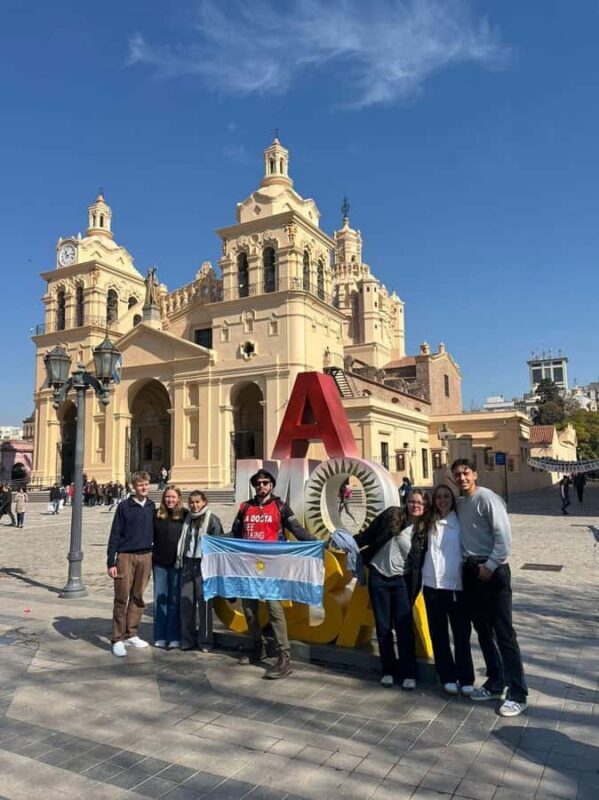
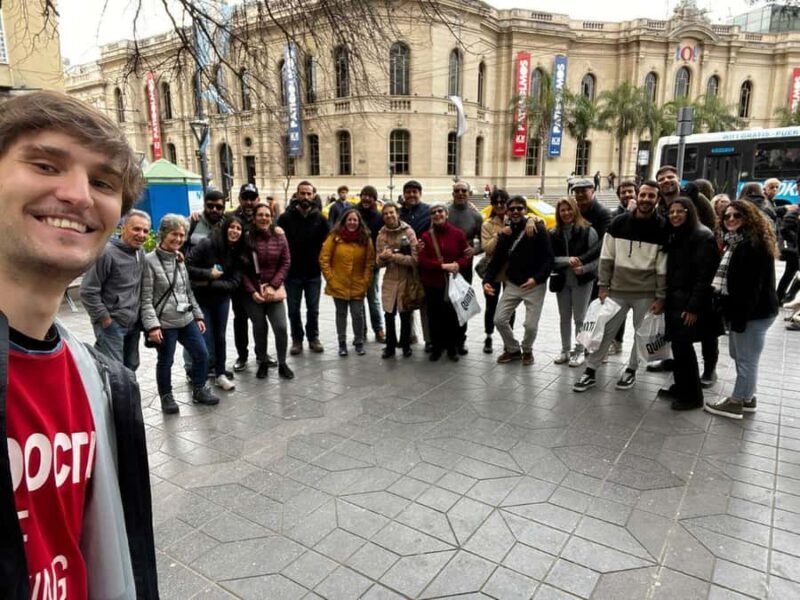
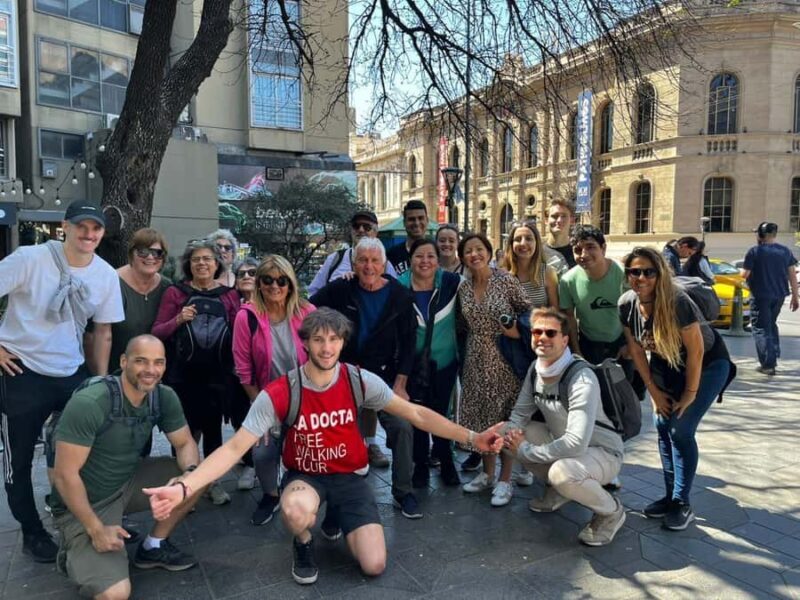
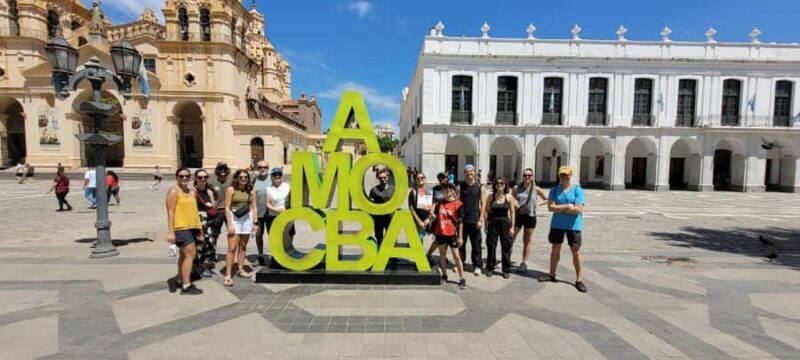
Meet beside the statue in Plaza San Martín, where the guide wears a red T-shirt. This is a practical starting point: the square anchors the historic center, and the tour begins among the civic and religious landmarks that define Córdoba’s old town.
From here, the guide sets up the story of the city, from its founding through the present. That broad timeline matters. Without it, the Cathedral, Cabildo and Jesuit buildings can feel like a string of handsome facades; with some context, you can start to understand how religion, education and public life shaped Córdoba.
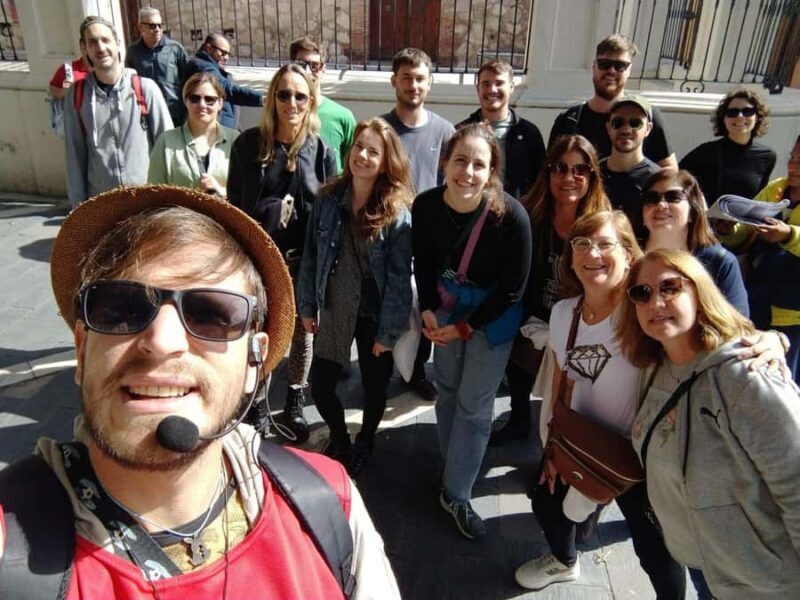
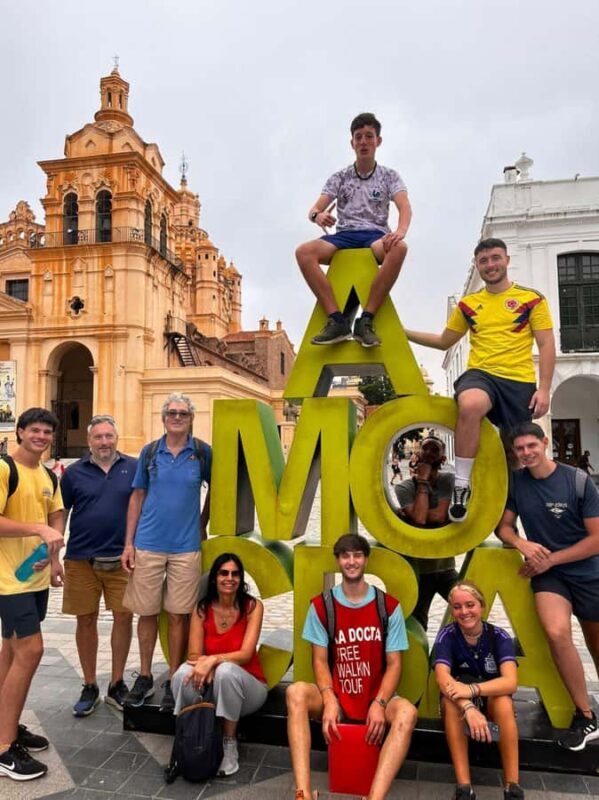
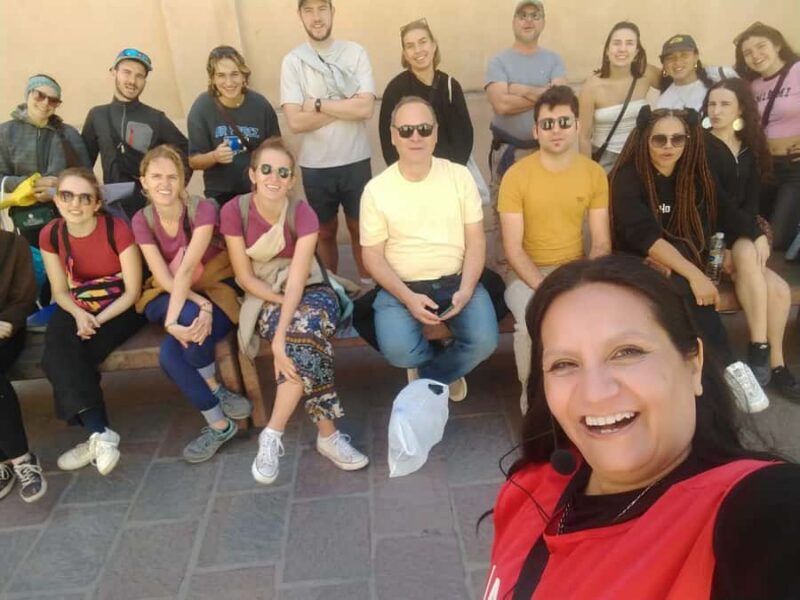
The tour is also designed as a shared walk, not a private lecture. You’ll be with other visitors, and the guide’s manner can shape the mood. Tomas, also referred to as Tomy or Thomas, is described as funny, energetic and engaging. Valeria has been praised for her enthusiasm and for using games to help people socialize. Aldy is another guide named for her lively style. Guides vary, so treat these names as possibilities rather than a guarantee.
You can also read our reviews of more walking tours in Cordoba Argentina
See the Jesuit center and UNC museum
The route includes the UNC Historical Museum in the Manzana Jesuítica, the Jesuit block associated with the University of Córdoba. The scheduled stop is 15 minutes, with a guided visit and time for photos. That’s enough for a first look and a clear explanation, though not a slow, detailed museum visit.
This stop is especially useful if you want to understand why Córdoba is often associated with education as well as colonial architecture. The tour also includes the Church of the Society of Jesus and the National College of Monserrat, making the Jesuit presence a recurring thread rather than a single quick mention.
Museum admission is not included. The tour description does not specify which interiors are entered, so ask your guide what is accessible on the day if seeing a particular collection matters to you. The value here is the overview: you get an introduction to the sites and their place in the city before deciding whether to return for a longer visit.
Read the Cabildo and Cathedral together
The Cabildo receives a 10-minute visit. This historic civic building offers a counterpoint to the religious sites nearby. A guide can help you read the center as a place where public authority and church life stood close together, not as separate chapters in a history book.
The Cathedral of Córdoba, dedicated to Our Lady of the Assumption, is another 10-minute stop. It is one of the route’s central landmarks, and the short visit gives you a chance to take in the building and hear about its role in the city. If you prefer to study architectural details at your own pace, note the location for a return visit rather than expecting an extended stop.
The Cathedral and Cabildo are best understood as part of the same urban setting. They stand among the places that help explain how Córdoba’s historic center developed, and the guide’s comments can give the surrounding streets more meaning. The tight schedule keeps the walk moving, but it also means this is an introduction, not an exhaustive tour of every interior.
Find the Jesuit Crypt and the city’s older layers
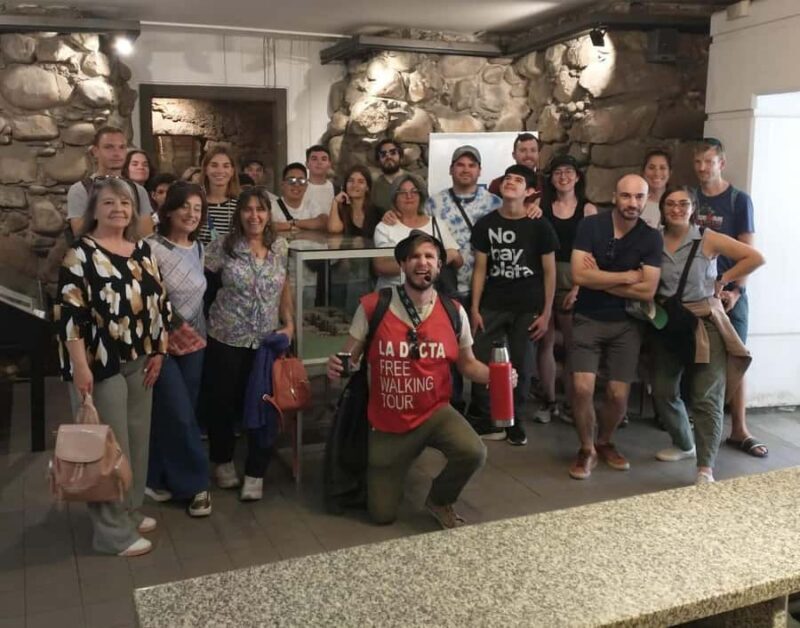
The Jesuit Crypt is listed as a 10-minute stop. It adds another layer to the route’s focus on the city’s religious and colonial past. A brief visit can help you place the underground site within the wider Jesuit story, though the tour does not promise a lengthy exploration.
The advertised highlights also include the Museum of Memory and the Narrowest Building. They are not assigned separate timed stops in the detailed route, so don’t assume you will have a dedicated visit to each. The tour is framed as a walk past and through Córdoba’s historic places, with the exact amount of time spent at individual points depending on the day and guide.
That distinction is useful if you are planning around a particular museum. The tour does not include museum admission, and its main purpose is to connect the landmarks rather than provide long visits at every one.
More Great Tours NearbyVisit the Marquis of Sobremonte house
The Marquis of Sobremonte Provincial Historical Museum is scheduled for a 10-minute stop. The house is named for the Marquis of Sobremonte, giving the guide a chance to add a personal and political thread to the city’s history.
As with the other museums, admission is not included. The short timing suggests you should think of this as an introduction to the building and its history, not a full museum visit. If the collection is a priority, ask the guide whether the group is entering and plan to return separately if needed.
This kind of stop is one reason the walk works well early in a Córdoba visit. You can learn which places deserve more of your time, then come back with a better sense of what you are looking at.


Take in the Church of the Society of Jesus and Monserrat
The Church of the Society of Jesus has a 15-minute stop, the longest among the timed visits in the route. That extra time makes sense within a walk that also covers the Jesuit block and the university’s history. You can pause, look closely and hear how the church fits into Córdoba’s colonial-era story.
The National College of Monserrat follows with a 10-minute stop. Along with the UNC Historical Museum, it broadens the tour’s view of the Jesuit legacy beyond religious architecture to include education. The route’s strength is this connection: one stop helps explain the next, rather than treating each building as an isolated photo opportunity.
The experience may be particularly rewarding if you like architecture. One visitor who described himself as a mason paid special attention to the brickwork and old arches, a reminder to look beyond the landmark names and notice how the buildings are put together. The tour does not promise a technical architecture lesson, but the route offers plenty to observe.
Finish at Patio Olmos, with local sounds and tastes along the way
The walk ends at Patio Olmos shopping mall, after roughly two and a half hours on foot. Ending at a shopping center gives you a clear finish point and a convenient chance to continue your day, though it is a contrast with the colonial streets and religious buildings that came before.
The tour also promises local sounds and tastes, with surprises planned along the way. The details are not specified, so think of these as a possible extra rather than a particular food or performance you can count on. They add a hint of local culture beyond buildings and dates, but the historic sights remain the main structure of the walk.
The group element is part of the appeal. You share the route with other visitors, and a lively guide can make the time feel less like a lecture. Valeria, for example, has been described as using games to help people meet one another. If you enjoy a social walking tour, that can be a welcome feature; if you prefer to move quietly at your own pace, a group format may feel less flexible.
What the price really means
The $0.50 charge is a deposit required to reserve a place. The tour itself has no fixed price: you choose what it is worth to you at the end. That makes it accessible to people managing a tight budget, while still giving you a chance to reward a guide whose explanations and energy make the walk worthwhile.
For value, consider what is covered: 150 minutes, a local guide, a broad route through major historic sites and a useful city overview. The guide’s work is the main value, not museum admission, which is excluded. Bring some cash or another way to pay your chosen amount, though the available payment methods are not specified.
This pricing model asks you to make a judgment at the end. If you enjoyed the guide and learned a lot, pay accordingly; if the experience did not meet your needs, the flexible format gives you room to reflect. Just don’t mistake the small deposit for the total expected cost.
Practical details before you book
The tour is offered in English and Spanish, with a live guide. Starting times depend on availability, so check the schedule when booking. The morning tour is named in the activity details, but the full range of start times is not specified.
Wear comfortable shoes and bring a drink. The walk lasts two and a half hours, and weather can affect the experience: a wet day was a drawback for one person, so check the forecast and dress for the conditions. No group size or accessibility details are provided.
You can cancel up to 24 hours in advance for a full refund, and the reserve-now, pay-later option lets you keep plans flexible without paying the deposit immediately. The tour says to meet next to the statue in Plaza San Martín and look for the guide in a red T-shirt. Arrive with enough time to find the group.
Should you book Córdoba La Antigua?
Book this walk if you want a practical first look at Córdoba’s historic center, prefer learning through a guide, and are happy to spend a couple of hours with a group. The combination of civic landmarks, the Cathedral and several Jesuit sites gives you a strong framework for exploring more on your own.
It is a weaker fit if you want guaranteed museum entry, long stops at each building or a completely self-paced visit. For most first-time visitors, I’d use it to get oriented, make note of the places you want to revisit, and decide at the end what the guide’s work was worth to you.
La Docta Free Walking Tour “Córdoba La Antigua”.
FAQ
How long is the tour?
It lasts 150 minutes, or two and a half hours.
Where does the tour start?
It starts next to the statue in Plaza San Martín. Look for the guide wearing a red T-shirt.
Where does the tour finish?
It ends at Patio Olmos shopping mall.
What is the booking price?
A $0.50 deposit per person is required to book. The tour has no fixed final price, and you decide what to pay at the end.
Which languages are offered?
The live guide is available in English and Spanish.
Are museum admissions included?
No. Admission to museums is not included in the tour price.
What should I bring?
Bring comfortable shoes and a drink.
Which places are included in the route?
Timed stops include the UNC Historical Museum in the Manzana Jesuítica, the Cabildo, the Cathedral, the Jesuit Crypt, the Marquis of Sobremonte Provincial Historical Museum, the Church of the Society of Jesus and the National College of Monserrat.
Can I cancel after booking?
You can cancel up to 24 hours in advance for a full refund.
Do I need to pay when I reserve?
No. The reserve-now, pay-later option lets you book without paying immediately. A $0.50 deposit is required to book, according to the tour information.
You can check availability for your dates here: