Jiulong Cave’s headline feature is a 44.71-meter stalagmite, rising inside a cavern that extends 2,284 meters and is divided into seven large halls. I like the sheer scale of that natural formation, and I like that the entrance-and-shuttle option makes the basic visit simpler to plan.
The main consideration is that only four main halls and one heavenly hall are open, so the full cave length is not a promise of how much you will see. The cave route is also slippery, and the package does not include transport to the site, meals, or a guide.
- At a glance
- The scale inside Jiulong Cave
- Beyond the cave entrance
- What the ticket covers, and what it does not
- A practical visit from arrival to exit
- Opening hours and timing
- Who will enjoy Jiulong Cave most
- Should you book?
- FAQ
- What is included in the entrance-and-bus ticket?
- Is there a bus-only ticket option?
- How many cave halls can I visit?
- What are the opening hours?
- What should I bring or wear?
- Do children under 1.2 meters and seniors over 70 need an entrance ticket?
- More Tours in Guizhou
- More Tour Reviews in Guizhou
- Not for you? Here's more nearby things to do in Guizhou we have reviewed
At a glance
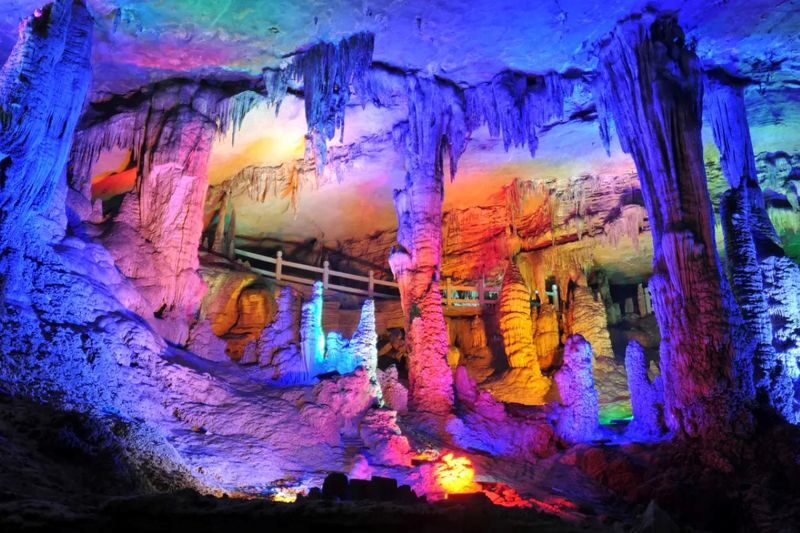
- A giant stalagmite: The cave’s largest stated formation reaches 44.71 meters.
- Five halls open: Four main halls and one heavenly hall are accessible.
- A wider scenic area: Jiulong Cave is part of a larger zone with river, mountain, ecological, and cultural features.
- A shuttle is included in one package: The entrance-and-round-trip-bus option covers the main ticket and sightseeing bus.
- A cool cave visit: The temperature stays around 18°C, so bring a light jacket.
- A low starting price: Rates start at $3.49, but check which ticket option that price covers before booking.
The scale inside Jiulong Cave
Jiulong Cave is the main reason to come. It is a typical example of the karst caves found across southwest China, a region where water slowly shapes limestone into chambers, columns, and hanging formations. The cave extends 2,284 meters and is organized into seven large halls, though visitors can currently enter four main halls and one heavenly hall.
That difference matters when you plan. The total length describes the cave, not necessarily the distance you will walk. The available information does not give a route map, walking time, or a precise list of formations in each hall, so I would treat the visit as a chance to see the open sections rather than expect to cover every passage.
The star formation is a stalagmite measured at 44.71 meters high. Stalagmites grow upward from mineral deposits left by dripping water, often over long spans of time. At this size, it is less a small detail to spot than a central feature of the cave’s scale. You will also see other geological formations, though no detailed inventory is provided.
The cave’s length and multiple halls suggest variety, but the experience is not described as a guided tour. There are no guide names or guiding services specified, so you should plan to explore without assuming a guide will explain the geology or cultural background. If those explanations matter to you, consider arranging them separately or reading up before you arrive.
You can also read our reviews of more tours and experiences in Guizhou.

Beyond the cave entrance
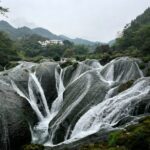
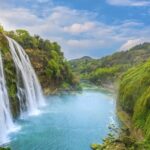
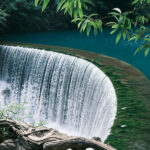
The scenic area covers about 80,000 square meters and brings together more than the cave itself. Its wider setting includes the Jinjiang Scenic Belt, the Liulong Mountain Natural Ecological Zone, and the Guanyin Mountain Cultural Landscape. In other words, the visit combines cave formations with mountain and water scenery, natural areas, and cultural relics.
That broader scope is useful if you want a change of pace after the underground chambers. But the information available does not describe the precise order of stops, walking distances, or how much time to allow for each part. I would avoid treating the names of these zones as a guaranteed, timed itinerary. They tell you what the scenic area includes, not exactly what your ticket requires you to visit.
The included sightseeing bus is a practical part of the entrance-and-bus package. It provides round-trip service within the scenic area, which can reduce the effort of getting between the entrance and the area’s attractions. The exact route and departure frequency are not stated, so check signs or ask staff on arrival if you need to know where the bus stops.
Do not confuse that internal shuttle with transport from Tongren or elsewhere in Guizhou. The ticket does not include round-trip transportation to the scenic area. You will need to arrange your own journey to the main entrance at Renjiawan Group, Jiulong Village, Yangtou Town, Bijiang District, Tongren City.
What the ticket covers, and what it does not
The main package includes one Jiulongdong Scenic Area entrance ticket and one round-trip sightseeing bus ticket. This is the option to compare if you want both admission and the internal shuttle sorted in one purchase.
There is also a bus-only option. Since the displayed starting price is $3.49, do not assume that the lowest price includes entrance to the cave. Check the exact package name and what is in your cart before paying. The listing gives both ticket types, but the package details describe the entrance-plus-bus option, so careful selection is worthwhile.
The price can be appealing for a major scenic attraction, particularly if the entrance-and-shuttle option is available at a rate that suits your budget. Still, value depends on the package you choose and on whether you can get to the site without arranging costly transport. Meals, personal insurance, self-funded activities, and other personal expenses are not included.
One customer note praises the convenience of booking and says they used their ID for entry. That matches the stated admission process: no ticket exchange is needed. Bring the original identity document used for the reservation, along with the e-voucher QR code, to enter and board the sightseeing vehicle. Accepted documents include an ID card, passport, or Hong Kong, Macao, and Taiwan travel permit.
A practical visit from arrival to exit
Start at the main entrance ticket office at Jiulongdong Scenic Area. Have your original booking ID and QR code ready. Because the ticket is valid only for the selected date, check your reservation details before setting off.
If you have the entrance-and-bus package, use the included sightseeing vehicle for the round trip within the scenic area. The precise bus route is not specified, so follow the posted directions or ask staff where to board. If you bought bus-only admission, confirm that you also have the required entrance ticket before you go through the gate.
From there, expect the cave to be the main event. The open route includes four main halls and one heavenly hall. The combination of large chambers and cave formations is the central attraction, with the 44.71-meter stalagmite as the standout feature described for the site. The available information does not give a fixed route sequence, so it is best not to plan around a particular hall being first or last.
The cave remains at about 18°C. That is cool enough to feel chilly if you have dressed for warm weather outside, especially if you move slowly through the chambers. A light jacket is sensible, even if the day outside is hot.
Footing deserves more attention than clothing. The cave trail can be slippery, so wear flat shoes with non-slip soles. This is not the place for smooth-soled dress shoes or footwear that makes you watch every step. Take care around formations and do not touch the stalactites; damage can lead to compensation at the appraised price.
After the cave, you can make time for the wider scenic area’s mountain, river, ecological, and cultural elements. Since opening hours apply to the whole visit and last entry is earlier than closing, avoid leaving the cave until late in the day if you hope to see more than the underground halls.
Opening hours and timing
From March 1 through October 31, the scenic area is open from 8:30 a.m. to 6 p.m., with last admission at 4:30 p.m. From November 1 through February 28, it opens at 9 a.m. and closes at 5:30 p.m., with last admission at 4 p.m.
The earlier last-entry time is important. Arriving close to closing will not give you a full visit, even if the gate remains open. During peak season, booking five to ten days ahead is recommended; during the off-season, the suggested lead time is one to three days. Confirmation is stated as taking up to 24 hours, while orders become effective immediately after successful confirmation.
The ticket is date-specific. If you need to cancel, a full refund can be requested more than 24 hours before the visit, provided the ticket has not been exchanged or used. Within 24 hours, after exchange or admission, or after the ticket expires unused, there is no refund or rescheduling.


Who will enjoy Jiulong Cave most
I would put this visit high on the list for anyone interested in karst geology, dramatic cave chambers, or unusual natural formations. The giant stalagmite gives the visit a clear focal point, while the open halls offer more than a quick look at a single cave room.
It also suits travelers who want a scenic outing that combines underground sights with mountain and water scenery. The wider area gives you more to consider than the cave alone, although the lack of a published stop-by-stop plan makes it harder to estimate exactly how much you can fit into one visit.
Families may find the cave appealing, but the slippery trail calls for care, especially with children. Children under 1.2 meters and adults over 70 are exempt from the main entrance ticket when they show valid identification, but they still need to purchase a sightseeing bus ticket. Adult tickets apply to people under 70, according to the stated eligibility terms.
This is less suitable if you want a guided geology lesson, a fully organized day trip with transport from your hotel, or a tightly timed itinerary. None of those are included in the ticket details. You are buying site admission and, in the relevant package, an internal shuttle, not a complete escorted excursion.
Should you book?
Book Jiulong Cave if you are already in the Tongren area or can arrange your own transport, and if a large karst cave is worth a dedicated stop for you. The 44.71-meter stalagmite and the five open halls give the visit a strong natural centerpiece, while the shuttle option can make getting around the scenic area easier.
Before you pay, confirm whether your chosen price includes entrance or only the round-trip sightseeing bus. Bring the same ID used for the reservation, wear shoes with good grip, and pack a light jacket. If you want a guide, a full route plan, or transport from another city, this ticket alone will not provide it.
Jiu Long Dong
“Booking with Klook is convenient: it's easy, and in the past, I just used my ID.”
FAQ
What is included in the entrance-and-bus ticket?
It includes one Jiulongdong Scenic Area entrance ticket and one round-trip sightseeing bus ticket within the scenic area.
Is there a bus-only ticket option?
Yes. A round-trip sightseeing bus-only option is listed. Check the selected package carefully, since a bus ticket is not the same as an entrance ticket.
How many cave halls can I visit?
Jiulong Cave has seven large halls, and four main halls plus one heavenly hall are open to visitors.
What are the opening hours?
From March 1 to October 31, hours are 8:30 a.m. to 6 p.m., with last entry at 4:30 p.m. From November 1 to February 28, hours are 9 a.m. to 5:30 p.m., with last entry at 4 p.m.
What should I bring or wear?
Bring a light jacket because the cave stays around 18°C. Wear flat shoes with non-slip soles because the cave trail can be slippery.
Do children under 1.2 meters and seniors over 70 need an entrance ticket?
They are exempt from the main entrance ticket when they show valid identification. They still need to buy a sightseeing bus ticket.