Jerusalem and Bethlehem hold more history and religious meaning than one day can contain. This 10-hour trip gives you a first look at both: from the Mount of Olives and Jerusalem’s Old City to the Church of the Nativity in Bethlehem, with transport and a licensed guide to help connect the places.
I like two things in particular: the panoramic view from the Mount of Olives, which helps you get your bearings, and the chance to walk the Old City before seeing Bethlehem’s Nativity church. The guides are a major part of the experience. Names such as Dan, Robert, Sam, Raffy, and Yechiel appear in accounts of especially informative tours, though you should not expect a particular guide.
The trade-off is the pace. You are covering a lot of ground, and the time at individual sites may be short, especially if the Holy Sepulcher is busy. This is a good overview, not a slow, thorough visit to every landmark.
- Key points to know before you go
- A big day, with two very different cities
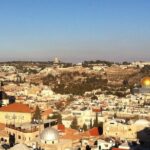
- The Mount of Olives sets the scene
- Walking Jerusalem’s Jewish and Armenian Quarters
- Via Dolorosa and the Church of the Holy Sepulcher
- Crossing into Bethlehem
- Church of the Nativity and Manger Square
- What the guide adds
- Is 4 a fair price?
- How to prepare for the day
- Who should book this tour?
- FAQ
- How long is the tour?
- What is included in the price?
- Do I need to bring my passport?
- What should I wear to visit the holy places?
- Is the tour guide with the group throughout the day?
- Is hotel pickup available everywhere in Tel Aviv?
- The Best Of Tel Aviv!
- More Tours in Tel Aviv
- More Tour Reviews in Tel Aviv
- Not for you? Here's more nearby things to do in Tel Aviv we have reviewed
Key points to know before you go
 1 / 7
 2 / 7
 3 / 7
 4 / 7
 5 / 7
 6 / 7
 7 / 7
- The Mount of Olives comes first: Take in a sweeping view of Jerusalem before entering the Old City.
- The Old City is a walking tour: Expect the Jewish and Armenian Quarters, the Cardo, the Western Wall area, and the route along the Via Dolorosa.
- The Church of the Holy Sepulcher can mean a wait: Access to the Holy Tomb depends on the lines on site.
- Bethlehem requires a border crossing: The Palestinian guide meets the group after the crossing, and a vehicle change may be required.
- Bring your passport and dress modestly: Shorts and sleeveless shirts are not allowed at holy places, and head covering is required.
- The $134 price covers key costs: Transportation, hotel pickup from central locations, a licensed guide, and entrance fees are included. Meals are not.

👉 See our pick of the 25 Best Guided Tours In Tel Aviv
A big day, with two very different cities
Jerusalem and Bethlehem are close enough to combine, but each has its own character and rhythm. Jerusalem’s Old City is a compact web of quarters, streets, sacred sites, and market lanes. Bethlehem adds a separate border crossing and a visit to Manger Square, where Christian tradition places the birth of Jesus.
That makes this tour useful if you have only one day to spare. You get a broad introduction without arranging transportation and site access yourself. But the schedule has to keep moving. If you want time to pray, study the architecture, shop, or wander without a guide, consider giving Jerusalem more than a day.
The 10-hour length includes travel and the transition into Palestinian Authority territory, so do not expect ten hours of sightseeing. The vehicle is air-conditioned, but you will walk through the Old City and at the religious sites. Comfortable shoes matter more here than a polished itinerary.
You can also read our reviews of more tours and experiences in Tel Aviv
The Mount of Olives sets the scene
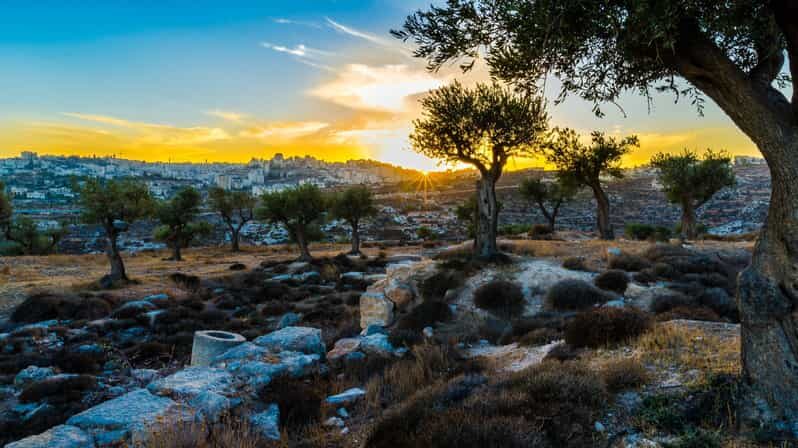
The first major stop is the Mount of Olives, where you look across Jerusalem from above. It is an especially useful opening because the view gives you a sense of the city’s layout before you enter its narrow streets. The tour describes the city as a spiritual center for Judaism, Christianity, and Islam, and from this high vantage point you can begin to grasp how much is packed into the day.
Bring a layer if you are sensitive to weather, since the visit is outdoors. The tour runs in different conditions, and a guide can still make the day worthwhile when the weather is poor, but rain or wind can make a viewpoint less comfortable.
The view is a short introduction, not a substitute for time inside the Old City. Its value is orientation: you start with the broad picture, then move into the close-up details.
Walking Jerusalem’s Jewish and Armenian Quarters
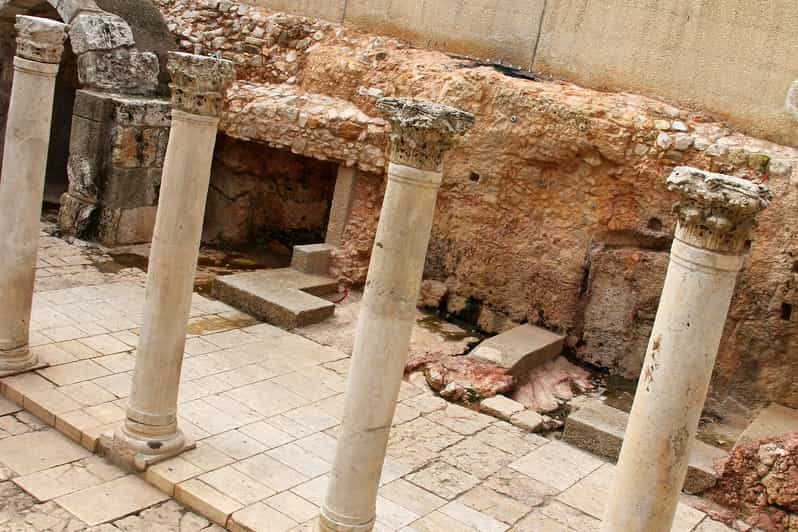
Inside the Old City, the route takes in the Jewish and Armenian Quarters and the Cardo, a restored Roman road visible along Jewish Quarter Street. The Cardo offers a tangible link between the present street plan and the city’s earlier layers. Your guide can explain what you are looking at, which is useful in a place where a few steps can carry you across centuries of religious and political history.
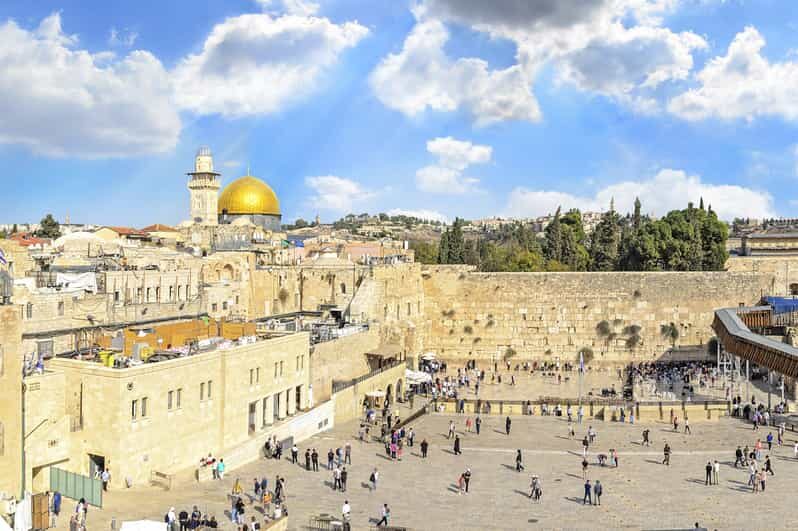
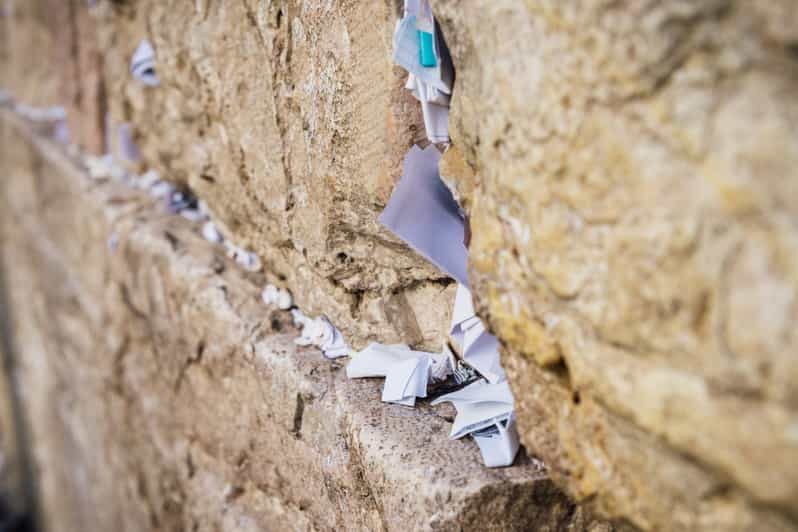
The Old City is best approached on foot, but that also means the schedule is less leisurely than a private stroll. You will pass through the bazaar toward the Western Wall, also called the Kotel. The wall is a major place of Jewish prayer, and the area around it can be crowded, so listen for the guide’s instructions and keep your passport secure.
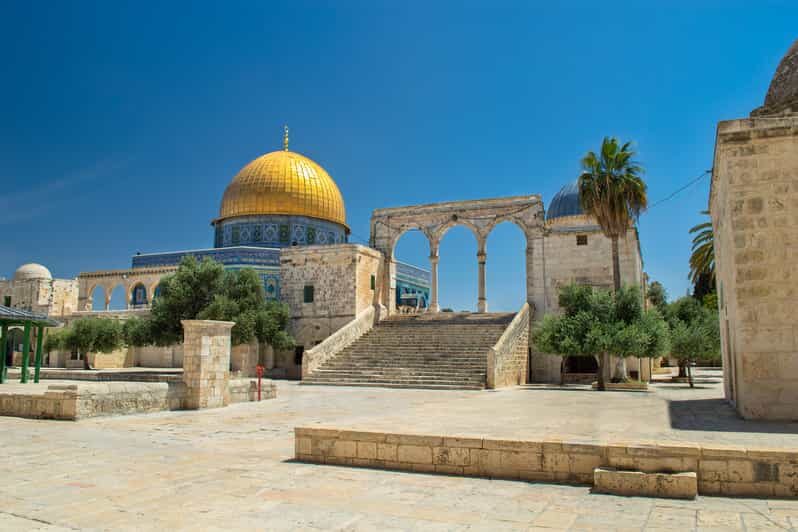
The itinerary also includes the Temple Mount and Dome of the Rock among the major sights. Access to religious sites can depend on local rules and conditions, so treat this as a guided overview rather than a promise that you will enter every building or enclosure. The day’s central strength is the guide’s context: several sites make more sense when someone explains their significance and relationship to one another.
Via Dolorosa and the Church of the Holy Sepulcher
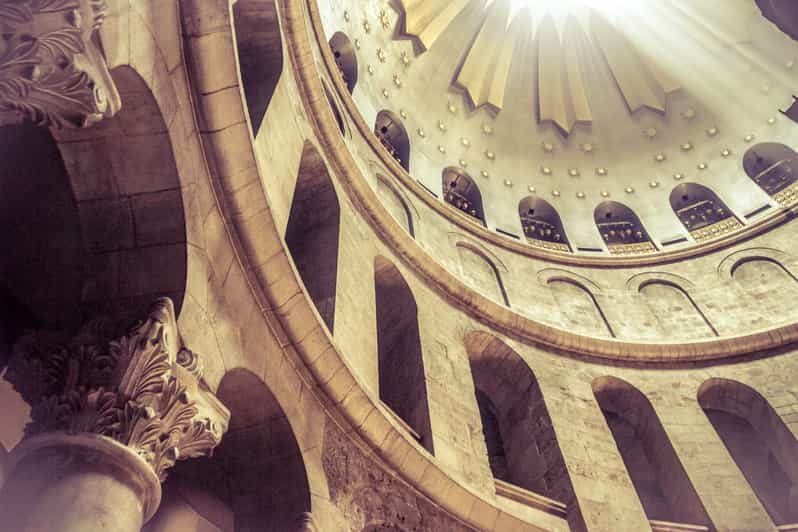
The route continues along the Via Dolorosa, the traditional path associated with Jesus’ final journey, to the Church of the Holy Sepulcher. The church is also known as the Church of the Resurrection and is revered by Christians as the site of Jesus’ burial and resurrection. It has been a pilgrimage destination since at least the fourth century.
This is the emotional center of the Jerusalem portion for many people, but it can also be the least predictable stop. The visit to the Holy Tomb depends on the line, and a long queue can take time from the rest of the schedule. The church itself is a place to pause and observe, whether you come for religious reasons or for its importance in Christian history.
Expect an active, crowded setting rather than a quiet museum visit. The tour’s value is having a guide frame what you see, but the scale of the site and the number of people can make it hard to hear every explanation. One visitor specifically found that spoken explanations were easy to miss when the surroundings were noisy. Stay near the guide and ask for a repeat when you need one.
More Great Tours NearbyCrossing into Bethlehem
After Jerusalem, the tour drives to Bethlehem, on the West Bank in Palestine. This is not simply another stop along the same city walk. The tour is subject to Palestinian Authority regulations, and the Palestinian guide meets the group after the border crossing. A short section may involve walking without the group’s guide, and the vehicle may change once you enter Palestinian Authority territory.
Those details are worth knowing before booking, particularly if you expect one guide and one vehicle for the full day. The transition is part of the logistics of visiting two jurisdictions, and the precise process may vary. Follow the instructions given on the day and keep your passport accessible.
The guide change can also add a useful local perspective. The Jerusalem guide and Bethlehem guide may have different roles, and accounts of the trip describe both as informative. Still, changes in transport and personnel can feel less tidy than the first leg, so allow yourself some patience at the crossing.

Church of the Nativity and Manger Square
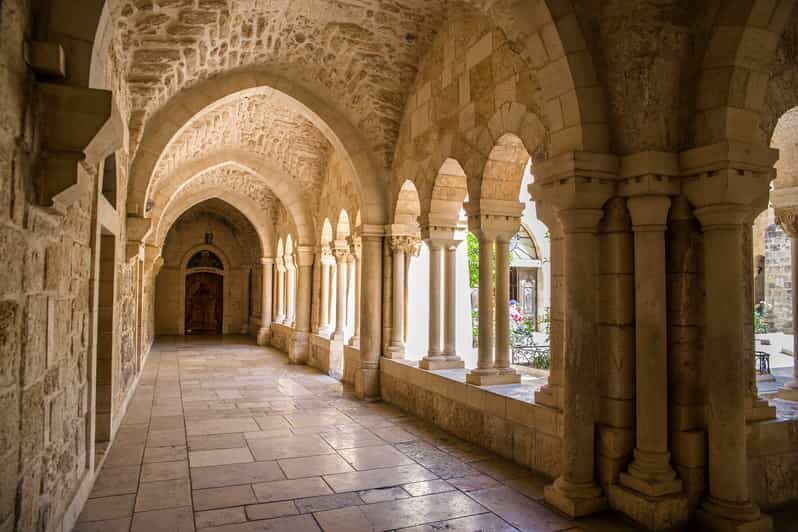
In Bethlehem, the main stop is the Church of the Nativity, one of the oldest continuously operating churches in the world. It stands at the heart of a city closely associated with the birth of Jesus. Manger Square sits nearby, surrounded by streets including Star Street and Nativity Street, and is also home to Bethlehem’s only mosque and the Palestinian Peace Center.
The tour also includes an overview of Shepherds’ Field. The Church of the Nativity is the key visit, and the square gives you space to take in the setting before the return drive. You may have time to reflect or visit a handicraft shop, but do not assume the stop will allow for extensive browsing.
Some people have found that shopping stops take longer than they would like, while others wanted more free time in Jerusalem and fewer shop visits. If you prefer to spend every spare minute at religious sites, this is worth considering. If you are interested in local crafts, a stop can be a welcome chance to look around, but the schedule is still shared with the group.
What the guide adds
The licensed guide is not just a narrator between landmarks. The day moves quickly, and a good guide helps you understand what each quarter, church, and viewpoint means rather than leaving you to connect the dots alone. Many accounts single out guides for clear explanations, local knowledge, warmth, and care for the group.
Several names are associated with strong experiences, including Dan, Robert, Sam, Raffy, Gabi, and Yechiel Lavi. These are examples, not a roster you can choose from. The guide may vary, and the Bethlehem portion has a Palestinian guide after the crossing. Some guides have worked in more than one language, but the advertised live tour language is English, so confirm language availability when booking if it matters to you.
The guides also have to speak over street noise and manage a packed day. Stick close enough to hear, and ask questions when there is a natural pause. A few minutes of clarification can make a site more meaningful than rushing ahead to take another photograph.
Is $134 a fair price?
At $134 per person, this is a practical way to combine two major destinations in one day. The price includes transportation, pickup from centrally located hotels, a government-licensed guide, and entrance fees. You do not have to arrange the cross-city transport yourself, which is a real convenience when the day includes a border crossing and potentially a vehicle change.
Meals are not included, so budget for food separately. The schedule and meal arrangements are not specified, so do not count on a particular lunch stop or length of break. The tour’s value is strongest if you want an organized introduction and have limited time. It is less compelling if you can spend several days in the region and would rather set your own pace.
Pickup is offered from central hotels in Tel Aviv and, depending on availability, Netanya or Herzliya. If your hotel is outside the central pickup area, you will be given the nearest meeting point. Pickup details and time are confirmed by the supplier, so check the message before the day of the tour. One account describes a long collection route through Tel Aviv and a delayed start, a reminder that hotel pickups can take time when several stops are involved.
How to prepare for the day
Bring your passport. It is essential for this trip, not an optional extra, because the route crosses into Palestinian Authority territory. Keep it somewhere easy to reach rather than buried at the bottom of a bag.
Dress modestly for holy places. Shorts and sleeveless shirts are not allowed, and you need a head covering. Since there is walking, choose shoes you can wear comfortably for much of the day. The vehicle is air-conditioned, but you will spend substantial time on foot at the sights.
If you can choose your date, one visitor advises avoiding Friday and Saturday because those days can be especially crowded. That is a practical suggestion rather than a guarantee of quiet on another day. Lines at the Holy Sepulcher and crowds around major sites can still affect how long you have at each stop.
The activity offers free cancellation up to 24 hours in advance and a reserve-now, pay-later option. These are useful if your plans are not settled, but confirm the current terms and pickup information when you book.
Who should book this tour?
Book it if you are based in Tel Aviv, have one day for Jerusalem and Bethlehem, and want the main sights explained by a guide. It is especially suited to a first visit, when orientation and context matter more than a slow, independent exploration. The included transport and site fees simplify a day that would otherwise require careful coordination.
Think twice if your priority is long, quiet visits inside churches, unhurried time in the Old City, or control over every stop. The tour’s reach is impressive, but its pace is the price of seeing both cities in one outing. If you have more time, give Jerusalem a full day or two and visit Bethlehem separately.
For a first look, the combination is worthwhile. Go prepared for a full day, a border transition, and a few queues, and you will come away with a clear sense of why these places matter.
Jerusalem & Bethlehem Full-Day Tour from Tel Aviv
FAQ
How long is the tour?
The tour lasts 10 hours, including transport and visits in Jerusalem and Bethlehem.
What is included in the price?
Transportation, pickup from centrally located hotels, a government-licensed tour guide, and entrance fees are included. Meals are not.
Do I need to bring my passport?
Yes. A passport is essential for the trip.
What should I wear to visit the holy places?
Modest dress is required. Do not wear shorts or sleeveless shirts, and bring a head covering.
Is the tour guide with the group throughout the day?
The Jerusalem guide leads the tour before the border crossing. A Palestinian guide meets the group after the crossing.
Is hotel pickup available everywhere in Tel Aviv?
Pickup is provided from centrally located hotels. If your hotel is not central, the supplier will give you the address of the closest meeting point.
You can check availability for your dates here: