The Imperial Treasury is less about paintings on a wall than power you can see in gold, gemstones and ceremonial dress. Across 21 rooms, the Habsburg collection brings you face to face with the Imperial Crown of the Holy Roman Empire, a scepter, robes and a much-discussed unicorn horn, likely a narwhal tusk.
I like two things in particular: the remarkable range of objects, from crowns and jewels to historic weapons and robes, and the museum’s central Hofburg location, which makes it easy to pair with other sights. The main consideration is scale: you can see the collection in one to two hours, but the admission ticket does not include an audio guide, and a quick visit may leave you wanting more context.
At a glance
- 21 rooms of Habsburg treasures: See crowns, scepters, orbs, jewels, robes and other historic objects.
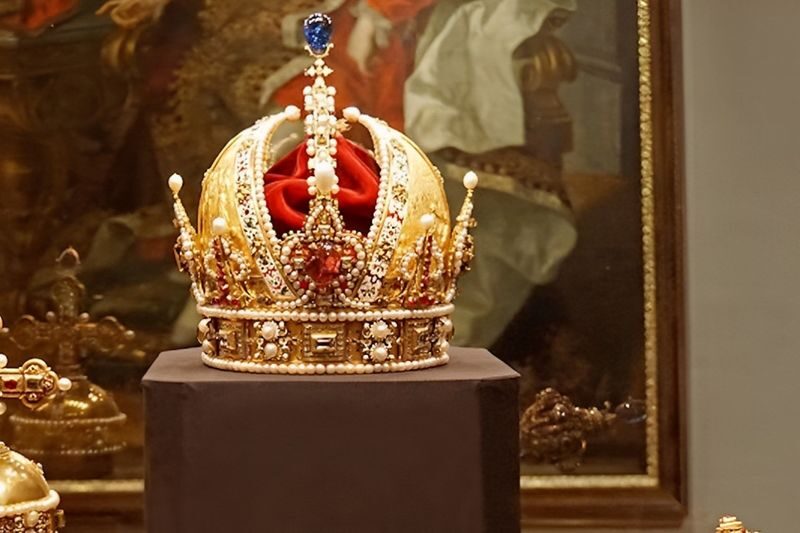
- The Imperial Crown: One of the collection’s headline pieces is the crown of the Holy Roman Empire.
- A curious so-called unicorn horn: The legendary object is likely a narwhal tusk, a reminder of how rare natural objects once gained grand stories.
- A practical one-to-two-hour visit: The treasury fits neatly into a day of sightseeing around the Hofburg.
- Audio guide available for an extra fee: Consider one if you want the stories behind the objects, not just their sparkle.
- Children aged 0 to 18 enter free: Bring valid identification if you are using a reduced ticket.

👉 See our pick of the 11 Best Shopping Tours In Vienna
- At a glance
- The Hofburg’s treasure rooms
- Finding the entrance at the Swiss Gate
- The Imperial Crown and the language of power
- Robes, jewels and objects beyond the crowns
- How much time to allow
- What the ticket includes, and what it does not
- Getting there and planning for different needs
- Who will get the most from the visit
- Should you book the Imperial Treasury ticket?
- FAQ
- How long does a visit to the Imperial Treasury take?
- What does the general ticket include?
- Is an audio guide available?
- What are the opening hours?
- Where is the Imperial Treasury?
- Is the museum wheelchair-accessible?
- Do children need a ticket?
- How do I use my ticket?
- Can I cancel or change my booking?
- The Best Of Vienna!
- More Tickets in Vienna
- More Tours in Vienna
- More Tour Reviews in Vienna
- Not for you? Here's more nearby things to do in Vienna we have reviewed
The Hofburg’s treasure rooms
 1 / 5
 2 / 5
 3 / 5
 4 / 5
 5 / 5
The Imperial Treasury sits in the Schweizerhof, the oldest part of the Hofburg Imperial Palace. Its location puts the collection in a fitting setting: these are not just handsome objects, but the possessions and symbols of a dynasty that shaped Central European history for centuries.
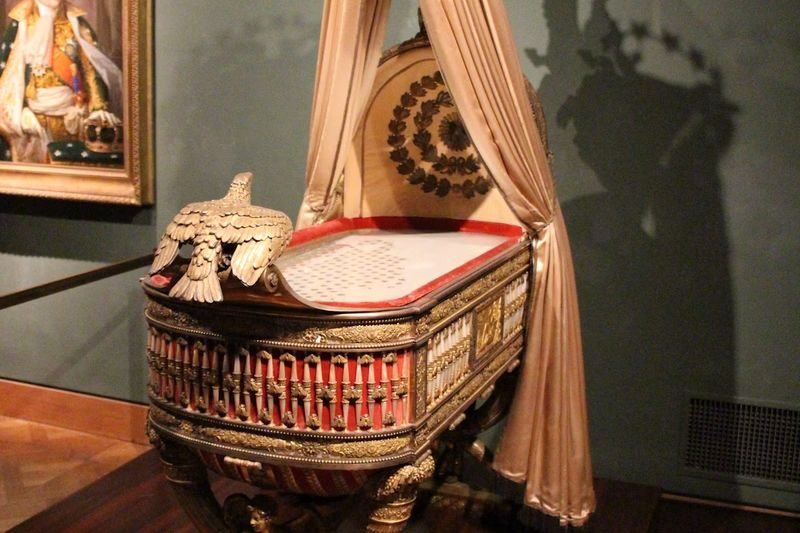
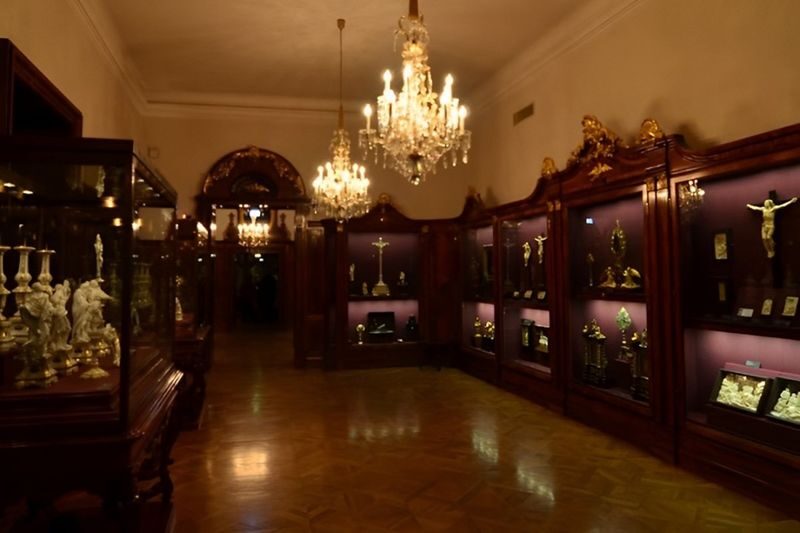
The collection spans roughly 800 years of Habsburg wealth. Across 21 rooms, you move through objects that served different purposes: some signaled religious authority, others marked royal status, and still others were worn or carried at major ceremonies. The overall effect is more varied than a room full of crowns.
This is a museum for looking closely. A jewel-encrusted object may catch your eye first, but consider what it was made to do and who was allowed to use it. The treasury makes power tangible through materials, craftsmanship and scale, even if you arrive knowing little about the Habsburgs.
You can also read our reviews of more tours and experiences in Vienna


Finding the entrance at the Swiss Gate
The meeting address is Schweizerhof, Hofburg, 1010 Vienna. The entrance can be found through the Swiss Gate, a useful landmark when you are navigating the Hofburg’s large complex. Look for the Imperial Treasury entrance rather than assuming every Hofburg museum uses the same door.
The ticket is admission to the treasury only. It does not include a guided tour, meals, drinks or an audio guide. If you want extra interpretation, an audio guide is available onsite for an additional fee. That can be a worthwhile add-on for a collection where the story behind an object often matters as much as its appearance.
The ticket is valid only on the date selected, and a time may apply. Give yourself enough breathing room around the visit, particularly if you are fitting it between lunch, another museum or a timed activity. One ticket holder noted that plans can run long when meals and queues are involved. The sensible move is to avoid booking this as a tight slot between two fixed appointments.
The Imperial Crown and the language of power
The Imperial Crown of the Holy Roman Empire is a natural focus of the visit. It is not simply an ornate piece of jewelry. A crown of this kind represents authority, ceremony and the political reach of the ruler who wore it. Seeing it in person gives you a direct connection to a period when such objects carried meaning well beyond their material value.
You will also encounter scepters and orbs, objects that can look formal or unfamiliar if you do not know their role. Take time to notice how the collection uses precious materials to communicate status. Their design is part of their purpose: they were made to be seen, remembered and associated with power.
The treasury’s appeal is not limited to specialists in European dynasties. If you like royal history, the regalia offer an immediate visual story. If you are less drawn to names and dates, the craftsmanship and sheer variety still provide plenty to study. The audio guide may help bridge that gap, especially if you want more than a visual overview.
Robes, jewels and objects beyond the crowns
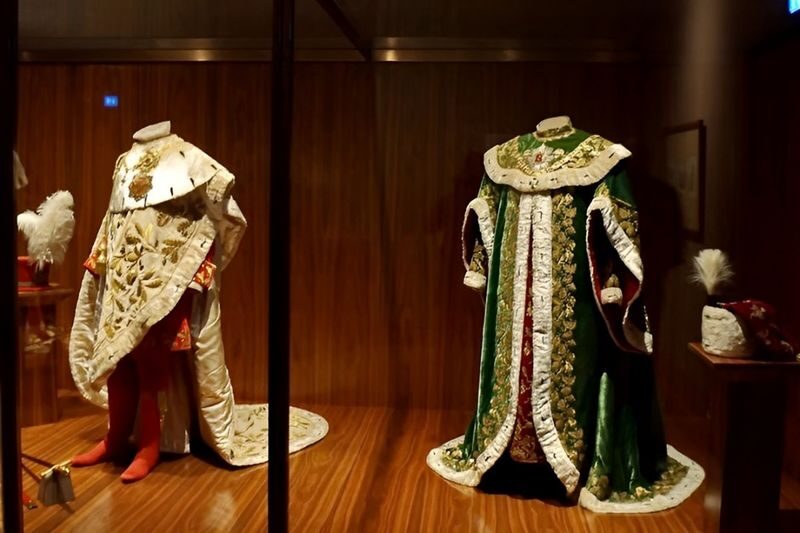
Crowns are the headline act, but the collection includes necklaces, ceremonial robes, swords and other historic artifacts. That range is one reason I would not treat the treasury as a single-room stop. Different kinds of objects give you different ways into the collection: clothing suggests the pageantry of court life, weapons point toward political and military authority, and jewels show how wealth could be displayed in portable form.
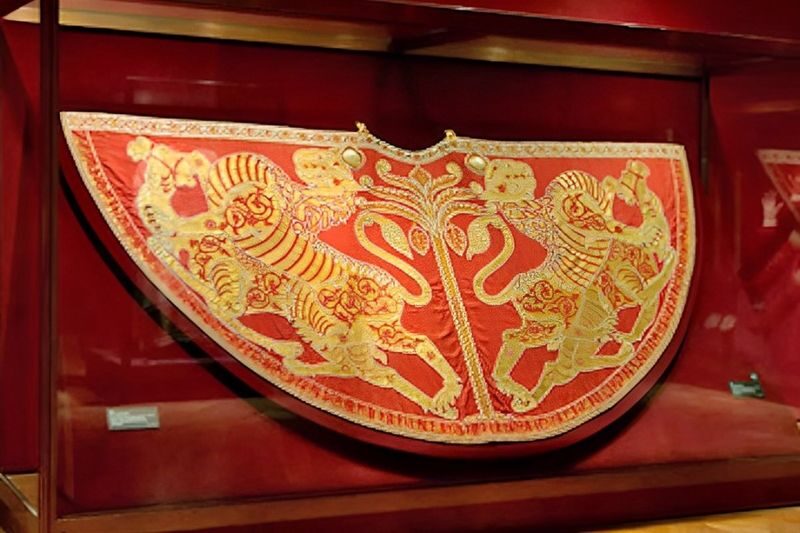
The robes are especially useful for imagining the ceremonies that gave these objects meaning. A crown in a case can seem like a beautiful relic; set beside ceremonial clothing and other regalia, it becomes part of a larger performance of rank. You are looking at more than decoration. These objects helped make authority visible.
The unusual objects add a welcome note of strangeness. The so-called unicorn horn is likely a narwhal tusk, a natural object once regarded as a rarity of great importance. It is the sort of exhibit that rewards a little curiosity: the history of an object includes not only what it is, but what people believed it to be.
How much time to allow
Plan on about one to two hours. That is enough for a focused visit through the 21 rooms, though your pace will depend on how much time you spend reading and looking closely. If you are keen on royal history or decorative arts, allow more time rather than racing through to meet another booking.
The collection is compact enough to work well as part of a larger Hofburg day. It is also close to other museums and sights in the area, making it easy to combine with another visit. Just be realistic about your energy: a treasury visit may be shorter than a major art museum, but it still asks you to pay attention to a lot of detail.
Opening hours are Wednesday to Monday, 9:00 a.m. to 5:30 p.m. The treasury is closed on Tuesdays according to the current schedule, and hours or closure dates may change. Check the latest details before setting out, especially if your Vienna visit is brief.


What the ticket includes, and what it does not
The general ticket includes admission to the Imperial Treasury. That simplicity is useful if you want to choose your own pace, but it also means you should not expect a guide or other extras to be included. An audio guide is available at the museum for an extra fee; meals, beverages and personal expenses are also on you.
The listed starting price is $19.79. Whether that feels worthwhile depends on your interest in the objects and how much time you give them. For a short visit to one of the world’s most significant treasury collections, the price can make sense if you enjoy history, royal regalia or fine craftsmanship. If you mainly want a broad overview of Vienna’s imperial past, you may get more value by pairing the ticket with another nearby museum or palace visit.
Ticket conditions deserve a careful look before you pay. The voucher applies only to the selected date and time, if one is specified. Free cancellation is available within 24 hours for bookings made more than two days in advance, while same-day and next-day bookings cannot be cancelled; issuing the voucher in advance makes the booking non-refundable. Because these terms depend on timing, check the conditions shown for your exact booking.
Getting there and planning for different needs
The address is Schweizerhof, Hofburg, 1010 Wien. The listed public transport connections include bus lines 1, 2, 2A and 57A, and metro lines U2, U3 and D. As the Hofburg is a large complex, use the Swiss Gate and the museum’s exact address to orient yourself once you arrive.
The museum is wheelchair-accessible. Children aged 0 to 18 enter free, while those aged 19 and older pay the adult rate. Bring valid identification if you are claiming a reduced ticket.
You can present your mobile voucher. Each person may have a separate QR code, so make sure every member of your party can access their own ticket if separate codes are issued. The activity allows booking for the same day, but same-day tickets have no cancellation option, so decide only when your schedule is firm.
Who will get the most from the visit
I would put the treasury high on the list for anyone interested in royal history, European dynasties, jewelry or ceremonial objects. It is also a good choice if you want a museum that feels different from a day of paintings and sculpture. Crowns, robes and historic artifacts bring a tactile sense of court life, even when you are viewing them behind glass.
Families can benefit from free entry for children through age 18, though the visit’s appeal will depend on how much children enjoy looking closely at historical objects. If you are visiting with a mixed-interest group, the one-to-two-hour duration makes this a manageable stop rather than a full-day commitment.
You may want to skip it if your schedule is packed and you have little interest in royal collections. The treasury is not a broad survey of Vienna, and the basic ticket offers no live guide. But if you are already exploring the Hofburg, it is a natural way to add a concentrated look at the material wealth and symbols of imperial rule.
Should you book the Imperial Treasury ticket?
Book it if you want to see the Imperial Crown, Habsburg jewels and ceremonial objects in the Hofburg itself, and if you can give the rooms a relaxed hour or two. The collection’s variety, central location and manageable visit length make it an easy addition to a Vienna itinerary.
Think twice if you are indifferent to royal history or need a flexible ticket that can be changed at short notice. For the best visit, choose a date when your plans are settled, leave room around your entry time, and consider paying for the audio guide if you want more context. The objects are striking on their own, but their stories are what turn a display of riches into a lesson in how power worked.
Imperial Treasury ticket in Vienna
“The insurance mechanism for unused refunds is good, but it would be even better if there was a full refund policy for unused services, regardless o…”
FAQ
How long does a visit to the Imperial Treasury take?
Plan on about one to two hours. Your visit may take longer if you spend extra time with the displays or use the audio guide.
What does the general ticket include?
It includes admission to the Imperial Treasury. An audio guide, meals, beverages, tips and personal expenses are not included.
Is an audio guide available?
Yes. You can get one onsite for an extra fee.
What are the opening hours?
The listed hours are Wednesday to Monday, 9:00 a.m. to 5:30 p.m. Hours and closure dates may change, so check the latest information before visiting.
Where is the Imperial Treasury?
It is at Schweizerhof, Hofburg, 1010 Wien, Austria. The entrance is through the Swiss Gate.
Is the museum wheelchair-accessible?
Yes, the activity information states that it is wheelchair-accessible.
Do children need a ticket?
Children aged 0 to 18 enter free. Visitors aged 19 and older are charged the adult rate.
How do I use my ticket?
Present your mobile voucher at the Imperial Treasury. The voucher is valid only for the selected date and time, if a time is specified.
Can I cancel or change my booking?
Cancellation terms depend on when you book and when the voucher is issued. Free cancellation is available within 24 hours for bookings made more than two days ahead; same-day and next-day bookings cannot be cancelled, and an advance-issued voucher is non-refundable.