Hiroshima’s story is best understood on foot, with time to pause at the Peace Memorial Park and room to ask questions that a big group tour might rush past. This private day can also reach Miyajima, where the famous torii gate, old shrines, and Momiji Manju offer a very different view of the region.
I like two things here: you help shape the day around your interests, and one guide can make the city’s history easier to place in context as you move between sites. The trade-off is that this is a walking tour, not a private-car tour. Transport and admission fees are extra, so the day’s final cost depends on your route.
- What to know before you book
- A private day with two very different sides of Hiroshima
- Starting in Hiroshima, then choosing your focus
- Peace Memorial Park and the Atomic Bomb Dome
- Hiroshima Castle and the city beyond the memorials
- The ferry to Miyajima and its famous torii
- What eight hours can realistically cover
- The guide makes the private format worthwhile
- Price, extra costs, and who gets good value
- Should you book this Hiroshima tour?
- FAQ
- How long is the tour?
- How many people can join?
- What is included in the price?
- Can I customize the itinerary?
- Can the tour include Miyajima?
- Is a private vehicle provided?
- Where does the tour meet?
- What start times are available?
- Is the tour accessible for wheelchairs and strollers?
- Can I cancel and receive a refund?
- More City Tours in Hatsukaichi
- More Tours in Hatsukaichi
- More Tour Reviews in Hatsukaichi
- Not for you? Here's more nearby things to do in Hatsukaichi we have reviewed
What to know before you book
- The day can link Hiroshima and Miyajima: Plan for Peace Memorial Park and the Atomic Bomb Dome, then consider the ferry to Miyajima if its shrines and Grand Torii Gate are priorities.
- Your guide helps plan the route: After booking, you receive a questionnaire, and your host contacts you to discuss interests, must-sees, and an itinerary.
- Transport is not included: You may use public transport or local taxis between stops, and you should discuss likely costs with your host.
- It is private for one to eight people: That gives you more control over the pace than a large group tour, though the route still needs realistic timing.
- Allow extra money for entry and food: Attraction admission, transport, personal expenses, and gratuities are not included.
- The day has a fixed eight-hour frame: You can choose among several start times, but the order and number of stops depend on your choices, travel time, traffic, and weather.
A private day with two very different sides of Hiroshima
This tour’s chief advantage is its flexibility. You can focus on the Peace Memorial Park and Hiroshima’s wartime history, include the castle, or devote a large share of the day to Miyajima. The host’s advance planning matters: an ambitious list of stops can quickly turn a relaxed outing into a race.
After booking, you receive a short questionnaire about your interests and priorities. Use it well. Tell your host which sites matter most, how much walking suits your group, and whether Miyajima is essential. Past guides including Kaku, Masayo, Ken, Yuka, and Kaori have been praised for helping shape routes and explain local history, but the guide you are assigned may be someone else.
The tour is offered as an eight-hour private walking experience for one to eight people. That does not mean you will walk every mile. Hiroshima and Miyajima require transfers, and the host may suggest public transport or local taxis. There is no private vehicle included, and transport expenses are yours to pay.
You can also read our reviews of more tours and experiences in Hatsukaichi.


Starting in Hiroshima, then choosing your focus
The stated meeting point is in front of the souvenir shop on the ground floor of Hiroshima Orizuru Tower. The experience also allows a flexible meeting place, such as your hotel or apartment, if you agree on it with your host. Confirm the exact location and time before the day, and arrive ten minutes early.
You can select a start time from 8:00 a.m. to 1:00 p.m. The available return times range from 4:00 p.m. to 9:00 p.m., depending on your selected departure and itinerary. An early start gives you more room to fit in both Hiroshima and Miyajima, especially if island time is important. The tour’s schedule can change with traffic and weather, so avoid treating every stop as a guaranteed appointment.
The day’s first conversation is a useful moment to agree on priorities. If the Peace Memorial Museum is a must, say so clearly, and check its admission arrangements and how much time you want there. If you are set on Miyajima at low tide, raise that before the day as well. One past guide, Kaku, adjusted the schedule to help a group visit the island at low tide, a good example of why early communication pays off.
Peace Memorial Park and the Atomic Bomb Dome
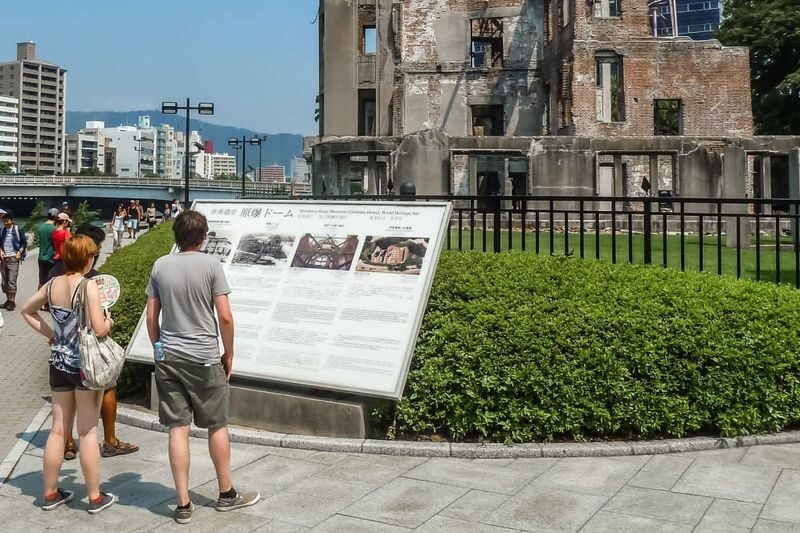
For many people, the Peace Memorial Park is the essential stop. This is a place to slow down, listen, and make room for the gravity of what happened in Hiroshima. A local guide can connect the memorials and surrounding sites to the city’s history, answering questions as they arise rather than leaving you to piece everything together alone.
The Atomic Bomb Dome is one of the city’s most recognizable sites and a powerful point of reference within the park. Seeing it in person gives the history a physical setting. Your guide can help explain its significance, while you decide how much time to spend there and at nearby memorials.
The Peace Memorial Museum is also a major draw. If you plan to visit, make it a clear priority in the itinerary rather than assuming it will fit in around other stops. Admission is not included, and the museum can take time. Pairing it with Miyajima and Hiroshima Castle in one day may be possible, but it calls for a careful schedule and a willingness to keep some stops brief.
The guided format is especially useful here because it adds context to what you are seeing. Past groups have valued guides who explained the background of sites and artifacts, and the personal format gives you room to ask questions at your own pace. Still, this is a sensitive subject, and you should tell your guide what kind of discussion would be helpful for your group.
Hiroshima Castle and the city beyond the memorials
Hiroshima Castle offers a different angle on the city, shifting attention from the events of 1945 to its earlier history. It is one of the possible stops rather than a guaranteed part of every route. If you want to include it, tell your host; the time available will depend on whether you also plan to visit the museum and Miyajima.
This is where customization can make the day more useful than a set group route. Some people want a fuller history day, while others prefer a mix of major sights and food. Your guide can also point out local places and offer practical suggestions. A past guide, Ken, helped a group finish near Hiroshima Station with an okonomiyaki meal, but meals and specific restaurant stops are not promised.
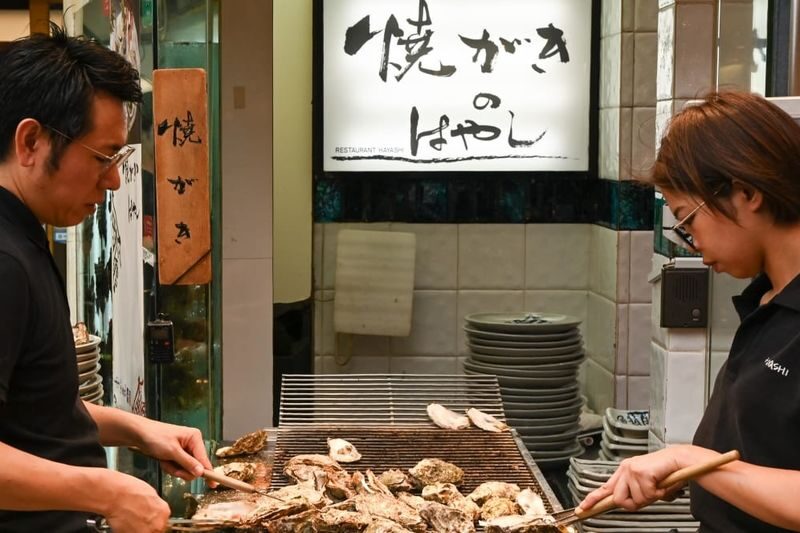
Food can be part of the day’s character, not just a pause between monuments. Hiroshima is associated with okonomiyaki, and Miyajima is known for Momiji Manju, maple-leaf-shaped cakes. The experience highlights a traditional sweet set in an old tea house as a possible treat, but ask your host whether it fits your chosen route and whether it is included. Personal food costs are not covered.
The ferry to Miyajima and its famous torii
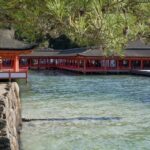
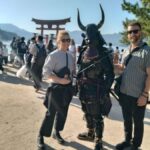
Miyajima gives the day a change of pace. A ferry ride takes you to an island known for ancient shrines and the Grand Torii Gate, which appears to float in the water at certain tides. The precise look of the gate depends on the tide, so if seeing it at low tide matters to you, mention that during planning. Timing the island visit around the tide can affect the order of your day.
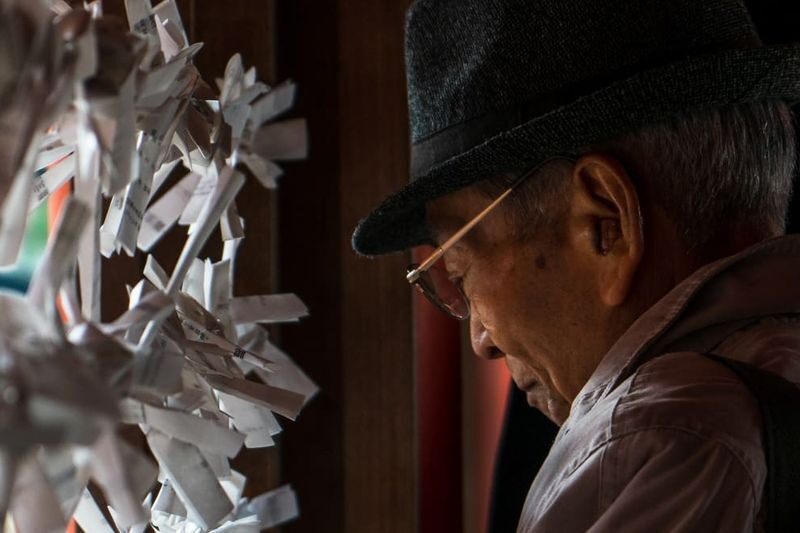
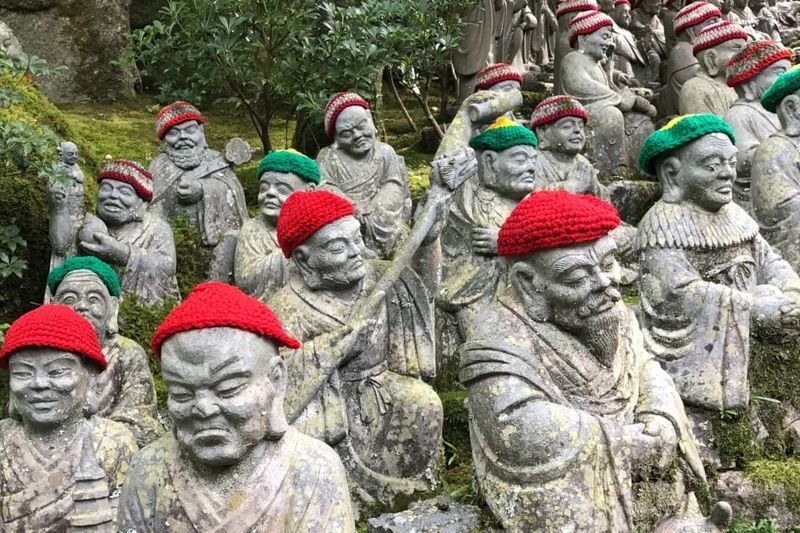
Itsukushima Shrine and the Grand Torii Gate are the headline sights, but the island itinerary can also include Daisho-in, described as Miyajima’s oldest temple. The tour highlights the temple’s connection to one of Japan’s best-known monks. These stops offer a different religious and cultural setting from the Peace Memorial Park, though fitting them all in takes time.
Miyajima can be crowded, particularly around its best-known shrine. One family noted that the shrine was busy during their visit, so you should expect to share the main sights rather than have them to yourself. Your host may help manage the route and timing, but a private guide cannot clear the crowds.
Island time is also where transport planning matters. The ferry and other transfers are not included in the tour price, and the operator says you may use public transport or local taxis. Ask your host for a realistic estimate of transfer costs before confirming the day’s plan.
What eight hours can realistically cover
The tour does not publish a fixed stop-by-stop schedule because the route is personalized. In practice, your choices shape the day: Peace Memorial Park, the Atomic Bomb Dome, the museum, Hiroshima Castle, and Miyajima are all possible, but trying to give every one equal attention may be too ambitious.
If Hiroshima’s wartime history is your main reason for booking, make the park and museum your anchors. Add the castle only if the timing works. If Miyajima is the priority, protect enough time for the ferry, shrine area, torii, and Daisho-in rather than treating the island as a quick photo stop.
A good plan has one or two must-sees and a few flexible extras. Tell your host what you would be disappointed to miss, then ask what can be fit comfortably into eight hours. That is a better approach than arriving with a long checklist and discovering that transfers have eaten the afternoon.
Weather and heat can change how enjoyable a walking day feels. One past group toured in extreme heat, and the guide used different forms of transport to limit time outdoors where possible. Rain has also affected visits without preventing the group from seeing the main sites. Wear walking shoes and dress for the day’s forecast, and be candid with your guide about the pace your group can manage.
The guide makes the private format worthwhile
The strongest reason to pay for a private tour is not simply having someone lead you between sights. It is having a local host who can help you spend your limited time wisely, explain what you are looking at, and adjust the plan when your priorities shift.
Past guides have included Kaku, Kaori, Masayo, Ken, Yuka, and Tomyuki. Their strengths, as reflected in individual experiences, include historical explanations, route planning, help with public transport, and patience with families or older relatives. These names are examples, not a promise about who will lead your tour.
There is one important caveat: private does not automatically mean the guide will follow your plan unless you agree on it. One group felt the guide’s own agenda took priority despite being clear about what they wanted to see. To avoid that, send a concise list of must-sees before the day and ask your host to confirm the route. If a stop is non-negotiable, say so plainly.
The private setup suits families and mixed-age groups particularly well because you can set a more personal pace. A past guide adapted for an older family member who found long walks, hills, and stairs difficult, while another kept a young family’s stops manageable. The tour is not wheelchair- or stroller-accessible, however, so discuss mobility needs with the host before booking.
Price, extra costs, and who gets good value
The supplied price information gives two different starting figures: a general price from US$125.55 and an eight-hour private walking package from US$145.55 for one to eight people. Check the live price for your date and selected package before booking.
The value depends on how many people share the cost and how much you value personal guidance. For a group of several people, one guide for the day can be a practical way to combine Hiroshima and Miyajima without spending your own time working out every route. For a solo visitor, the per-person cost is higher, and you will need to decide whether the added context and planning support are worth it.
Build a separate budget for admissions, transport, meals, snacks, and gratuities. None is included. Ask the host about likely transport costs once your route is set, since a day focused on central Hiroshima may have different expenses from one that includes the ferry and island transfers.
This is a strong fit if you want a guided, adjustable day and are comfortable walking and paying for transport separately. It is less suitable if you need a private car, want a fixed all-inclusive price, or prefer a self-guided visit with no schedule to coordinate.
Should you book this Hiroshima tour?
Book it if you want a local guide to help connect Hiroshima’s major historical sites with Miyajima, and if you are willing to help plan the day rather than leave every decision to the host. The best version of this tour starts with clear priorities: choose your must-sees, discuss pace and transport, and make a realistic plan for eight hours.
Think twice if your group needs wheelchair or stroller access, expects a private vehicle, or wants all admission and transport costs bundled into one price. For everyone else, the private format can be a valuable way to get context, move at your own pace, and make one full day count.
Hiroshima Full-Day Private City Exploration
“I booked the trip a week before and almost immediately after booking, I was contacted by Kaku, a local from Hiroshima and our guide. Kaku kept in t…”
FAQ
How long is the tour?
The experience lasts eight hours. The exact route and schedule can change depending on your choices, traffic, and weather.
How many people can join?
The private tour is for one to eight participants.
What is included in the price?
An English-speaking guide and an eight-hour tour with a local host are included. Attraction admission, transport, personal expenses, and tips are not included.
Can I customize the itinerary?
Yes. After booking, you receive a questionnaire about your interests and must-sees, and your host contacts you to plan a route around your preferences.
Can the tour include Miyajima?
Miyajima is a highlighted possible stop, with its shrines, Grand Torii Gate, and Daisho-in temple. Confirm your priorities and route with the host, since the day is limited to eight hours.
Is a private vehicle provided?
No. This is a private walking tour, not a private-car tour. Public transport or local taxis may be used between sites, and transport costs are extra.
Where does the tour meet?
The stated meeting point is in front of the souvenir shop on the ground floor of Hiroshima Orizuru Tower. A hotel, apartment, or other central meeting place may also be arranged with the host.
What start times are available?
The listed departure choices are 8:00 a.m., 9:00 a.m., 10:00 a.m., 11:00 a.m., 12:00 p.m., and 1:00 p.m. Available return times depend on the departure time and itinerary.
Is the tour accessible for wheelchairs and strollers?
No. The activity is not wheelchair- or stroller-accessible. Walking shoes are recommended, and you should discuss your group’s pace and needs with the host.
Can I cancel and receive a refund?
A full refund is available if you cancel at least 24 hours before the activity date, using the destination’s local time. Late arrivals and no-shows are not refunded.