Gulu Egg-Laying Cliff’s claim to fame is a geological oddity: every 30 years or so, its cliff face sheds greenish-brown stone formations called eggs. They measure about 30 to 50 centimeters across and have tree-ring-like patterns. You may not see one fall during your visit, but the cliff gives you a rare reason to look closely at the rocks.
I like two parts of this visit beyond the unusual cliff: the ticket also includes a walk through a Shui ethnic village and visits to the Shuishu Corridor and Qianshen Square. At a starting price of $4.15, that mix of geology and local culture can make for good value if you are already in the area.
The main consideration is timing. The cliff is said to shed its stone eggs only about once every 30 years, so this is a place to see the formations and hear their story, not a show with a scheduled falling-rock moment. The attraction’s gentle trails are a plus, but you will need to arrange your own transport and meals.
- What to know before you go
- The cliff and its stone eggs
- The Shui village adds a human dimension
- Walking the Shuishu Corridor
- Qianshen Square and the Millennium Sacred Turtle
- What the ticket includes, and what it does not
- Is .15 good value?
- Timing, shoes, and entry
- Who will enjoy Gulu Egg-Laying Cliff most?
- Should you book?
- FAQ
- Where is Gulu Egg-Laying Cliff?
- How much does admission cost?
- What does the admission ticket include?
- Is a sightseeing bus included with admission?
- What are the opening hours?
- How do I enter the scenic area?
- Is the ticket valid on any date?
- Can I cancel or change my booking?
- More Tours in Qiannan Buyei and Miao Autonomous
- More Tour Reviews in Qiannan Buyei and Miao Autonomous
- Not for you? Here's more nearby things to do in Qiannan Buyei and Miao Autonomous we have reviewed
What to know before you go
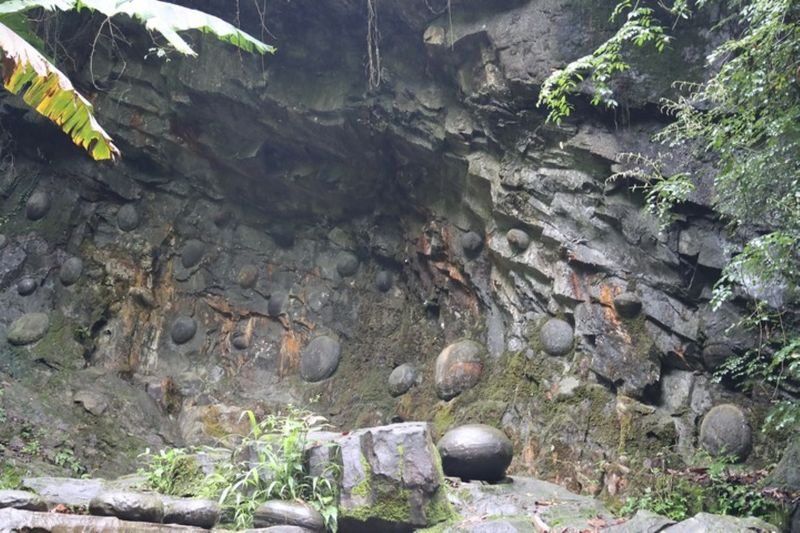
- Stone eggs are the headline, not a timed event: The formations are 30 to 50 centimeters in diameter, with tree-ring-like patterns. A fall is not something to plan your visit around.
- Your ticket covers several areas: Entry includes Chandan Cliff, the Shui ethnic village, the Shuishu Corridor, and Qianshen Square.
- The cultural stops add context: The village and corridor make this more than a short geology stop, though no guide or formal cultural activity is specified.
- Trails are described as gentle: Comfortable sports shoes are still a good idea for walking around the grounds.
- A QR code gets you through the gate: You do not need to exchange your e-voucher for a paper ticket.
- Transport is not part of the basic ticket: A sightseeing-car option is available, but round-trip transport to the site is excluded.
The cliff and its stone eggs
The first thing to understand about Gulu Egg-Laying Cliff is the name. The cliff is known for releasing smooth, egg-shaped stones from its face at intervals of roughly 30 years. The formations are described as greenish-brown, 30 to 50 centimeters wide, and marked with patterns that resemble tree rings.
That long interval is part of what makes the place intriguing, but it also sets a sensible expectation. You can see the cliff and learn about the geological feature; you should not expect to witness stones falling. The cliff’s unusual name points to a natural phenomenon, not a daily demonstration.
The site is designated a national 3A-level tourist attraction. That gives you a clue to its role: it is a regional place of interest with a defined visitor area, rather than a large, highly developed resort. The appeal rests on a curious natural feature and nearby Shui cultural sites.
If you enjoy places that give you something specific to notice, the cliff has an easy hook. Look for the rounded forms and the patterns on their surfaces. It is a more focused visit than a broad mountain or park excursion, and that can be a welcome change if you are planning a varied trip through Guizhou.
You can also read our reviews of more tours and experiences in Qiannan Buyei and Miao Autonomous.
The Shui village adds a human dimension
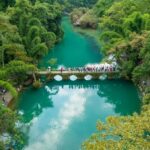
The scenic area includes an original ecological Shui ethnic cultural village. That phrase suggests a visit centered on the village setting and its cultural identity, rather than a staged attraction with a detailed performance schedule. No specific demonstrations, workshops, or guided activities are included in the information available, so treat the village as a place to see as you walk, not as a guaranteed program.
This stop matters because it shifts the visit from geology to local life and culture. The cliff may draw you in, but the village gives the outing another point of interest. If you are comparing this with a quick roadside viewpoint, the village and other included areas make the entry ticket more substantial.
The best approach is to allow yourself time to look around rather than rush from one named stop to the next. The exact visit duration is not specified, and there is no fixed sequence described. You can set your own pace within the scenic area, which is useful if you want a calm outing rather than a tightly timed tour.
Walking the Shuishu Corridor
The Shuishu Corridor is another included public-area stop. Its name makes it sound like a route or passage through the site, but the available details do not specify its length, architecture, or interpretation. I would not make it the sole reason to come. Instead, think of it as part of a broader circuit that links the area’s cultural and scenic features.
A corridor can be a useful pause between open-air stops, especially on a day when you want a little variety in the walk. But the practical value here is that it is included with the main ticket, not that a particular exhibit or experience is promised. The appeal will depend on what you notice on the day and how much you enjoy exploring the setting at an unhurried pace.
Qianshen Square and the Millennium Sacred Turtle
Qianshen Square, also called the Square of a Thousand Gods, is included in the public-area visit. The name points to a distinct cultural stop, though no further details are provided about displays or activities there. You can include it as part of your walk without budgeting for a separate admission fee.
The scenic area also names the Millennium Sacred Turtle Guarding Eggs among its attractions. That title connects the turtle with the cliff’s egg theme, but the ticket details do not spell out whether this is a sculpture, a viewpoint, or another kind of feature. Keep your expectations open and regard it as one of the site’s themed points of interest rather than a specific scheduled encounter.
Taken together, the square and turtle give the visit a local character beyond the geological story. They may especially appeal if you like seeing how a place presents its own symbols and traditions. Still, the cliff remains the clearest reason to make the trip.
What the ticket includes, and what it does not
The first-gate ticket includes entry to the scenic area and access to the public areas named above: Chandan Cliff, the Shui ethnic village, the Shuishu Corridor, and Qianshen Square. The Millennium Sacred Turtle is also identified as an attraction within the area. This is a useful bundle if you intend to see more than the cliff alone.
A separate package option adds a sightseeing bus ticket. The basic admission option does not include that, and the available details do not say how much extra it costs or how the bus operates. If you prefer to walk and the gentle trails suit you, the admission-only option may be enough. If you would rather reduce walking, check the bus option’s current terms before booking.
Round-trip transport, food, personal insurance, self-funded entertainment, and other personal expenses are excluded. That matters when you compare the modest entry price with the total cost of your outing. The ticket can be inexpensive, but you still need to plan how to reach Gulu Village in Sandu Shui Autonomous County and what you will eat during the visit.
Is $4.15 good value?
The listed starting price is $4.15 for admission, making this an affordable stop if you are already nearby. It covers several named areas, not just access to the cliff, so the cultural stops help the price make sense. The best value comes if you are interested in both the geology and the Shui village setting.
The ticket is less compelling if you expect a long guided tour, a live geological event, or transport from a nearby city. None of those is included in the basic offer. You are paying for access to the scenic area and its public spaces, then arranging the rest yourself.
The price applies equally to all ages, according to the ticket details. That makes budgeting straightforward for a mixed-age group, though it also means there is no lower child rate stated. Check the final price and any sightseeing-bus charge at booking, as the listed amount is a starting price.
Timing, shoes, and entry
The scenic area is open daily from 09:00 to 17:00, all year. Since no recommended visit duration is given, plan your schedule around the number of areas you want to see and your transport arrangements. Arriving earlier in the opening window gives you more room to walk at your own pace, but there is no stated need to reserve a particular entry time.
The trails are described as gentle, and comfortable sports shoes are recommended. That is practical advice for any walk through an outdoor scenic area, even when the route is not strenuous. No other accessibility details are provided, so do not assume that every section is suitable for wheelchairs or for visitors who need step-free access.
To enter, show the e-voucher QR code directly at the gate. The main entrance ticket office is at Sandu Gulu Dan’an Cliff Scenic Area, in Gulu Village, Fenghu Street, Sandu Shui Autonomous County, Qiannan Buyi and Miao Autonomous Prefecture, Guizhou Province. The voucher is valid only on the selected date and for one use.
Booking is available as soon as the order is confirmed, and the suggested booking window is one to three days ahead. If your plans may change, note the strict conditions: more than 24 hours before the visit, an unused and unexchanged ticket can be refunded. Within 24 hours, or after exchange, entry, or expiry, refunds and rescheduling are not offered.
Who will enjoy Gulu Egg-Laying Cliff most?
This is a good fit if you like unusual natural features and want a little cultural context alongside them. The stone eggs give the visit a memorable subject, while the village and public-area stops help fill out the outing. It also suits visitors who prefer a gentle walk to a strenuous hike.
Families and mixed-age groups may appreciate the same-price entry and easy trail description, though the lack of a stated child discount is worth noting. People interested in local ethnic culture may find the village and Shui-related spaces appealing, but anyone looking for a detailed, guided cultural program should confirm what is operating on the day.
It is not the right choice if you need a bundled day trip with transport, meals, or a guide. Nor should you go expecting to catch the cliff shedding a stone egg. Think of it as an affordable scenic-area visit built around an uncommon geological story, with a few additional places to explore.
Should you book?
Book Gulu Egg-Laying Cliff if you are near Sandu and want a low-cost outing that combines a geological curiosity with Shui cultural sites. The $4.15 starting price is reasonable for the included areas, and QR-code entry keeps the ticket process simple.
Skip it if getting there requires a major detour or if you want transport and a tightly organized tour included. The stone eggs are the draw, but the falling event is rare by design. Go for the cliff, the village, and the chance to see a distinctive local attraction, not for a spectacle on a clock.
Gulu Egg-Laying Cliff
“Very interesting attraction. Booking with Klook was convenient.”
FAQ
Where is Gulu Egg-Laying Cliff?
It is in Gulu Village, Fenghu Street, Sandu Shui Autonomous County, Qiannan Buyi and Miao Autonomous Prefecture, Guizhou Province, Mainland China.
How much does admission cost?
The admission ticket is listed from $4.15. The final price may depend on the selected package, and a separate sightseeing-bus option is available.
What does the admission ticket include?
It includes one first-gate ticket and access to public areas such as Chandan Cliff, the Shui ethnic village, the Shuishu Corridor, and Qianshen Square.
Is a sightseeing bus included with admission?
Not with the basic admission ticket. A separate package option combines admission with a sightseeing bus ticket.
What are the opening hours?
The scenic area is open daily from 09:00 to 17:00, throughout the year.
How do I enter the scenic area?
Show the e-voucher QR code at the entrance. No ticket exchange is required.
Is the ticket valid on any date?
No. It is valid only on the selected date and can be used once.
Can I cancel or change my booking?
More than 24 hours before the visit, you can request a full refund if the ticket has not been exchanged or used. Within 24 hours, or after the ticket has been exchanged, used, or expired, refunds and rescheduling are not available.