Dujiangyan is not a dam, and that is the first thing worth understanding. For more than 2,000 years, this clever system has directed river water for irrigation and flood control without blocking the river behind a conventional dam. Its channels and spillways are still at work, so you are looking at living infrastructure, not just a relic.
I like two things here: the engineering makes an ancient story tangible, and the route pairs waterworks with dramatic river scenery and historic sites. A local guide can make the difference between simply seeing a channel and understanding why it was built.
The main drawback is that this is a large, sometimes tiring site, with stairs and uphill sections. Ticket and opening-hour details can also be confusing, especially because Dujiangyan and nearby Mount Qingcheng are sold as separate options. Check your selected ticket and date before you set out.
- A working ancient system: Yuzui, Feishayan and Baopingkou show how the river is divided, managed and directed.
- A good three-to-four-hour visit: You have time for the main waterworks and several historic stops, but allow more time if you walk slowly.
- Passport-based entry: Bring the original identity document used for booking. Staff verify your details at the entrance.
- A guide adds context: A guide can explain the engineering and the stories behind Li Bing and his son.
- Not the same as Qingcheng Mountain: Choose the Dujiangyan ticket for the irrigation site. Qingcheng has its own ticket and optional paid services.
- Why Dujiangyan Is More Than a Scenic Walk
- Following the Water From Yuzui to Baopingkou
- Temples, Bridges and a Change of Pace
- How Much Time to Set Aside
- Getting There and Joining the Nearby Qingcheng Mountain
- Ticket Value and What It Does Not Cover
- Entry, Opening Hours and Seasonal Planning
- Who Will Get the Most From This Visit
- Should You Book Dujiangyan?
- FAQ
- How long should I allow for Dujiangyan?
- What does the Dujiangyan ticket include?
- Can I enter with a passport?
- Do I need to exchange my voucher for a paper ticket?
- Is Mount Qingcheng included with Dujiangyan admission?
- What are Dujiangyan’s opening hours?
- Are children admitted free?
- Are transport and ropeways included?
- The Best Of Chengdu!
- More Tickets in Chengdu
- More Tours in Chengdu
- More Tour Reviews in Chengdu
- Not for you? Here's more nearby things to do in Chengdu we have reviewed
Why Dujiangyan Is More Than a Scenic Walk
 1 / 4
 2 / 4
 3 / 4
 4 / 4
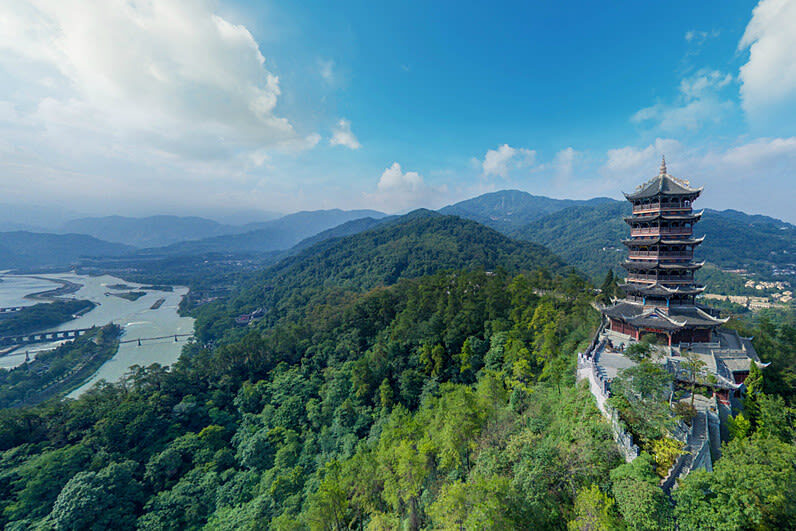
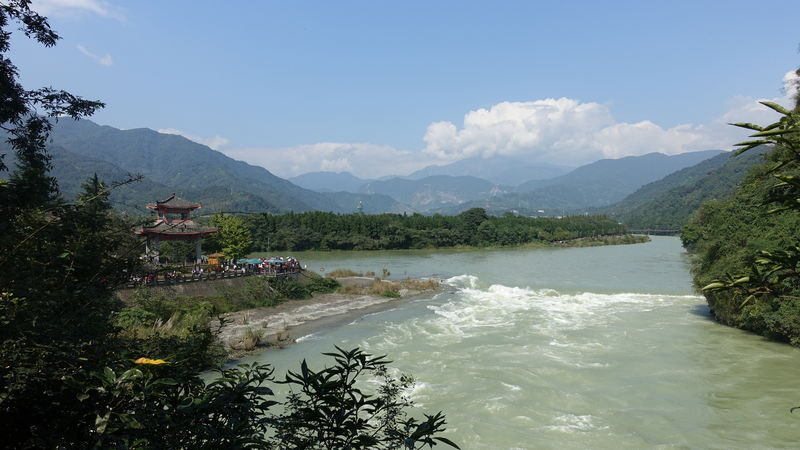
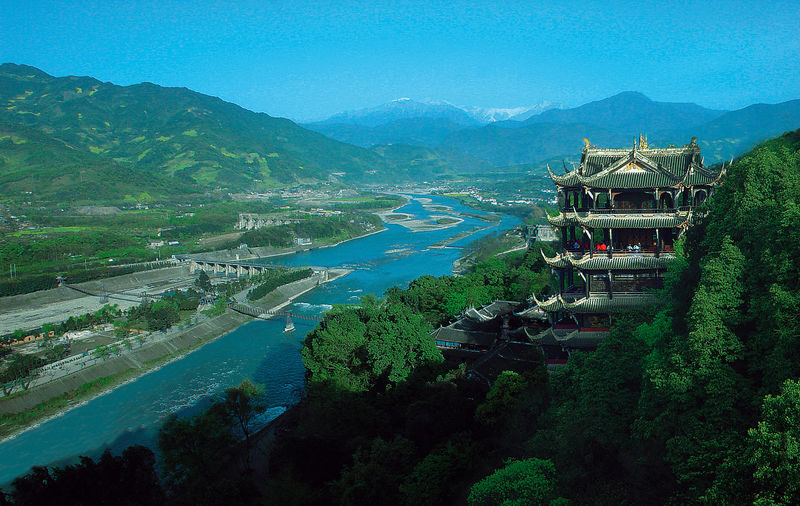
Dujiangyan’s great achievement is its design. Instead of holding back the Min River with a dam, the system guides water into channels and manages excess flow through a network of natural and built features. It has supported irrigation and helped control floods for more than two millennia, and it continues to function today.
That longevity gives the visit unusual weight. At Yuzui Diversion Dike, Feishayan Spillway and Baopingkou Water Inlet, you can see the parts of the system named in the history, rather than trying to picture them from a museum display. The river is not a backdrop. It is the force the engineers learned to work with.
The site is also a scenic area, with broad water views, steep cliffs, unusual peaks and old trees. That combination makes the visit engaging even if you are not an engineering enthusiast. Still, the engineering is the main reason to go. Without a little context, some of the structures may look like a succession of channels and bridges rather than a carefully planned whole.

👉 See our pick of the 11 Best Shopping Tours In Chengdu
Following the Water From Yuzui to Baopingkou
Yuzui, or Fish Mouth, is one of the defining features of the system. Its shape helps divide the river’s flow, directing water toward irrigation channels while allowing the river to continue along its course. It is a useful place to pause and take in the scale of the work.
Feishayan, the spillway, gives you another piece of the system to consider. It helps manage excess water and sediment. Seeing it in the context of the moving river makes the design easier to grasp: the aim was not to overpower the water, but to guide it.
Baopingkou, or the Bottle-Neck Channel, is the water inlet that carries water toward the irrigation network. These three features work together, so I recommend viewing them as parts of one plan, not as separate photo stops. A local guide can help connect the details and explain the role of Li Bing and his son, who are closely associated with the project.
Some visitors arrange to start at Gate 4 and walk downhill, a route described as easier and more rewarding for views. Another approach mentioned is to begin near Qin Yan Tower and walk down toward South Bridge and the old town of Guanxian. Route conditions and your starting point matter, so check the map on arrival and choose a direction that limits unnecessary climbing.
You can also read our reviews of more tours and experiences in Chengdu


Temples, Bridges and a Change of Pace
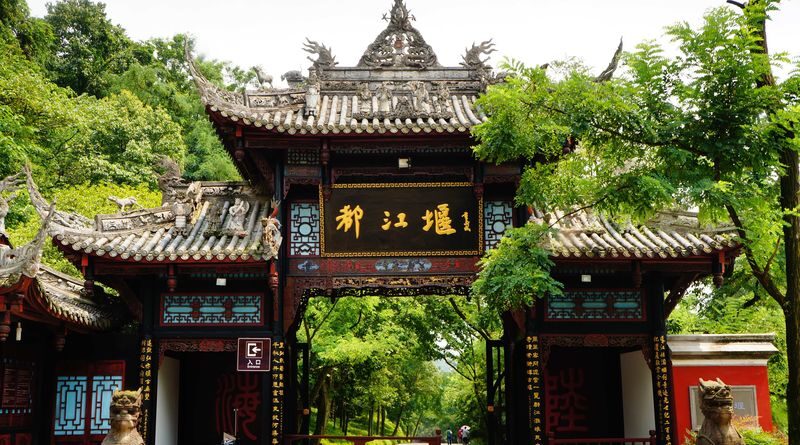
Dujiangyan is not all channels and riverbanks. Anlan Bridge and Erwang Temple add a different layer to the visit, bringing historic architecture and local tradition into the same outing. The bridge is a notable crossing within the scenic area, while the temple offers a quieter pause from the river’s force and the walk’s busier stretches.
The mix is part of the appeal. You can move from practical engineering to religious and historical sites without leaving the area, then return to the water views. If you are short on time, make the core waterworks your priority. If you have the full three to four hours, add the temple and bridge rather than rushing from one named feature to the next.
The area is broad, and the walk can be tiring. One useful option is a sightseeing bus or shuttle for part of the route, but it costs extra. The bus and ropeway prices listed for Mount Qingcheng are not Dujiangyan transport prices, so do not assume they apply to this site. Ask locally about the current Dujiangyan shuttle service and fare.
How Much Time to Set Aside
Plan on roughly three to four hours at Dujiangyan. That gives you a reasonable window for the principal waterworks, river views and selected historic sites, with room for pauses. A brisk visit may be shorter, but you will get less from it if you move through without stopping to understand what you are seeing.
The physical effort depends on your route. Visitors describe tiring climbs and sore legs, while downhill routes can make the walk easier. Wear comfortable shoes, take your time on steps and slopes, and avoid treating the whole area as a quick stop between other attractions.
For a fuller experience, hire a guide or arrange a local explanation. A guide named Mr. Li Yangdong has been associated with visits to the site and with explaining its history. His availability is not guaranteed, so confirm any guide arrangement in advance. You can also ask about local guiding at the site, but do not assume a guide is included with the admission ticket.
Getting There and Joining the Nearby Qingcheng Mountain
Dujiangyan is in Dujiangyan City, within the Chengdu area, and the scenic-area entrance is the meeting point for this admission ticket. The ticket itself is not described as including transport from Chengdu. Plan your journey separately, and allow time for the transfer as well as the visit.
The site is close to Mount Qingcheng, another World Cultural Heritage area about 68 kilometers from Chengdu. The two make a natural pairing if you have a full day or more: Dujiangyan is the place to focus on water management, while Qingcheng is known for Taoist temples and wooded mountain scenery.
Do not confuse proximity with inclusion. The ticket options include a Dujiangyan daytime admission ticket, a Mount Qingcheng Scenic Area ticket, and a combined one-day tour from Chengdu with a Chinese-speaking group. The package information also identifies a Qingcheng ticket as its selected package in one section. Before booking, check the exact package name. If your goal is the irrigation system, the option must specifically say Dujiangyan Scenic Area Ticket.
Mount Qingcheng has Front Mountain and Back Mountain areas, but the ticket details supplied specify the Front Mountain scenic area. Ropeways, sightseeing vehicles, ferries, sedan chairs and guide services are extra or otherwise excluded. Confirm the scope of your chosen ticket if you intend to visit Qingcheng as well.
Ticket Value and What It Does Not Cover
The admission price starts from $2.49, but the final amount depends on the selected package. At that starting price, entry to a site that combines major historic engineering with riverside scenery can be good value. The ticket is most worthwhile if you take time to understand the three main waterworks rather than treating the visit as a quick walk and a few photos.
Admission does not cover dining or shopping, and transport services within the scenic area may cost extra. For Mount Qingcheng, listed add-ons include Front Mountain ropeway fares of 45 yuan uphill and 35 yuan downhill, Back Mountain ropeway fares of 30 yuan uphill and 20 yuan downhill, and a Front Mountain sightseeing bus at 20 yuan for a one-way trip. These are Qingcheng prices, not a general Dujiangyan transport rate.
The ticket is valid only on the date selected. Changes require cancelling the original booking and making a new one. The stated cancellation terms allow free cancellation more than 24 hours ahead; cancellations within 24 hours carry a 30 percent service fee, while same-day cancellations, expired unused tickets and tickets already used for entry have stricter or no-refund conditions. Read the terms for your exact package before paying.


Entry, Opening Hours and Seasonal Planning
For entry, bring the original passport or other valid identity document used for booking. Staff manually verify the passport or ID number at the entrance, and the ticket instructions say you can enter directly without exchanging a paper ticket. Do not rely on a voucher alone if the booking is tied to an identity document.
The published opening times in the supplied details do not fully agree. One schedule gives April 1 to October 31 as 8:00 a.m. to 5:30 p.m., with last entry at 5:00 p.m., and November 1 to March 31 as 8:30 a.m. to 5:00 p.m., with last entry at 4:30 p.m. Another schedule gives March 2 to October 31 as 8:00 a.m. to 6:00 p.m., with last entry at 5:30 p.m., and November 1 to March 1 as 8:00 a.m. to 5:30 p.m. Because these hours conflict, check the current hours for your visit date and do not arrive near closing.
Summer calls for sun protection, while winter visits require warm clothing. Rain can affect nearby mountain access, particularly at Qingcheng, where the Back Mountain may close during periods of heavy summer rain because of mudslide concerns. If you are combining the sites, check current conditions before travelling.
Children aged 13 and older are listed under the adult ticket, while children aged 6 to 12 use the child or student ticket category. Children under 6, or under 1.2 meters tall, are admitted free with a passport. Match the ticket to the child’s age and make sure names and ID numbers are accurate.
Who Will Get the Most From This Visit
Dujiangyan suits anyone interested in old infrastructure, Chinese history or the way a place works as well as how it looks. It also makes sense for visitors who want a day outside Chengdu that combines riverside scenery with cultural sites. The central story is unusual enough to hold the attention of people who might normally skip an engineering attraction.
You will get more from the visit if you are comfortable walking and willing to pause for explanations. If steep or tiring routes are a concern, plan a shorter circuit and ask about local transport options. The ticket does not remove the need to choose your route or manage your energy.
Should You Book Dujiangyan?
I would book Dujiangyan if you want to see a historic water system that still has a practical purpose, not just an old structure preserved for display. Its strongest points are the working engineering, the dramatic river setting and the chance to connect Yuzui, Feishayan and Baopingkou into one clear story.
Book the Dujiangyan ticket specifically, bring the same original ID used for the reservation, and check the opening hours for your date. If you can spare the time, add a guide. If you are also planning Qingcheng Mountain, treat it as a separate ticket decision and check weather and access before you go.
Dujiangyan Admission Ticket Chengdu
“ease of booking on Klook: very fuss free! experience: wonderful experience at the place and really worth going”
FAQ
How long should I allow for Dujiangyan?
Plan for approximately three to four hours. The time lets you visit the main waterworks and some of the historic sites without rushing.
What does the Dujiangyan ticket include?
The Dujiangyan option is a daytime admission ticket to Dujiangyan Scenic Area. Dining, shopping and any separately charged services are not included.
Can I enter with a passport?
Yes. Bring the original valid identity document used for the booking. Staff manually verify your passport or ID number at the entrance.
Do I need to exchange my voucher for a paper ticket?
The entry instructions say to go to the main entrance with your original identity document for manual verification, with no paper-ticket exchange required. Bring the ID even if you also have a voucher.
Is Mount Qingcheng included with Dujiangyan admission?
Not automatically. Dujiangyan and Mount Qingcheng are separate ticket options, although a combined one-day tour is also listed. Check the exact package name before booking.
What are Dujiangyan’s opening hours?
The supplied opening-hour schedules conflict. Check the current hours for your selected date, including the last-entry time, before travelling.
Are children admitted free?
Children under 6 years old, or under 1.2 meters tall, are listed as free with a passport. Children aged 6 to 12 use the child or student ticket category, and ages 13 and older use the adult ticket category.
Are transport and ropeways included?
The Dujiangyan admission ticket is an entry ticket, and no transport from Chengdu is listed as included. The stated ropeway and sightseeing-bus prices apply to Mount Qingcheng options, not necessarily to Dujiangyan.