A meeting with a North Korean defector gives this DMZ trip a human focus that border viewpoints alone cannot provide. You hear one person’s account of leaving North Korea, then visit sites that show how the peninsula’s division shapes the present.
I like two things here: the live Q&A, which lets you ask questions after the short film, and the varied stops, from the Third Tunnel to the Dora Observatory. The trade-off is that the DMZ is a controlled area: military restrictions, capacity and weather can change or shorten the schedule.
- What to know before you go
- Why the defector conversation changes the experience
- From Seoul to Imjingak Peace Park
- The North Korea Experience Hall and live Q&A
- Walking the Third Infiltration Tunnel
- Looking across the border at Dora Observatory
- Unification Village and the optional suspension bridge
- What the price includes, and what it does not
- Timing, meeting points and useful preparation
- Is this DMZ tour right for you?
- FAQ
- How long does the tour take?
- Where are the pickup points?
- What time should I arrive?
- Do I need to bring a passport?
- What does the tour include?
- Is the suspension bridge included?
- Is the tour available in Chinese or Japanese?
- What should I wear for the Third Tunnel?
- Can the tour schedule change?
- The Best Of Seoul!
- More Tours in Seoul
- More Tour Reviews in Seoul
- Not for you? Here's more nearby things to do in Seoul we have reviewed
What to know before you go
 1 / 10
 2 / 10
 3 / 10
 4 / 10
 5 / 10
 6 / 10
 7 / 10
 8 / 10
 9 / 10
 10 / 10
- The defector meeting is the tour’s defining feature: A short documentary at the North Korea Experience Hall leads into a live Q&A.
- The Third Tunnel takes effort: Expect a steep walk, and wear flat, supportive shoes.
- Dora Observatory offers a view across the border: On a clear day, telescopes may help you make out people and landmarks in North Korea.
- You visit several sites in one half-day outing: Stops include Imjingak Peace Park, Unification Village and, on some packages, a suspension bridge.
- Tour guides get strong praise for clear, lively explanations: Guides named in recent feedback include AJ, Katie, Erica, Lily and Chloe, but you cannot request a particular guide.
- Bring your passport and arrive early: A late arrival means missing the bus, with no refund or rescheduling.

👉 See our pick of the 25 Best Guided Tours In Seoul
Why the defector conversation changes the experience
A visit to the DMZ can easily become a sequence of checkpoints, viewpoints and historical facts. The defector meeting gives the subject a personal scale. Instead of thinking only about borders and military history, you hear from someone who experienced life in North Korea and made the dangerous choice to leave.
At the North Korea Experience Hall, you watch a documentary of about 10 minutes before the live Q&A. It is a compact introduction, not a long lecture, so the chance to ask questions matters. If you have a question you care about, think it through ahead of time. The conversation may be one of the most memorable parts of the day.
The guides also help connect the stops to the larger story. AJ, Katie, Erica, Lily and Chloe are among the names praised for clear explanations, good pacing and an upbeat manner. You will not be guaranteed a particular guide, but the tour offers English, Chinese or Japanese guiding, depending on the booking and minimum demand.
One language detail is worth planning for. A Chinese-speaking participant reported that the defector segment did not have Chinese interpretation. If you book a non-English tour, check what language support will be available for this portion, or have a translation app ready.
You can also read our reviews of more tours and experiences in Seoul.
From Seoul to Imjingak Peace Park
The tour starts at either Myeongdong Subway Station Exit 9 or Hongik University Station Exit 3. Morning departures are offered at 7:25 or 9:25 from Myeongdong, and 8:00 or 10:00 from Hongik University. The earlier times are paired with the earlier tour, so follow the time on your booking rather than choosing a stop and assuming both schedules match.
The drive to the DMZ area takes about an hour, though traffic can affect the schedule. Your guide uses the bus ride to introduce Korean history and the division between North and South. A live guide can make a difference here: you can ask questions as the context becomes clearer, instead of relying only on signs at each stop.
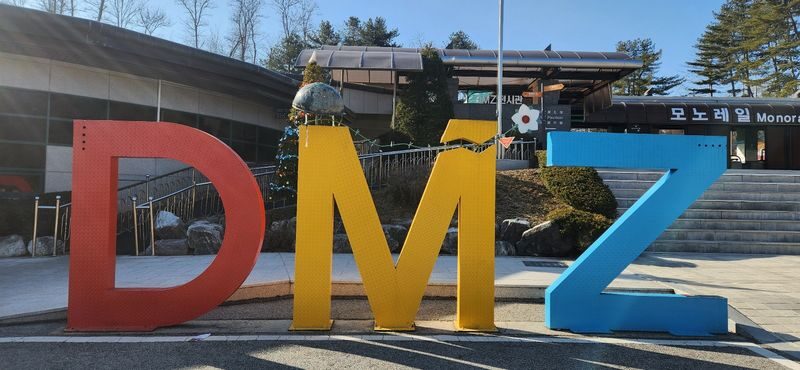
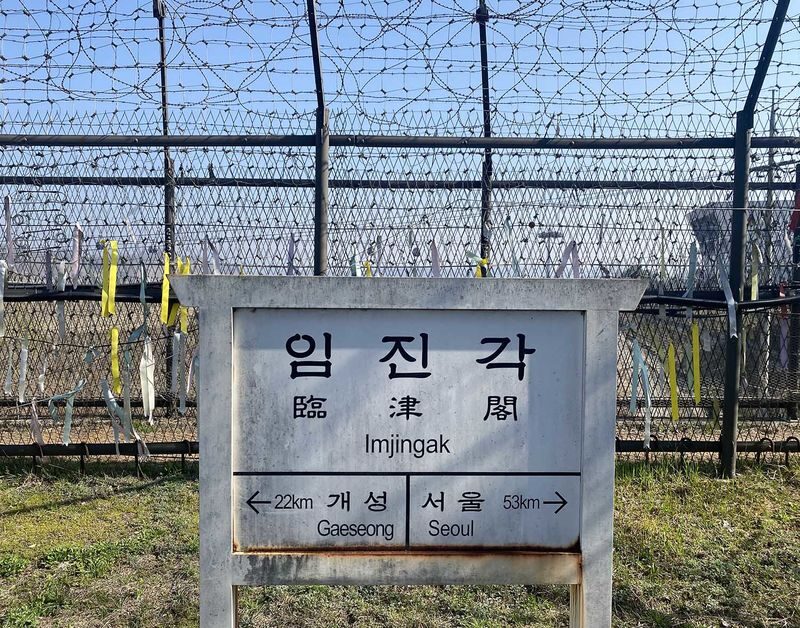
Imjingak Peace Park is a useful first stop for getting your bearings. It is part of the DMZ-area visit and gives the tour a place to begin before moving on to the more restricted sites. As with the rest of the day, the order and time at each stop can change if military rules, capacity or weather require it.
The North Korea Experience Hall and live Q&A
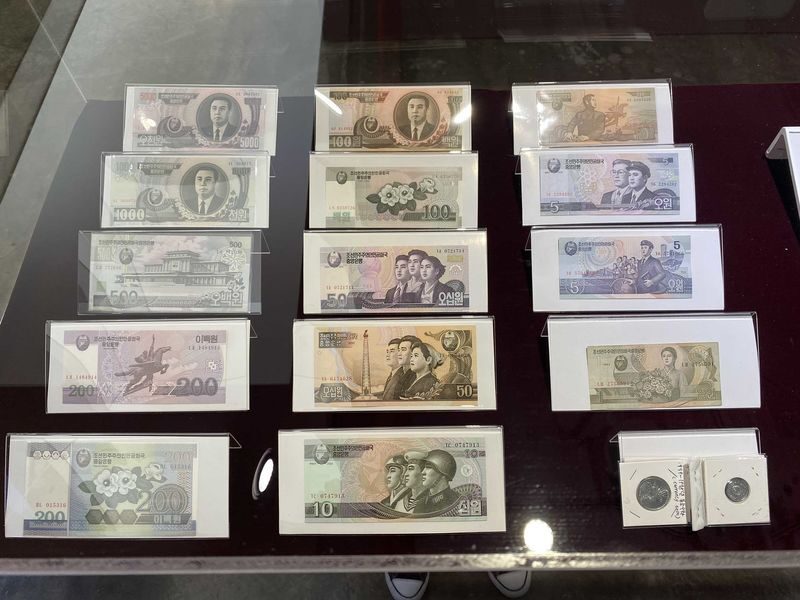
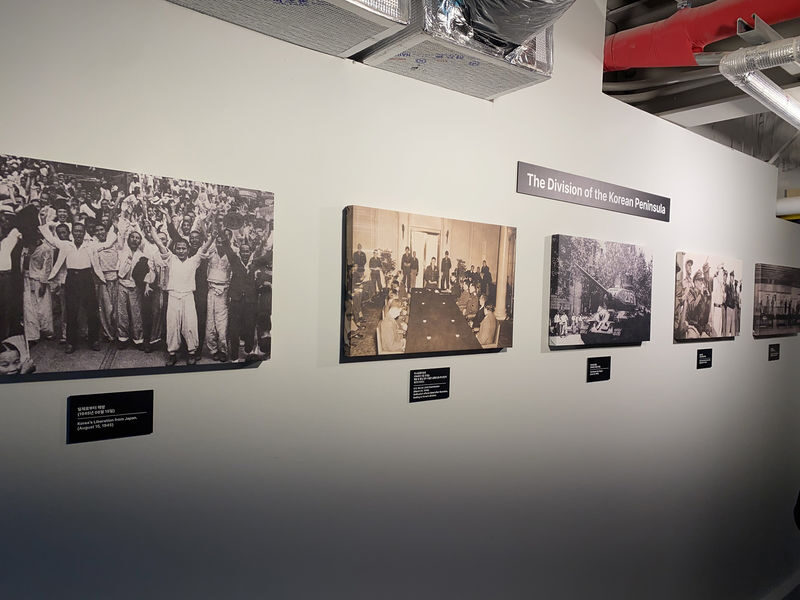
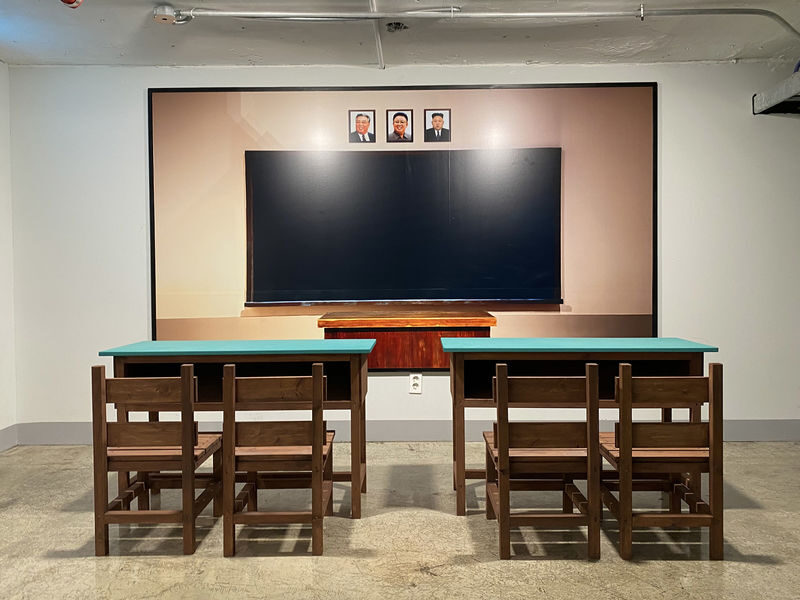
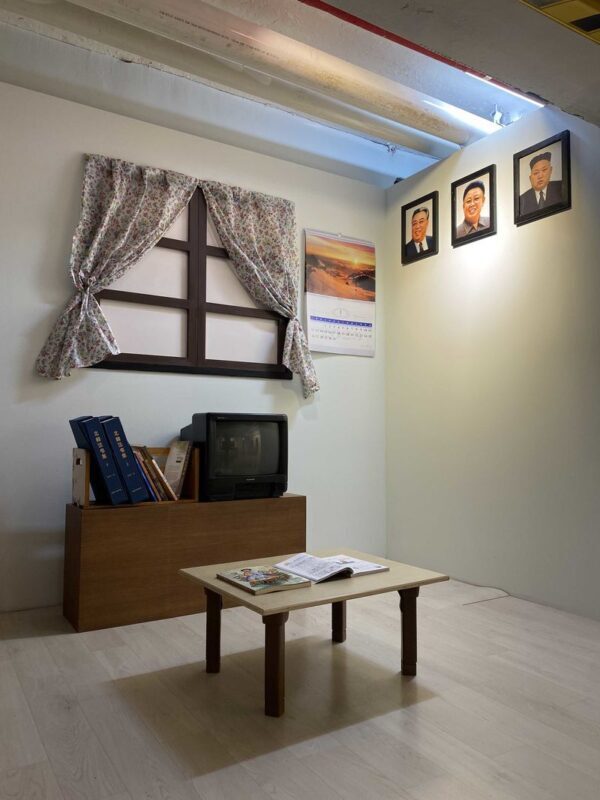
The Experience Hall combines a short film with the defector meeting. The documentary offers a brief introduction, while the Q&A gives you a chance to hear more directly from someone who left North Korea. That contrast is valuable: the film provides background, and the conversation can make broad political facts feel less abstract.
Approach the session with curiosity and respect. A defector is sharing a personal story, not serving as a stand-in for every person in North Korea. You may not get to ask every question, especially if time is limited, so focus on what you most want to understand.
This stop is the strongest reason to choose this tour over a basic DMZ outing. The border sites show where division is visible; the conversation adds a personal perspective on what that division can mean in a person’s life.
Walking the Third Infiltration Tunnel
The Third Infiltration Tunnel is one of the day’s most physical stops. It was dug beneath the border by North Korea, and the tour takes you into the tunnel area as part of the guided visit. Seeing a tunnel associated with an attempted incursion makes the military reality of the DMZ more tangible than a distant view can.
Plan for a steep uphill and downhill walk. Wear sneakers or other flat, sturdy shoes; one visitor who wore low heels found the slopes hard on their feet. The route may also feel awkward if you are tall, so consider your comfort before choosing this tour. The tunnel is not simply a quick photo stop, and your energy level can shape how much you enjoy it.
The site is subject to capacity and security restrictions, as are other parts of the DMZ. A change in access does not necessarily mean the whole trip is cancelled, but the order or selection of stops can shift. Keep your expectations flexible.
Looking across the border at Dora Observatory
At Dora Observatory, you look toward North Korea from a strategic viewing point. Telescopes can make the view more rewarding: in clear weather, visitors have reported spotting people and soldiers, as well as statues of Kim Il-sung and Kim Jong-il. What you can see depends on visibility, so this is not a guaranteed close-up of daily life across the border.
The observatory is a place where the guide’s explanations can sharpen the experience. A distant landscape may seem hard to read at first; a guide can point out what you are looking at and explain why the location matters. Still, bring patience. Weather and visibility have the final say, and you may see less than you hoped.


Unification Village and the optional suspension bridge
Unification Village is included among the tour’s highlighted stops. It offers another part of the DMZ-area visit, though the time available can vary with the day’s schedule. Souvenir shops are found at several stops, including the village, Imjingak, the tunnel and the observatory. The selection is often similar, so you may not need to shop at every stop.
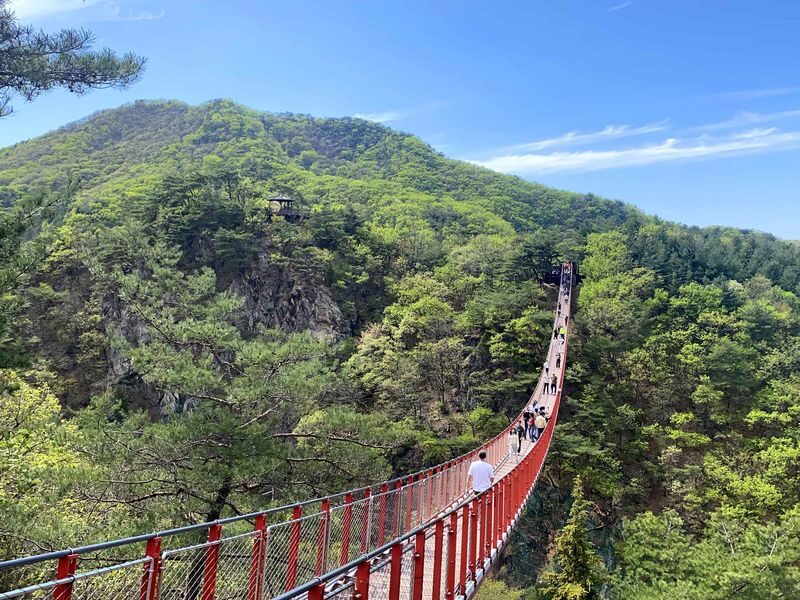
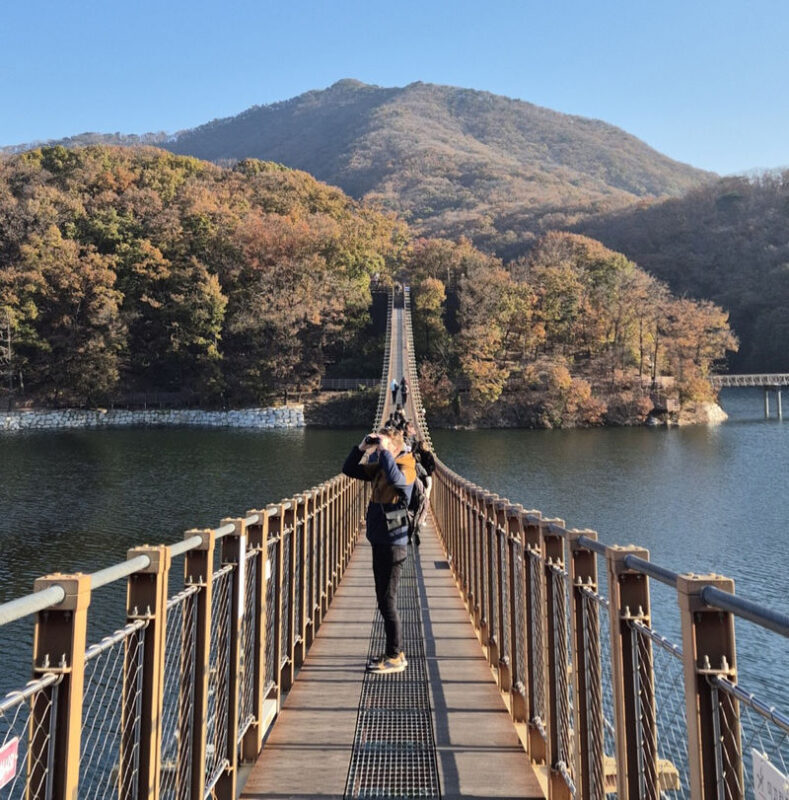
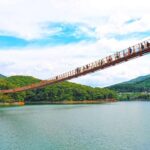
You can also select a package that includes a suspension bridge. The options listed are the Red Suspension Bridge and Majang Lake Suspension Bridge, each priced from US$74.35, compared with the tour-only package. The bridge is an add-on rather than the central reason to book: choose it if you want a scenic extra, but choose the basic tour if your main interest is the defector meeting and DMZ sites.
The suspension bridge schedule may differ from the tour without a bridge. The tour with a bridge has an early Myeongdong pickup listed at 7:30, while Hongik University pickup is listed at 8:00. Confirm the exact option and departure time on your booking.
What the price includes, and what it does not
The tour includes round-trip transport from Seoul, admission to attractions and an English-, Chinese- or Japanese-speaking guide. Meals, drinks, personal expenses, tips, insurance and hotel drop-off are not included. You return to Seoul, with the listed return point at City Hall Station.
The advertised prices vary by package and displayed fare. The tour-only option is shown from US$54.39 in the package details, while the summary price begins at US$62.55. Bridge packages start at US$74.35. Check the price for your date and selected option before paying rather than assuming the lowest figure applies to every departure.
For the cost, the main value is convenience and context. You do not have to arrange separate transport between the sites, and the guide helps explain what you are seeing. A private or self-directed visit would not offer the same built-in defector Q&A, and the DMZ’s controlled access makes an organized tour a practical way to visit.
Timing, meeting points and useful preparation
Although one tour detail gives a duration of one hour, the schedule shows a half-day outing, with returns to Seoul listed at 14:00 or 16:00 depending on departure and itinerary. Plan your day around the longer half-day timing, not a one-hour visit. Traffic, weather and military restrictions can also change the schedule.
Arrive at your selected meeting point five minutes early. The operator says late arrivals and no-shows are not refundable or reschedulable, and missing the bus counts as a no-show. Bring your passport; a military ID or Alien Registration Card is also accepted. Your passport number is used to obtain the entry permit. Korean passport holders must provide their citizen registration number.
Children aged 0 to 1 can join free. Chinese and Japanese tours require at least three participants; if that minimum is not met, the tour runs in English. The voucher is valid only for its selected date and time, and you must present your mobile voucher and passport.
Is this DMZ tour right for you?
I’d choose this tour if you want more than a quick look at the border. The defector meeting, the guided explanations and the visits to the Third Tunnel and Dora Observatory make a strong combination for anyone curious about Korean history and the present-day relationship between North and South Korea.
It is also a good fit if you want the logistics handled for you and have a half day to spare. Choose the bridge package only if that extra stop appeals to you, and be ready to walk at the tunnel. If you need a tightly fixed schedule, have difficulty with steep slopes, or mainly want a scenic outing, the tour’s changing access and history-heavy focus may not suit you as well.
DMZ Tour & Exclusive North Korean Defector Meet-Up from Seoul
“We had a really nice tour with an awesome guide named Camila. We also learned a lot about the history of Korea in general.”
FAQ
How long does the tour take?
The schedule gives a one-hour drive from Seoul and lists return times of 14:00 or 16:00, depending on your departure and itinerary. Plan for a half-day outing. The one-hour duration shown elsewhere does not match the full schedule.
Where are the pickup points?
You can depart from Myeongdong Subway Station Exit 9 or Hongik University Station Exit 3. The available time depends on the tour you book.
What time should I arrive?
Be at your selected meeting point five minutes before departure. Late arrivals and no-shows are not refundable or reschedulable.
Do I need to bring a passport?
Yes. Bring a valid passport, which is used to obtain the permit for entry. A military ID or Alien Registration Card is also accepted. Korean passport holders must provide their citizen registration number.
What does the tour include?
The price includes admission to attractions, round-trip transfers and an English-, Chinese- or Japanese-speaking guide. Meals, drinks, personal expenses, tips, insurance and hotel drop-off are not included.
Is the suspension bridge included?
Only if you select a bridge package. Options include the Red Suspension Bridge and Majang Lake Suspension Bridge. The tour-only package does not include a suspension bridge.
Is the tour available in Chinese or Japanese?
Chinese- and Japanese-speaking guides are offered, but each language tour needs at least three participants. If the minimum is not met, the tour runs in English.
What should I wear for the Third Tunnel?
Wear flat, supportive shoes. The walk includes steep uphill and downhill sections, and visitors in low heels have found it uncomfortable.
Can the tour schedule change?
Yes. Traffic and weather can affect the schedule, and some attractions may be skipped because of capacity or weather conditions. Military restrictions can also affect access to DMZ sites.