Djerba’s appeal lies in how much culture fits into a small area: a pottery village, a street-art quarter, a historic synagogue and mosque, and the market lanes of Houmt Souk. This four-hour tour gives you a practical route through those contrasts, with pickup in Midoun and a guide to connect the stops.
I like that the tour pairs hands-on craft in Guellala with the murals of Djerbahood, and that guides such as Houssem and Arbi bring the island’s history to life with clear explanations and personal stories. I also like the short format: you can see several key places without committing a full day.
The trade-off is time. Four hours is enough for an introduction, not a slow exploration of every site, and the route includes several stops. If you want long stretches in the souk or time to study the murals, you may need to return on your own.
At a glance
- Guellala pottery: See traditional pottery and, depending on the stop, watch a potter at work.
- Djerbahood murals: Walk through an open-air collection of colorful street art.
- Houmt Souk: Browse the island capital’s market lanes, with some time for shopping.
- Sacred sites: The tour description includes the Ghriba Synagogue and Sidi Yeti Mosque.
- Guide-led context: Arabic, German, French and English are listed; guides named in recent experiences include Houssem, Arbi and Youssef.
- A compact outing: Four hours, pickup in Midoun, and a listed price of $21 per person.
- What four hours can show you
- Houmt Souk: market lanes and local crafts
- Djerbahood: murals in an open-air museum
- Guellala: pottery and the work behind it
- Ghriba Synagogue and Sidi Yeti Mosque
- The guide can make a short tour feel personal
- Pickup, group size and the price
- Who should book this Djerba tour?
- FAQ
- How long is the Djerba Island Tour?
- Where does the tour pick up?
- Which places are included?
- What languages are available?
- How much does the tour cost?
- Is the tour wheelchair accessible?
- Is pottery part of the tour?
- Can I cancel for a refund?
- Do I have to pay when I reserve?
- More Tours in Midoun
- More Tour Reviews in Midoun
- Not for you? Here's more nearby things to do in Midoun we have reviewed
What four hours can show you
 1 / 8
 2 / 8
 3 / 8
 4 / 8
 5 / 8
 6 / 8
 7 / 8
 8 / 8
This is a sampler of Djerba rather than a deep visit to any one place. The planned sequence begins in Midoun, then takes you to Houmt Souk, Djerbahood and Guellala before returning to Midoun. The itinerary assigns about an hour to each named stop, though the exact time at each place can depend on the day’s route and the other sites included.
The tour description also names the Ghriba Synagogue and Sidi Yeti Mosque. Those visits add a religious and architectural dimension to the day, alongside the market, murals and pottery. With several places packed into a short outing, expect some travel between stops and a brisk pace.
That balance is the point. You get a broad first impression of Djerba’s crafts, public art and daily life, with a guide to explain what you are seeing. If your stay is brief, or you want help finding places that can be awkward to connect independently, this format makes sense.
You can check availability for your dates here:Houmt Souk: market lanes and local crafts
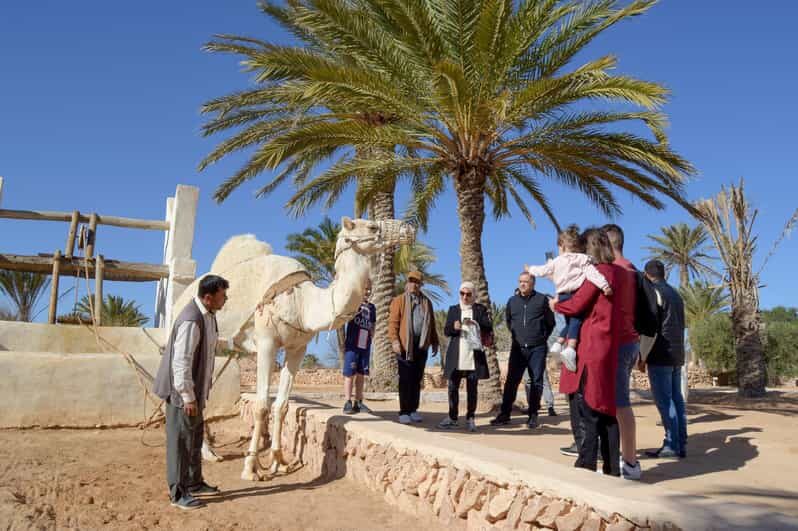
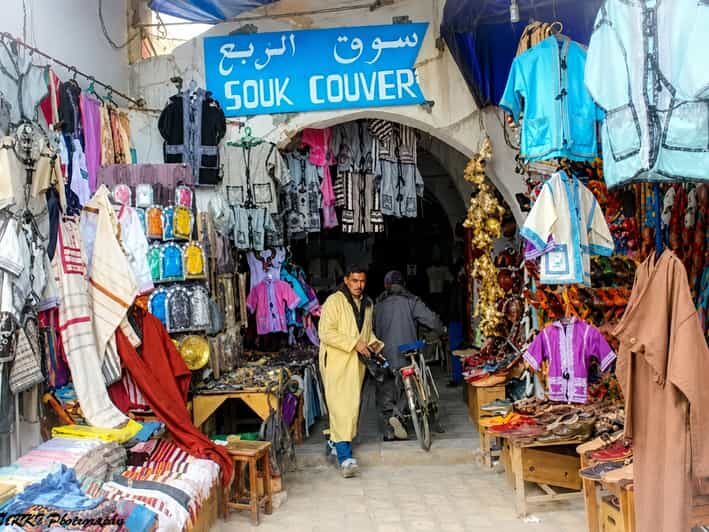
Houmt Souk is the island’s capital and the natural place to encounter its commercial side. The tour gives you a guided visit through the souk’s alleyways, where you can browse handicrafts and look for local specialties. A guide can help give the market context, so it feels like more than a sequence of shop windows.
You should still allow for the fact that a guided stop is not the same as an open-ended shopping afternoon. The itinerary gives Houmt Souk about an hour, and the tour has several other destinations to cover. If you want to bargain at a leisurely pace, compare prices, or stop for a meal, treat this visit as a first look and plan to come back.
The souk is also the stop where it pays to stay alert to the meeting point and time. One visitor briefly lost track of the group and got separated, but contact with the tour team helped sort it out. Keep the guide’s contact details handy, and make sure you know where and when to meet before wandering off.
You can also read our reviews of more tours and experiences in Midoun.


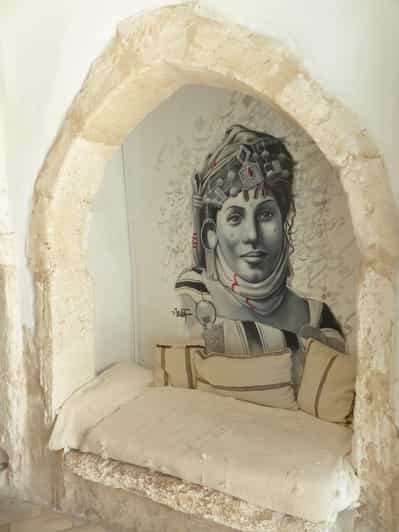
Djerbahood: murals in an open-air museum
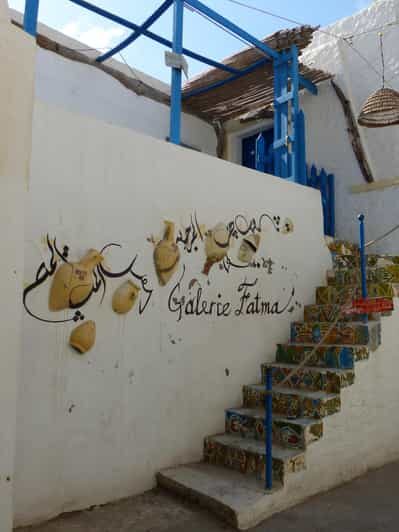
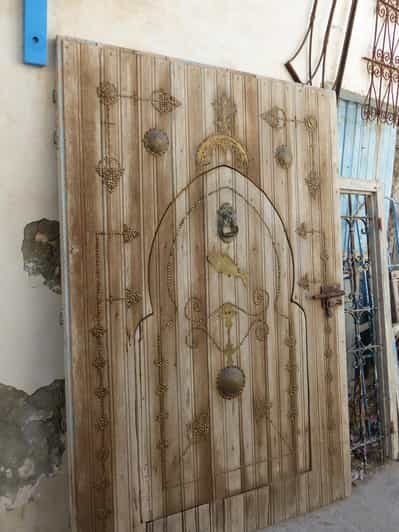
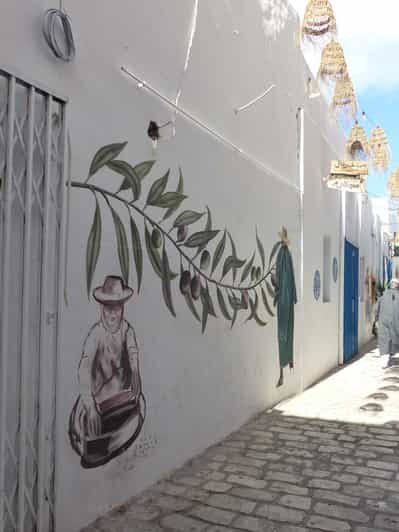
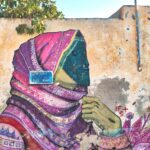
Djerbahood turns a village setting into an open-air display of colorful murals. The artwork is the main draw, but a guide can add useful context about the artists and the project, and point out details you might otherwise pass without noticing. The paintings also make this one of the tour’s more photogenic stops.
An hour here can be a good introduction, though it may not satisfy anyone who likes to inspect every work at length. The route is short and includes other major stops, so the guide’s pace matters. Some visitors have wished for a cooling break here, particularly in hot weather; refreshments are not listed as an included feature.
Bring your own sense of pace. Take photos, but stay aware of the group and the return point, especially if you pause to frame a shot. One guide, Arbi, was praised for helping with photographs, but you should see that as a welcome possibility rather than a promised service.
Guellala: pottery and the work behind it
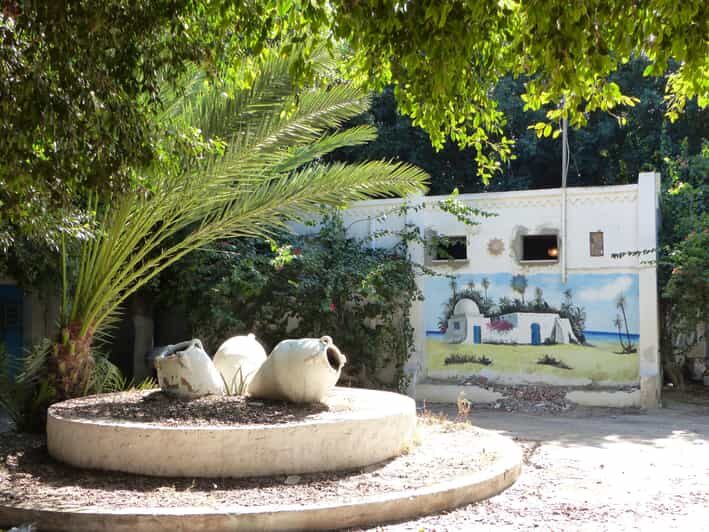
Guellala is known for traditional pottery, and this stop gives the tour a closer look at a craft tied to Djerbian heritage. You can see pottery and, depending on the visit, watch an artisan at work. The tour also includes an exhibition of traditional folk arts and displays of objects and scenes connected to local life, celebrations, customs, myths and pottery.
That mix is useful because it puts the craft in a wider cultural frame. Rather than seeing ceramics only as souvenirs, you get a sense of their place in island traditions. A pottery demonstration has been part of some visits, with a local potter named Walid mentioned by one guide’s party.
There is usually an opportunity to buy a souvenir, but shopping is optional. If you are interested in the making process, use your time to watch and ask questions before browsing the finished pieces. The stop is particularly worthwhile for anyone who enjoys seeing how local skills are practiced, not just displayed.
Ghriba Synagogue and Sidi Yeti Mosque
The Ghriba Synagogue is described as one of the oldest in Africa, making it a significant stop for understanding Djerba’s Jewish heritage. The tour’s explanation can help place the building in the island’s broader religious and cultural history. As with any sacred site, follow the guide’s directions and be respectful of the setting.
The seafront Sidi Yeti Mosque offers a different perspective. Its coastal location makes it a distinctive stop, and its inclusion helps show that Djerba’s identity is not captured by one monument or tradition alone. Together, the synagogue and mosque add welcome depth to a route that could otherwise focus only on shopping and scenery.
The exact amount of time at each religious site is not specified. With a four-hour schedule and several stops, expect a visit rather than an extended architectural study. If one of these places is a particular priority, ask the operator how it fits into the planned route when you check availability.
More Great Tours NearbyThe guide can make a short tour feel personal
The strongest part of this experience is the guide-led interpretation. Guides named in recent outings include Houssem, Arbi, Youssef, Yoyo, Adam and Eddie. Names and assignments can change, but the pattern described is consistent: guides explain local history, answer questions and use anecdotes to make the stops easier to understand.
Houssem is often singled out for his friendly manner and clear explanations, while Arbi is remembered for looking after the group and helping with photos. One guide even shared bread and cold water during an outing. Those gestures are not part of the formal inclusions, so don’t count on them, but they show how a good guide can make a compact itinerary feel less like a checklist.
Arabic, German, French and English are listed as tour languages. One German-speaking visitor was guided with help from a translation app, which worked well for that group, but it is sensible to confirm your preferred language when booking. If language is important to your enjoyment, ask what can be arranged rather than assuming every departure will have a guide in your first choice.


Pickup, group size and the $21 price
Pickup is included, with Midoun shown as the pickup and return point. The activity information says to check availability for pickup details, so confirm your own location and starting time before booking. The tour lasts four hours, and available start times depend on the date.
The group size can vary. Some outings have been very small, including a family of four or a group of three, while another party included 12 friends. A smaller group can make it easier to ask questions and move at a flexible pace, but no fixed maximum group size is provided.
At $21 per person, the value is strongest if you want transport, a guide and several distinct stops in one outing. You are paying for an organized introduction to Djerba, not an all-day private tour or guaranteed shopping time. For a first visit, the price is reasonable for the range covered; for a return visit focused on just one site, you may prefer to go independently and spend longer there.
Free cancellation is available up to 24 hours in advance for a full refund, and the reserve-now, pay-later option lets you hold a place without paying immediately. The tour is listed as wheelchair accessible, though it is worth checking the practical details for your chosen route if you have specific mobility needs.
Who should book this Djerba tour?
I’d choose this outing if you have half a day, want an overview of Djerba, and value a guide who can explain local customs and history as you go. It suits first-time visitors, curious families, and anyone who would rather have transport arranged than piece together the stops alone. The combination of art, pottery, sacred sites and market lanes gives you a useful cross-section of the island.
It is less suitable if you want a slow, unstructured day or long visits at each stop. Houmt Souk and Djerbahood deserve extra time if shopping or photography is your main interest, and the tour’s four-hour limit means you will need to choose what to linger over.
For a straightforward introduction at $21, I’d book it, especially if you can confirm pickup and your preferred language in advance. Go in expecting a well-paced overview, not an exhaustive tour, and use the guide’s local knowledge to decide which places you want to revisit later.
Djerba Island Tour :Visit the best places in Djerba 4h
FAQ
How long is the Djerba Island Tour?
The tour lasts four hours, including the visits and return to Midoun.
Where does the tour pick up?
Midoun is listed as the pickup and return location. Check availability for details about pickup arrangements.
Which places are included?
The planned stops are Houmt Souk, Djerbahood and Guellala. The tour description also includes the Ghriba Synagogue and Sidi Yeti Mosque.
What languages are available?
The listed guide languages are Arabic, German, French and English. Confirm your preferred language when checking availability.
How much does the tour cost?
The listed price is $21 per person.
Is the tour wheelchair accessible?
Yes, the activity is listed as wheelchair accessible. Check the practical details for your specific needs before booking.
Is pottery part of the tour?
Yes. The tour visits Guellala, known for traditional pottery, and includes an exhibition related to pottery and Djerbian heritage. A pottery demonstration may be part of the visit.
Can I cancel for a refund?
You can cancel up to 24 hours in advance for a full refund.
Do I have to pay when I reserve?
No. The reserve-now, pay-later option allows you to book without paying immediately.
You can check availability for your dates here: