Chiang Rai’s hills are best explored on foot, and this day trip trades city streets for bamboo forest, village paths and a waterfall. The main event is a trek of roughly 7 to 10 kilometers, with steep slopes and uneven ground, led by a local guide who may point out useful plants and fashion a bamboo cup as you walk.
I like two things in particular: the chance to help prepare lunch in a Lisu village, and the guides’ habit of turning the walk into a lesson in local plants, bamboo and mountain life. One important caveat: this is a strenuous hike, and rain can make the narrow trails slick and muddy. It is not a casual stroll between sightseeing stops.
- The day at a glance
- A full day in the Chiang Rai hills
- Into bamboo forest and mountain paths
- Lunch cooked with bamboo in a Lisu village
- Chinese village, tea fields and waterfall
- Akha and Lahu villages, with respect for daily life
- Hot springs: plan for a flexible stop
- What the price covers, and what it does not
- Who should book this trek
- Practical details before you go
- Should you book it?
- FAQ
- How long does the tour last?
- How much walking should I expect?
- Is the hike difficult?
- What should I wear and bring?
- Is lunch included?
- Can I help cook lunch?
- Is the hot spring visit guaranteed?
- Are transfers included?
- How many people are in the group?
- Is the tour wheelchair or stroller accessible?
- The Best Of Chiang Rai!
- More Tours in Chiang Rai
- More Tour Reviews in Chiang Rai
- Not for you? Here's more nearby things to do in Chiang Rai we have reviewed
The day at a glance
- A proper mountain trek: Expect several hours on uneven trails, with some steep climbs and descents. The exact distance and difficulty can vary with the route and conditions.
- Lunch in a Lisu village: Help prepare a meal cooked with bamboo and served at a village hut, often with a view over the surrounding hills.
- A guide who brings the forest to life: Guides such as But, Baht and Wat have shared plant uses, offered wild fruit and herbs to taste, and made small bamboo keepsakes.
- Tea fields and village stops: The route passes Chinese village areas, tea plantations, a waterfall, and Akha and Lahu villages. These are living communities, not staged cultural shows.
- A hot spring stop, with a caveat: A hot spring visit is part of the plan, but access and available facilities can vary. Some departures have had only a foot bath or missed the stop.
- A small shared group: The join-in tour is for 2 to 12 people, with round-trip transfers from within Chiang Rai city’s pickup zone.

👉 See our pick of the 3 Best Workshops And Classes In Chiang Rai
A full day in the Chiang Rai hills
The tour starts around 9:00 am and returns at about 5:00 pm, though shared pickup times can shift earlier or later. The operator confirms your pickup time in advance, and you meet a guide holding or wearing a company logo sign.
From there, the day is a mix of driving and walking, with the trek taking up a large share of the schedule. Some descriptions of the route put the walk at around 7 kilometers, while others have recorded closer to 10 kilometers. Plan for a substantial hike, often around four hours of walking in two stretches, rather than relying on a precise distance.
That distinction matters. The itinerary lists several villages and sights, but the walking itself is the core of the day. If your group moves slowly, the guide may adjust the schedule or use a pickup truck to get closer to a later stop. That flexibility can help, but it also means you may spend less time at the waterfall or hot spring.
You can also read our reviews of more tours and experiences in Chiang Rai.


Into bamboo forest and mountain paths
The morning walk is where you feel the tour’s character most clearly. The trail runs through mountain forest and bamboo, with slopes, narrow paths, and uneven footing. In dry weather, it is still a workout. After rain, mud and slick ground can make the descents especially demanding.
This is not a route I would choose in sandals or smooth-soled trainers. Wear trail shoes or hiking shoes with good grip, long trousers, and clothes you are comfortable getting sweaty or dirty. A trekking pole can help on steep downhills; guides have provided bamboo poles on some outings, but you should not assume one will be available.
The guide can make the walk feel less like a march from point to point. But, Baht and Wat are among the names associated with tours here, and guides have been praised for explaining plants, spotting edible fruit and herbs, and showing how different types of bamboo can be used. Some have carved cups or rings as small souvenirs, sometimes marking them with names. The guide assigned to your date may differ, so treat those personal touches as a possibility rather than a guarantee.
Bring mosquito repellent, too. Insects can be persistent, especially when the group stops moving in the forest. Carry water and take breaks when you need them. The pace and level of support can vary, and the trail can be difficult for anyone with limited mobility, knee trouble or a medical condition that makes strenuous activity risky.
Lunch cooked with bamboo in a Lisu village
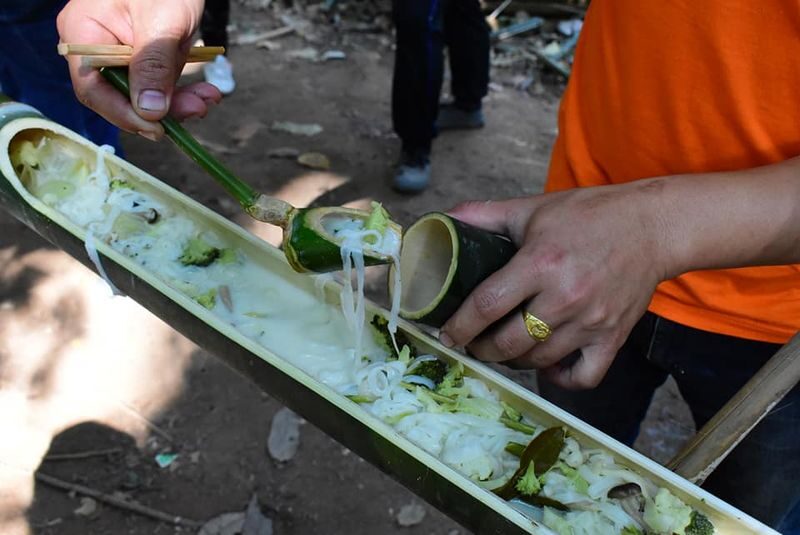
The midday stop is a welcome pause and a real part of the experience, not just a quick meal before the next attraction. At a Lisu village, the group has the chance to help prepare lunch, with cooking done by bamboo and a meal served at a village hut. The setting can look out over the valley, giving you time to rest and take in the hills.
The sample menu includes noodles, grilled chicken, boiled rice, steamed egg and grilled corn. The meal is often described as generous and delicious, and some outings have included dishes made with ingredients gathered along the walk. Special dietary needs, including vegetarian meals, allergies and gluten intolerance, can be accommodated, but tell the operator in advance.
The description promises handmade bamboo eating utensils, while experiences can vary in how much cooking guests actually do. You may get to help with preparation, or find that local cooks have done most of the work. Either way, this is the day’s best chance to see how food and local materials come together in a village setting.
Keep an eye on the clock here. A long lunch is pleasant after a tough morning, but delays can squeeze the afternoon stops. If there is one place you particularly want time for, tell your guide early and ask how the day’s timing is shaping up.
Chinese village, tea fields and waterfall
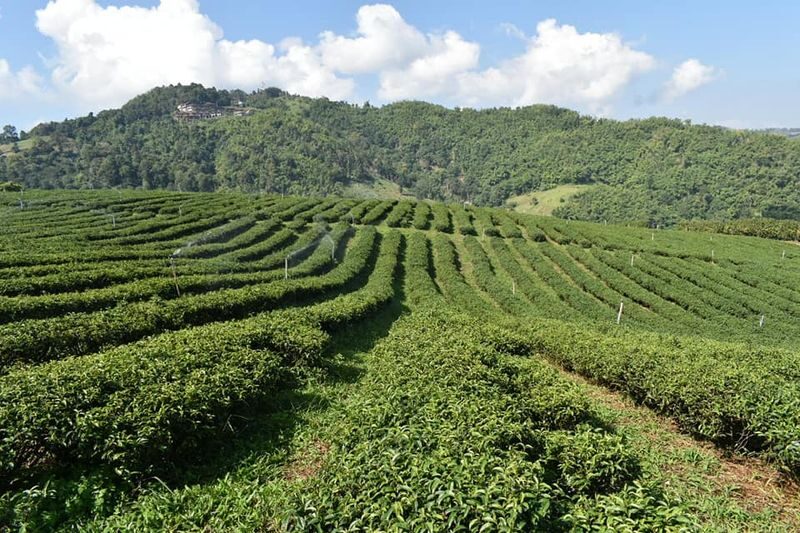
After lunch, the route continues toward a Chinese village and tea plantation. The plantation is a scenic stop rather than a guaranteed tasting or hands-on tea activity. You may see tea fields from the route, and some outings have included a visit to a small bamboo bar or café, but that is not a fixed part of the stated itinerary.
A waterfall is another key stop. It offers a change of pace after hours on the trail, and you may have the option to cool off in the water. Bring swimwear if you want to take advantage of that, and pack it so it is easy to reach. The time available can be short if the trek or lunch runs late, so do not count on a long swim.
The trail and these stops show a different side of the Chiang Rai area from the city’s temples and cafés. You move through forest, fields and village surroundings, with the scenery changing as the route rises and falls. The appeal is less about polished attractions and more about seeing how the countryside connects.
Akha and Lahu villages, with respect for daily life
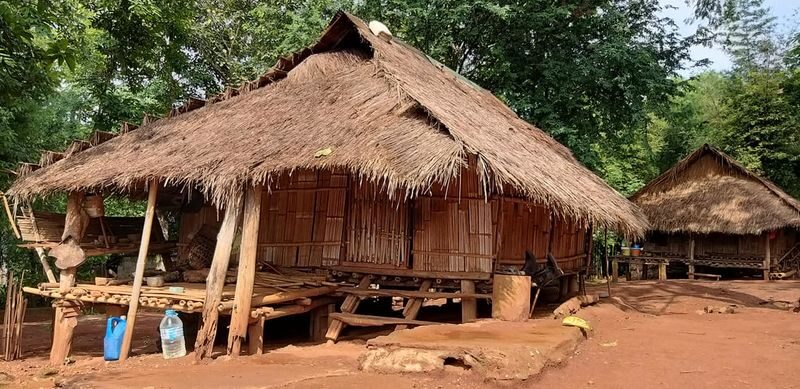
The planned route also includes Akha and Lahu village stops. It is useful to set your expectations: these are communities where people live and work, not performances arranged for visitors. You may see ordinary village life, local farms or people going about their day, rather than a formal introduction or a cultural show.
That can be the more meaningful way to encounter a place, but it is also less predictable. The amount of time spent in each village depends on the group’s pace and the day’s schedule. Stay observant and respectful, and follow your guide’s lead about where to walk and when it is appropriate to take photographs.
The tour description places the villages within a broader day of walking and nature stops. If your main goal is a detailed cultural program or extended conversation with village residents, this trip may not provide that. Its strength is the combination of countryside trekking, a village meal and brief glimpses of several communities.


Hot springs: plan for a flexible stop
The itinerary includes a hot spring, and admission to the hot spring is listed as included. In practice, the stop’s facilities and availability have not always matched expectations. Some outings have ended with a hot foot bath rather than access to a larger pool, while on at least one occasion the stop was skipped because it had closed.
I would book this for the trek, the guide and the lunch, not on the assumption that you will get a long soak. If a hot spring is a must for you, check its current operating status before the tour and confirm what is open on the day. Bring swimwear if you hope to use water facilities, but understand that the waterfall may be your more reliable chance to get wet.
What the price covers, and what it does not
The listed price starts at US$44.69 for the join-in tour, while another quoted starting price is US$51.35. Prices can depend on the date or package, so check the amount at checkout before booking. For a full day, the cost includes an English-speaking guide, round-trip transfer within the Chiang Rai city pickup zone, insurance provided by the operator, lunch, one drink and the hot spring admission ticket.
That is reasonable value if you want transport, a guide and a substantial outdoor day arranged for you. The lunch is more than a boxed meal, and the guide’s plant knowledge and bamboo demonstrations can add a personal dimension that is hard to replicate by simply hiring a car and stopping at viewpoints. Tips are not included.
The value is less certain if you are booking mainly for the hot spring or expecting a carefully timed tour of every named stop. Weather, walking pace and the group’s fitness all affect the schedule. A shared group can include up to 12 people, so a wide range of hiking speeds is possible.
Who should book this trek
Book it if you enjoy active days outdoors, can handle several hours of walking, and are curious about the plants, food and village life of northern Thailand. It suits hikers who are happy with mud, sweat and imperfect footing in exchange for forest scenery and a home-cooked meal.
Think twice if you have mobility limitations, knee problems, or a medical condition such as high blood pressure or epilepsy that could make strenuous activity unsafe. The tour is not wheelchair or stroller accessible. Children and infants must be included in the passenger headcount, and the group size is 2 to 12 participants, but the physical demands make this a poor fit for anyone who cannot manage uneven trails.
Weather changes the character of the hike. During rainy periods, paths can turn slippery and soft, and mosquitoes can be more bothersome. The tour operator may cancel in extreme weather, with an option to reschedule or request a full refund.
Practical details before you go
Wear grippy hiking shoes, long trousers and light clothing suitable for a sweaty day. Pack mosquito repellent, swimwear, and anything you need for a few hours outside. The operator includes one drink, but carrying water is sensible; there may be places to buy refreshments along the route, though these should not replace your own preparation.
Tell the operator about dietary requirements before the trip. The voucher is valid only for the booked date and time, and you can present it on your phone. Shared transfers may arrive early or late, so keep the pickup window flexible and watch for the guide’s company sign.
Should you book it?
I would book this tour for its demanding forest walk, thoughtful local guiding and village lunch, not for a guaranteed hot spring soak or a rigid checklist of stops. The best fit is an active person who wants to see Chiang Rai beyond the city and is willing to earn the views. If that sounds like your kind of day, bring proper shoes, repellent and a flexible schedule.
Chiang Rai Mueang Chiang Rai One-Day Tour
“didn't realise the hike was through about 2h of dense jungle! was a bit challenging especially with the rainy season making the narrow paths very m…”
FAQ
How long does the tour last?
The scheduled day runs from about 9:00 am to 5:00 pm. Pickup may be earlier or later because the transfer is shared, and the operator reconfirms the pickup time in advance.
How much walking should I expect?
Plan for a substantial hike. The route has been described as roughly 7 to 10 kilometers, often split between a morning and afternoon walk, with several hours on uneven and sometimes steep trails.
Is the hike difficult?
It can be challenging, particularly after rain when the trail is muddy or slippery. Good balance and a reasonable level of fitness are useful, and the activity is not recommended for people with certain medical conditions, including high blood pressure or epilepsy.
What should I wear and bring?
Wear hiking or trail shoes with good grip and long trousers. Bring mosquito repellent and swimwear if you want to use the waterfall or any available water facilities.
Is lunch included?
Yes. Lunch is included, with a sample menu of noodles, grilled chicken, boiled rice, steamed egg and grilled corn. Special dietary needs can be accommodated if arranged in advance.
Can I help cook lunch?
The tour includes a village lunch cooked with bamboo, and guests may help with preparation. The amount of hands-on cooking can vary by outing.
Is the hot spring visit guaranteed?
A hot spring stop is planned, and admission is listed as included. Facilities may vary, and the stop has sometimes been limited to a foot bath or missed if the spring was closed.
Are transfers included?
Yes. Round-trip transfers are included within the pickup zone in Chiang Rai city. The transfer is shared, so pickup can be early or late.
How many people are in the group?
The join-in group size is 2 to 12 participants. Infants and children must be included in the passenger headcount.
Is the tour wheelchair or stroller accessible?
No. The activity is not wheelchair or stroller accessible, and the uneven mountain trails can be difficult for people with mobility issues.