At the end of Busselton Jetty, an eight-metre descent takes you below the surface to watch fish move through the structure’s underwater world. The observatory has 11 viewing windows and sits among the marine life supported by the jetty’s piles, making this a rare chance to see a reef without getting wet.
I like two things in particular: the slow train ride gives you open views across Geographe Bay, and the guide puts the observatory’s unusual setting into context. The all-day jetty pass also lets you take your time on the pier instead of treating the ride and tour as the whole outing.
The main caveat is that the observatory is compact, and what you see through its windows depends on water clarity and conditions. If you expect a large aquarium or a guaranteed parade of fish, you may come away underwhelmed.
Key points
- A rare underwater viewpoint: Descend about eight metres to look through 11 windows onto marine life around the jetty’s piles.
- A scenic trip out to sea: The electric, solar-powered train travels about 1.7 km along the historic jetty, with views across Geographe Bay.
- A short guided visit: The observatory tour takes about 40 minutes. The guide explains the reef and the structure that supports it.
- Time to explore on foot: Your ticket includes all-day jetty access, so you can walk the 1.8 km pier at your own pace.
- Visibility can vary: Wind and ocean conditions affect opening hours, and water clarity can change what you see.
- Plan ahead for the train: Arrive at the Interpretive Centre at least 15 minutes before departure, and allow 30 minutes to park and check in.
- The jetty sets the scene
- The electric train ride across Geographe Bay
- What you see below the surface
- Keep time for a walk on the planks
- Price, timing and the small-print details
- Who will enjoy this outing most
- Should you book the Busselton Jetty Underwater Observatory?
- FAQ
- How long does the Underwater Observatory tour take?
- How deep is the Underwater Observatory?
- How long is the Busselton Jetty train ride?
- What is included in the ticket?
- Can I walk back instead of taking the return train?
- Where do I check in?
- Can I bring a stroller on the train?
- Is the experience wheelchair-accessible?
- The Best Of Busselton!
- More Tours in Busselton
- More Tour Reviews in Busselton
- Not for you? Here's more nearby things to do in Busselton we have reviewed
The jetty sets the scene

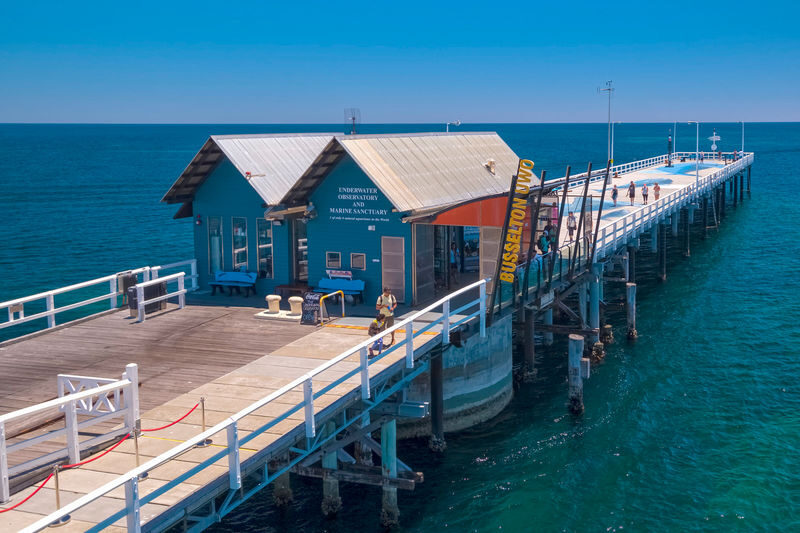





Busselton Jetty reaches 1.8 km into Geographe Bay, its long timber walkway drawing a straight line from the foreshore towards the sea. It is the longest wooden jetty in the southern hemisphere, though not the world’s longest jetty overall. That scale is part of the attraction: you are not simply heading to an observatory, but travelling out along a landmark that has shaped this stretch of coast.
The jetty also gives the observatory its purpose. Its underwater piles have become an artificial reef, providing a place for marine life to gather. The observatory’s windows let you see that habitat in its natural setting, rather than in a tank. The difference matters: fish may be present, but they move freely, and the scene is not arranged for a guaranteed show.
I’d allow more time than the tour’s 40-minute guided portion. The full train and observatory schedule is listed as about 115 minutes, while the train’s round trip is approximately 45 minutes. Add time for the pier itself, and this can comfortably fill a good part of your day.

👉 See our pick of the 4 Best Whale Watching Experiences In Busselton
The electric train ride across Geographe Bay
The experience begins at the Interpretive Centre, in the blue buildings at the shore end of the jetty. From there, the electric train carries you about 1.7 km towards the observatory. It runs at a gentle pace, which is useful for taking in the water on both sides, though it is not a quick shuttle. If you are in a hurry, the leisurely ride may feel slow; if you have come for the setting, that is part of its appeal.
The train is powered by electricity and solar energy. Audio along the journey highlights points of interest and the jetty’s history. Train seats are first come, first served, so your group may not sit together. Arrive on time, especially if sitting together is important to you.
Your ticket includes a return trip, but you can choose to walk back instead. That gives you a useful bit of flexibility: ride out to keep the schedule simple, then stroll shoreward at your own pace if you still have energy and the conditions suit. The full 1.8 km walk offers a different view of the bay and the jetty’s length.
You can also read our reviews of more tours and experiences in Busselton.


What you see below the surface
At the far end, a guided tour leads into the Underwater Observatory. You descend by spiral staircase to around eight metres below the surface, where 11 windows at different levels look out into the water. A lift is available for people who have difficulty with stairs, but note that the activity information also says the overall experience is not wheelchair-accessible. If access is a concern, contact the operator before booking to confirm what is possible for your needs.
The guide explains how the jetty piles form Australia’s largest artificial reef and what kinds of marine life may be found around them. The site is home to more than 300 species, including subtropical corals. That figure describes the habitat, not a promise that you will see every species, or even a particular fish on your visit. The attraction is watching what happens to be present through the windows.
The tour lasts about 40 minutes. That is enough time to look through the different viewing levels and hear the guide’s explanation, but it is not a long aquarium visit. The observatory itself is small, a point worth knowing if you are picturing a broad gallery of tanks. Its appeal is the unusual perspective: you are below the water, looking at marine life in the place it lives.
Visibility is the main variable. Clear water can make the fish and reef easier to see; after rough or windy conditions, the view may be less sharp. The operator can also adjust hours depending on weather, wind and ocean conditions. Keep expectations flexible, and think of the guide’s explanation and the setting as part of the visit, not just the fish count.
Keep time for a walk on the planks
The Jetty Day Pass allows you to explore the full 1.8 km length on foot, fish from the edge or swim in the water at your own pace. The pass adds genuine value if you have time to use it. The train and observatory are the main booked activities, but walking the pier gives you a slower way to appreciate the scale of the structure and the open bay.
You do not have to use the train for both directions. Some people ride out and walk back, while others use the return service. If you plan to walk, factor that into your energy and schedule; the jetty is long, and the return leg is not a short stroll. Swimming and fishing are possible activities, but bring your own supplies and check conditions before heading into the water.
There is no re-entry after you leave the venue, so plan your visit as one continuous outing. The day pass is not a reason to rush away and come back later.
Price, timing and the small-print details
Prices start at $32.89, with the final amount depending on the offer and booking details. For that starting price, you get the observatory admission, English-speaking guide, return train ride and all-day jetty access. The value is strongest if you use the train, attend the guided tour and spend extra time on the pier. If you only want a brief look at the observatory, the package may feel expensive for the time spent there.
The train and tours generally depart hourly. The published seasonal schedule lists trains from 9:00 a.m. to 5:00 p.m. in summer, with tours from 9:00 a.m. to 4:00 p.m.; in winter, trains run from 10:00 a.m. to 4:00 p.m. and tours from 10:00 a.m. to 3:00 p.m. Opening times can vary with conditions, so use your selected time as the key reference and check current operating details before setting out.
Arrive at the foreshore about 30 minutes before your booked time. Parking is not directly beside the jetty; the closest car parks are about 50 to 100 metres away, and busy holiday periods or local events can add delays. Check in at the blue Interpretive Centre at least 15 minutes before departure. The listed address is 17 Foreshore Parade, while the meeting details also give 15 Foreshore Parade. Look for the blue buildings at the shore end of the jetty rather than relying on the street number alone.
Prams and strollers cannot go on the train or into the observatory. A baby carrier is recommended, and you can ask staff about securing a pram to the jetty for a $10 deposit. Fishing gear, diving gear and large luggage are also not allowed aboard the train or inside the observatory. Children under 15 need an adult aged 18 or older with them for the train journey and tour. Children under three travel free but must sit on an adult’s lap and do not receive their own train seat.
Who will enjoy this outing most
This is a good fit for families who want a coastal activity that combines transport, a short guided visit and time outdoors. Children often find the train ride and the underwater viewpoint engaging, while the guide’s explanations give the visit more substance than simply looking through windows. The slow ride and modest observatory size make it a manageable outing, but the train’s stops and starts may not suit every child. If your child has sensory or mobility needs, contact the operator in advance to discuss practical arrangements.
It also suits visitors who like landmarks and unusual viewpoints. You are seeing marine life without snorkelling or swimming, and the artificial reef is an interesting example of how a human-built structure can support a habitat. If you are a serious marine-life enthusiast seeking close-up encounters or a large collection of species in ideal viewing conditions, this may not meet those expectations.
Book ahead for busy periods. The attraction can sell out, especially during school holidays, long weekends, Easter and Christmas, when foreshore parking can also be harder to find. Weather may affect the visit, so leave some flexibility in your plans if your schedule allows. If conditions force a cancellation, the operator may offer a reschedule or refund.


Should you book the Busselton Jetty Underwater Observatory?
Book it if you want to combine a memorable pier, a relaxed ride over the bay and a guided look at the marine life beneath the jetty. The strongest parts are the setting, the unusual underwater viewpoint and the chance to explore the full pier with one ticket. The guide’s explanation can make a short visit feel more rewarding, particularly for families and first-time visitors.
Think twice if your main goal is a long aquarium-style visit, or if you need guaranteed clear water and plentiful fish. The observatory is small, and visibility varies. For the best value, arrive early, use the train and guided tour, then leave time for a walk back along the jetty.
Busselton Jetty Underwater Observatory Experience
“The fire show and the pier were quite interesting, but the underwater guided tour was very ordinary and nothing to get excited about.”
FAQ
How long does the Underwater Observatory tour take?
The guided tour lasts about 40 minutes. The full train and observatory schedule is listed as approximately 115 minutes.
How deep is the Underwater Observatory?
The viewing area is about eight metres below the surface.
How long is the Busselton Jetty train ride?
The train travels about 1.7 km out to the observatory. The listed round trip takes approximately 45 minutes.
What is included in the ticket?
The package includes admission to the Underwater Observatory, an English-speaking guide, a return train ride and a Jetty Day Pass.
Can I walk back instead of taking the return train?
Yes. The ticket includes a return trip, but you can choose to walk back along the jetty.
Where do I check in?
Check in at the Interpretive Centre, the blue buildings at the shore end of the jetty. Arrive at least 15 minutes before your booked train and tour time.
Can I bring a stroller on the train?
No. Prams, strollers and pushers cannot go aboard the train or into the observatory. A baby carrier is recommended.
Is the experience wheelchair-accessible?
A lift is available for the descent to the observatory, but the activity information also says the experience is not wheelchair-accessible. Contact the operator before arrival to check arrangements for your specific needs.


