
Djerba’s most rewarding cultural stops are spread across the island, and this four-hour outing links them in one practical loop: a pottery village, a historic synagogue, a mural-filled village and the market streets of Houmt Souk. At $22 per person, it’s an efficient way to get a first look at the island without arranging transport stop by stop.
I like two things in particular: the mix of heritage and everyday craft, especially the pottery demonstration in Guellala, and the guides, whose names include Aziz, Kamel, Abdel and Bechir. The tour also includes hotel pickup in an air-conditioned vehicle, so you can spend your limited time looking around rather than figuring out how to get between sights.
One consideration: this is a quick sampler, not a slow-paced visit. The four stops have set time limits, and during busy periods the operator may use a 29-seat bus instead of a 14-seat minibus. On Saturdays, you cannot visit the interior of El Ghriba synagogue.
- The tour at a glance
- A quick route through Djerba’s varied culture
- Guellala: pottery made by hand
- El Ghriba: a short visit with a Saturday caveat
- Djerbahood: murals among village streets
- Houmt Souk: market time and local browsing
- Guides, transport and group size
- Is good value?
- Who should book this tour?
- FAQ
- How long is the tour?
- Is hotel pickup included?
- What languages are available?
- Can I visit inside El Ghriba synagogue on a Saturday?
- Are food, drinks and souvenirs included?
- Will the tour use a small minibus?
The tour at a glance
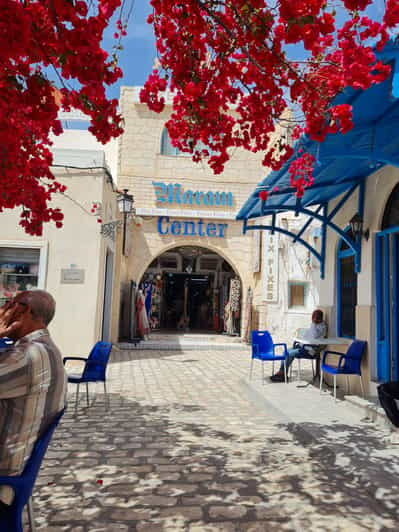 1 / 8
 2 / 8
 3 / 8
 4 / 8
 5 / 8
 6 / 8
 7 / 8
 8 / 8
- Guellala pottery: Spend about an hour in the village known for its potters, with a workshop visit and, according to the tour’s usual format, a pottery demonstration.
- El Ghriba synagogue: Allow about 20 minutes for the visit. The interior is not open to tour visitors on Saturdays.
- Djerbahood murals: Walk around this open-air art project for about 45 minutes, with time for photos and a guided look at its painted walls.
- Houmt Souk: Get about 45 minutes for the market, shopping and a short independent wander.
- Hotel pickup and a local guide: The tour runs in the morning or afternoon, takes about four hours, and offers French, English, Italian and German.
- A budget-minded island sampler: The listed price is $22 per person. Drinks, personal souvenirs and entry to the interior of Fort Ghazi, if you choose to visit, are not included.
A quick route through Djerba’s varied culture
Djerba can look like a beach-and-resort destination from your hotel, but the island’s cultural stops tell a broader story. This outing brings together a historic route linking island and mainland, traditional pottery, Jewish heritage, contemporary street art and a working market. You get a useful cross-section in a single half-day, without needing to plan the route yourself.
The order of stops may vary with the tour schedule, but the route includes Guellala, El Ghriba synagogue, Djerbahood and Houmt Souk, with pickup and drop-off in the Djerba Midoun area. It begins with a panoramic view of the Roman road, the causeway connecting Djerba with the mainland. It is a short stop rather than a long archaeological visit, but it gives you a clear sense of how the island connects to the rest of Tunisia.
The tour is best understood as a guided introduction. You’ll get context and a look at several very different places, but the time at each is limited. If one stop catches your attention, note it down and consider returning independently for longer.
Guellala: pottery made by hand
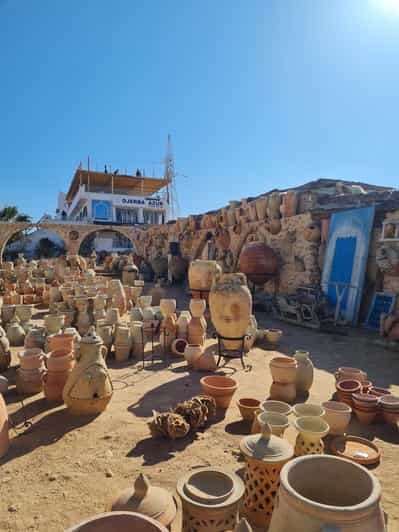
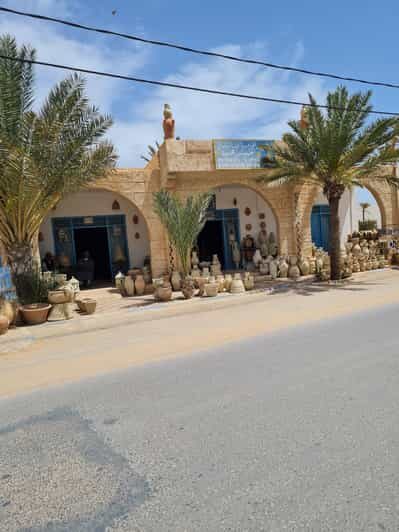
The longest scheduled stop is in Guellala, a village known for its potters. You have about an hour to visit a pottery workshop and learn about the local craft, with a demonstration that can show how clay moves from raw material to finished object. If you’re choosing between quick photo stops and a chance to see a working tradition, this is the part of the tour that offers the most direct contact with island craftsmanship.
The stop is more than a shopping break. Pottery is part of Guellala’s identity, and seeing the work in context can help you understand why the village is a destination in its own right. The time also gives you a chance to look at the pieces on display and decide if you want to buy something.
Souvenirs are not included in the tour price, so treat any purchase as an extra. If you prefer to browse without buying, you can still focus on the demonstration and explanations. The visit is scheduled for one hour, though, so you won’t have unlimited time to compare items or linger.
El Ghriba: a short visit with a Saturday caveat
El Ghriba synagogue is presented as the oldest synagogue in North Africa, making it one of the tour’s most important heritage stops. The scheduled visit is about 20 minutes. That is enough for a brief introduction, but not a long, unhurried exploration.
There is an important day-of-week detail: the synagogue interior cannot be visited on Saturdays. If seeing inside is a priority, check the tour date before booking and plan for a day other than Saturday. The exterior and the stop itself remain part of the route, but the interior experience is not available then.
The short allocation also helps set expectations. This is one chapter in a fast-moving island tour, not a dedicated synagogue visit. If religious history is your main interest, you may want to allow extra time on another day.
Djerbahood: murals among village streets
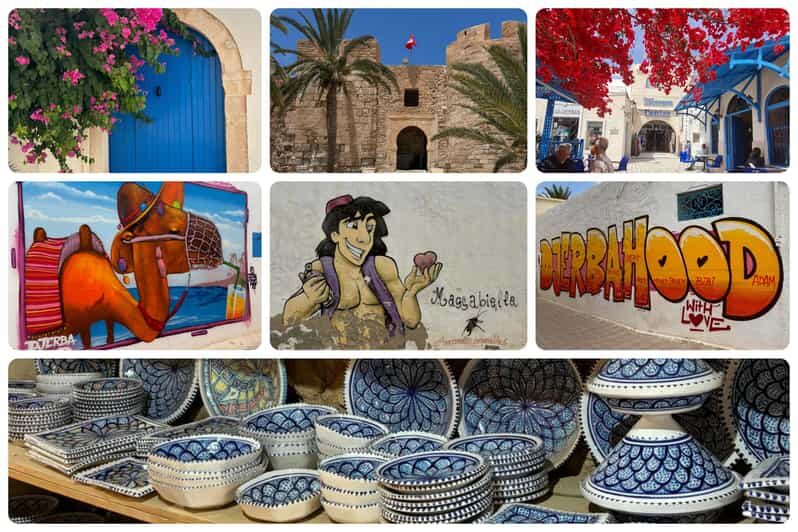
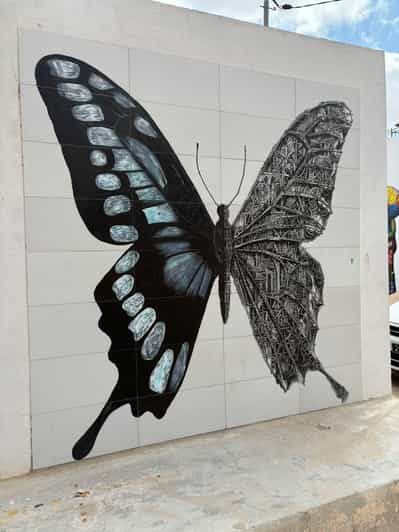
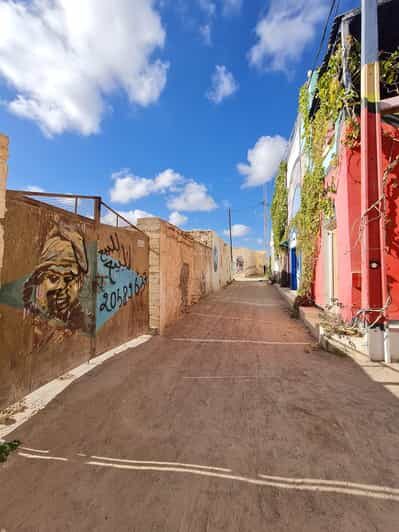
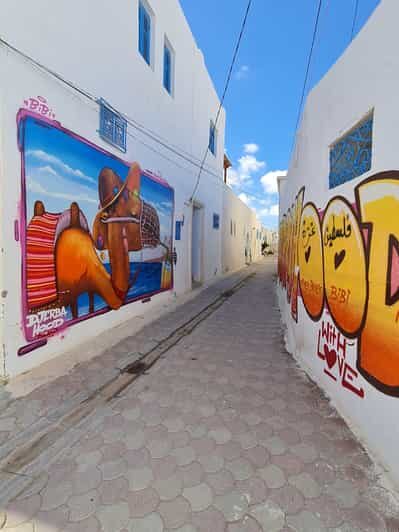
Djerbahood brings a different kind of cultural stop. In this village, walls have become an open-air gallery, with murals by artists from around the world. The tour allots about 45 minutes for a guided walk and photos, enough to see a selection of the work and get a feel for the project.
The art is spread through village streets rather than gathered in a single indoor gallery. That makes the walk part of the experience: you’re looking at the paintings in the setting where people live, not moving through a formal exhibition. The guide can help you find notable works and explain what you’re seeing, which is useful when the lanes are unfamiliar and time is short.
Bring a camera if you enjoy street art, but leave room to look beyond the lens. Forty-five minutes goes quickly, and this is not a stop where you can expect to see every mural. The tour’s tight schedule is a good fit if you want an introduction; art lovers may want to return at their own pace.
More Great Tours NearbyHoumt Souk: market time and local browsing
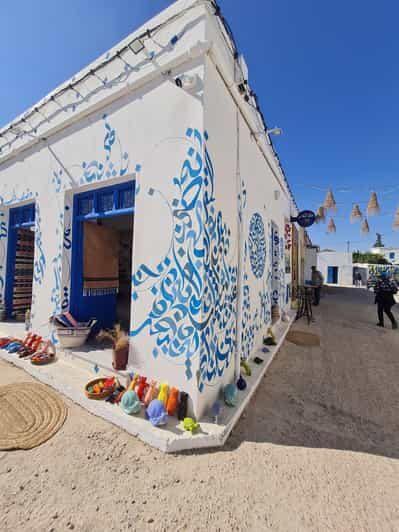
Houmt Souk, Djerba’s island capital, is the final scheduled stop and gets about 45 minutes. You’ll have a guided introduction and free time to stroll through the souks, browse handmade souvenirs or stop for a drink at your own expense. The free time is a welcome change after the more structured visits.
Think of this as a short taste of the market, not a long shopping afternoon. Keep an eye on the time and agree on the return point with your guide. One guide has recommended a local coffee shop during the stop, but specific suggestions can vary with the guide and schedule.
The tour does not include drinks or personal purchases. That keeps the advertised price low, but you should bring some spending money if you want a coffee or a souvenir. If shopping is your main reason for visiting Houmt Souk, you may find the allotted time brief.
Guides, transport and group size
The people leading the tour are a major part of its appeal. Guides named Aziz, Kamel, Abdel and others are regularly associated with the outing; the advertised languages are French, English, Italian and German. The tour descriptions emphasize clear explanations, local knowledge, humor and a friendly atmosphere. Aziz is especially noted for explanations in English, while Kamel is known for keeping the mood light. Your guide will depend on the departure.
Pickup is in front of your hotel, and the air-conditioned vehicle is selected to suit the group size. That matters in Djerba’s summer heat, especially when you are moving between several stops. The driver is also part of the experience: names such as Bechir, Ali and Mohammed have been praised for careful driving.
The small-group format is not guaranteed in every busy period. During summer or school holidays, the operator may use a 29-seat bus if the 14-seat minibuses are full. That is worth knowing if a smaller vehicle is important to you. The operator says the larger bus is a last resort, but the practical point is simple: expect a small-group setup where possible, not as an absolute promise.
There may also be several hotel pickups before the tour reaches the first stop, so the vehicle may not arrive at your hotel at the exact start time. The team sends pickup information by WhatsApp the day before. Keep an eye out for that message and check the pickup details carefully.
Is $22 good value?
At $22 per person, this is strong value if you want an organized overview of Djerba’s cultural sights. The price includes hotel pickup, an air-conditioned vehicle and a live guide, while the stops cover several distinct sides of the island. Arranging those transfers and finding the murals or pottery workshop on your own would take time and planning.
The value is strongest for a short stay, a first visit or anyone without a rental car. You get a broad sense of place in roughly four hours, and the guide’s explanations help tie the stops together. The tour is also available in the morning or afternoon, which gives you some choice when fitting it around other plans.
There are trade-offs. The pace is brisk, market time is limited, and you’ll pay extra for drinks, souvenirs and any visit inside Fort Ghazi. The listed itinerary does not include Fort Ghazi as a scheduled stop, so don’t count on time there unless the operator confirms it. If you want long visits at each place or plenty of unstructured wandering, a private arrangement or separate visits may suit you better.
Who should book this tour?
I’d choose this outing if you want to see Djerba beyond your hotel, have half a day free and appreciate a guide who can explain the cultural context while keeping the trip lively. It works well for first-time visitors, short-stay holidaymakers and budget-conscious couples or families who want transport handled for them.
It is also a good option if you enjoy variety. One stop is about craft, another about religious heritage, another about street art, and the last about shopping and daily life. That contrast makes the excursion more useful than a string of similar photo stops.
I’d think twice if you dislike set schedules, want to spend a long time at the synagogue or market, or are booking specifically for a very small vehicle in peak season. Check the day of the week if the synagogue interior matters to you, and treat the four-hour schedule as an overview rather than a deep visit to every site.
Best of Djerba: The Island’s Cultural Gems and Traditions (Small Group)
FAQ
How long is the tour?
The tour lasts about four hours. The scheduled visits include one hour in Guellala, 20 minutes at El Ghriba synagogue, 45 minutes in Djerbahood and 45 minutes in Houmt Souk, plus travel between stops.
Is hotel pickup included?
Yes. Pickup in front of your hotel is included, with return to the Djerba Midoun pickup area. The team sends pickup information by WhatsApp the day before.
What languages are available?
The live tour guide is available in French, English, Italian and German.
Can I visit inside El Ghriba synagogue on a Saturday?
No. The synagogue interior is not open to tour visitors on Saturdays.
Are food, drinks and souvenirs included?
No. Drinks and personal souvenirs are not included in the tour price.
Will the tour use a small minibus?
The tour normally uses an air-conditioned vehicle suited to the group size, including 14-seat minibuses. In summer or school holidays, a 29-seat bus may be used if the smaller minibuses are full.
You can check availability for your dates here: