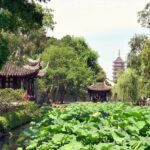
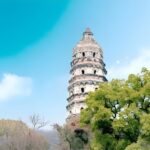
Panmen’s special appeal is easy to grasp: this is the only existing complete ancient city gate in China with both water and land access. A single ticket opens the gate area and its three signature sights, giving you a compact look at Suzhou’s old defenses and Jiangnan elegance without committing to a full-day tour.
I like two things here. First, the Panmen Three Sceneries bring together a city gate, an ancient pagoda, and an elegant bridge, so you get more than one kind of historic site in a single visit. Second, the ticket starts at $7.45, a modest price for an attraction that can add a distinct change of pace to a Suzhou visit.
The main drawback is that this is an entry ticket, not a guided tour. You’ll need to make your own way there, arrange your own food, and plan your visit around the closing time. The ticket is also valid only for its selected date, and leaving the scenic area means paying again to re-enter.
What makes Panmen worth your time
- A complete land-and-water gate: See the feature that makes Panmen unusual among China’s surviving ancient city gates.
- Three sights in one area: The gate, Ruiguang Pagoda, and Wumen Bridge give you different points of focus during one visit.
- A lower-cost Suzhou stop: Tickets start at $7.45, with transportation, meals, and extras not included.
- A self-guided visit: No guide is specified, so you can set your own pace and focus on the sights that interest you.
- A firm closing time: Entry stops 30 minutes before closing, so arrive with enough time to explore.
- A date-specific ticket: You must enter on the selected date, and there is no re-entry on the same ticket.

👉 See our pick of the 3 Best Guided Tours In Suzhou
- What makes Panmen worth your time
- The rare gate at the heart of Panmen
- Three sights, three different ways to look
- A self-guided visit, not a scheduled tour
- Making the .45 starting price work
- Timing your visit and finding the entrance
- Who should make room for Panmen
- Should you book Panmen?
- FAQ
- What does the Panmen Scenic Area ticket include?
- What are the Panmen Three Sceneries?
- What are the opening hours?
- How do I enter with my ticket?
- Can I re-enter after leaving the scenic area?
- Can I cancel or reschedule my ticket?
- The Best Of Suzhou!
- More Tours in Suzhou
- More Tour Reviews in Suzhou
- Not for you? Here's more nearby things to do in Suzhou we have reviewed
The rare gate at the heart of Panmen
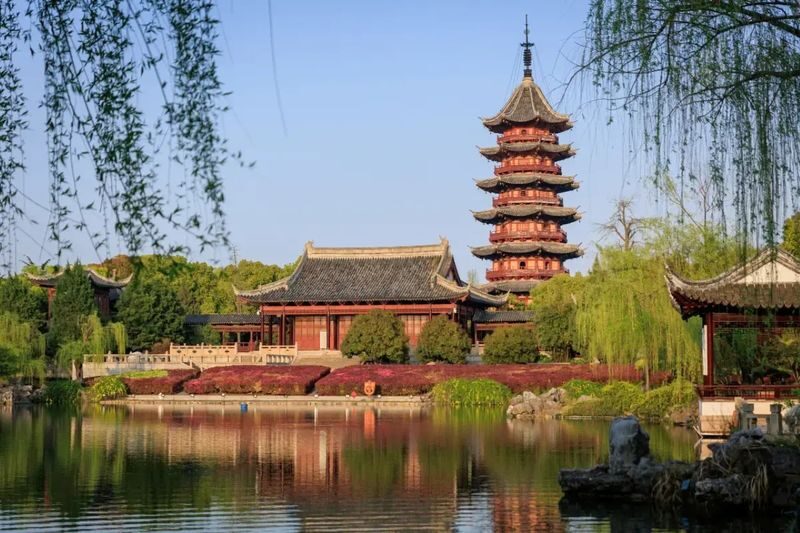
Panmen is not simply a scenic corner with an old wall. Its defining feature is a complete ancient city gate that served both land and water access. That combination gives the site a practical interest: you are looking at a place shaped by the need to control movement through a city, not just a decorative landmark.
The gate is one of the three sights known together as the Panmen Three Sceneries. The other two are Ruiguang Pagoda and Wumen Bridge. Their proximity makes the area an efficient stop if you want to see a few distinct pieces of Suzhou’s past without buying separate tickets for each attraction.
The setting is described as a blend of Jiangnan garden elegance and the strength of old city walls. That contrast is a useful way to approach your visit. Look at the gate for the defensive and civic side of the site, then give the pagoda and bridge their own attention rather than treating them as background decoration.
Panmen is a national 4A-level scenic spot. That designation tells you it is an established attraction with a defined visitor entrance, ticketing, and opening schedule. It does not mean you should expect a guided history lesson: the ticket is for entry, and no guide is included in the details provided.
You can also read our reviews of more tours and experiences in Suzhou.


Three sights, three different ways to look
The most practical way to plan your time is to keep the three headline sights in mind and give each a moment of attention. The supplied information does not prescribe a route or a set visit duration, so you can decide the order once you arrive. If the gate is your main reason for coming, begin there; if you prefer to take in the area as a whole, pause to identify the pagoda and bridge too.
The water-and-land gate is the central draw. Its unusual completeness is what separates Panmen from a visit focused on a single tower or garden. You can consider how a gate linked land and water movement, then look at the structure as part of a broader historic site rather than an isolated object.
Ruiguang Pagoda adds a different kind of landmark to the visit. It is identified as an ancient pagoda, but no further details about its age, interior access, or exhibits are provided. I would treat it as a key sight to view and appreciate from the area, not assume that you can climb it or enter it.
Wumen Bridge brings a more graceful note to the trio. It is described as elegant, a quality that contrasts neatly with the imposing idea of a city gate. Take time to notice how the bridge changes the mood of the visit: the experience is not only about walls and defenses, but also about the measured beauty associated with Jiangnan.
These three sights give you a simple framework for exploring. You do not need to rush from one to the next just to tick them off. Give the gate, pagoda, and bridge separate attention, then see how they work together as a compact portrait of old Suzhou.
A self-guided visit, not a scheduled tour
The ticket covers entry to Panmen Scenic Area. It does not include a guide, transport, meals, personal insurance, or optional entertainment facilities. That makes this a straightforward choice if you are comfortable exploring on your own and want to decide how long to spend at each sight.
There is no group size or tour duration listed, and no guide names are provided. In practice, you should not book this expecting someone to lead you through the history or manage the day’s schedule. If you want that kind of interpretation, you will need to arrange it separately.
The benefit of a self-guided visit is flexibility within the site. You can concentrate on the gate, spend longer at the bridge, or keep the stop brief if you have other plans. The trade-off is that you are responsible for getting there, checking the entrance details, and keeping an eye on closing time.
A single five-star rating describes the ticket booking as convenient and the facilities as excellent. That is encouraging, but it is only one rating, so it is best treated as a small positive signal rather than a guarantee about every visit. The most useful practical takeaway is that the ticket can be redeemed at the entrance using the original valid ID used for the reservation and the e-voucher QR code.
Making the $7.45 starting price work
At a starting price of $7.45, Panmen can be a good-value stop if you want to see a historic gate and two related landmarks in one area. The value comes from the range of sights included, not from extras: the ticket covers one entry to the scenic area, while transport, dining, entertainment facilities, and personal costs remain yours to arrange.
Think about the price in relation to your day. If you are already nearby or have a simple plan for reaching the entrance, the ticket is an affordable way to add a different side of Suzhou to your visit. If you are making a special journey just for Panmen, factor in your own transport and the time needed to get there before deciding how it fits your budget.
The ticket is date-specific and cannot be used for re-entry after you leave. That detail matters if you are used to stepping out for a meal and returning later. Plan to complete your visit in one go, and do not rely on the ticket to cover a second entry.
Cancellation terms also reward careful planning. If it is more than 24 hours before your visit and the ticket has not been exchanged or used, you can request a full refund. Within 24 hours, after exchange or admission, or after the ticket expires unused, refunds and rescheduling are not available. The ticket cannot be changed or split.
Timing your visit and finding the entrance
The scenic area is open from 8:30 a.m. to 5 p.m. from January 1 through December 30. On December 31, it stays open until 5:59 p.m. Ticket sales and entry stop 30 minutes before closing, so arriving at the final minute is a poor plan if you want time to see all three sights.
The location details give two addresses: the meeting point is listed as No. 49 Dongdajie Street, at the former Suzhou Match Factory site near Changxu Road, while the admission address is the Panmen Scenic Area ticket office at No. 1 Dongdajie Street, Gusu District. Use the admission address when navigating to the ticket entrance, and check your voucher before setting off if the two listings cause confusion.
To enter, present the original valid ID used for the reservation and the e-voucher QR code at the turnstile. No separate ticket exchange is required. The ticket becomes available two hours after successful booking, and booking is offered as soon as the following day; in peak season, booking five to ten days ahead is recommended, compared with one to three days in quieter periods.
Pets, sky lanterns, balloons, open-flame sky lanterns, water lanterns, and other dangerous items are prohibited. If you are using an elderly or disability certificate, the stated policy requires family members under 60 to accompany the certificate holder. Citizens’ free-entry policy is suspended during the night garden period, so do not assume it applies then.


Who should make room for Panmen
Panmen suits you if you are interested in historic city structures, bridges, and pagodas, and prefer to explore at your own pace. It is also a sensible choice if you want a compact cultural stop rather than a guided day trip. The three main sights give you enough variety to make the visit feel more complete than a quick look at a single monument.
It may be less suitable if you need a guided explanation included in the ticket, want transport or meals bundled into the price, or need the freedom to leave and return later. Those are not part of this purchase. You should also check the date and closing time carefully, since the ticket cannot be moved within 24 hours and cannot be used for a second entry.
If Panmen is one part of a wider Suzhou itinerary, it can pair naturally with other city sights, but allow for your own travel time between them. The ticket itself does not arrange connections or specify how long a visit takes. Keep your schedule flexible enough to reach the entrance before the last admission cutoff.
Should you book Panmen?
Book Panmen if the unusual land-and-water gate appeals to you and you want to see it alongside Ruiguang Pagoda and Wumen Bridge for a modest entry price. The site offers a clear reason to visit, and its three headline sights make for a more varied stop than a gate alone.
Skip it, or choose a different option, if you are looking for a guided tour, bundled transport, or a ticket with flexible re-entry. For everyone else, the practical choice is simple: confirm the correct entrance address, select a date you can keep, and arrive well before the final 30-minute entry cutoff.
Ancient Panmen Gates Area
“It is the only well-preserved land and water city gate park in Suzhou. Klook booking convenience: Convenient Facilities: Excellent”
FAQ
What does the Panmen Scenic Area ticket include?
It includes one entrance ticket to Panmen Scenic Area. Transport, dining, personal insurance, optional entertainment facilities, and other personal expenses are not included.
What are the Panmen Three Sceneries?
They are the water-and-land city gate, Ruiguang Pagoda, and Wumen Bridge.
What are the opening hours?
From January 1 through December 30, the scenic area is open from 8:30 a.m. to 5 p.m. On December 31, it is open from 8:30 a.m. to 5:59 p.m. Ticket sales and entry stop 30 minutes before closing.
How do I enter with my ticket?
Present the original valid ID used for the reservation and the e-voucher QR code at the turnstile. A separate ticket exchange is not required.
Can I re-enter after leaving the scenic area?
No. The ticket is valid only for the selected date, and re-entry after leaving requires a new ticket purchase.
Can I cancel or reschedule my ticket?
If it is more than 24 hours before your visit and the ticket has not been exchanged or used, you can request a full refund. Within 24 hours, after exchange or admission, or after the ticket expires unused, refunds and rescheduling are not available.