The Namib’s dunes can look empty until someone shows you where to look. On this 3.5-hour outing from Swakopmund, a guide helps you search for small desert animals, from palmato geckos and sand-diving lizards to the fog-basking tok-tokkie beetle.
I like two things in particular: the close-up look at desert life and the way the guide explains how animals manage with so little water. The short dune drive adds a change of pace after the walk, and hotel pickup keeps the outing simple to arrange.
The main consideration is that the animals are small and can be hard to spot, even with a trained guide. This is a patient wildlife search, not a big-game safari, and it is not suitable for people with mobility impairments.
- What to know before you go
- A different kind of wildlife tour near Swakopmund
- From your Swakopmund hotel to the dune belt
- Reading the sand for signs of life
- The value of seeing the small five
- A short dune drive to finish
- Is a fair price?
- Prepare for sun, sand, and walking
- Should you book the Living Dunes Experience?
- FAQ
- How long is the Living Dunes Experience?
- Where does the tour start?
- What animals might I see?
- What is included in the price?
- What should I bring?
- Is the tour suitable for people with mobility impairments?
- The Best Of Swakopmund!
- More Tours in Swakopmund
- More Tour Reviews in Swakopmund
- Not for you? Here's more nearby things to do in Swakopmund we have reviewed
What to know before you go
 1 / 6
 2 / 6
 3 / 6
 4 / 6
 5 / 6
 6 / 6
- Look for the desert’s small stars: Search for geckos, lizards, beetles, snakes, spiders, scorpions, and chameleons in the coastal dunes.
- Learn to read the sand: Your guide points out subtle animal tracks and explains the adaptations that help desert species survive.
- Plan on 3.5 hours: The tour includes hotel transfers, a long guided outing in the dunes, and a short dune drive.
- Expect a guide-led search: The animals are easy to miss without an experienced eye, and sightings can vary.
- Pay $61 per person: The price includes transport, a guide, and still mineral water. Food is not included.
- Bring sun protection: Sunscreen and a hat are specifically recommended. The outing involves walking and is not suited to people with mobility impairments.
👉 See our pick of the 7 Best Guided Tours In Swakopmund
A different kind of wildlife tour near Swakopmund
If Namibia brings to mind elephants, lions, and wide-open plains, this outing offers a useful change of scale. The coastal dunes outside Swakopmund are home to small creatures that leave faint tracks and use the sand itself to hide, move, and cope with the dry conditions.
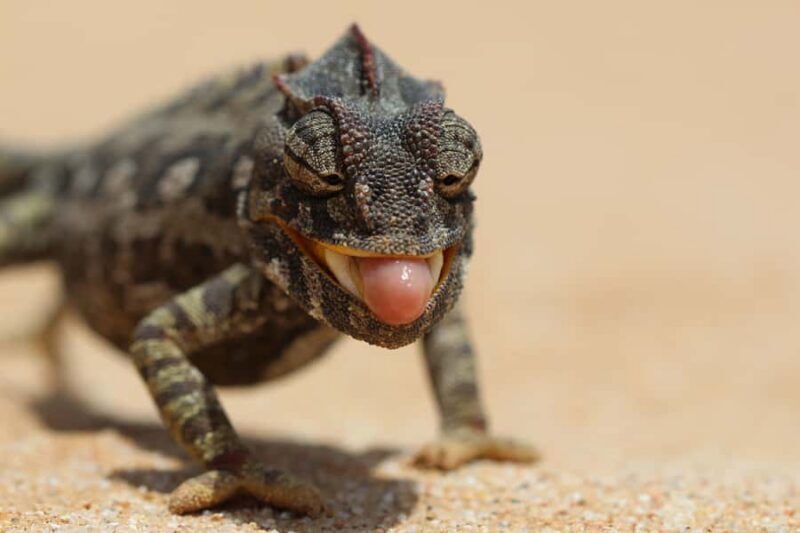
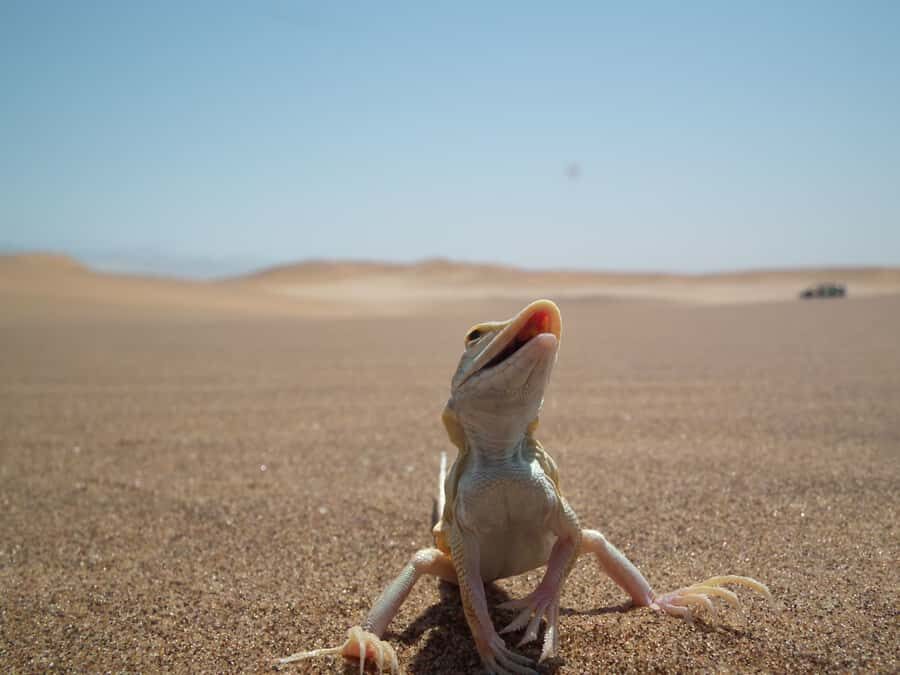
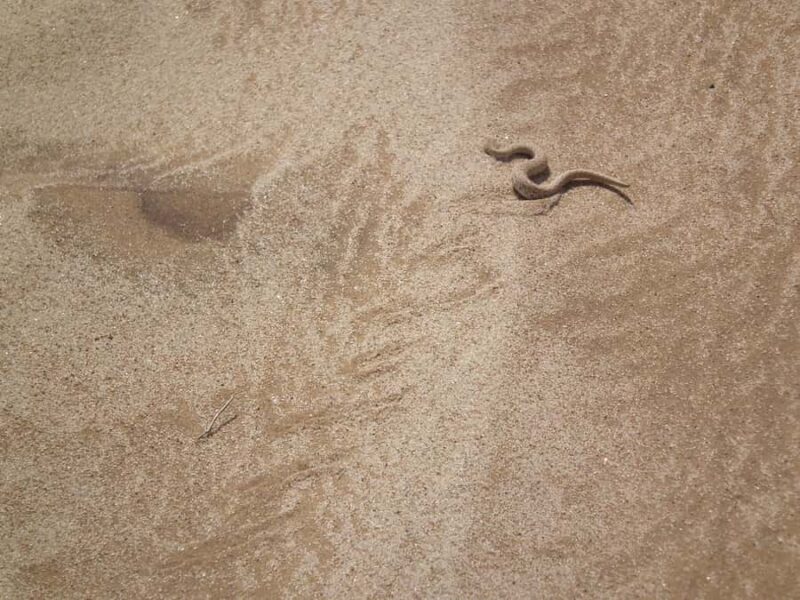
The tour focuses on finding and understanding those animals rather than covering a large area in search of big wildlife. You may look for palmato geckos, sand-diving lizards, the tok-tokkie beetle, sidewinder snakes, spiders, scorpions, and chameleons. The range gives the guide plenty to explain, but you should treat each sighting as a possibility, not a promise.
I find the close attention this kind of outing demands part of its appeal. You are not just looking at the dune scenery; you are learning to notice details that would otherwise pass as marks in the sand or a flicker of movement.
The guides are central to the experience. People who have led the outing include Johnny, Björn, and Immanuel, with praise for their skill at finding small animals, clear explanations, humor, and care around wildlife. Names and guides can change, but those qualities are worth looking for in a tour built around observation.
You can also read our reviews of more tours and experiences in Swakopmund.



From your Swakopmund hotel to the dune belt
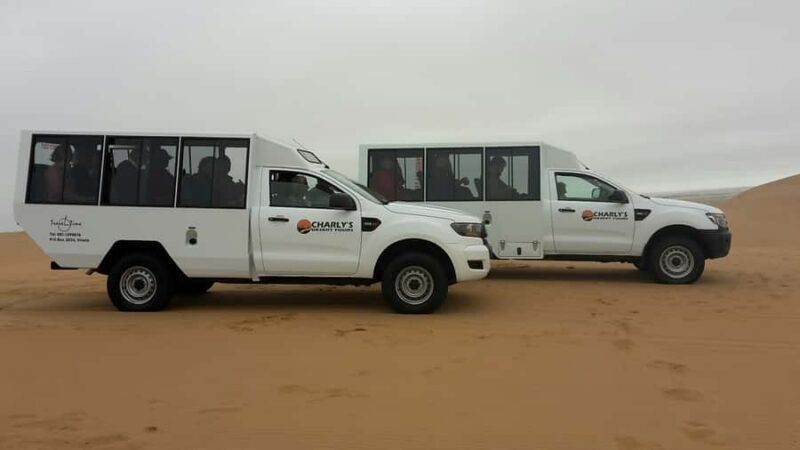
The outing begins with pickup at your accommodation in Swakopmund. From there, you travel in a jeep or SUV toward the coastal dune belt just beyond the city. The listed outbound transfer is brief, about five minutes, before the main guided portion begins.
That short ride matters less as sightseeing than as a practical link between town and the dunes. You do not need to arrange your own transport to the starting area, and the return transfer brings you back to Swakopmund at the end.
The main portion lasts about three hours and fifteen minutes. It combines a safety briefing, a guided walk and wildlife search, photo stops, and scenic views, followed by a short dune drive. The exact order of sightings will depend on what the guide finds and how the search unfolds.
The tour is in English. Still mineral water is included, but food is not, so plan your meal around the 210-minute outing rather than expecting a snack stop.
Reading the sand for signs of life
The heart of the experience is the guided search. To someone without practice, a dune may seem to offer little more than sand and changing shapes. A trained guide can point out tracks and subtle signs that show where animals have been moving.
That difference is the reason to book with a specialist rather than simply drive into the dunes. You are not only hoping to spot an animal; you are learning how to look. The guide can explain what an animal’s tracks suggest and how desert species have adapted to a place where water and shade are scarce.
The named creatures give a sense of the tour’s range. Palmato geckos and sand-diving lizards are among the small reptiles you may search for. The tok-tokkie beetle is known for fog-basking, while sidewinder snakes and other small animals may also appear.
A chameleon, spider, or scorpion could be part of the search too. These are wild animals in a large natural area, so sightings are not guaranteed. The most useful expectation is a guided lesson in finding and understanding desert life, with each animal spotted as a bonus.
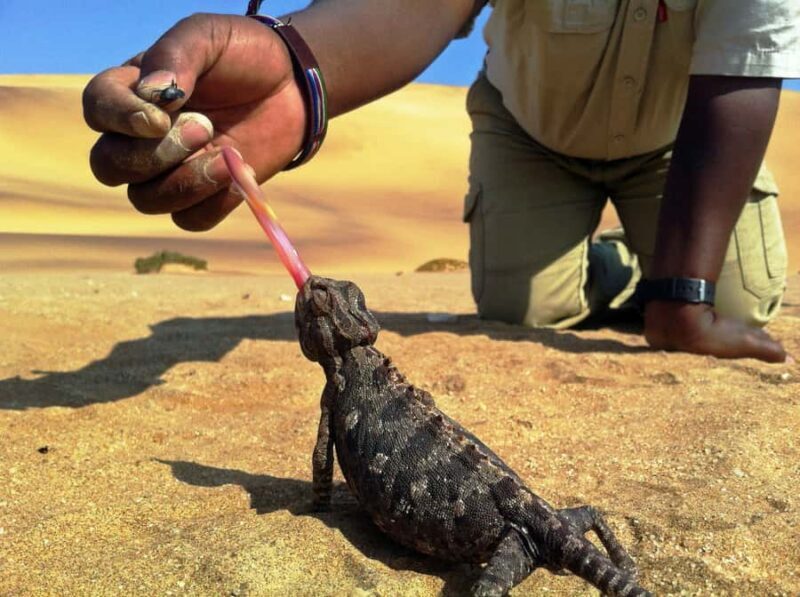
The guides’ approach matters here. In reviews of the outing, Johnny was praised for finding small animals and handling them carefully, while Björn and Immanuel were praised for making the information clear and entertaining. The best version of this tour is not a rushed tally of sightings; it is an explanation of what you are seeing and why it can live here.
The value of seeing the small five
The tour’s idea of wildlife is deliberately modest in size but not in interest. The phrase small five gives a playful frame to the search, and one outing has resulted in sightings of four of them. That is a strong example of what a skilled guide may find, but it should not be treated as a guaranteed checklist.
I like the way this changes the usual safari rhythm. Instead of scanning the horizon, you focus close to the ground and watch for tracks, shapes, and movement. The reward is a better sense of how much life can be present in a place that first looks bare.
That makes the activity particularly appealing if you have already seen large animals elsewhere in Namibia or want a wildlife experience that does not repeat the usual safari format. One participant described it as a welcome alternative to spotting big animals, and that is a useful way to think about it: a small-scale wildlife outing with a different kind of payoff.
It is also a good fit for curious visitors who enjoy learning while outdoors. The guide’s explanations are a major part of the value, and the humor noted by people who have taken the tour can make a technical subject easier to follow.
More Great Tours NearbyA short dune drive to finish
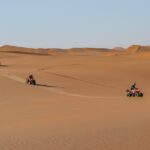
After the wildlife search, the outing includes a short drive through the dunes. It provides a change of pace after the walking and gives you another chance to take in the scenery from the vehicle.
Keep your expectations measured. The drive is described as short, not as a separate long adventure or a full dune-driving session. Its role is to round out the wildlife portion and add a scenic finish before the return to town.
The contrast is useful: first you move slowly, looking for small animals and tracks; later, the vehicle lets you cover a little ground and enjoy the dunes from another angle. If you are mainly booking for an extended high-speed drive, this is probably not the right choice. If you want wildlife interpretation with a brief driving element, the mix makes sense.
The return transfer to Swakopmund is listed at about 15 minutes. Pickup and drop-off are included, so the tour offers a straightforward half-day plan without requiring you to organize a separate ride.
Is $61 a fair price?
At $61 per person, the price includes a guide, hotel pickup and drop-off, and still mineral water. Food is not included. For a 210-minute outing, the value depends less on distance covered than on the guide’s ability to help you find and understand animals you would likely overlook on your own.
This is a specialized experience, not simply a ride into the dunes. You are paying for a guide who knows where and how to search, plus transport from your accommodation and a short scenic drive. If you enjoy natural history and want to learn, that package gives the price a clear purpose.
If you prefer guaranteed sightings, abundant large animals, or a long driving adventure, the value may feel less certain. Small wildlife can be elusive, and the tour’s strongest feature is the search and explanation, not a promise that every animal on the list will appear.
The tour has a 4.9 rating from 84 reviews. The praise centers on guides who explain well, find several small animals, treat wildlife carefully, and bring humor to the outing. That pattern suggests the guide is not an extra detail here; the guide is the main reason the experience works.
Prepare for sun, sand, and walking
Bring sunscreen and a hat. Those are the key items specified for the outing, and they make sense for several hours in open dunes. Still mineral water is provided, but there is no food included, so eat beforehand if you expect to need a meal during the 3.5-hour period.
The tour includes walking and is not suitable for people with mobility impairments. If walking is difficult for you, check carefully before booking rather than assuming the vehicle portion can replace the guided walk.
You can cancel up to 24 hours in advance for a full refund, and a reserve-now, pay-later option is available. Starting times depend on availability, so check the schedule that fits your visit.
Should you book the Living Dunes Experience?
Book it if you are curious about Namibia’s smaller desert wildlife and want a guide to show you how to find it. The most rewarding moments are likely to come from seeing an animal you would have missed and understanding how it manages to live in the dunes.
Choose another outing if you want a big-game safari, dislike walking, or expect a long dune drive. For a half-day close to Swakopmund, though, this is a distinctive and well-priced way to trade the usual wildlife search for something smaller, quieter, and surprisingly full of life.
From Swakopmund: Living Dunes Experience
FAQ
How long is the Living Dunes Experience?
The tour lasts 210 minutes, or three and a half hours, including the dune outing and transfers.
Where does the tour start?
Pickup is included from your accommodation in Swakopmund. The tour travels from town into the coastal dune belt nearby and returns you to Swakopmund.
What animals might I see?
The search may include palmato geckos, sand-diving lizards, tok-tokkie beetles, sidewinder snakes, spiders, scorpions, and chameleons. Sightings depend on what the guide finds.
What is included in the price?
The $61 price per person includes hotel pickup and drop-off, a guide, and still mineral water. Food is not included.
What should I bring?
Bring sunscreen and a hat. Food is not provided, so plan ahead if you will need a meal during the outing.
Is the tour suitable for people with mobility impairments?
No. The tour is listed as unsuitable for people with mobility impairments.
You can check availability for your dates here: