In Marrakech, the best part of this cooking class may begin before anyone picks up a knife: you head to a local souq to choose the ingredients for the meal. Then Moroccan chefs guide you through cooking at Riad Black Doors, a workshop in the Medina, and you sit down to eat what you have made.
I like two things in particular: the market visit gives you a practical look at everyday food shopping, and the class folds in the mint tea ritual and conversation about Moroccan culture. One consideration is time. A tagine needs to cook slowly, so you may have a long pause after the preparation is done.
The class costs $35 per person and runs for five hours, including the meal. It suits curious cooks and anyone who wants a closer look at Moroccan food traditions, but it is less appealing if you expect five hours of nonstop cooking or need the souq visit to be guaranteed: it is not included on Fridays or during Ramadan.
- What makes this class worth your time
- From Jemaa el-Fna to the souq
- A Medina kitchen at Riad Black Doors
- Preparing a meal, not just taking notes
- Mint tea and the meal you made
- How the five hours are likely to feel
- Who will enjoy this class most
- Should you book it?
- FAQ
- Where does the class meet?
- How long does the experience last?
- Is the local market visit included?
- What food will I cook?
- Are food allergies or dietary restrictions discussed?
- What languages are available?
- What is included in the price?
- More Cooking Classes in Marrakesh
- More Tours in Marrakesh
- More Tour Reviews in Marrakesh
- Not for you? Here's more nearby things to do in Marrakesh we have reviewed
What makes this class worth your time
 1 / 8
 2 / 8
 3 / 8
 4 / 8
 5 / 8
 6 / 8
 7 / 8
 8 / 8
- Shop for the meal in a local souq: You meet near Jemaa el-Fna, then walk to a market away from the main tourist areas to buy fresh produce and other ingredients.
- Cook with Moroccan Berber chefs: Marouane and Abdou are described as the workshop hosts. Experiences have also been led by Khalid, so the chef may vary.
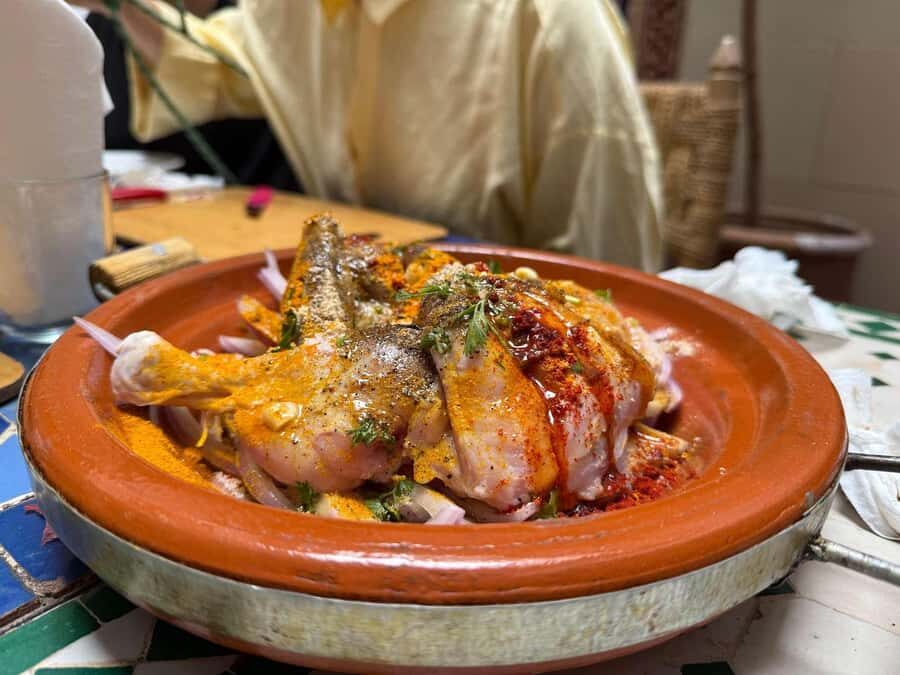
- Make more than a main dish: The meal is described as including starters, a main course, and dessert. Examples have included Moroccan salad, zaalouk, and chicken tagine, with vegetarian cooking also offered.
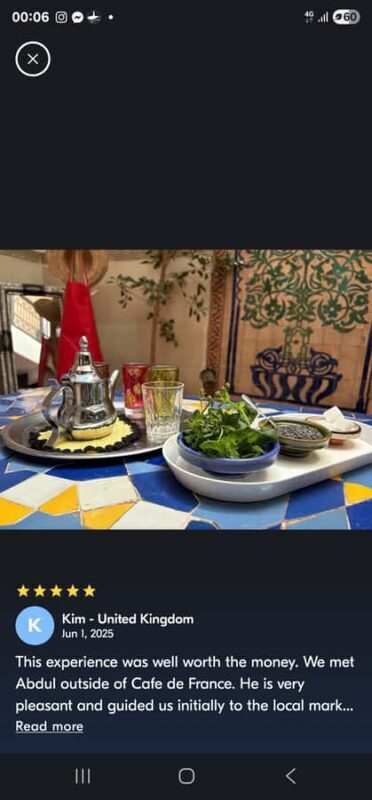
- Learn the mint tea ritual: Tea is part of the welcome and the lesson, not just a drink set on the table.
- Eat what you prepare: Meal, tea, guide, and cooking class are included in the $35 price.
- Plan around the simmering time: Tagine takes time to cook, and you might wait after the hands-on preparation is finished.
From Jemaa el-Fna to the souq
The meeting point is outside the main door of Café de France on Jemaa el-Fna Square. You are not picked up, so plan to get there on your own and check that you are waiting at the stated entrance. From the square, the group walks about five minutes toward the cooking workshop and local food market.
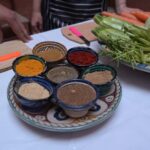
The souq visit is a useful start because you see the ingredients before they become a dish. You can look at fresh produce, spices, and local specialties, and learn what the chef chooses for the meal. It is a small but meaningful change from simply being told what goes into a tagine: you see the shopping part of cooking, too.
The market is described as being away from the tourist areas, but it is still part of a guided outing, not a long independent food tour. You should expect to walk with the group and buy ingredients for the class rather than browse at your own pace. If shopping and food culture are a main reason you are booking, check the date carefully. The market visit does not take place on Fridays or during Ramadan.
Before cooking, the hosts ask about food allergies and dietary restrictions. That is the right moment to be clear about what you can and cannot eat. A vegetarian version has been prepared in at least one session, alongside chicken, but the information does not promise a particular menu for every date. If you need a specific accommodation, raise it before the class rather than assuming it will be available.
You can also read our reviews of more cooking classes in Marrakesh
A Medina kitchen at Riad Black Doors
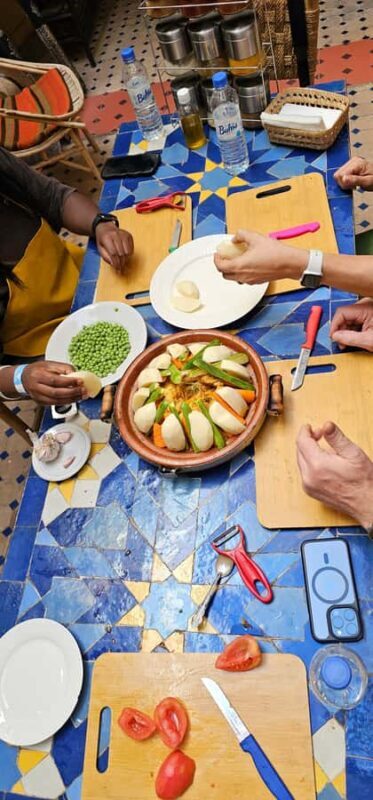
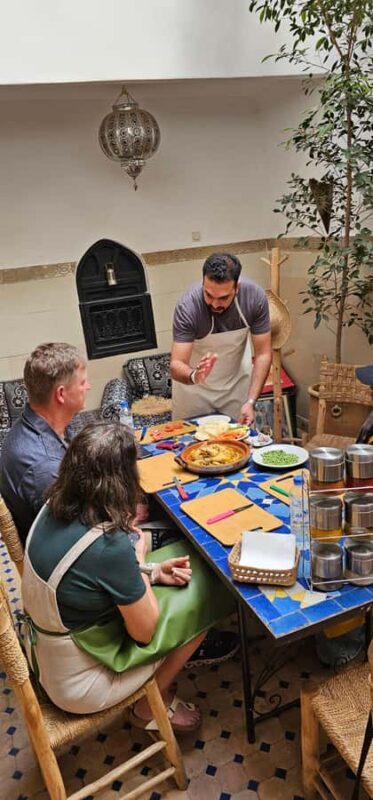
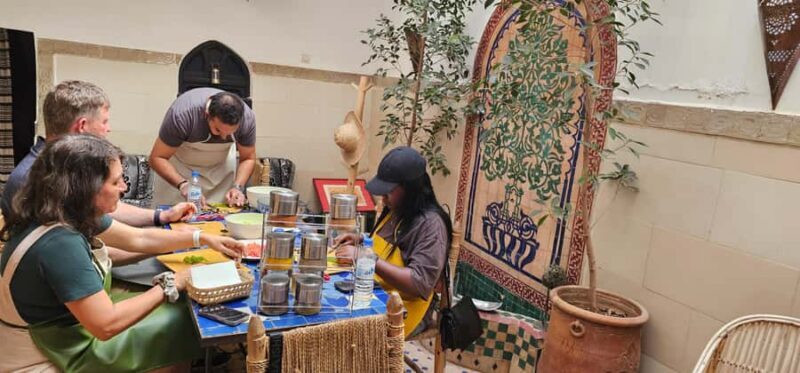
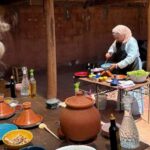
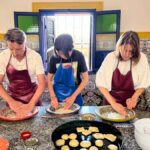
The workshop takes place at Riad Black Doors in the heart of the Medina. The setting is presented as warm and family-friendly, with the class built around cooking together rather than watching a chef perform from across the room. You should expect to take part in preparing the food and to hear about the techniques and spices as you work.
The class is led by Moroccan chefs with experience in cuisine and pastry, including work at hotels and restaurants in Morocco and abroad. The named hosts are Marouane and Abdou, both Moroccan Berber chefs. Some sessions have been led by Khalid, who has shared family cooking tips and talked about his Amazir background and life in Marrakech. The chef you meet may depend on the session.
That personal element matters. This is not only a recipe demonstration. Food is a way into conversations about family, Berber identity, and Moroccan customs, and the class leaves room for questions as you cook. You can learn a method, but you also get context for why a dish is made and shared in a certain way.
The experience is offered in English, French, and Arabic. If you have a language preference, check that the session you book is available in it. The class is open to individuals as well as groups, and private sessions can be arranged on request. No group size is specified, so do not count on a small class unless you confirm that detail.
Preparing a meal, not just taking notes
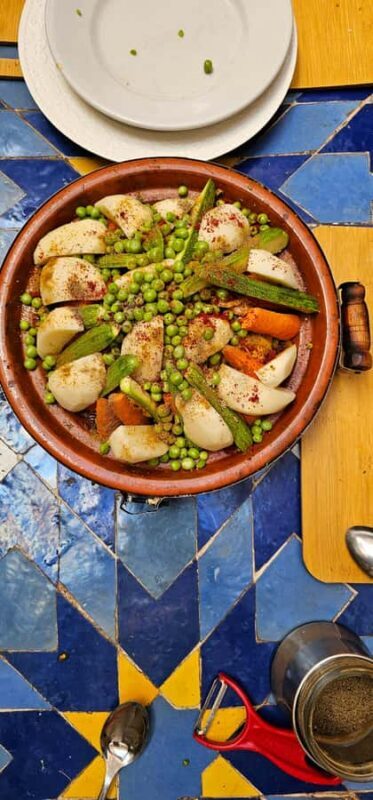
The cooking session is listed as lasting about an hour and a half. The meal is described as a set of classic Moroccan dishes, with starters, a main course, and dessert. You might make a salad, zaalouk, or chicken tagine; vegetarian cooking has also featured. The exact menu is not fixed in the information provided, so treat those dishes as examples rather than a promise.
The value is in learning the steps and making them yourself. You get to handle ingredients, follow the chef’s directions, and ask how spices and cooking methods work together. The instruction is meant to be collaborative, with everyone involved in the preparation. That makes this a better fit for people who enjoy participating than for anyone who would rather sit back and watch.
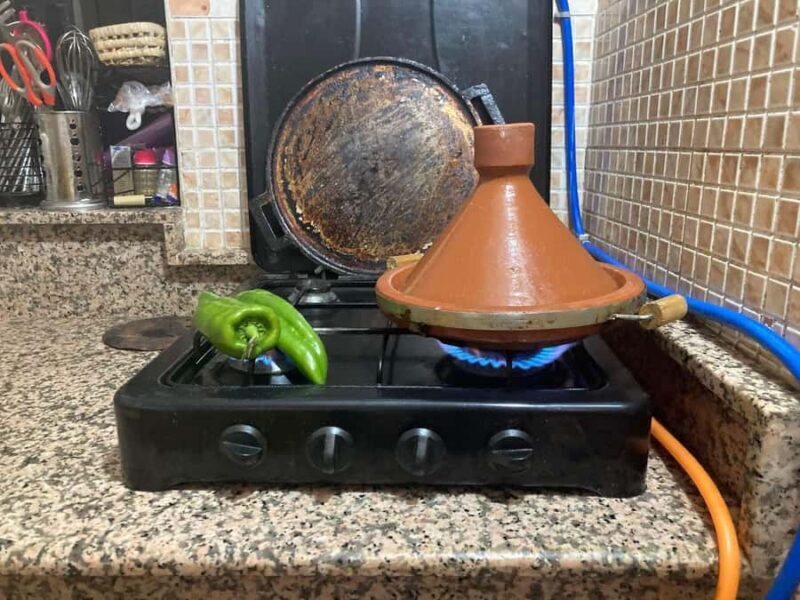
There is one practical catch: a tagine is a slow-cooked dish. Preparation may be finished well before the food is ready, leaving a wait of an hour or more in some sessions. The full experience includes tea and eating, so there is more to the visit than the listed cooking time, but a pause can still feel long if there is nothing else to do.
I would go in expecting a relaxed afternoon, not a tightly packed lesson. Ask questions, take notes, and use the waiting time to talk with the chef or other people in the group. One participant wished there had been another dish to prepare during the wait. That is fair advice if you like constant activity: this class may include stretches where the cooking is happening without much for you to do.
Mint tea and the meal you made
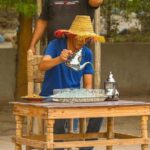
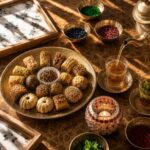
Tea is part of the welcome at the riad, and you learn about the Moroccan mint tea ritual before moving into the cooking session. This gives the class a natural pause and a chance to hear more about local customs. The itinerary sets aside about 30 minutes for tea, though the actual flow may vary.
The meal is the payoff: you sit down to eat the dishes prepared during the class. The listed tasting time is about an hour, and the meal is included in the price. It turns the lesson into a shared table rather than a recipe sheet and a quick goodbye.
The food examples give you a sense of the range. A meal has included Moroccan salad, eggplant zaalouk, and chicken tagine, while another session prepared both chicken and vegetarian versions with side dishes. The class description also includes dessert, but no single dessert is named. Expect the menu to depend on the session and the ingredients available.
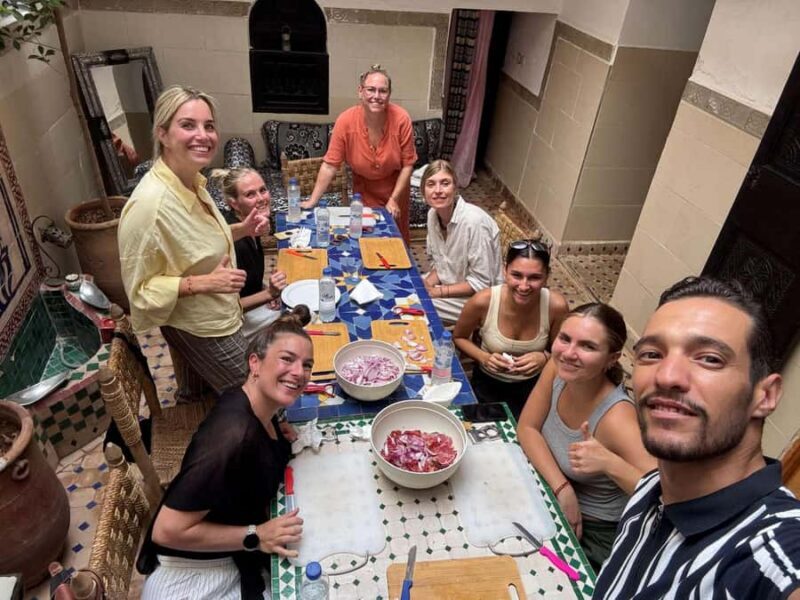
The atmosphere can be as valuable as the cooking. The class is designed for conversation, and the meal gives you time to talk with your host and the group. If you are interested in Berber traditions or everyday life in Marrakech, ask about them. One session included a discussion of culture, architecture, family, and Amazir origins, alongside cooking advice.
More Great Tours NearbyHow the five hours are likely to feel
The experience lasts five hours. The listed sequence includes the meeting near Café de France, a short walk, a 90-minute cooking class, 30 minutes for tea, and an hour for eating. The market visit is also part of the usual experience, but is not available on Fridays or during Ramadan. Since tagine cooking can create a long wait, the day may feel less evenly paced than those activity blocks suggest.
That makes this better for a day when you have room to linger. It is not an ideal choice if you need to be somewhere soon after the stated finish time. The meeting point is central, and you return to Café de France, but the tour does not include pickup or drop-off.
At $35, the price covers a guide, tea, the cooking class, and the meal. You are also getting the market visit when it is operating, plus several hours with local chefs. That is good value if you want a meal and an activity in one booking, especially because you take part in preparing the food rather than paying only for a restaurant dinner.
The price is less compelling if your main goal is a highly structured, nonstop cooking lesson. The slow cooking time is part of how tagine is made, but it can leave an awkward gap. Think of the value as a blend of food shopping, cooking, cultural conversation, and a shared meal, rather than five hours of hands-on instruction.
You can also read our reviews of more tours and experiences in Marrakesh

Who will enjoy this class most
I would recommend it to anyone who likes learning through food, especially if you want to see where ingredients come from before they reach the kitchen. It is also a good fit if you are curious about Moroccan mint tea and want to ask a local chef about family recipes and culinary customs.
It can work for solo participants or groups, and the welcoming, collaborative format may suit people who like meeting others over a meal. If you want a private session, the option can be arranged on request. If you are traveling with someone who has dietary needs, contact the organizers in advance and explain them clearly.
It is a weaker match if you want a fast lesson with little waiting, a guaranteed market visit on a Friday or during Ramadan, or a fixed menu. The class is hands-on, but the pace depends partly on cooking time. For a slow afternoon with food, conversation, and a bit of market shopping, that is a reasonable trade.
Should you book it?
Book this class if you want to cook and eat Moroccan food with local chefs, and you like the idea of learning through a market visit, tea, and conversation as much as through recipes. At $35, the included meal and guided cooking make the price sensible for a five-hour experience. Check the date if the souq matters most, and be ready for a slower stretch while the tagine cooks.
Skip it if you need a tightly timed activity or expect every minute to be hands-on. For everyone else, it offers a grounded way to spend an afternoon in the Medina: shop for ingredients, learn how a Moroccan meal comes together, then share the results at the table.
Marrakech: Moroccan Cooking Class with Local Chef
FAQ
Where does the class meet?
Meet outside the main door of Café de France on Jemaa el-Fna Square. Pickup is not included.
How long does the experience last?
The activity lasts five hours. The itinerary includes a walk, cooking, tea, and time to eat.
Is the local market visit included?
The class usually begins with a visit to a local food market, but that visit is not included on Fridays or during Ramadan.
What food will I cook?
The menu includes starters, a main course, and dessert. Examples include Moroccan salad, zaalouk, and chicken tagine. A vegetarian version has also been prepared, but the exact menu may vary.
Are food allergies or dietary restrictions discussed?
The hosts ask about allergies and dietary restrictions before the market visit. Tell them about your needs in advance, especially if you require a particular menu.
What languages are available?
The live guide is available in English, French, and Arabic.
What is included in the $35 price?
The price includes a guide, tea, the cooking class, and the meal you prepare. Pickup is not included.
You can check availability for your dates here: