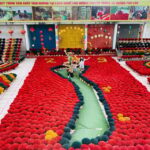
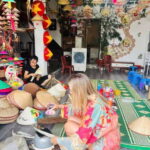
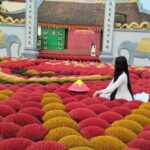
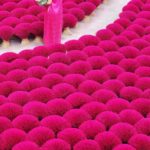
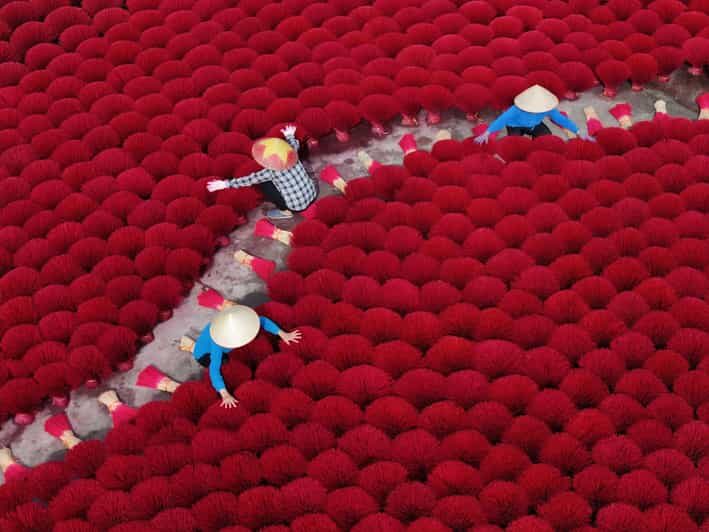
Quang Phu Cau’s incense sticks dry in colorful bundles along village lanes, making this a striking glimpse of a working craft as well as a popular photo stop. The tour pairs it with Chuong, where you can watch conical hats take shape and paint one of your own.
I like that the craft stops go beyond looking: you can try parts of the hat-making process and, at the incense village, take part in making incense sticks. I also like the choice between a focused half-day and a longer route that adds lacquerware and votive paper crafts.
One thing to weigh is the drive. The villages are outside Hanoi, and the journey can take around an hour and a half each way; the longer tour also fits several stops into one day, so time at each can feel limited.
- What to know before you choose
- Two routes, two different days out
- The drive from Hanoi’s Old Quarter
- Chuong: see how a conical hat is made
- Quang Phu Cau: incense made by hand
- Ha Thai and Phuc Am on the longer route
- Guides, pace, and the optional Train Street stop
- Is good value?
- Who should book this village trip?
- FAQ
- How long does the tour take?
- Which villages are included?
- Can I paint a conical hat?
- Is lunch included?
- Is Train Street part of the tour?
- What should I bring?
- More Tours in Quang Phu Cau
- More Tour Reviews in Quang Phu Cau
- Not for you? Here's more nearby things to do in Quang Phu Cau we have reviewed
What to know before you choose
 1 / 8
 2 / 8
 3 / 8
 4 / 8
 5 / 8
 6 / 8
 7 / 8
 8 / 8
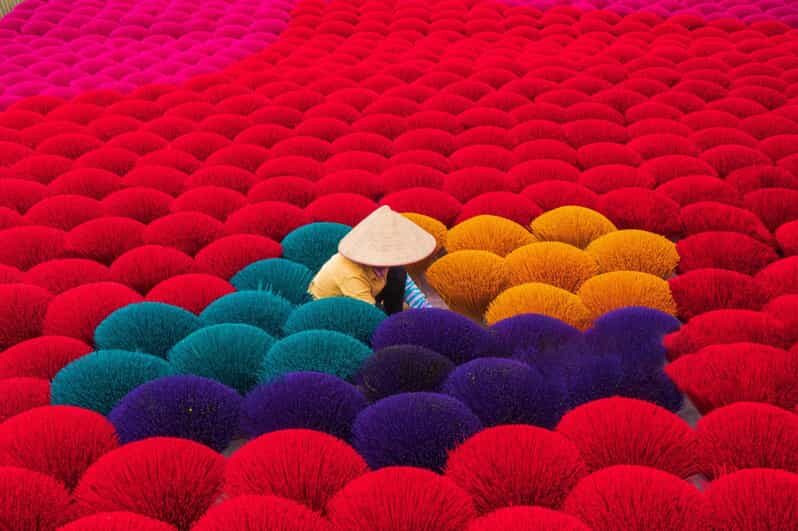
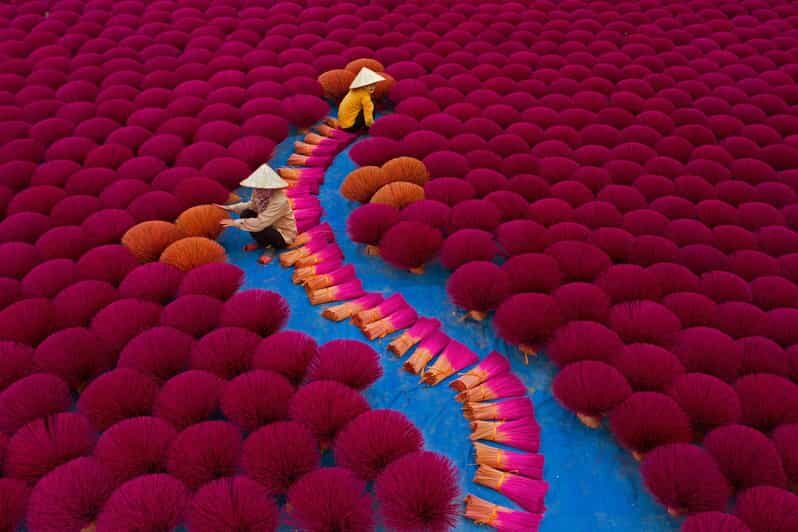
- Incense bundles make a memorable photo stop: Quang Phu Cau is known for incense production, with family-scale work and colorful sticks drying outdoors.
- You get a small hands-on souvenir: Both tour options include a conical hat to paint and take home.
- Chuong offers craft, not just a photo: You can see how hats are made and try parts of the process, including working with bamboo leaves.
- The longer route adds two distinct crafts: Ha Thai is known for lacquerware, while Phuc Am makes votive paper items for spiritual ceremonies and festivals.
- Train Street is an optional drop-off: The half-day tour returns to the city and can drop you near a Train Street café. The train’s arrival is not guaranteed.
- Guides help shape the day: Alex, Henry, and Huy are among the guides named by visitors, with particular praise for friendly explanations and help taking photos.
Two routes, two different days out
This experience is sold in more than one format, so check which route and duration you are booking. The half-day group option lasts about six hours and visits Chuong Conical Hat Village and Quang Phu Cau Incense Village. It runs in a morning slot, roughly 7:45 to 13:30, or an afternoon slot, roughly 11:45 to 17:30.
The longer, four-village option adds Ha Thai and Phuc Am and is described as a five-to-eight-hour outing. The route covers lacquerware, votive paper crafts, incense, and hats. A traditional lunch is listed as optional, so confirm whether it is part of the arrangement you choose.
There is also a private-tour format, as well as small-group availability. The exact pace and amount of time at each village can vary with the route and group. If you care most about trying the hat activity and seeing the incense work, the two-village trip is the simpler choice; choose the longer one if the extra crafts matter to you.
You can also read our reviews of more tours and experiences in Quang Phu Cau.

The drive from Hanoi’s Old Quarter
Pickup and drop-off are included for the Old Quarter area. Depending on the route, the villages are about an hour and a half from central Hanoi, and the journey can take longer in traffic. That transfer is a meaningful part of the day, so this is not a quick stop you can squeeze between city sights.
The ride also gives your guide time to introduce the crafts and answer questions. Alex has been praised for keeping the group engaged on the drive, and guides including Henry and Huy have also been singled out for being helpful and clear. If you are prone to motion discomfort, bring what you usually need for a road trip.
Small-group availability helps the visits feel more personal than a large coach outing, though it does not mean every moment will be quiet or unhurried. A few accounts describe a crowded vehicle or a rushed schedule, so it is worth allowing flexibility in your day, especially if you book the full route.
Chuong: see how a conical hat is made
Chuong has made conical hats for more than 300 years. At the village, you can see the work up close, from the materials and construction to the finishing steps. The tour includes a visit to a family workshop, where you can watch artisans at work rather than only seeing finished hats on display.
The hands-on part is a highlight for many people. You can try painting a hat and take it home as a personalized souvenir; visitors have also described trying steps such as ironing bamboo leaves. The supplied hat is a small craft item, not necessarily the same thing as buying a finished, wearable hat, so ask your guide what is included if you have a particular expectation.
This stop can also help you understand why hats vary in price. A finished hat involves skilled work and multiple steps, and the materials and finish matter. If you want a wearable hat, you can ask about buying one locally, but treat that as a separate purchase from the included painting activity.
The main caution is time. A few visitors felt the demonstration or painting session moved quickly, and the hat stop can include a chance to buy local products. If you want a detailed craft lesson, ask questions as the process is explained and use the available time well.
Quang Phu Cau: incense made by hand
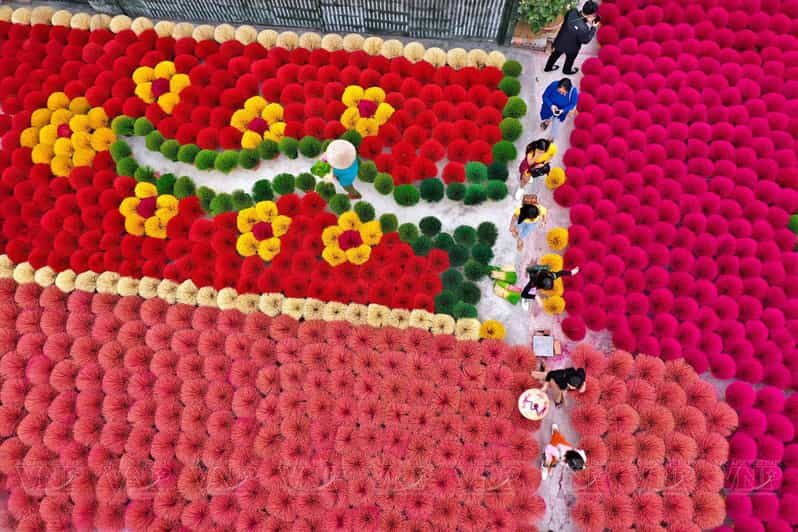
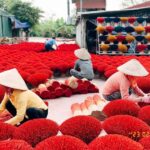
Quang Phu Cau has produced incense for more than a century. The village visit takes you among drying incense sticks and family workshops, where you can see stages of production and meet people who specialize in dyeing the sticks. The bright bundles are part of the work itself, but they also make the village an especially appealing place for photographs.
You can learn how incense is made and take part in some of the process. The tour includes an incense-making demonstration, and the listed inclusions mention a few free sticks after you have made them yourself, along with incense souvenirs. Ask your guide which steps you can try during your visit, since the activity may depend on the workshop and available time.
Keep your expectations balanced: this is a working craft village, but the visit also has a strong photo element. Some areas are set up to show the incense against a colorful background, and the experience may feel more like a short workshop visit than a long walk through a traditional village. That is a fair trade if you want a clear demonstration and good pictures; less so if you are seeking hours of unstructured exploration.
The stop is also a good opportunity to buy incense directly from makers. You are not obliged to shop, but if you do, carry cash, which is recommended for the outing.
More Great Tours NearbyHa Thai and Phuc Am on the longer route
The full-day route adds Ha Thai, a village associated with lacquerware since the 17th century. Here you can learn about the process behind lacquer objects and see why the craft is valued for its durability and finish. This stop broadens the day beyond the photogenic incense and hands-on hat painting, giving you another way to see how traditional skills remain part of village work.
Lacquerware is a process rather than a single quick trick, so a guided visit can help you recognize the work behind a finished piece. The tour includes a guided visit to the lacquer art-making village, but the available details do not promise a hands-on lacquer activity. If making something yourself is important, the hat painting is the more reliable activity to plan around.
Phuc Am is known for votive paper crafts used in spiritual ceremonies and festivals. Artisans make symbolic items such as paper effigies and animals. Seeing these objects in context can make the visit more meaningful than treating them as curiosities: they are made for particular cultural and religious uses.
The full route gives you more variety, but it also means more transitions and less time at each place than a dedicated workshop might offer. Choose it because you want to compare several crafts in one day, not because you expect an in-depth course in every technique.





Guides, pace, and the optional Train Street stop
The guide is an important part of this experience. Alex is frequently praised for explaining the craft steps, helping with photos, and keeping the ride lively. Henry and Huy are also named as warm, helpful guides, and one French-speaking guide was appreciated by a family travelling with young children. Guides are offered in many languages, including English, French, Spanish, Italian, Chinese, Korean, Japanese, and others; check the language available for your departure.
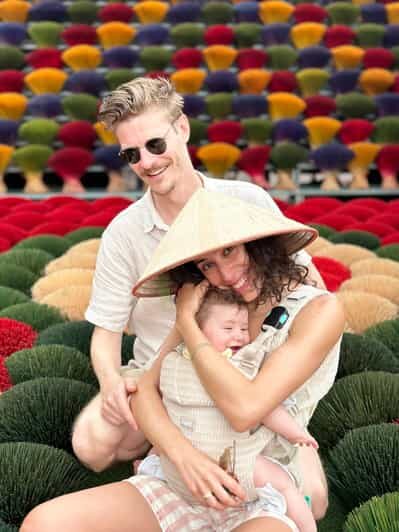
Photo help is a practical bonus at Quang Phu Cau, where the colorful incense is a natural backdrop. Several guides have been described as willing to take pictures for the group, which is useful if you are travelling alone or want a photo of everyone together. Still, the guide’s main job is to explain and manage the visit, so be ready to take your own pictures too.
On the half-day route, the return may include an optional drop-off at Hanoi Train Street. If you do not want to get out there, you can stay in the vehicle. The drop-off is near a café, but it does not promise that a train will pass while you are there.
Is $14 good value?
At $14 per person, the stated price is low for a guided outing with Old Quarter pickup and drop-off, village visits, entrance fees, activities, bottled water, a painted hat, and some incense. The value is strongest if you use the demonstrations and hands-on activities, rather than viewing the trip as transport to a photo location.
Check the format before judging the price. The half-day and four-village options do not cover the same ground, and the lunch is optional. A longer route that includes Ha Thai and Phuc Am is a different day from the two-village trip, so confirm the route, meal arrangement, and group type when you check availability.
A Lunar New Year surcharge of 250,000 VND per person is listed. Personal expenses are not included, and cash is useful for purchases. Cancellation is free up to 24 hours before the activity, and reserve-now, pay-later booking is available.
Who should book this village trip?
I would choose the half-day tour if you want an easy introduction to two recognizable Vietnamese crafts, a chance to paint a hat, and time back in Hanoi later in the day. It suits curious first-time visitors, families, and anyone who likes learning by watching and doing. One family found the outing manageable with children aged two and eight, though your own comfort will depend on the drive and schedule.
Pick the four-village option if you are more interested in craft variety and can give the outing most of a day. It adds the quieter context of lacquerware and votive paper work, but the day’s pace may feel brisk. Neither version is ideal if you want a long, unstructured village walk or an intensive class.
Bring comfortable shoes, a camera, and cash. If you value an organized trip, local explanations, and a few tangible souvenirs, this is a good-value way to get beyond Hanoi’s center. If your priority is only the incense photo, you may find the long drive hard to justify.
Hanoi: Incense Village, Hat or Lacquer Village “SMALL GROUP”
FAQ
How long does the tour take?
The experience is listed as five to eight hours. The two-village group option lasts about six hours, with morning and afternoon departure windows.
Which villages are included?
The half-day option visits Chuong Conical Hat Village and Quang Phu Cau Incense Village. The longer option adds Ha Thai lacquer village and Phuc Am votive paper village.
Can I paint a conical hat?
Yes. Both the half-day and full-day options include a hat for you to paint and take home.
Is lunch included?
A traditional Vietnamese lunch is listed as optional. Check the details of your selected tour to confirm whether it is included.
Is Train Street part of the tour?
The half-day option offers an optional drop-off near a Train Street café on the return to Hanoi. If you do not want to get out there, you can wait in the vehicle; a passing train is not guaranteed.
What should I bring?
Wear comfortable shoes and bring a camera and cash. Personal expenses are not included.
You can check availability for your dates here: