
The best part of this four-hour trip is the variety packed into one outing: you move from mangrove channels to small islands, then swim above coral and a wreck near the barrier reef. Local guides such as Christophe, Ken, and David bring the route to life with explanations about the plants and animals around you.
I like two things in particular: the stops are varied enough for swimmers and non-swimmers to take part, and the boats carry no more than 12 people, so the outing feels personal rather than like a floating bus tour. Free masks, fins, and snorkels make it easy to try the water without bringing your own kit.
One thing to weigh is the language: the live tour guide speaks French. Some guides have also spoken English, but that is not guaranteed. The meeting point has caused confusion for at least one group, so confirm the exact departure place and time before setting out.
- Six distinct stops: Expect two snorkeling stops, two where you can stand in the water, and two where you stay aboard.
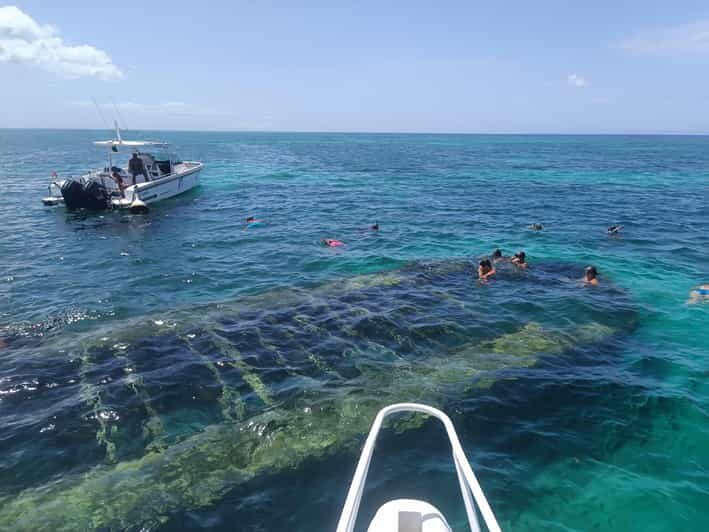
- A wreck beside the reef: See a shipwreck that breaks the surface in clear water near the barrier reef.
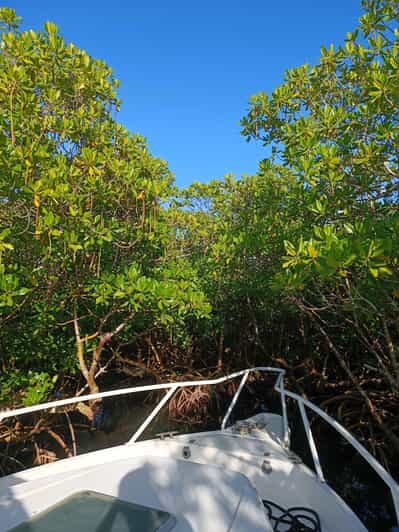
- Mangrove time with a local guide: Learn why this coastal forest matters to Guadeloupe’s wildlife and environment.
- A small-boat outing: Gwadaventure operates three boats, each carrying up to 12 people.
- Snorkel kit and a planter included: Borrow fins, masks, and snorkels, then enjoy a homemade planter after the sightseeing.
- From Sainte-Rose into the Grand Cul-de-Sac Marin
- What the six stops mean for your day
- The mangrove: more than a scenic boat ride
- Îlet Caret, Îlet Blanc, and the barrier reef
- A good fit for mixed-age groups
- Guides make the difference
- The planter, the price, and the practical trade-offs
- Who should book this boat trip?
- FAQ
- How long is the excursion?
- Where does the boat leave from?
- Do I need to know how to swim?
- Is snorkeling equipment included?
- What language does the guide speak?
- Is the tour wheelchair accessible?
From Sainte-Rose into the Grand Cul-de-Sac Marin
 1 / 6
 2 / 6
 3 / 6
 4 / 6
 5 / 6
 6 / 6
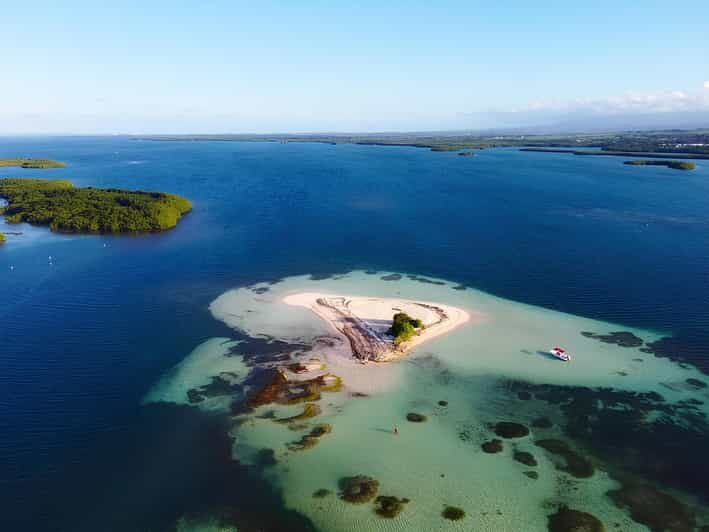
Gwadaventure’s trip leaves from the harbor of Sainte-Rose, on Guadeloupe’s north coast, and spends four hours exploring the Grand Cul-de-Sac Marin. This protected marine area is known for its barrier reef, shallow waters, mangrove forest, and small islands. The route gives you a close look at several different parts of that environment in one half-day.
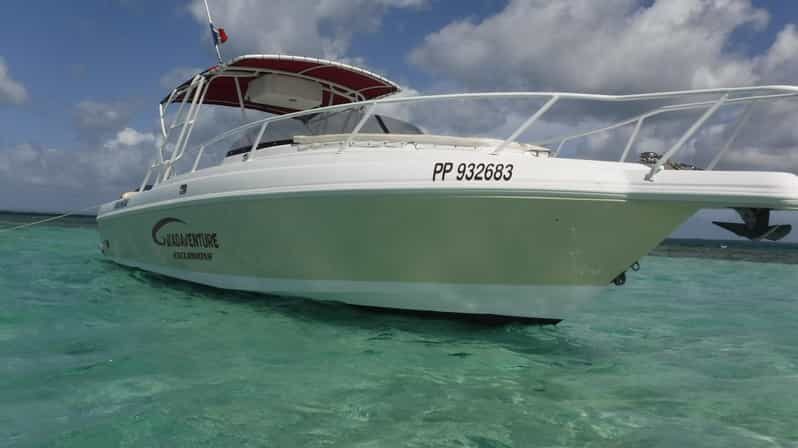
You can choose a morning or afternoon departure, subject to availability. That flexibility makes it easier to fit the outing around a beach day or other plans, though you will want to check the time carefully when you book. The excursion runs on one of three outboard boats, with space for up to 12 people on each. That is a useful size: large enough to make the boat feel sociable, but small enough for the guide to talk with people rather than simply broadcast a list of place names.
The boats have a sun-protected area and a sunbathing area at the front. You can sit out of direct sun between stops or stretch out at the bow when you want a little more exposure. The ride is part of the fun, but the comfort details matter in the Caribbean sun, especially if you are bringing children or older relatives.
What the six stops mean for your day
The trip includes six stops, with a mix of time in the water and time aboard. Two stops are for snorkeling, at depths of about three to five meters. Two more are places where you can stand in the water, while the remaining two are enjoyed from the boat. That blend is one of the tour’s strongest practical features. You do not need to be a confident swimmer to come along, and you can decide how much time you want to spend in the sea.
The specific order can vary, so think of the route as a set of highlights rather than a fixed sequence. You will visit the mangrove, Îlet Caret, Îlet Blanc, and the barrier reef, including a wreck that rises above the water. The crew provides masks, fins, and snorkels at no extra charge, which saves you from packing bulky gear. If you use your own equipment, the supplied details do not say whether it can be stored aboard, so ask ahead if that matters to you.
A four-hour outing gives time to stop and look around rather than race from one point to the next. Several people have found that the time passes quickly, a sign that the stops and explanations keep the trip moving. Still, four hours is a half-day, not a full-day cruise with long stretches on an island. Go for a concentrated tour of the marine area, not for an entire day lounging on Îlet Caret.
The mangrove: more than a scenic boat ride
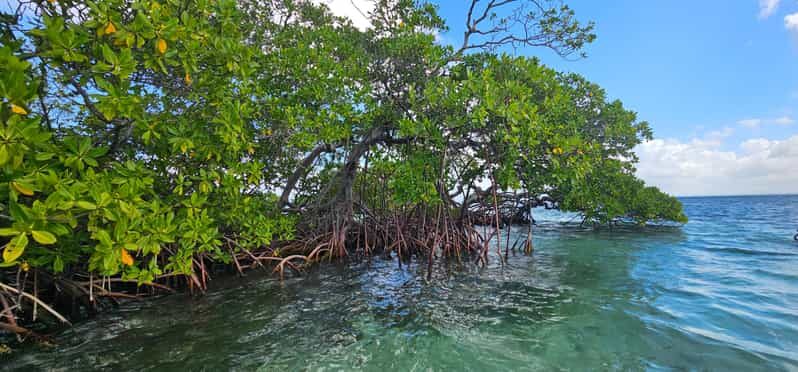
The mangrove is the outing’s most distinctive stop. These trees grow in coastal water and form a habitat with its own wildlife and ecological role. Your guide explains the environment as you explore, with attention to the mangrove’s importance and the flora and fauna around it. Guides including Christophe and Ken have been praised for making these explanations clear and engaging, and for showing genuine concern for the area’s preservation.
That educational element gives the excursion more substance than a series of pretty swimming stops. You get a sense of why the mangrove matters, not only what it looks like from the boat. It is especially worthwhile if you are traveling with children or want an outing that offers some context alongside the scenery.
The experience is still a boat trip, not a land walk through the forest. You see the mangrove from the water, and the supplied information does not promise a disembarkation or a hike. If you are expecting a long walk among the trees, adjust your expectations. The appeal is seeing this coastal ecosystem from close range while your guide points out what you might otherwise pass without noticing.
Îlet Caret, Îlet Blanc, and the barrier reef
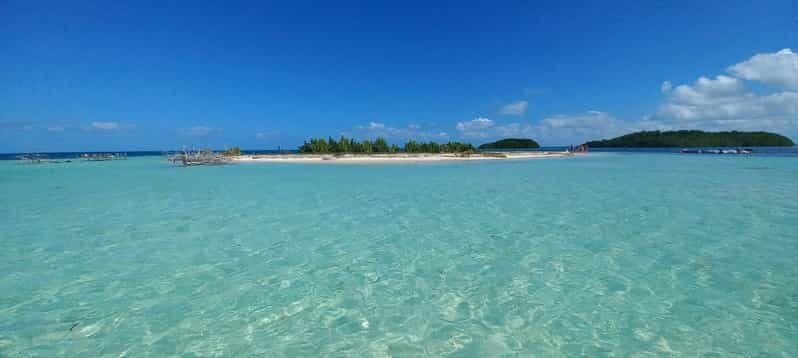
The small islands give the route its postcard moments. Îlet Caret and Îlet Blanc are part of the string of sites visited across the Grand Cul-de-Sac Marin, and their pale sand and clear surrounding water make a striking contrast with the mangrove’s dense shoreline. The itinerary allows time to enjoy the stops rather than treating each one as a quick photo pause.
The barrier reef is the main event for snorkelers. With the supplied mask and snorkel, you can look for colorful fish, starfish, coral, gorgonians, and formations known as Neptune’s brains. The reef is described as a giant aquarium, but remember that visibility and what you see can vary with conditions. The activity information gives the snorkeling depth as three to five meters, so this is not a shallow wade at every stop.
Near the reef, the wreck is one of the trip’s more unusual sights. It breaks the surface in clear water, offering a striking contrast with the natural reef around it. You can see it from the boat and explore the underwater area at the snorkeling stop. If you are not comfortable in the water, you can stay aboard for some stops, and you do not have to swim at every location to be part of the trip.
A good fit for mixed-age groups
This outing is designed to work for different comfort levels. Swimming is not a prerequisite: there are two snorkeling stops, two stops where you can stand, and two where you remain on the boat. That arrangement can help a family group avoid the usual problem of one person wanting to snorkel while another would rather stay dry.
The boats are described as suitable for children and seniors and protected from the sun. Families have enjoyed the trip with children, and guides have been noted for helping young passengers feel at ease. If it is a child’s first boat outing, a calm, attentive captain can make a real difference. Still, the practical details of child seats, life jackets, and minimum ages are not specified here, so confirm any particular requirement directly with Gwadaventure.
The activity is listed as wheelchair accessible, and a visitor with reduced mobility has found it suitable. Accessibility can depend on what you need, particularly when boarding or getting into the water. If you plan to stay aboard and need specific assistance, contact the operator before booking to make sure the boat and boarding arrangements fit your needs.
Guides make the difference
The guides are a major part of the experience. Christophe is frequently singled out for a warm manner, patience with children and nervous snorkelers, humor, and lively explanations. Ken has also been praised for explaining the mangrove and its role in the ecosystem, while David has led relaxed, informative trips. Other named captains include Mario, Pierre, and Lola. Your guide depends on the departure, so you should not book expecting a particular person.
The language deserves special attention. The listed live guide language is French. One group described a guide who spoke both French and English, and another English-speaking group was able to follow along because the guide left time for translation. But you cannot count on that. If you do not speak French, ask Gwadaventure whether an English-speaking guide is available for your chosen date rather than assuming the tour will be bilingual.
Guides do more than steer between stops. Their explanations connect the scenery to the local environment, and their manner helps set the tone on a small boat where everyone shares the same space for four hours. The best moments, from the accounts available, come when the captain is funny and relaxed without letting the explanations become an afterthought.
The planter, the price, and the practical trade-offs
At $67 per person, the trip offers four hours on the water, several stops, a local guide, and free use of snorkel equipment. A homemade planter is included as well, enjoyed with your feet in the water after the sightseeing. That is a fair bundle if you want a guided introduction to the marine area and do not own snorkeling gear. The value is less compelling if your priority is simply to spend a long stretch on a beach, since the tour is built around moving between sites.
The planter adds a convivial finish, but it is rum-based. If you do not drink alcohol, you can still enjoy the scenery and the rest of the outing; the supplied details do not specify a nonalcoholic alternative. Bring water and sun protection as sensible basics for a boat trip, though check with the operator about what you may bring aboard.
There have been occasional problems with timing and directions to the meeting point. One group waited because the departure time had changed without them being notified, while another had trouble identifying the right hut at the harbor. These appear to be practical exceptions rather than the defining feature of the outing, but they are easy to guard against: reconfirm your departure time and ask for a precise meeting-point description before you leave.
You can cancel up to 24 hours ahead for a full refund, and the reserve-now, pay-later option lets you hold a place without paying immediately. Those terms offer useful flexibility if your plans are still taking shape. Check current availability for the actual morning or afternoon departure you want.
Who should book this boat trip?
I would choose this excursion if you want to see more than one side of Guadeloupe’s coastal environment in a single half-day. It suits couples, families, and small groups who like a mix of boat time, snorkeling, scenery, and local explanation. It is also a sensible option if not everyone in your party swims, since some stops are on the boat and others allow you to stand.
You may want another kind of outing if you need an English-language tour guaranteed, want a long beach stop, or prefer a full day on the water. The scenery is a strong reason to go, but the guide’s language, the meeting details, and your comfort with a small outboard boat are worth checking in advance.
At $67, I see good value for a four-hour guided route with equipment included and a small group cap. Book it if the mangrove and reef are high on your list, and if you are happy to share the boat with a dozen people or fewer. Before paying, confirm the language and exact harbor meeting point. That small bit of planning can help you start the trip relaxed, which is exactly the mood this outing is meant to deliver.
Guadeloupe: Day Trip to the Grand Cul-de-Sac Marin and the Mangrove
FAQ
How long is the excursion?
The outing lasts four hours. You can choose a morning or afternoon departure, depending on availability.
Where does the boat leave from?
It departs from the harbor of Sainte-Rose in Guadeloupe.
Do I need to know how to swim?
No. Swimming is not a prerequisite. The trip includes two snorkeling stops at a depth of three to five meters, two stops where you can stand, and two stops where you stay aboard.
Is snorkeling equipment included?
Yes. Fins, masks, and snorkels are available to borrow at no extra charge.
What language does the guide speak?
The listed live tour language is French. English has been spoken on some trips, but it is not guaranteed, so confirm with Gwadaventure if you need an English-speaking guide.
Is the tour wheelchair accessible?
The activity is listed as wheelchair accessible. If you need specific assistance with boarding or other arrangements, check directly with the operator before booking.
You can check availability for your dates here: