Christchurch’s story is written in its streets twice: first in the buildings and places shaped by Māori and European settlement, then in the changes brought by the 2010 and 2011 earthquakes. This two-hour walk links those histories with the city’s geology, architecture, and rebuilding, so you can see the central city with more context than a stroll alone provides.
I like two things in particular: the tour connects the city’s past to the forces that formed Canterbury, and its local guides make room for questions and personal perspective. At $17 per person, it is an inexpensive way to get your bearings. One consideration: you spend two hours outdoors, so rain or other poor weather can make the walk less comfortable, even though the pace is relaxed.
- Look for the purple umbrella beneath the Bridge of Remembrance, on the corner of Oxford Terrace and Cashel Street.
- Follow a layered story: Ngāi Tahu history, English settlement, Canterbury’s geology, and Christchurch today.
- Hear about the earthquakes and rebuild through a walk in the central city, where recovery is part of the streetscape.
- Meet four notable New Zealanders with direct ties to Canterbury, including two whose influence reached well beyond the country.
- Ask questions as you go: guides such as Reg and Lisa are praised for clear explanations, local insight, and a steady group pace.
- Plan for an easy two hours: the tour is listed as wheelchair accessible, with English-language guiding.
- Start beneath the Bridge of Remembrance
- At 159 Oxford Terrace, connect the city to its setting
- Cathedral Square and Christchurch’s changing centre
- At 89 Armagh Street, bring human history into view
- A hidden stop and the details you might miss
- The earthquakes, told with care and context
- Antarctic links and four New Zealand lives
- What the walk feels like in practice
- Is good value?
- Who should book this Christchurch walk?
- FAQ
- Where does the tour start?
- How do I find the guide?
- How long is the tour?
- How much does it cost?
- What language is the tour in?
- Is the tour wheelchair accessible?
- What subjects does the guide cover?
- Which places are included on the route?
- Can I cancel for a refund?
- The Best Of Christchurch!
- More Walking Tours in Christchurch
- More Tours in Christchurch
- More Tour Reviews in Christchurch
- Not for you? Here's more nearby things to do in Christchurch we have reviewed
Start beneath the Bridge of Remembrance
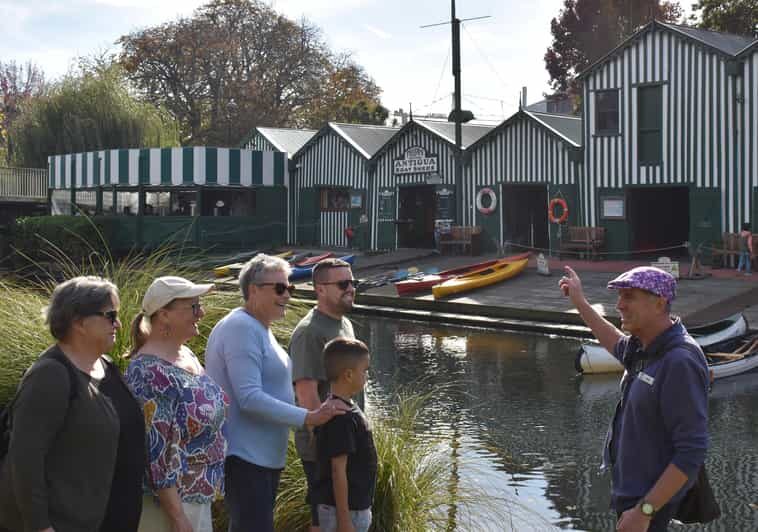 1 / 5
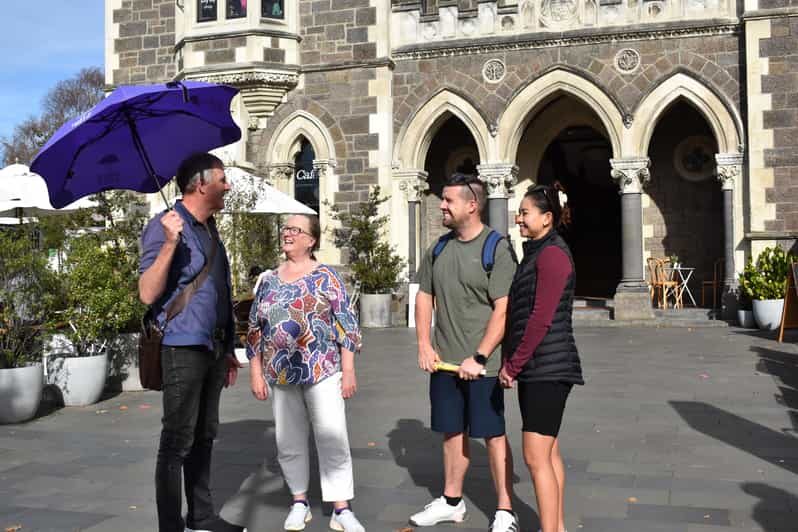 2 / 5
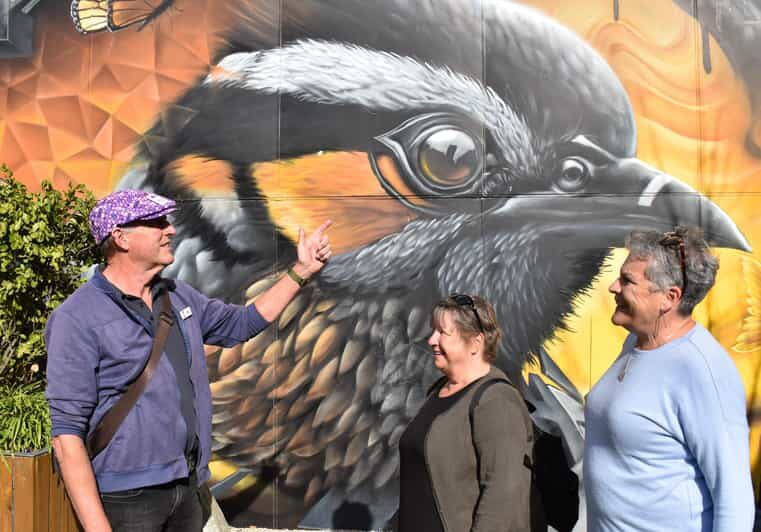 3 / 5
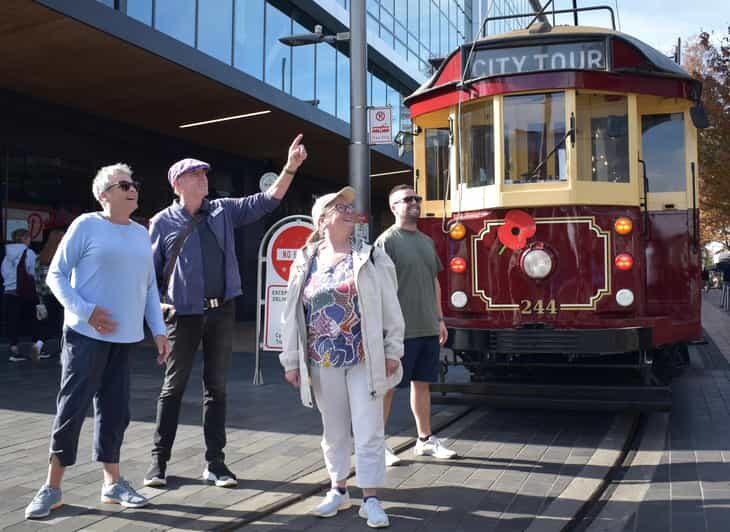 4 / 5
 5 / 5
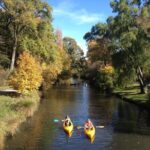
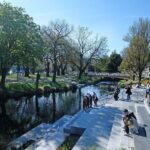
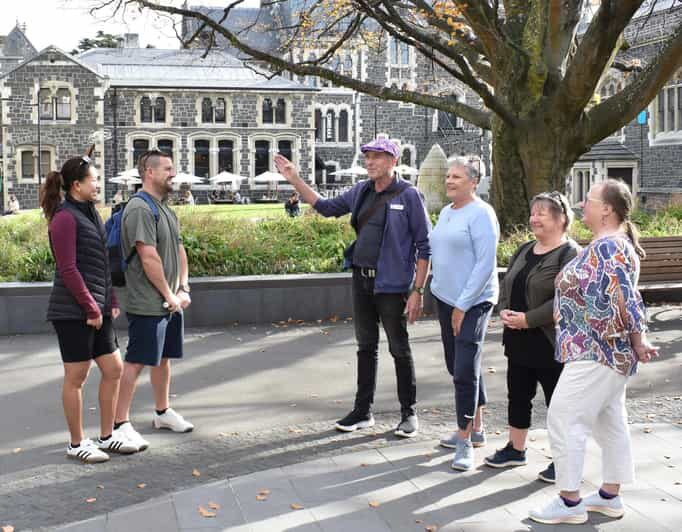
The meeting point is beneath the Bridge of Remembrance, an archway over the Ōtākaro/Avon River, close to 76 Cashel Street. The tour begins at the corner of Oxford Terrace and Cashel Street. Look for the guide carrying a purple umbrella, an easy landmark in a busy central area.
Starting here puts you beside a structure that carries its own weight in the city’s memory. It is a fitting place to begin a walk that takes in both Christchurch’s older heritage and the effects of the earthquakes. You do not need to arrive knowing the city’s story. The guide builds context as the group moves through the centre.
The tour is described as small-group, which suits a subject that benefits from conversation. You can ask for clarification or follow up on a point rather than simply listening to a long speech. The pace is intended to suit the group, and several guides have been noted for adjusting it to slower walkers.
You can check availability for your dates here:
👉 See our pick of the 4 Best Shopping Tours In Christchurch
At 159 Oxford Terrace, connect the city to its setting
An early stop is at 159 Oxford Terrace, where the guide begins linking Christchurch’s built environment with the physical geography of Canterbury. The tour covers how the South Island and Canterbury were formed, and what advantages the region’s particular topography provides.
That wider frame makes the city easier to understand. Christchurch is not only a collection of buildings and civic landmarks; it sits within a region shaped by geological forces, waterways, climate, and the Southern Alps. The guide also discusses water and irrigation across the plains, topics that help explain how geography affects life and settlement in the area.
This is one of the tour’s more unusual strengths. Many city walks focus mainly on architecture and dates. Here, the natural history is part of the account, giving you a better sense of why Canterbury developed as it did. The stop is brief, so think of it as an introduction rather than a full geology lesson.
You can also read our reviews of more walking tours in Christchurch



Cathedral Square and Christchurch’s changing centre
Cathedral Square is one of the named stops, with about ten minutes set aside for guided interpretation. It offers a natural place to consider Christchurch’s civic identity, older architecture, and the changes that followed the earthquakes.
The tour includes Christchurch’s heritage buildings, described as distinctive and old by New Zealand standards. The value here is not just looking at façades. Your guide can help explain what buildings and public spaces say about the city’s earlier ambitions and how the centre has changed since the disasters of 2010 and 2011.
The city’s rebuilding story is not presented as a simple tale of damage followed by repair. The walk also considers recovery, innovation, and the choices involved in shaping a changing centre. You will see places in the CBD while hearing about the city’s pre-earthquake and post-earthquake form, which gives the contrast a real setting.
If architecture is your main interest, this stop will be useful, though the two-hour format means the tour cannot examine every building in depth. It is better understood as a guided overview that helps you decide what you want to revisit afterward.
At 89 Armagh Street, bring human history into view
The stop at 89 Armagh Street gives the guide another place to explain Christchurch’s human story. The tour covers Ngāi Tahu Māori history and the early English settlers who helped shape Canterbury, placing those chapters within a broader account of the city and region.
That balance matters. A walk about Christchurch should not begin and end with European settlement or the earthquake rebuild. The inclusion of Ngāi Tahu history gives the tour a longer time horizon and helps you see that the city’s story did not start with the colonial town.
The guide also connects local history to wider New Zealand history. The tour introduces four New Zealanders regarded as especially important, each with a direct connection to Canterbury. Two are described as having changed the world, though their names are not given in the tour details. That element should make for an engaging thread through the walk, especially if you enjoy learning how local places connect to larger events.
A hidden stop and the details you might miss
The itinerary includes a 15-minute guided stop described as a lesser-known spot. The exact location is not specified in advance, which leaves room for a surprise along the route. The purpose is clear: point out places or details that are easy to pass without noticing when you walk through the centre on your own.
This can be a useful moment to slow down and look more closely. Local guides often notice details that are not obvious from a quick glance, and the tour’s focus on lesser-seen parts of the city is one reason to choose a guided walk over a self-guided loop. The stop may be especially rewarding if you have already spent time in Christchurch but want a fresh way to read its streets.
The route also includes Oxford Terrace again, with a further guided stop of about ten minutes. Together, the stops make a compact circuit through central Christchurch rather than a long march across the city. The supplied route gives selected stop timings, not a minute-by-minute schedule for the full two hours, so expect some of the time to be spent walking between points and hearing the guide’s commentary.
The earthquakes, told with care and context
The 2010 and 2011 earthquakes are central to the tour, but they are part of a wider story rather than its only subject. You hear about the devastation and loss, then about resilience, creativity, and the ongoing work of rebuilding and reshaping the city.
That approach is valuable because the earthquake’s impact is still visible in Christchurch’s development. A guide can help explain why the central city looks as it does today, and how recovery has created both challenges and opportunities. The focus is on understanding the city, not treating disaster as a spectacle.
Guides including Reg have been singled out for explaining the city’s slow, determined recovery with sincerity. Lisa has also been praised for an engaging manner and for keeping people talking after the formal walk. Those names are useful when choosing, but guide availability may vary by tour date.
The story is not presented as a tidy, finished chapter. Christchurch continues to change, and the tour asks you to notice both reminders of loss and examples of new thinking. If you want a detailed account of every political or planning decision involved in the rebuild, two hours may not cover all of it. The walk is an introduction, not a specialist seminar.
You can also read our reviews of more historical tours in Christchurch


Antarctic links and four New Zealand lives
Christchurch’s close historical and current association with Antarctica is another distinctive subject. The tour links the city to the earliest explorers who came to this part of the world and to the southern continent. That connection adds an unexpected dimension to a city walk, especially if you tend to think of Christchurch mainly through its British heritage or earthquakes.
The four notable New Zealanders provide another thread. Each has a direct Canterbury connection, and two are described as having changed the world. Since their identities are not specified ahead of time, the tour works best if you are happy to hear the stories as they unfold rather than arrive expecting a particular list of names.
These topics broaden the walk beyond local landmarks. You get a sense of how Christchurch’s location, people, and institutions tie it to events and journeys beyond the city. That wider perspective is a good fit for visitors who want more than a quick orientation.
What the walk feels like in practice
Expect a relaxed two-hour walk with frequent stops, not a strenuous hike. The route stays in central Christchurch and includes guided visits at Cathedral Square, Oxford Terrace, Armagh Street, and an unspecified stop. The listed walking segments are short, and the guide adjusts the pace to the group.
The format works well for families and first-time walkers. One family group described the experience as a good first walking tour, and feedback repeatedly highlights the steady pace and welcoming atmosphere. You can ask questions along the way, and guides are noted for answering them with local knowledge and explaining details with maps when useful.
The tour is in English and is listed as wheelchair accessible. If access is an important part of your planning, it is sensible to confirm the specific route and conditions for your date, since the details here do not describe surfaces or step-free access at each stop.
Weather is worth planning for. The tour runs outdoors, and people have still found it worthwhile in rain, but that does not make wet weather pleasant. Bring clothing suited to the forecast and comfortable walking shoes. There is no need to treat it as an all-day commitment, but you will be outside for the full two hours.
Is $17 good value?
At $17 per person, this tour offers strong value if you want a guided introduction to Christchurch. You get two hours with a live local guide, and the subject matter ranges from geology and Māori history to heritage architecture, earthquake recovery, and Antarctic connections. A guide also helps you connect places that might otherwise feel like separate sights.
The value is less about ticking off a long list of attractions and more about getting context. You could walk through the same streets by yourself, but you would miss the explanations linking Canterbury’s physical formation to settlement, the changes after the earthquakes, and the city’s ongoing identity.
The price is particularly appealing for the first day of a stay. You can get your bearings, pick up ideas for places to revisit, and ask about the city while you are still deciding how to spend your time. The offer to reserve now and pay later adds flexibility, and cancellation is free up to 24 hours in advance for a full refund.
Who should book this Christchurch walk?
Book it if you want a broad, human-scale introduction to the city, especially if you are curious about the earthquakes and what Christchurch has become since. It also suits New Zealanders who know the city but would like a fresh account of Canterbury’s formation, settlement, and architecture. A local guide can add useful detail even if the streets already feel familiar.
It is a good choice for anyone who enjoys learning by walking and asking questions. The small-group format, easy pace, and mix of subjects make it more conversational than a lecture. Guides such as Reg and Lisa are praised for being warm, clear, and enthusiastic, with local insight that extends beyond the main landmarks.
Skip it if you would rather explore entirely at your own pace, or if you want a long, specialist tour focused only on earthquake engineering, Māori history, or architecture. This walk covers many topics in two hours, so it gives you an informed overview rather than exhaustive treatment.
My practical recommendation: book it early in your Christchurch stay if you can. The route gives you a useful map of the central city, while the stories help you understand what you are looking at when you head back out on your own.
Historical, Heritage & Earthquake Christchurch walking tour
FAQ
Where does the tour start?
It starts beneath the Bridge of Remembrance, near 76 Cashel Street, at the corner of Oxford Terrace and Cashel Street.
How do I find the guide?
Look for the guide holding a purple umbrella at the meeting point.
How long is the tour?
The walking tour lasts two hours.
How much does it cost?
The stated price is $17 per person.
What language is the tour in?
The live tour guide speaks English.
Is the tour wheelchair accessible?
Yes, the activity is listed as wheelchair accessible.
What subjects does the guide cover?
The tour covers Canterbury’s geology, Ngāi Tahu Māori history, early English settlers, Christchurch heritage buildings, the 2010 and 2011 earthquakes, the city’s recovery, and its connections to Antarctica.
Which places are included on the route?
Named stops include the Bridge of Remembrance, 159 Oxford Terrace, Cathedral Square, 89 Armagh Street, a hidden stop, and Oxford Terrace.
Can I cancel for a refund?
Yes. You can cancel up to 24 hours in advance for a full refund.
You can check availability for your dates here: