The heart of this visit is learning practical bush skills from San people themselves: how plants can be used, how to make fire, and how a small bow or trap works. You’ll also hear the San click language, with a guide helping translate and explain.
I like that the walk gives you a rare cultural experience close to Windhoek, and that it makes room for conversation about the San’s lives today, not only their past. I also like that the activity provides income and helps keep traditional skills in use.
One thing to keep in mind: this is a guided demonstration on a site near the capital, not a visit to a remote, traditional San village. The walk itself is gentle, but the setting can be hot, so wear closed-toe shoes and bring water and a hat.
- Click language, heard in context: A guide helps you follow San explanations and try a few sounds yourself.
- Useful bush skills: See demonstrations of fire-making, plant uses, hunting methods and traps.
- Crafts with a purpose: Learn how ostrich eggshells are worked into jewellery and other items.
- A present-day perspective: The visit also introduces contemporary challenges facing the San.
- A short outing from Windhoek: The guided bushwalk takes about two hours, with the full activity lasting two to three hours.
- A direct way to support the program: Income from the activity helps San participants sustain themselves and pass skills to younger generations.
- A bush walk that puts living knowledge first
- Starting at the farm near Windhoek
- Learning through the San language and demonstrations
- Plants, fire and the logic of survival
- Ostrich eggshell craft and social stories
- What the visit can and cannot show you
- Is good value for this outing?
- Who will get the most from the walk
- Should you book the San bush walk?
- FAQ
- How long does the activity last?
- Is hotel pickup included?
- What should I bring?
- What language is the tour in?
- Is the walk suitable for wheelchair users?
- Can I buy anything at the site?
- The Best Of Windhoek!
- More Tours in Windhoek
- More Tour Reviews in Windhoek
- Not for you? Here's more nearby things to do in Windhoek we have reviewed
A bush walk that puts living knowledge first
 1 / 8
 2 / 8
 3 / 8
 4 / 8
 5 / 8
 6 / 8
 7 / 8
 8 / 8
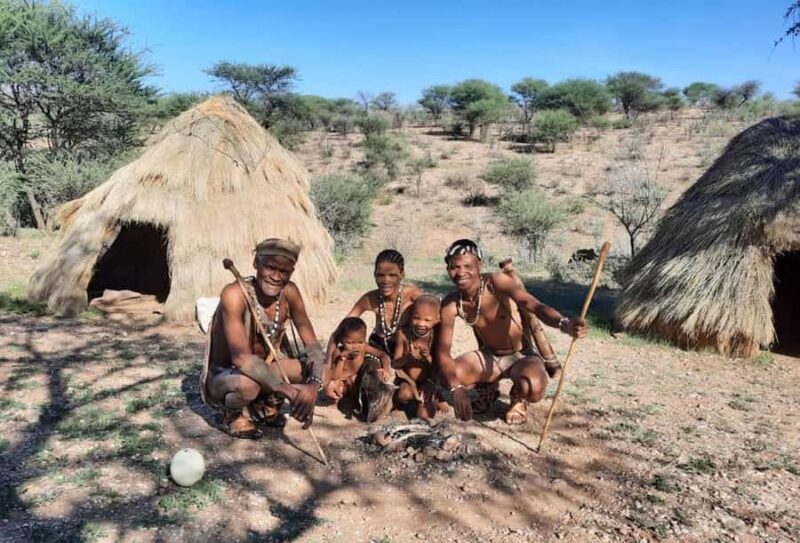
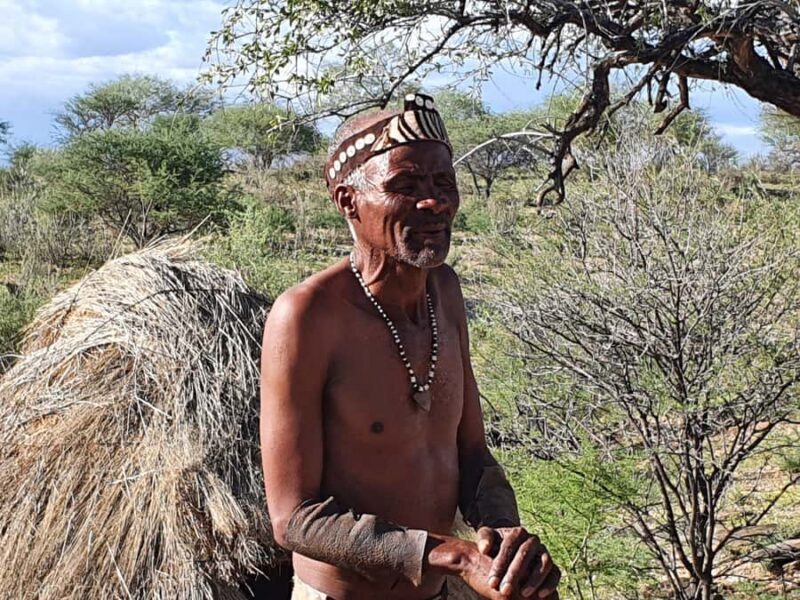
This experience is less about covering ground than learning to notice what the bush can provide. You walk with San participants and see practical knowledge demonstrated in its setting: identifying useful plants, making fire, and shaping materials into tools or crafts. The details are the point. A fire-making technique or a plant’s use connects daily survival with a way of life built around close attention to the natural world.
The San are among the world’s oldest Indigenous peoples, but this visit should not be mistaken for a time capsule. The group shares traditional knowledge while living in a modern world, and the tour makes space to talk about the pressures on San culture and livelihoods. That mix of skills and present-day context is what makes the outing more meaningful than a set of staged demonstrations alone.
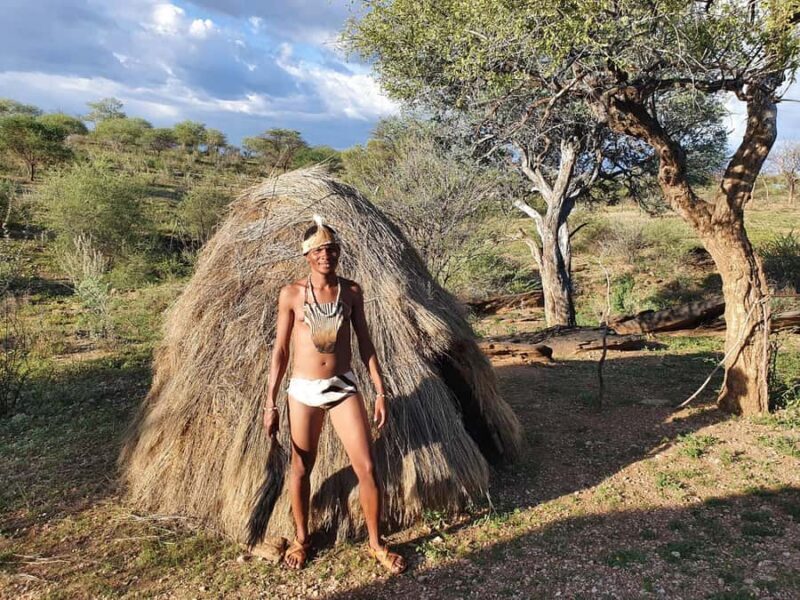
The activity takes place on a farm near Windhoek. San participants stay at the site periodically so they can share their knowledge with visitors without requiring you to travel for a full day to remote parts of Namibia. That access is useful, but it also shapes expectations: you’re seeing a cultural program in a bush setting, not entering an unchanged nomadic village.
👉 See our pick of the 10 Best Guided Tours In Windhoek
Starting at the farm near Windhoek
The meeting point is by the farm’s pool area, where a guide welcomes you. If you choose an option with hotel pickup, the operator collects you in Windhoek and returns you afterward. Pickup is optional, so check the option you book rather than assuming it is included.
For people driving themselves, clear directions matter. The site is outside the city, and one visitor found the turn confusing and the lack of a sign unhelpful. Ask for directions and confirm the meeting details in advance. A WhatsApp number is requested so the operator can share information, which is especially useful if you are arranging your own transport.
The full outing is listed as two to three hours, while the guided walk is about two hours. Leave a little room in your plans for the introduction and transfers. One visitor found the activity finished sooner than expected and had to wait for a prearranged ride, so coordinate your pickup time rather than scheduling it too tightly.
Before the walk, there is a short introduction to the nonprofit activity on the farm. It gives you a clearer sense of why this program exists and how visitor income supports San participants. This is a worthwhile few minutes: it helps place the demonstrations in a current social and economic context.
You can also read our reviews of more tours and experiences in Windhoek.

Learning through the San language and demonstrations
The guide acts as a bridge between visitors and San participants. English is the tour language, and guides can help explain what is being said in the San language. Frans is one guide associated with the experience; a guide described by a participant spoke English, Afrikaans and his native San language. The precise guide may vary, but translation is central to making the visit understandable.
One distinctive part of the experience is hearing the click language in use rather than encountering it as a quick fact in a guidebook. You’re introduced to its sounds and may have a chance to try them. The aim is not to master the language in an afternoon, of course. It’s to listen, ask questions and appreciate how much meaning is carried in sounds that may be unfamiliar to you.
The format can be engaging even when you don’t share a language with the San participants. One guide has visitors listen to an explanation in the San language before translating it, giving you a moment to notice gestures, tone and expression. It’s a simple approach, but it reminds you that communication is more than words.
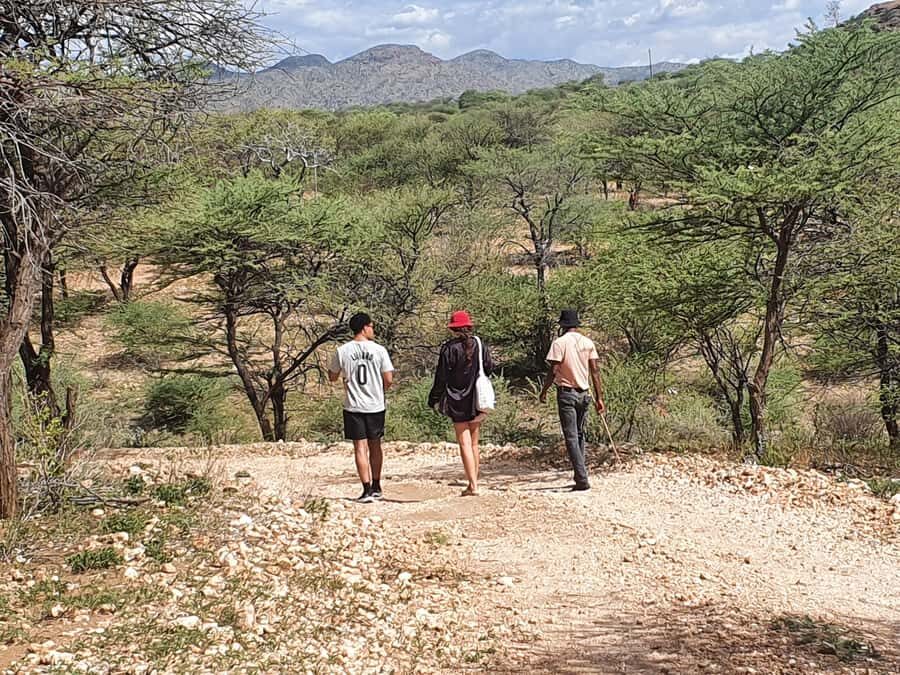
Expect a guided walk with demonstrations, not a strenuous hike. The route is described as easy, and the emphasis is on stopping to learn rather than walking a long distance. Closed-toe shoes are required. The area can be hot, so carry water and wear a hat; an umbrella may also help with shade, as one local visitor advised.
Plants, fire and the logic of survival
The bush plant section shows how detailed observation becomes practical knowledge. You’ll learn about plants and their uses, though the exact examples may depend on what the guides choose to demonstrate that day. The useful takeaway is not a memorized list. It’s seeing how people identify resources in their environment and understand what each can offer.
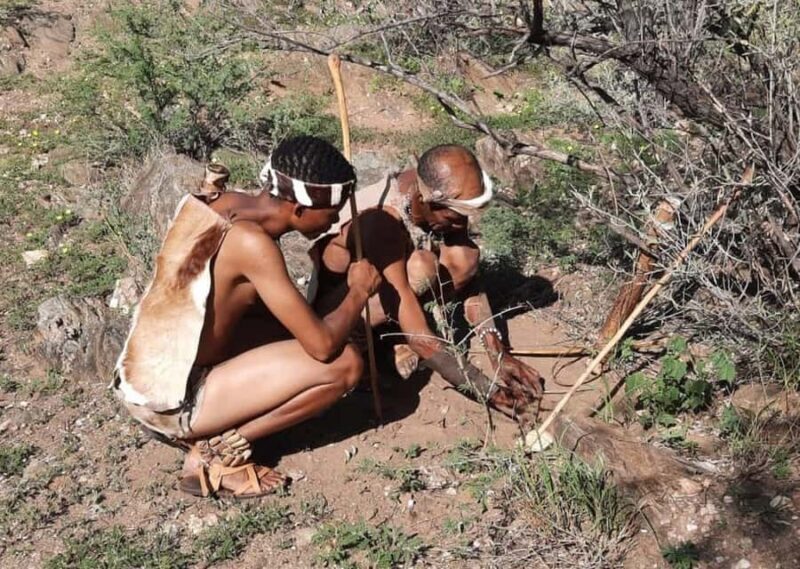
Fire-making is another hands-on demonstration. Rather than treating fire as a primitive curiosity, the activity lets you consider the skill, materials and patience involved in making it without modern tools. The guides also explain hunting practices, including the use of bows and arrows, poison, and traps. These are demonstrations of traditional methods, not an opportunity to hunt.
The hunting and trapping explanations can be especially revealing if you’ve mostly encountered the San through broad descriptions of hunter-gatherer life. Here, the methods have practical form: a tool is made, a trap is explained, and the reasoning behind it becomes easier to grasp. You’re not simply told that the San lived from the land; you get a glimpse of the choices and skills such a life requires.
Keep the distinction between learning and reenactment in mind. The tour presents traditional practices for visitors, while San people face contemporary challenges and changing ways of life. That contrast is worth acknowledging. A respectful visit listens to the knowledge being shared without pretending that a short walk reproduces an entire culture.
Ostrich eggshell craft and social stories
Crafting with ostrich eggshells adds a quieter, more personal element to the walk. You learn how the material is shaped into jewellery, linking a natural resource with skilled handwork. There is also a small art gallery on the property with San-made jewellery, and you can buy pieces there if you wish.
Stories about courtship and marriage are another memorable part of the experience. The bow used to declare love has been a particular talking point, and the explanation gives the group a chance to laugh while learning about social customs. It’s a good reminder that a cultural visit need not be solemn from start to finish. Humour and warmth are part of the exchange.
Some groups also end with dancing. It isn’t guaranteed as a fixed feature, so think of it as a possible closing moment rather than a promised performance. When it happens, it can be a lively way to finish, especially after you’ve spent the walk listening and asking questions.
More Great Tours NearbyWhat the visit can and cannot show you
The strongest reason to choose this experience is that it brings San knowledge within reach of a Windhoek itinerary. You don’t need to set aside a full day for a journey to remote areas to learn about plant uses, fire-making, tools, language and crafts. For a short stay in the capital, that is real value.
At the same time, proximity has limits. The San participants stay at the site periodically, and the program is designed to demonstrate and share traditional knowledge. It is not a portrait of every San community, nor a chance to observe a village’s ordinary daily life. One participant put it plainly: in Windhoek, you should not expect a normal San village. Go for an educational encounter, not an unfiltered window into every aspect of San life.
That distinction need not diminish the experience. In fact, it helps you approach it with better questions. Ask how contemporary life affects the San, how young people learn traditional skills, and what visitors can do to support the people sharing their knowledge. The activity explicitly addresses contemporary challenges, so it is appropriate to listen beyond the demonstrations.
The tour also has a practical purpose. Income from the activity gives San participants an opportunity to support themselves, while sharing skills helps younger generations retain knowledge that might otherwise fade. That makes the outing more than a pleasant diversion, though it is sensible to see it as one small source of support rather than a complete answer to broader challenges.
Is $43 good value for this outing?
At $43 per person, the price buys a two-hour guided bushwalk within a larger two-to-three-hour activity, a short introduction to nonprofit work, and an information sheet about traditional knowledge. If you’re interested in Indigenous culture and want an experience that fits into a half day in Windhoek, the combination is worthwhile.
The value depends on what you want. This is not a long wilderness trek, a wildlife safari or a visit to a remote settlement. You’re paying for the time and knowledge shared by the San participants, interpretation by a guide, and access to a cultural program close to the city. If those are your priorities, the price is easier to justify.
Hotel pickup and drop-off are included only with selected options. Cold drinks are available for 20 Namibian dollars, and jewellery in the small gallery is an optional purchase. Neither is included in the activity price, so bring enough cash if you may want a drink or a handmade item.
Small-group availability can make it easier to ask questions and follow demonstrations, but confirm the option and schedule when booking. The tour is in English and is not suitable for wheelchair users. Free cancellation up to 24 hours ahead and a reserve-now, pay-later option provide some flexibility, but the practical details still deserve a quick check before you set off.
Who will get the most from the walk
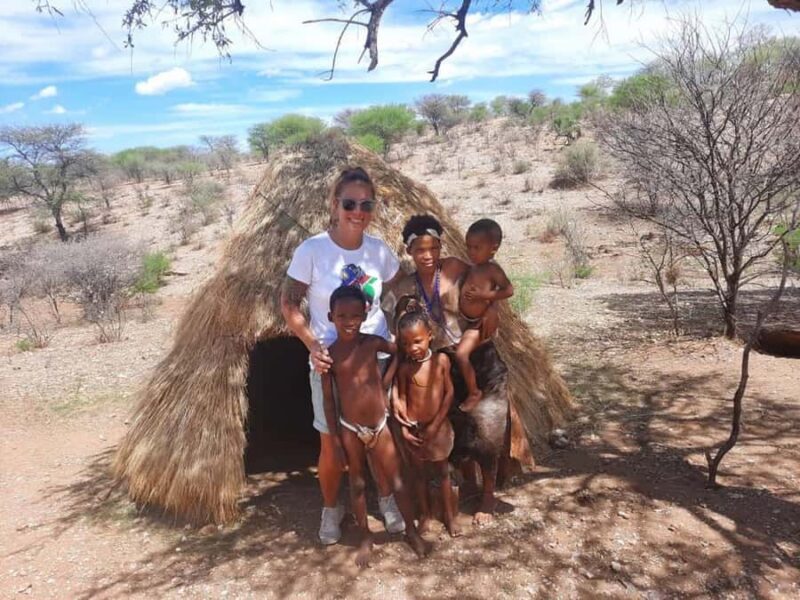
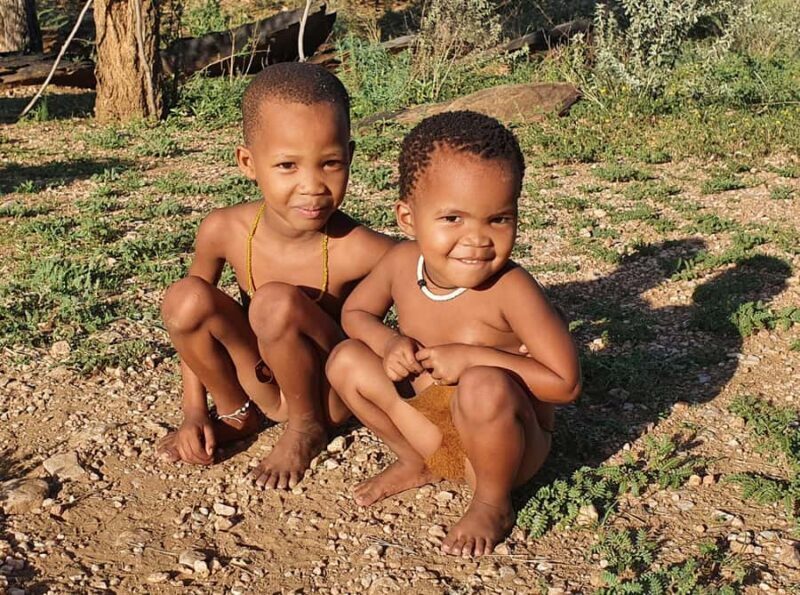
I’d recommend this to anyone curious about San culture, especially if Windhoek is your base and you have a spare half day. It suits people who like learning by watching and asking questions more than those seeking a fast-paced outdoor adventure. The easy walk and demonstrations can also work well for families; a five-year-old enjoyed meeting the San, and older children have taken part too.
Solo visitors can consider it as well. The activity is guided, and pickup can be arranged through selected options. If you’re travelling independently, make transport plans carefully, since getting a taxi to the farm may not be straightforward. Confirm the pickup point and return arrangements in advance.
You may find it less satisfying if you expect a remote village visit or a fully immersive cultural stay. The program is short and visitor-focused. Treat it as an introduction, stay open to questions of change and continuity, and you’ll come away with a better sense of both the San’s traditional skills and the realities they face now.
Should you book the San bush walk?
Book it if you want an accessible, thoughtful introduction to San knowledge and culture without leaving Windhoek for a full day. The click language, plant lore, fire-making, hunting tools and crafts give the walk plenty of substance, while the conversation about contemporary challenges keeps it grounded in the present.
Before you go, confirm whether your option includes hotel pickup, get clear directions if driving, and bring closed-toe shoes, water and a hat. If you’re looking for a remote village or a long wilderness walk, choose a different outing. If you want a compact cultural experience that also supports the people sharing it, this is a strong choice.
Windhoek: Bushman Walk with the San
FAQ
How long does the activity last?
The full activity takes about two to three hours. The guided bushwalk itself lasts about two hours.
Is hotel pickup included?
Hotel pickup and drop-off in Windhoek are included only if you select an option that provides them. For pickup, wait in your hotel lobby.
What should I bring?
Bring closed-toe shoes. A hat and water are also sensible, as the walk can be hot.
What language is the tour in?
The live tour guide speaks English. The experience includes an introduction to the San click language, with a guide helping visitors understand and communicate.
Is the walk suitable for wheelchair users?
No. The activity is not suitable for wheelchair users.
Can I buy anything at the site?
Yes. A small art gallery sells San-made jewellery, and cold drinks are available for 20 Namibian dollars. These are not included in the activity price.
You can check availability for your dates here: