Bukhara’s old town is a compact parade of trading domes, madrasahs, mosques, and brickwork that can be hard to make sense of on your own. This walking tour links the landmarks into a single route, with a local guide to explain how the city’s Silk Road trade and religious life shaped what you see.
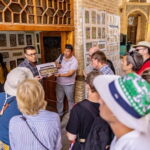
I like two things here: the broad route gives you a useful first-day map of the old town, and visits to embroidery and other artisan workshops add a human scale to the monuments. The guide is English-speaking, and guides named on tours include Aziz and Asad, though you should not assume a particular guide will lead your departure.
The trade-off is pace. The tour covers many stops in about 3.5 hours, so you will get an overview rather than time to explore every building at length. Entrance tickets are not included, and the Ark is viewed from outside.
- A 3.5-hour route across the old town: See major monuments and historic market domes in one guided walk.
- A useful first-day orientation: The tour connects key sights, helping you choose where to return for a longer visit.
- Craft demonstrations, not a shopping tour: Workshops introduce local silk embroidery and other crafts; buying is optional.
- A small group of up to 10: That size can make it easier to hear the guide and ask questions.
- Entry fees are separate: The tour price is $18 per person, but monument entrance tickets are not included.
- A fast, useful introduction to Bukhara
- Lyabi-Hauz and the madrasahs around the pond
- Trading domes, old baths, and working crafts
- Magoki-Attori and the older layers of the city
- Kalyan Minaret and the Friday mosque
- The Ark, Bolo-Hauz, and Bukhara’s oldest monument
- What the pace, group, and price mean for you
- Who should book this walk?
- FAQ
- How long is the walking tour?
- What is the meeting point?
- What language is the tour in?
- How many people are in the group?
- Are entrance tickets included in the price?
- Is the tour focused on shopping?
- What should I bring?
- Can the tour route change?
- What happens if the operator cancels the tour?
- The Best Of Bukhara!
- More Walking Tours in Bukhara
- More Tours in Bukhara
- More Tour Reviews in Bukhara
- Not for you? Here's more nearby things to do in Bukhara we have reviewed
A fast, useful introduction to Bukhara
 1 / 8
 2 / 8
 3 / 8
 4 / 8
 5 / 8
 6 / 8
 7 / 8
 8 / 8
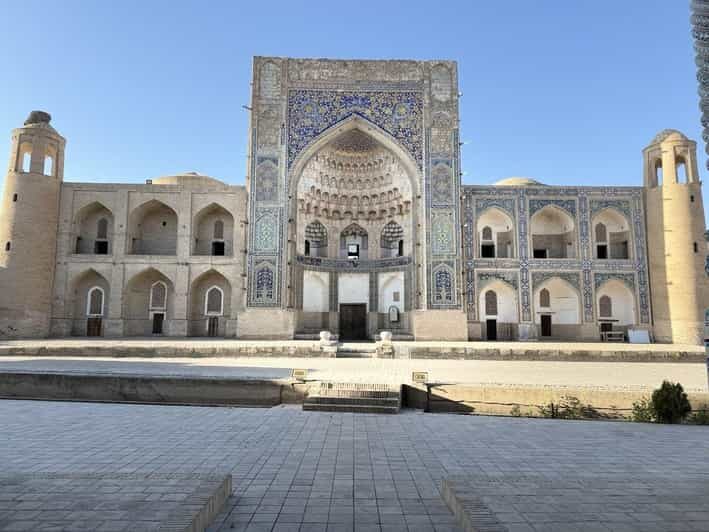
Bukhara rewards slow wandering, but it helps to understand the city’s layout before you set off alone. This walk begins at the Nadir Divan Begi Khanaka, by the Lyabi-Hauz ensemble, then crosses the historic center toward the Kalyan complex and the older monuments near the city’s edge.
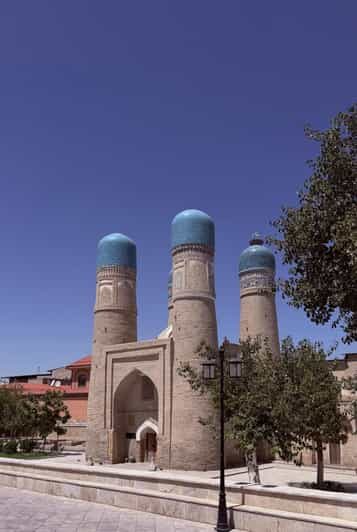
The route is unusually broad for a half-day tour. It takes in mosques, madrasahs, trading domes, a caravanserai, a synagogue, craft workshops, and several major landmarks. That mix matters: Bukhara was not only a place of prayer and study, but also a commercial center where merchants, craftspeople, and visitors met.
At $18 per person, the price is good value if you want a guided orientation and context for the architecture. You are paying for the guide’s time and the route, not admission to paid sites. Budget separately if you plan to enter monuments or the Ark museum sections, and check which buildings are open on the day.
👉 See our pick of the 3 Best 3 Day Tours In Bukhara
Lyabi-Hauz and the madrasahs around the pond
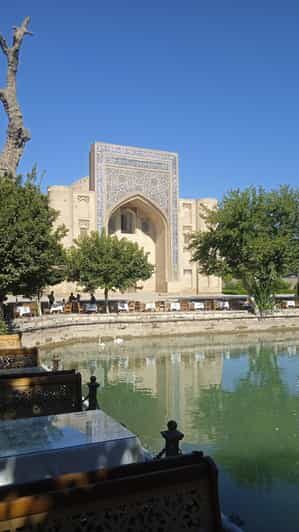
The walk opens at Lyabi-Hauz, a historic pond and square that gives the old town a natural gathering place. You spend about 40 minutes in this area, with time to hear about the ensemble and take photos. It is a good starting point because the landmarks sit close together, and the guide can begin setting the scene before the route gets longer.
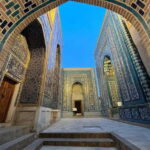
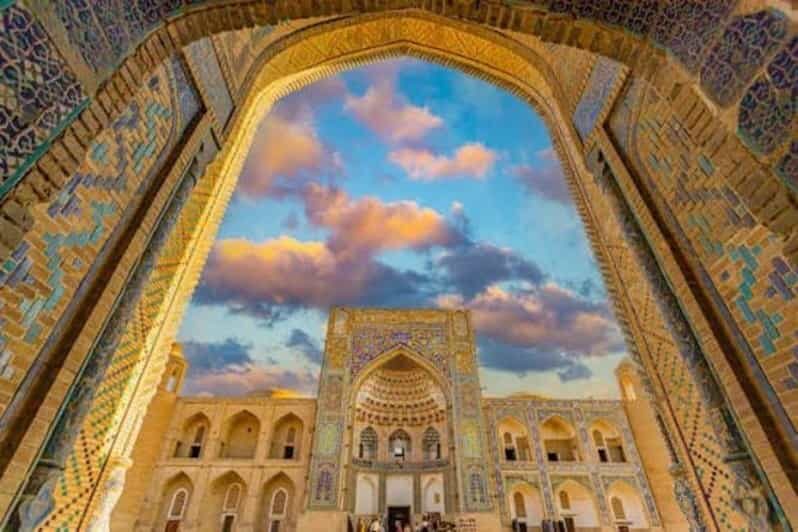
Nearby, the Nodir Devonbegi Madrasah is known for its decorated façade and mosaics. The route also visits the Kukaldosh Madrasah, described as Bukhara’s largest, and the Nodir Devonbegi Khanaka, once a place for Sufi dervishes to meet for prayer, study, and reflection. These stops are more than a run of impressive facades: together they show how religious education and spiritual life occupied a central place in the city.
Expect to look closely and listen rather than spend a long stretch inside each building. The itinerary allows for visits and some free time, but with so many stops in 3.5 hours, the guide must keep the walk moving. If a particular madrasah catches your eye, make a note to return later.
You can also read our reviews of more walking tours in Bukhara
Trading domes, old baths, and working crafts
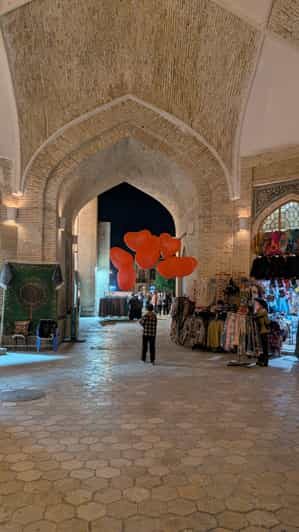
Bukhara’s covered bazaars are among the route’s most revealing stops. At Toki Sarrafon, merchants and money changers once handled trade; Toki Telpakfurushon was associated with hats and handcrafted goods; and Toki Zargaron was the jewelers’ bazaar. The domes help explain how commerce was organized, while their different names point to the trades that once filled them.
The route also includes Sayfuddin Caravanserai, a Silk Road inn for merchants and visitors, and the Abdullakhan Tim trading dome, linked to fine silk. You may also see the Bozori Kord Hammam, a historic bathhouse. Together, these stops put everyday activity alongside the grand religious buildings: trade, lodging, bathing, and making things were all part of the city’s life.
Workshop visits add a practical, tactile element. The route includes silk embroidery and a suzani workshop, and the tour may show you local crafts or offer an optional masterclass with a local artisan. You can learn how a textile is made and what certain objects are used for, rather than just seeing finished goods behind a counter.
The operator says the tour is not focused on shopping and that no payment is expected during workshop visits. Buying is optional. I would still bring cash for personal expenses, as advised, but you should feel free to treat these stops as demonstrations and conversations rather than sales appointments.
The itinerary also includes a doll museum and a visit to Bukhara Synagogue. These stops broaden the picture beyond the monumental Islamic architecture and bring in more of the city’s cultural life. The exact depth of each visit depends on the pace and what is available on the day.
Magoki-Attori and the older layers of the city
Magoki-Attori Mosque is presented as one of Central Asia’s oldest surviving mosques, with layers of history beneath its present form. It offers a different architectural mood from the grander buildings later in the route. The guide can help you understand why the site matters, even if your stop is brief.
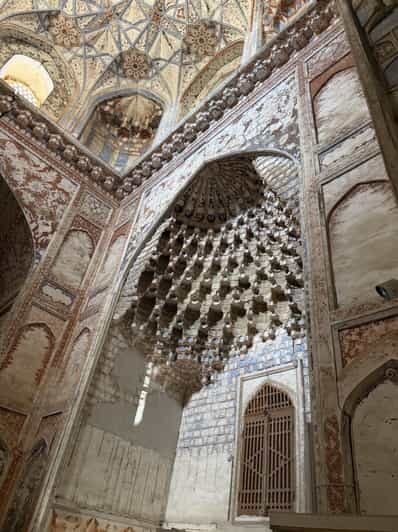
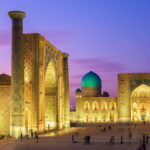
Ulugbek Madrasah and Abdulazizkhan Madrasah make a useful pair. Ulugbek’s school dates to the 15th century and was founded by the astronomer and ruler Ulugbek. Abdulazizkhan Madrasah is noted for detailed decoration and craftsmanship. Seeing them in sequence lets you compare different periods and styles without needing to study the buildings in advance.
The walk also passes trading domes and workshops before turning toward the Kalyan complex. This steady change of scene is one of the route’s strengths. You move from commerce to learning and worship, while the guide can connect individual buildings to the wider history of Bukhara.
Kalyan Minaret and the Friday mosque
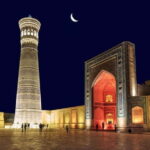
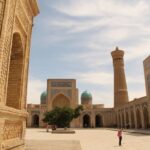
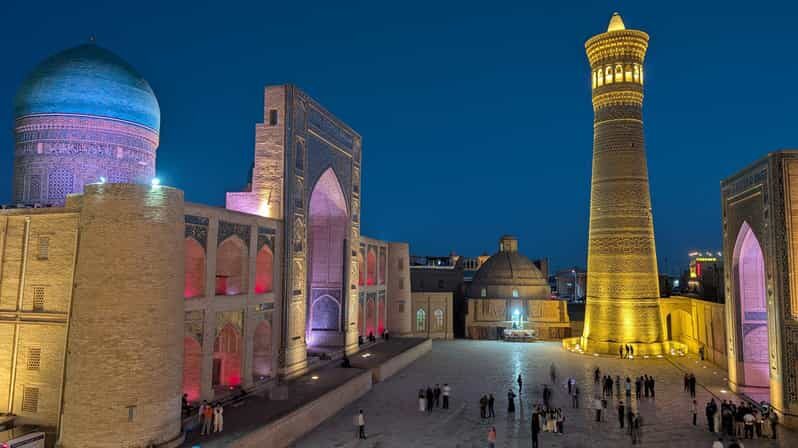
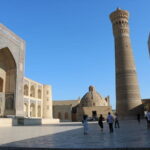
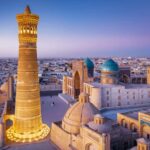
The Kalyan Minaret is the city’s signature landmark, a 12th-century tower that has become a defining part of Bukhara’s skyline. It is a natural pause in the route and one of the best places to appreciate the scale and workmanship of the old center.
Beside it, Kalyan Mosque is the grand Friday mosque, with space for as many as 10,000 worshippers. Across the complex is Miri Arab Madrasah, still an active center of religious learning. That active role is worth keeping in mind: these are not simply preserved stage sets. They remain part of a living religious tradition, so follow the guide’s advice and be respectful of local customs.
You will likely want photographs here, but do not let the camera occupy the whole stop. Look at how the minaret, mosque, and madrasah relate to one another. The group moves on, so use this part of the walk to note anything you would like to revisit later.
More Great Tours NearbyThe Ark, Bolo-Hauz, and Bukhara’s oldest monument
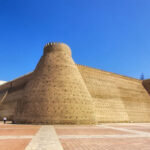
The Ark Fortress is viewed from outside, and entrance to its museum sections is not included. The citadel was the residence of Bukhara’s emirs and is one of the city’s most imposing historic sites. If you want to explore its interior, plan a separate visit and allow extra time.
Bolo-Hauz Mosque offers a change of scale. It is known for its carved wooden columns and the way they reflect in the nearby pool. The tour includes a photo stop here, so you can appreciate the columns from outside and take in the water’s reflection.
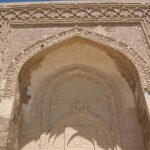
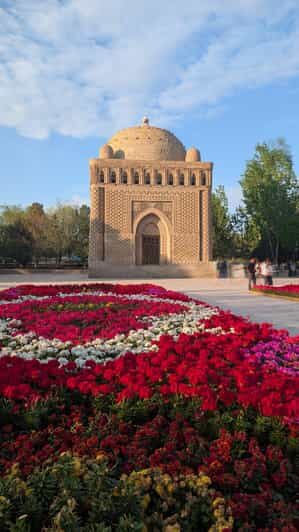
The final stretch includes Chashma-Ayyub Mausoleum, associated with the Prophet Job and the legend of the Spring of Job, then the Ismail Samani Mausoleum. The latter is the oldest preserved monument in Bukhara and is prized for its intricate brickwork. It is a fitting end to a route that has moved across centuries of building and belief.
The stated drop-off points are the Ismail Samani Mausoleum and Bolo-Hauz Mosque. Confirm your intended finish with the guide, especially if you have plans immediately afterward.
You can also read our reviews of more guided tours in Bukhara
What the pace, group, and price mean for you
This is a walking tour with a lot packed into a short window. Wear comfortable shoes and clothes, and bring water only if you have confirmed it is permitted, since the activity information lists drinks among items not allowed. The itinerary’s many stops mean you should expect a steady walk, with pauses for explanation, photos, and workshop visits.
The group size is capped at 10, a useful limit for a tour that depends on hearing the guide and keeping the group together in busy historic areas. English is the tour language. The activity is marked wheelchair accessible, but the route is extensive and includes many separate sites, so contact the operator before booking if you need details about surfaces or access at individual stops.
Arrive five minutes early at the entrance gate of Nodir Devonbegi Khanaka. The operator asks you to provide a WhatsApp number when booking, and notes that tours may be canceled if the minimum participant requirement is not met or if weather is poor. If the operator cancels, you can receive a full refund or reschedule. You can also cancel up to 24 hours ahead for a full refund, and reserve now without paying immediately.
Some monuments may be under restoration. If that affects the route, the guide will suggest alternative highlights. That flexibility is useful in a city where restoration can change what you can see, but it is another reason to view the walk as an orientation rather than a promise of long visits inside every building.
Who should book this walk?
I would book it early in a Bukhara stay, especially if you have limited time or want the city’s monuments to make sense before exploring independently. The route is broad, the guides’ English is intended to be clear, and the mix of architecture, local stories, and craft demonstrations gives you more than a procession of photo stops.
It is also a good fit if you like asking questions. Past tours have been led by guides including Aziz and Asad, and the strongest descriptions of the experience point to lively explanations, humor, local details, and useful tips. Names are not guaranteed, so book for the route and format rather than a specific guide.
Skip it if your priority is lingering inside each monument, shopping, or avoiding a long walk. At $18, it is a sensible way to get oriented, but you will need extra time and entrance money to explore selected sites more fully. For most first-time visitors, that is a fair trade: see the broad outline with a guide, then return to the places that earn a second look.
Bukhara: Old Town Walking Tour with a Local Guide
FAQ
How long is the walking tour?
The tour lasts 3.5 hours. Check the available starting times when booking.
What is the meeting point?
Meet in front of the entrance gate of Nodir Devonbegi Khanaka. Arrive five minutes before the tour begins.
What language is the tour in?
The live tour guide speaks English.
How many people are in the group?
The small group is capped at 10 people.
Are entrance tickets included in the $18 price?
No. Entrance tickets are not included. Entry to the Ark Fortress museum sections is also not included.
Is the tour focused on shopping?
No. The workshop visits are intended to introduce local crafts and culture. Shopping is optional, and no payment is expected during the visits.
What should I bring?
Bring comfortable shoes, comfortable clothes, cash, and a credit card. The tour information also advises having local currency for personal expenses and tips.
Can the tour route change?
Yes. Some monuments may be under restoration. If that affects the route, the guide will suggest alternative highlights.
What happens if the operator cancels the tour?
If the operator cancels because of adverse weather or because the minimum participant requirement is not met, a full refund or rescheduling is available.
You can check availability for your dates here: