
El Jem’s amphitheater is the kind of ancient building that makes you stop and look up. This half-day trip brings you to one of the Roman world’s largest and best-preserved arenas, where you can walk through spectator tiers and underground chambers once used by gladiators and animals.
I like two things about this outing: hotel pickup and an air-conditioned ride make a distant site easier to reach, and a licensed guide puts the amphitheater and its mosaics in context. Guides such as Fathi and Ali have earned praise for clear explanations, lively delivery and skill with mixed-language groups.
The trade-off is the road time. From Hammamet, the drive can take around two hours each way, and some days stretch well beyond the advertised five hours. There is also a mismatch in the tour details about pickup locations, so confirm that your hotel is included before booking.
- Key points before you go
- What the tour gives you
- The drive from Hammamet: plan for more than five hours
- At the amphitheater: stone, scale and underground passages
- The museum: mosaics and daily life in Thysdrus
- Guides, languages and the value of a live explanation
- Who will get the most from this outing
- Booking details worth checking
- Should you book the El Jem half-day trip?
- FAQ
- Is hotel pickup from Hammamet included?
- How long does the tour last?
- Which languages are available for the guide?
- Are admission tickets included in the price?
- How much time is spent at the amphitheater and museum?
- What does the tour include besides the guide?
- Can I cancel without a fee?
Key points before you go
 1 / 5
 2 / 5
 3 / 5
 4 / 5
 5 / 5
- El Jem’s amphitheater is the main event: Its size, three levels of seating and underground passages make this more than a quick photo stop.
- The museum adds a different kind of history: Roman mosaics and objects from the area offer a closer look at home life in ancient Thysdrus.
- The guide matters: Fathi, Ali and other named guides have been praised for clear, engaging explanations and for speaking to groups in more than one language.
- Travel takes a real bite out of the day: The advertised duration is five hours, but the journey and collection stops can make the outing longer.
- The $33 price does not cover admission: Set aside extra for tickets, plus any food or drinks you want along the way.
- Check your pickup details carefully: The tour description says Hammamet, while the itinerary lists Sousse as the pickup and return point.
What the $33 tour gives you
The basic offer is straightforward: pickup from your Hammamet hotel, air-conditioned transport, a driver approved by the Tunisian Tourism Office and a licensed guide. Fuel, expressway charges and parking are included, so you are not left to arrange the long trip yourself.
At $33 per person, the price can make sense if you want transport and interpretation bundled together. El Jem is a substantial drive from Hammamet, and the guide’s background helps turn a walk around old stonework into a visit with a story. You pay extra for entry to the archaeological sites and museum, and meals and drinks are also on you.
The admission cost is not fixed in the information for this tour. One reported payment was 20 Tunisian dinars for the amphitheater, but use that only as a rough reference, not a guaranteed current price. Check the latest fees and bring enough cash or another accepted form of payment.
One detail needs sorting before you commit: the tour is titled as a departure from Hammamet and says Hammamet hotel pickup is included, but its itinerary names Sousse for both pickup and return. Confirm your hotel’s eligibility, pickup time and return point with the operator. That simple check matters more than the tour’s tidy five-hour label.
The drive from Hammamet: plan for more than five hours
The itinerary estimates 105 minutes by coach each way. In practice, the full outing can take longer because the vehicle may collect other people, combine with another minibus or stop to pick up the guide. Some departures have involved about two hours each way; one account put the total day at roughly seven and a half hours, with most of that time spent travelling.
Pickup can be early. One schedule started around 6 a.m. in Hammamet, with a return around 2 p.m. Starting times vary, so check the time for your date rather than relying on a general estimate. You may receive pickup details the evening before, but confirm them if they do not arrive.
The vehicle is described as air-conditioned, and several accounts mention comfortable transport and considerate drivers. There have also been reports of waits or delays while pickups are combined. Build in some flexibility after the tour, and do not book a tight lunch reservation or another activity for the advertised end time.
Bring water and a small snack, especially in warm weather. Stops for toilet breaks have been made on some trips, but the precise timing is not guaranteed. The drive is part of the price of seeing El Jem from a Hammamet base, so decide in advance whether a long morning on the road suits you.
At the amphitheater: stone, scale and underground passages
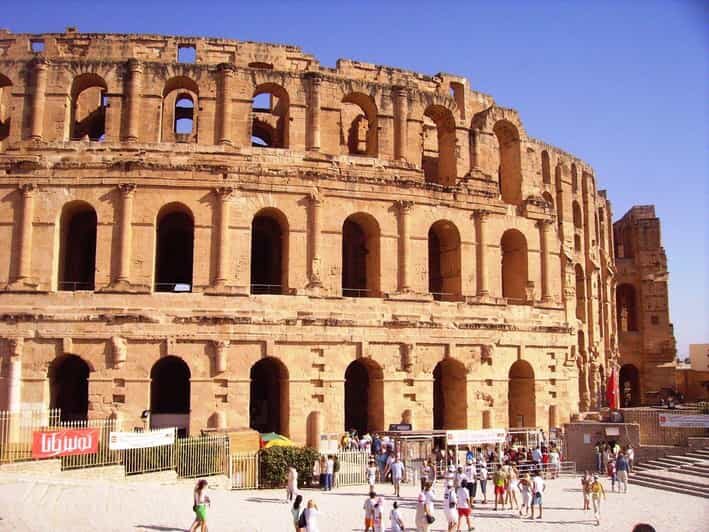
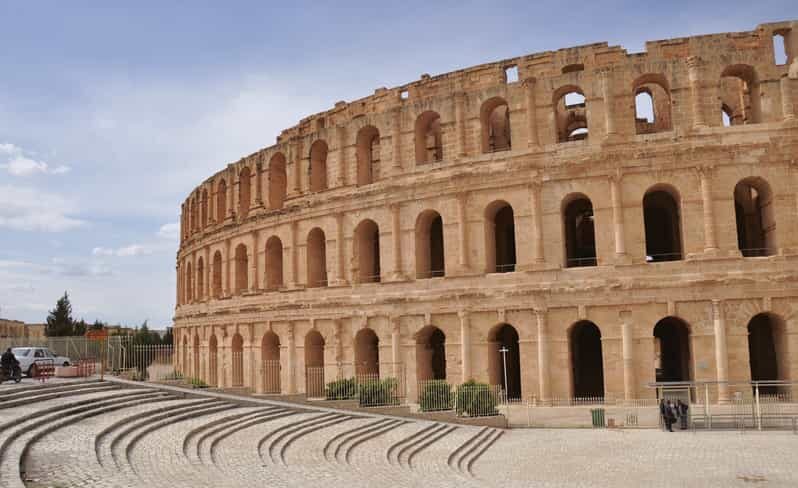
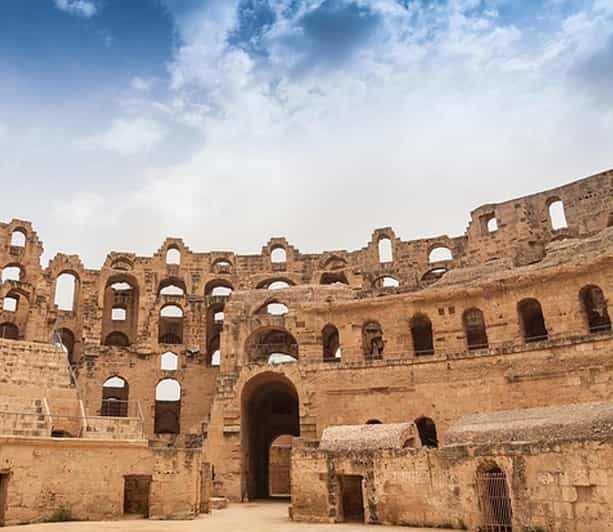
El Jem’s amphitheater is the heart of the trip. It is described as the third-largest amphitheater in the Roman world, with seating for as many as 35,000 people. Even if you have seen Rome’s Colosseum, this Tunisian site has its own force: the vast oval rises from the surrounding town, and much of its structure remains standing.
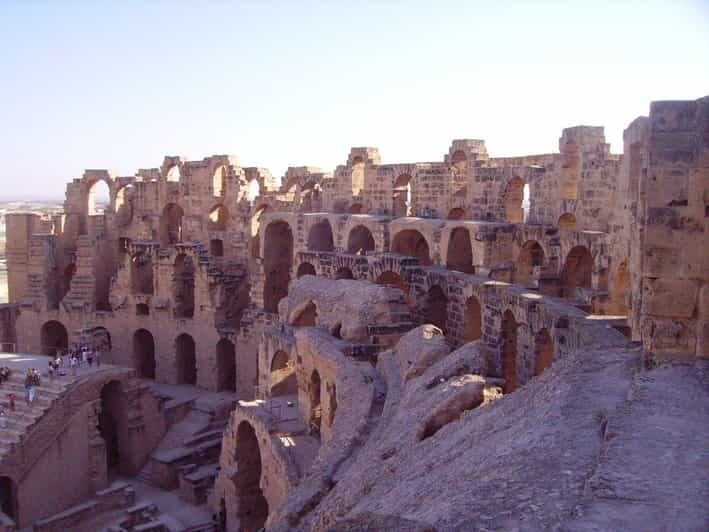
A guided visit lasts about an hour. Your guide leads you through the tiers, galleries and underground chambers, explaining how the building worked and how it fit into life in ancient Thysdrus. The scale is easier to grasp when you can move between the seating and lower passages rather than viewing the exterior from a distance.
The underground areas are a particular draw. This is where gladiators and wild animals waited before entering the arena. The stone corridors make the spectacle feel less abstract, while the guide’s stories help you picture the organization behind the games. You are visiting an archaeological site, not a reconstructed show, so the atmosphere comes from the surviving structure and the history explained on foot.
An hour gives you a good introduction, but it may feel short if you want to linger, take photographs and explore every accessible corner at your own pace. Some departures leave time to wander after the guided explanation; others can feel more tightly scheduled. Ask how much independent time is planned before setting off, especially if photography or a slower visit matters to you.
The amphitheater can be exposed to sun and heat. The tour’s short stop is a practical advantage in hot weather, but it also limits how long you can explore. Bring water, wear comfortable walking shoes and take the time you have to look beyond the arena floor. The seating levels and passageways show the building as a working place, not just a dramatic backdrop.
The museum: mosaics and daily life in Thysdrus
A short walk from the amphitheater, the El Jem Archaeological Museum shifts the focus from public spectacle to private life. The collection includes Roman mosaics, statues, everyday objects and finds from the surrounding region. The scheduled guided visit is about 30 minutes.
The mosaics are the main reason to make time for this stop. Their fine detail and range of subjects offer a close look at Roman art, while the objects help explain how people lived, worked and worshipped. The museum is smaller and more intimate than the arena, and that contrast is useful: the amphitheater shows the scale of public entertainment; the museum helps put individual households and beliefs into view.
Thirty minutes is enough for a focused introduction, particularly if your guide points out key pieces. It may not be enough for a slow visit if you like to read every display or study the mosaics at length. A few accounts describe extra time to explore independently, but do not assume that every departure offers the same amount.
Some versions of the excursion have also included a nearby Roman house or villa. That stop is not listed as a standard part of the itinerary, so treat it as a possible addition rather than a promise. If it matters to you, ask the operator whether it is included on your date.
More Great Tours NearbyGuides, languages and the value of a live explanation
The tour includes a live guide in French, English, German or Italian. This is a real strength for an archaeological visit: the stones and mosaics are impressive on their own, but a good explanation gives you a sense of why they mattered and what you are looking at.
Fathi, also spelled Fatih in some accounts, has been named often for his enthusiasm, historical explanations and ability to address people in different languages. Ali has also been praised for an easy connection with the group and clear English. Other guides, including Nouredina and Feti, have been mentioned for sharing Tunisian culture alongside the site’s history. Names are useful clues, not a guarantee of who will lead your departure.
The multilingual format can mean the guide repeats explanations in two languages. That helps mixed groups follow along, though it can lengthen stops or make it harder to hear if people are spread out. Stay close during the explanation, and ask questions while the guide is nearby. The guide’s role is especially valuable at the museum, where a little direction helps you focus on the most significant pieces.
Who will get the most from this outing
This tour suits you if El Jem is high on your Tunisia list and you would rather leave the driving and navigation to someone else. It is also a good choice if you want historical context without committing to a full-day itinerary, and if you are comfortable spending several hours in a vehicle for a relatively short visit.
You do not need to be an ancient-history specialist to enjoy it. The amphitheater’s sheer size is immediately striking, and the mosaic collection offers a clear change of pace. A lively guide can make the subject accessible, even if you arrive mainly for the architecture and photographs.
It is less suited to anyone who dislikes long road journeys, needs a generous amount of unstructured time at each site or has a fixed schedule later in the day. Families and solo visitors may appreciate the organized transport and guided structure, but the provided information does not specify age rules, group size or accessibility arrangements. Ask the operator about those needs before booking.
Booking details worth checking
The tour offers free cancellation up to 24 hours before departure and a reserve-now, pay-later option. Those terms give you some flexibility, but they do not remove the need to confirm the practical details.
Before booking, check that pickup is available from your exact Hammamet hotel, since the itinerary also names Sousse. Confirm the start time, expected return and how long you will have at each stop. Ask whether the nearby Roman house or villa is part of your departure if you are keen to see it.
The tour price excludes admission, food and drinks. Check current ticket prices before you go, and carry water and a snack for the drive. If the operator offers several departure times, remember that an early start may be necessary to make the route work.
Should you book the El Jem half-day trip?
Book it if you want to see one of Tunisia’s most impressive Roman sites and value having a guide and transport arranged for you. The amphitheater is the star, while the mosaic museum makes the excursion more rounded. At $33 before admission, the package is a reasonable way to reach a distant site without organizing the journey yourself.
Skip it, or look for a longer option, if you want hours to explore at your own pace or if a long drive for about an hour at the amphitheater and half an hour at the museum sounds unbalanced. The key question is not whether El Jem is worth seeing; it is whether you are happy to spend much of the outing getting there and back. Confirm the pickup point and actual schedule, then book if the travel-to-visiting ratio works for you.
From Hammamet: Half-Day Tour to Discover El Jem
FAQ
Is hotel pickup from Hammamet included?
The tour details say pickup from your hotel in Hammamet is included. However, the itinerary names Sousse as the pickup and return location, so confirm that your hotel is covered before booking.
How long does the tour last?
The stated duration is five hours. The drive is estimated at 105 minutes each way, and actual outings can run longer because of collection stops and route changes.
Which languages are available for the guide?
The live guide is listed as speaking French, English, German and Italian. The language available can depend on the departure and group, so check when you book.
Are admission tickets included in the $33 price?
No. Entrance fees to the archaeological sites and museum are excluded. Meals and drinks are also not included.
How much time is spent at the amphitheater and museum?
The planned guided visit is one hour at the amphitheater and 30 minutes at the El Jem Archaeological Museum. The amount of additional time to explore independently may vary.
What does the tour include besides the guide?
It includes hotel pickup in Hammamet, air-conditioned transport, an approved driver, a licensed guide, fuel, expressway fees, parking and 24/7 support.
Can I cancel without a fee?
The activity allows free cancellation up to 24 hours in advance for a full refund. It also offers a reserve-now, pay-later option.
You can check availability for your dates here: