Marrakech’s old city makes more sense when someone helps you read it. On this 3.5-to-4-hour walk, you move from Jemaa el-Fnaa and the Koutoubia Mosque area into the Kasbah, the Saadian Tombs, the Mellah, Bahia Palace and the souks, with a local guide linking the sights to the city’s past and daily life.
Two things I like here: the route joins major monuments to working streets and artisan workshops, rather than treating the old city as a string of photo stops; and guides such as Fatah, Ahmed and Youssef are often praised for clear explanations, warmth and humor. The main consideration is cost and crowds: the $15 tour price excludes two monument tickets, and queues or heat can stretch the walk.
- At a glance
- A useful first walk through Marrakech
- From Jemaa el-Fnaa to the Koutoubia
- Bab Agnaou and the royal Kasbah
- Inside the Saadian Tombs
- Through the Mellah and Tinsmiths’ Square
- Bahia Palace’s courtyards and craft
- Souks, workshops and Medina lanes
- Guides, pace and language
- What the price really covers
- Practical details before you book
- Should you book this Marrakech walk?
- FAQ
- Where does the shared tour start?
- Is hotel pickup included?
- Are entrance fees included in the price?
- How long is the tour?
- Which languages are available?
- Does the tour enter the Koutoubia Mosque?
- What should I bring?
- Is the tour suitable for wheelchair users?
- Can I cancel or reserve without paying immediately?
- More Tours in Marrakesh
- More Tour Reviews in Marrakesh
- Not for you? Here's more nearby things to do in Marrakesh we have reviewed
At a glance
 1 / 8
 2 / 8
 3 / 8
 4 / 8
 5 / 8
 6 / 8
 7 / 8
 8 / 8
- Two landmark visits: Bahia Palace and the Saadian Tombs, with time set aside at each.
- A walk through several sides of the old city: the Kasbah, historic Jewish Quarter, Tinsmiths’ Square, Medina and souks.
- Local context: guides explain the monuments, Moroccan culture and the craft traditions visible in the workshops.
- Budget separately for admission: Bahia Palace and the Saadian Tombs each cost 100 MAD per adult.
- Plan on walking: comfortable shoes, sun protection and cash in Moroccan dirhams are useful.
- A strong first-day option: the route offers a practical introduction to Marrakech’s layout and history.
A useful first walk through Marrakech
This is a good orientation tour if you have just arrived and the Medina feels like a maze of lanes, workshops and landmarks. Your guide gives you a route through several important areas, while explaining what you are seeing and answering questions along the way.
That context can make later independent visits more rewarding. A palace courtyard is beautiful on its own, but details about its architecture and history help you notice more than the tilework. The same goes for the Medina: a guide can point out traditional crafts and local life that are easy to pass without understanding.
The tour lasts 3.5 to 4 hours, though the experience may feel shorter or longer depending on pace, heat and queues. Some visitors have finished in about three hours, while a wait at the Saadian Tombs has taken up to an hour for one group. Treat the duration as a guide, not a guarantee.
You can also read our reviews of more tours and experiences in Marrakesh.


From Jemaa el-Fnaa to the Koutoubia
For a shared tour, meet your guide in front of Café Argana on Jemaa el-Fnaa. A brief introduction sets up the walk before you cross the square and head toward the Koutoubia Mosque. If you book the private option, pickup is available from your riad or accommodation within the Medina.
Jemaa el-Fnaa is one of the city’s best-known gathering places, and beginning here gives the tour an immediate sense of place. The group spends about ten minutes in the square, enough for an introduction and a look at its atmosphere, rather than an extended visit. You will return to the main meeting area at the end.
At the Koutoubia, the visit is outside only. You can admire the minaret and Almohad architecture while your guide explains the mosque’s importance to Marrakech. Do not expect an interior visit. This stop is brief, but it helps orient you to a major landmark before the route turns into the historic Kasbah.
Bab Agnaou and the royal Kasbah
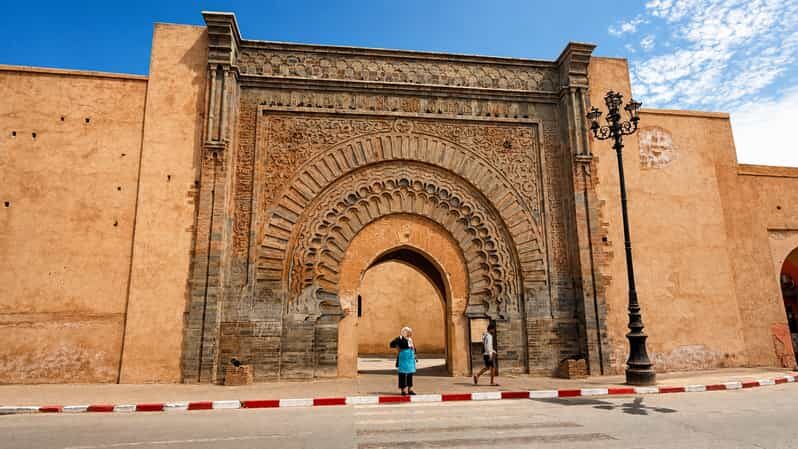
The walk continues to Bab Agnaou, a historic gate leading into the royal Kasbah. You stop outside to examine its traditional design and hear about its role as an entrance to this former royal district. It is a quick stop, but it gives the streets that follow a clearer historical frame.
From there, the route passes through the Kasbah’s older lanes. This is one of the tour’s useful transitions: instead of jumping straight from a famous square to a palace, you walk through the district that connects the monuments and hear how the city’s royal quarter fits into the larger Medina.
The pace includes time to look and ask questions, but this is still a guided group walk. If you want to linger over every architectural detail or stop often for photos, a private option may give you more room to adapt the pace, though the available information does not specify a different route or duration.
Inside the Saadian Tombs
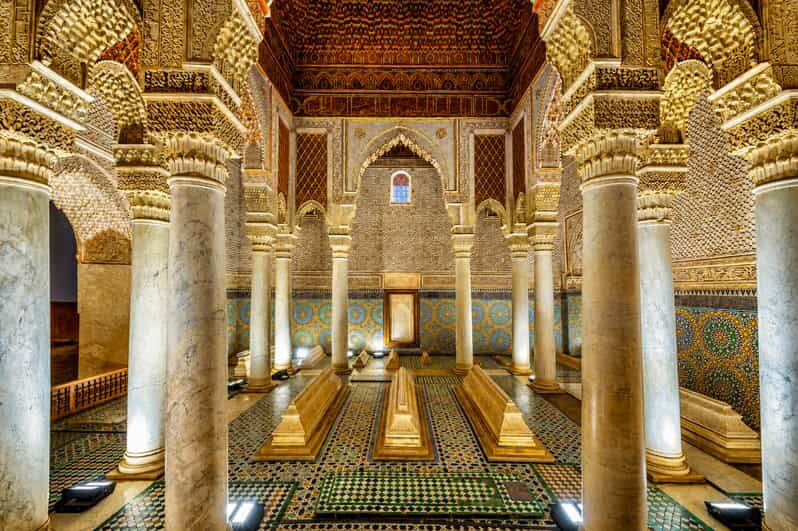
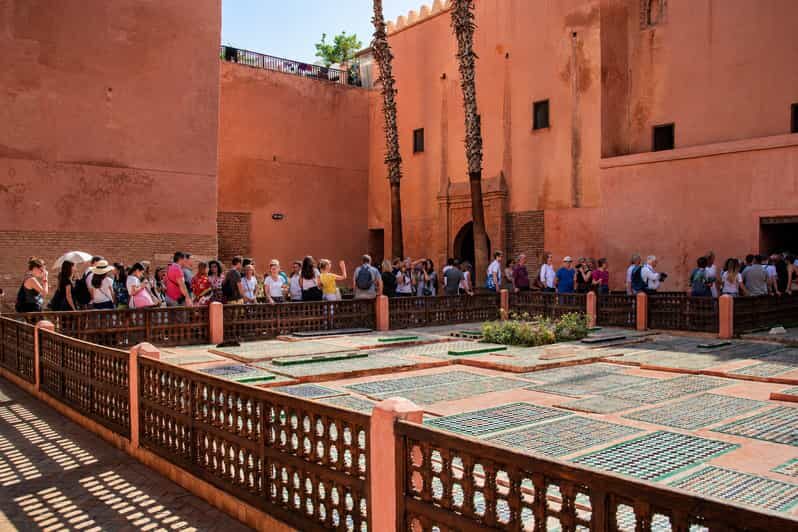
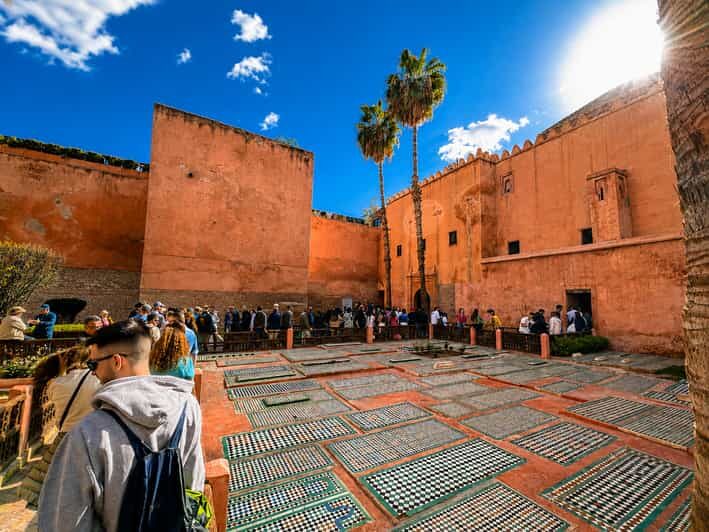
The Saadian Tombs are a major stop, with about 40 minutes set aside. Here you can see the tombs of the Saadian dynasty and the fine zellij tilework, marble, carved stucco and traditional architectural details. A guide adds the historical story behind the royal burials, making the visit more than a quick look through a striking building.
The drawback is crowding. The tombs are a popular attraction, and one group reported waiting about an hour to enter, a delay that used up a sizeable part of the tour. The advertised skip-the-line access may help, but it does not guarantee there will be no queue or delay. A busy day can change the pace and the time available elsewhere.
If you are weighing the admission cost against your interests, keep in mind that one visitor felt the tombs were not essential. I would treat them as a worthwhile stop if royal history and decorative architecture appeal to you, but not as a must for every itinerary. The guide’s explanation can be especially helpful if you would otherwise find the site difficult to interpret on your own.
Through the Mellah and Tinsmiths’ Square
After the tombs, the route passes through the Mellah, Marrakech’s historic Jewish Quarter, and continues toward Place des Ferblantiers, also called Tinsmiths’ Square. The walk takes about 15 minutes here, with time to learn about the area’s cultural heritage and see another side of the Medina.
This section adds welcome variety. The tour is not only about palaces and royal monuments; it also traces the changing character of the city’s neighbourhoods and brings you into streets where craft and local commerce remain part of everyday life. The guide’s stories help connect the district’s past with the city around you.





Bahia Palace’s courtyards and craft
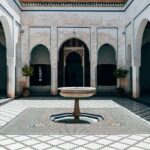
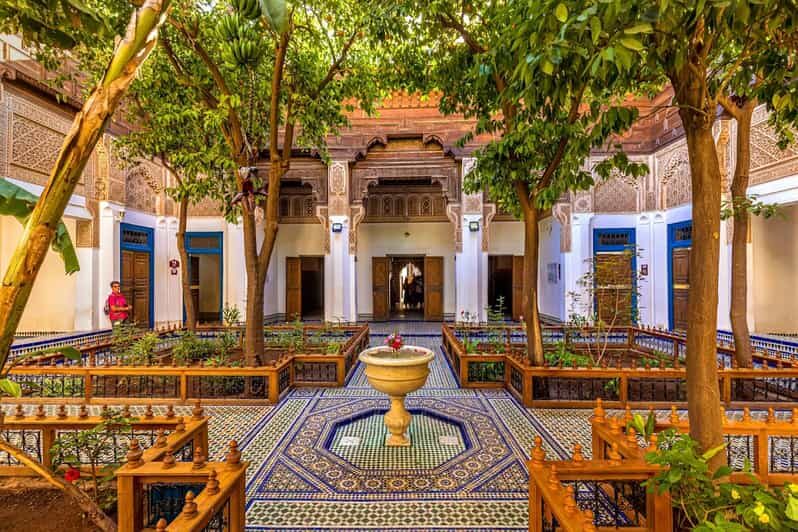
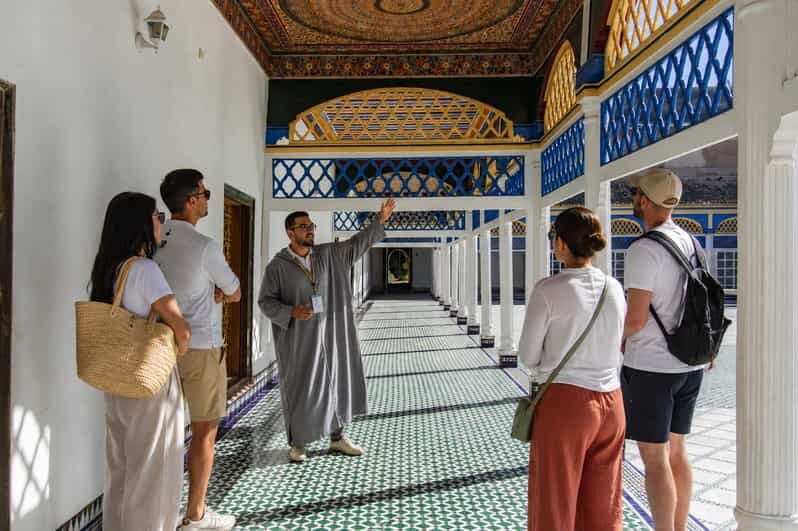
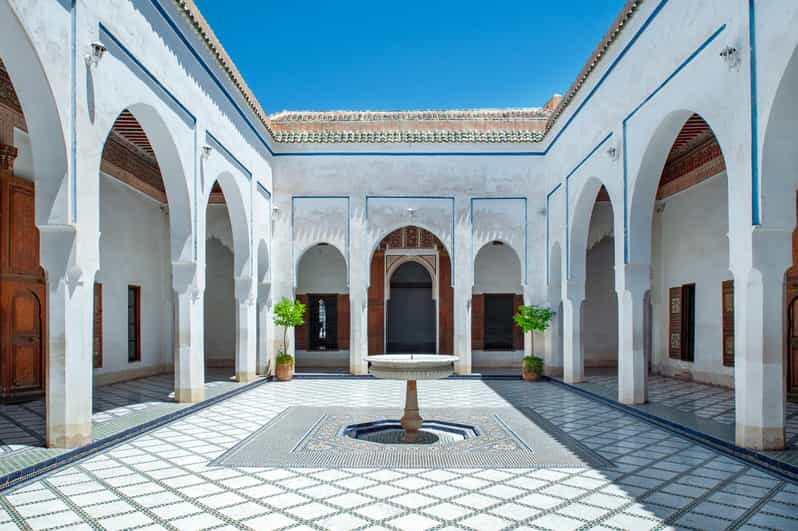
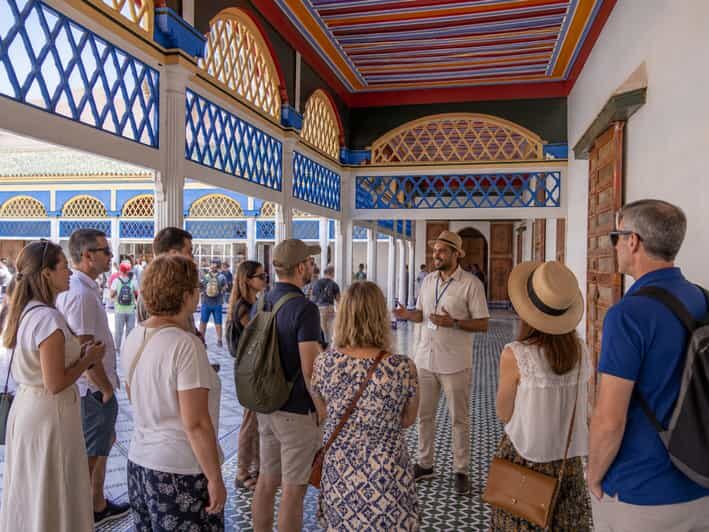
Bahia Palace gets the longest scheduled visit, about an hour. The 19th-century palace is known for its courtyards, gardens and decorated rooms, with zellij mosaics, carved cedarwood and detailed stucco. You have time to look closely and take photographs, while your guide explains the palace and the Moroccan craftwork behind its design.
This is a highlight for many visitors because the decoration rewards a slow look. Notice the repeated patterns, carved surfaces and changes from one courtyard or room to the next. A guide can direct your attention to details you might otherwise photograph without fully seeing.
Crowds and restoration work can affect the experience. One visitor found the palace crowded and under construction, so conditions may vary. The site’s popularity is part of the trade-off: you get access to one of Marrakech’s best-known architectural sights, but you may share its courtyards with many other people.
Admission costs 100 MAD per adult, paid separately unless you choose an option that includes tickets. Ask at booking which option you are selecting, since the base tour price does not include entry.
Souks, workshops and Medina lanes
After the palace, the guide takes you into the souks for about 30 minutes. You pass stalls selling spices, textiles, leather, carpets, lanterns and other traditional Moroccan goods, and visit artisan workshops where craftspeople use traditional techniques.
This is the part of the route where a guide can be particularly useful. The Medina’s narrow streets can be confusing, and it is easy to focus on the shopfronts without understanding the work behind the goods. Your guide helps you notice local crafts and points out corners of the old city you might not find by wandering alone.
There is time to browse and shop, but do not expect a long, unstructured shopping session. The tour needs to keep moving to cover its sights. If you see something you genuinely want, ask how much browsing time is available before you start negotiating or comparing options.
The walk ends by returning through the Medina to the main meeting area, with two listed drop-off locations: Café Restaurant Argana and the Medina. You finish with a better sense of how the square, monuments, neighbourhoods and souks fit together.
Guides, pace and language
The guide is central to the value of this tour. Names that come up often include Fatah or Fettah, Ahmed, Youssef, Mubarak and Lahcen. Visitors describe guides who explain history clearly, answer questions, adapt the pace and bring humor to the walk. One particular strength is the way guides connect the buildings to Moroccan culture, rather than reciting dates alone.
The experience can vary by group size and conditions. One visitor found it harder to hear the guide in a larger group and crowded locations, while another had a private tour with a leisurely pace. If hearing every detail matters to you, stay close to the guide and ask questions as you go.
Live guide languages listed include German, Arabic, English, French and Italian. The activity also describes language options by paired choices, so check the available language for your date and tour type before booking rather than assuming every language is offered at every departure.
What the $15 price really covers
At $15 per person, the tour is good value if you want a guide for the route and context at several major sights. You are paying for a licensed local guide, a planned walk, free time for photos and souk browsing, and visits to the Koutoubia Mosque area, Bab Agnaou, the Kasbah, Bahia Palace and the Saadian Tombs.
But the advertised price is not the whole cost. Admission is 100 MAD per adult at Bahia Palace and another 100 MAD per adult at the Saadian Tombs, unless you select an option that includes entry tickets. Bring cash in Moroccan dirhams, and remember that transport to and from the meeting point is not included.
The tour description includes skip-the-line entry, but the separate admission fees still apply, and queues may remain. One group waited a long time at the tombs. For a realistic budget, think of the $15 as the guiding fee and set aside money for both monuments.
Practical details before you book
Wear comfortable shoes. This is a walking tour through streets and lanes, with no provision for people with mobility impairments or wheelchair users. Sunglasses and sunscreen are sensible, particularly in hot weather; one group found the heat a factor in the pace.
For a shared tour, arrive at Café Argana on Jemaa el-Fnaa. You should receive a WhatsApp message one day before with the guide’s name, meeting point, contact details and helpful tips. The group may start up to ten minutes late if needed. Private tour pickup is available from accommodation within the Medina; check the options when booking.
Free cancellation is available up to 24 hours before the activity, and a reserve-now, pay-later option is offered. These terms can help if your plans are still shifting, but they do not change the separate costs for entrance fees or transport.
Should you book this Marrakech walk?
Book it if this is your first visit, you want a clear introduction to the Medina, or you prefer hearing the history of Bahia Palace and the Saadian Tombs from a local guide rather than piecing it together alone. The mix of monuments, the Mellah, the Kasbah and artisan lanes gives you a useful cross-section of the old city.
Think twice if you dislike crowds, have difficulty walking, or want long, independent visits at each stop. The tombs and palace can be busy, and the group has a fixed route to cover. For most first-time visitors who can manage several hours on foot, I’d book it, budget for the two entry fees and go early in your Marrakech stay.
Marrakesh: Bahia Palace, Saadian Tombs and Medina Souks Tour
FAQ
Where does the shared tour start?
Meet your guide in front of Café Argana on Jemaa el-Fnaa. A WhatsApp message is sent one day before with final meeting details and the guide’s contact information.
Is hotel pickup included?
Pickup from a riad or accommodation within the Medina is included with the private option only. Transport to and from the shared meeting point is not included.
Are entrance fees included in the $15 price?
No, not in the standard option. Bahia Palace and the Saadian Tombs each cost 100 MAD per adult. The activity also offers an option with entry tickets included, so check the option details when booking.
How long is the tour?
The stated duration is 3.5 to 4 hours. Crowds, queues, heat and the group’s pace can affect the timing.
Which languages are available?
Live guide languages listed are German, Arabic, English, French and Italian. Available language choices may depend on the tour option and departure, so confirm before booking.
Does the tour enter the Koutoubia Mosque?
No. The stop is an external visit to the mosque area, where the guide explains its history and importance.
What should I bring?
Wear comfortable walking shoes and bring sunglasses, sunscreen and cash in Moroccan dirhams for monument entrance fees.
Is the tour suitable for wheelchair users?
No. It is listed as unsuitable for wheelchair users and people with mobility impairments.
Can I cancel or reserve without paying immediately?
The activity offers free cancellation up to 24 hours in advance and a reserve-now, pay-later option. Check the terms shown for your selected booking.
You can check availability for your dates here: