Samarkand’s grand monuments make more sense when someone connects their tilework and legends to the rulers, scholars, and daily life behind them. This walking tour links Gur-e-Amir, Registan Square, Bibi-Khanym Mosque, Siyob Bazaar, and Shah-i-Zinda in one substantial outing.
I like two things in particular: the guide explains more than the dates and dynasties, and the bazaar stop adds a taste of everyday Samarkand to the monumental sights. Guides such as Javokhir, Savlatjon, and Abdulaziz have been especially praised for clear storytelling, relaxed pacing, and useful local advice.
The main consideration is the scale of the day. You’ll walk between major sites for four to eight hours, and entrance tickets are not included. In Samarkand’s heat, comfortable shoes, water, a hat, and sunscreen are sensible basics.
At a glance
- Five landmark stops: Gur-e-Amir, Registan, Bibi-Khanym, Siyob Bazaar, and Shah-i-Zinda.
- A guide who adds context: Expect history alongside discussion of Uzbek culture and modern life.
- Tea and local snacks included: Coffee, meals, and entrance tickets are extra.
- A long walking day: The experience is listed as four to eight hours, with regular pauses.
- Flexible group options: Private and small-group tours are available, in four languages.
- Good value if you want context: The $21 price covers a guide and tea break, but not paid entry to monuments.
👉 See our pick of the 2 Best Guided Tours In Samarkand
- At a glance
- Five stops that tell Samarkand’s story
- Gur-e-Amir, where Timurid history begins
- Registan Square, the city’s grand gathering place
- Bibi-Khanym Mosque, an ambitious monument
- Siyob Bazaar, a change of pace
- A tea break, with snacks rather than coffee
- Shah-i-Zinda, a close-up of tiled craftsmanship
- What buys, and what it doesn’t
- Who will get the most from this walk
- Should you book it?
- FAQ
- How long does the walking tour last?
- Which places are included in the route?
- What languages are offered?
- Is tea included?
- Is coffee included?
- Are entrance tickets included in the price?
- Is this a private tour?
- Is the tour wheelchair accessible?
- What should I bring?
- Can I cancel for a refund?
- The Best Of Samarkand!
- More Walking Tours in Samarkand
- More Tours in Samarkand
- More Tour Reviews in Samarkand
- Not for you? Here's more nearby things to do in Samarkand we have reviewed
Five stops that tell Samarkand’s story
 1 / 8
 2 / 8
 3 / 8
 4 / 8
 5 / 8
 6 / 8
 7 / 8
 8 / 8
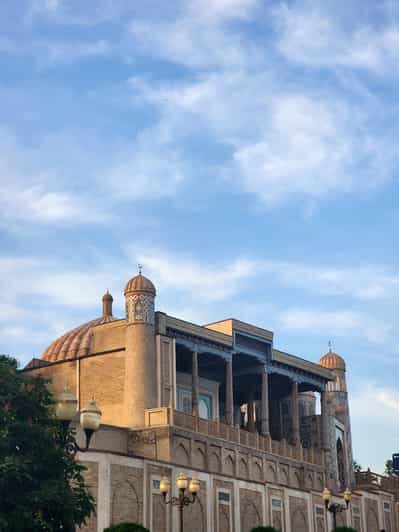
Samarkand’s headline sights are spread across a walk that takes you from a ruler’s tomb to a grand public square, then on to a mosque, market, and sacred necropolis. That range is the tour’s main strength: instead of seeing the monuments as separate photo stops, you get a chance to connect their stories.
The pace is designed for explanations and photographs, not just marching from one gate to the next. The exact duration can run from four to eight hours, so ask about the expected length when you check available start times. Some groups have completed the main sights in about four hours, while others have spent longer talking, eating, or adapting the route.
The guide is a big part of the experience. English, Russian, Tajik, and Uzbek are offered, and guides named by past participants include Javokhir, Savlatjon, Abdulaziz, Xumoyon, and Ahmed. Don’t assume you’ll have a particular person unless you confirm it. What you can reasonably look for is a guided walk with time to ask questions, hear local perspectives, and get help understanding the places around you.
You can also read our reviews of more walking tours in Samarkand
Gur-e-Amir, where Timurid history begins
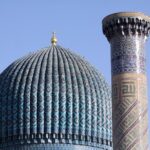
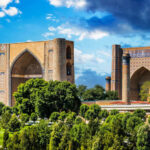
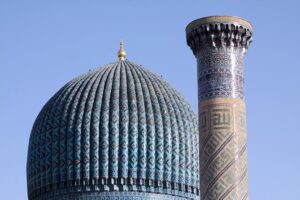
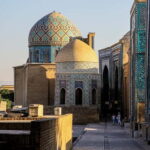
The route starts at Gur-e-Amir, the mausoleum of Amir Timur, also known as Tamerlane. Its turquoise dome gives you a striking first view, but the guide’s introduction helps explain why this tomb matters beyond its appearance: Timur’s power and ambitions shaped Samarkand’s role as an imperial capital.
Inside, look for marble and onyx details, and listen for explanations of the tombs and their symbolism. A guide can help you read the space rather than simply move through it. The stories here also set up the next stop, since the city’s later monuments reflect the Timurid era and the influence it left behind.
This is a strong opening for visitors who want historical context early in the day. Keep in mind that entrance tickets are not part of the $21 price, so budget separately for admission where required. The tour includes the guide, but not the cost of going inside each paid site.
Registan Square, the city’s grand gathering place
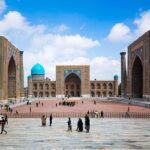
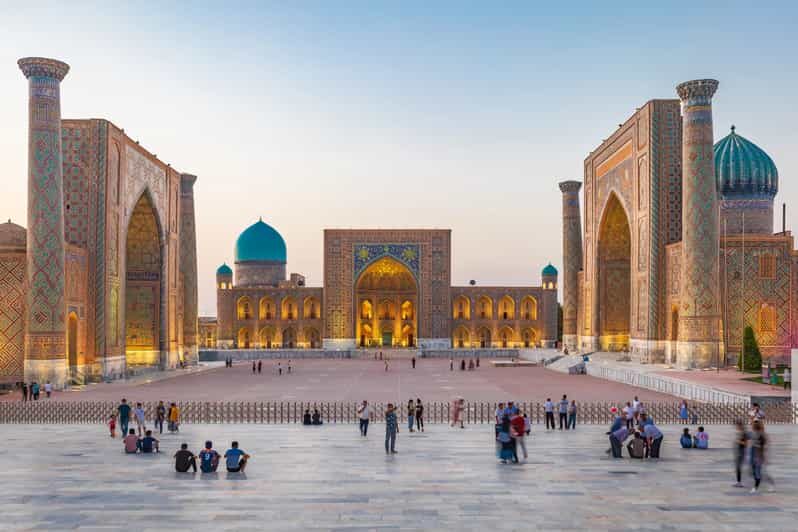
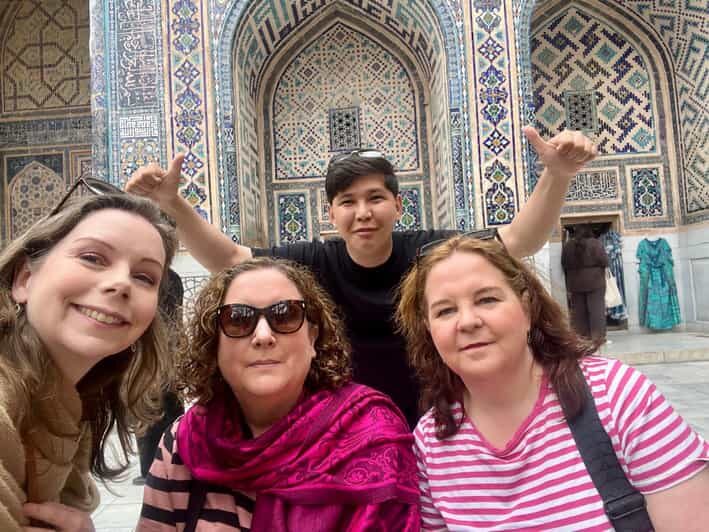
Registan is the architectural high point for many people: three madrasahs face the square, Ulugh Beg, Sher-Dor, and Tilya-Kori. Their facades reward a slow look. The patterns, colors, and decorative details are easy to admire at a glance, but your guide can point out how the buildings served religious, educational, and commercial life.
Ulugh Beg’s connection to astronomy gives the square an extra dimension. Rather than treating the madrasahs as beautiful backdrops, the guide can explain the city’s intellectual life and its place on Silk Road trade routes. You’ll also have time for photographs, though the scale and detail mean you may want to put the camera down now and then.
The square is a major draw, so expect a popular landmark rather than a quiet corner. The value of a guided stop is that you can focus on what you’re seeing instead of trying to piece together the story on your own. If you’re keen on architecture, this is the point where it pays to ask specific questions about the decoration and design.
Bibi-Khanym Mosque, an ambitious monument
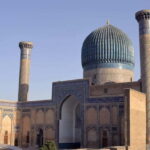
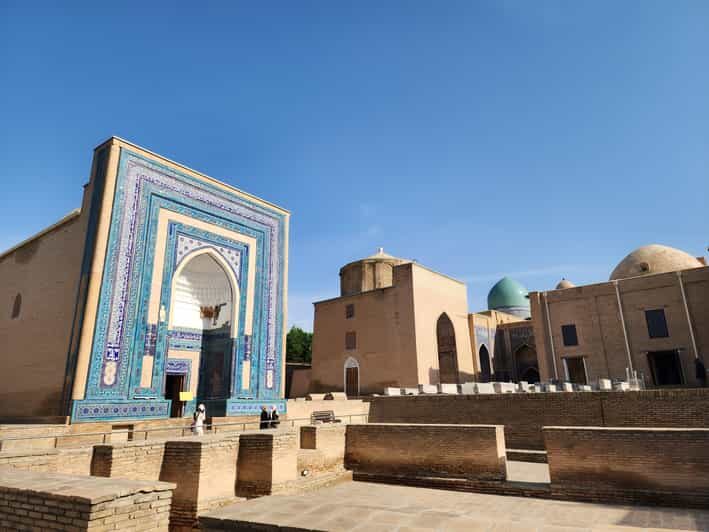
Next comes Bibi-Khanym Mosque, a vast complex known for its scale and its striking domes and courtyard. The story of its construction includes legends, and a guide can help separate the monument’s historical significance from the tales told about it.
The size makes this stop feel different from the close-up detail at Gur-e-Amir or the carefully composed facades at Registan. Take time to absorb the proportions and the space between the buildings. If you’ve already seen several monuments, this is a good moment to notice how each site has its own character rather than treating them all as variations on blue tile.
As at the other major monuments, admission is not included. If you’re watching your spending, remember that this tour’s low base price does not cover entry fees. You’ll need to decide how much of the day’s budget to reserve for going inside the sites.
More Great Tours NearbySiyob Bazaar, a change of pace
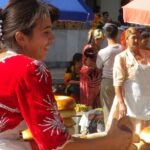
The walk through Siyob Bazaar brings you from grand architecture into ordinary market life. Stalls carry fruit, spices, nuts, sweets, and Samarkand bread. It’s a useful place to see local food traditions up close, and a welcome change of scenery after several large monuments.
The guide can help you navigate the market and offer tips on bargaining. One guide, Javohir, has even helped visitors negotiate prices. That sort of practical assistance can make browsing less awkward, especially if you don’t speak Uzbek or aren’t used to haggling. It’s still your choice whether to buy anything, and personal spending is not included.
Food recommendations can also be part of the conversation. Guides have pointed people toward local dishes such as plov, samsa, and other snacks. These suggestions are a bonus, not a promised meal: meals are excluded, so check with your guide if you want to plan lunch or dinner around the walk.
A tea break, with snacks rather than coffee
The break is meant to give your feet a rest and leave space for questions. Tea and light local snacks are included, and the stop may be at a café or a quiet corner near the market. The chance to talk about Uzbek customs, current life, and the places you’ve seen can be just as worthwhile as the refreshment.
There is a small but important wording distinction: despite the tour’s title mentioning tea or coffee, the included refreshment is tea. Coffee is specifically excluded. If you want coffee, expect to pay for it yourself. Meals are not included either, even though some guides may recommend a restaurant or an optional place to eat.
For many people, this is the most natural point to ask questions that don’t fit neatly into monument history. Guides such as Javokhir and Abdulaziz have been praised for conversations about modern Uzbekistan and the wider region. Treat this as an opportunity to learn, not a formal lecture: the most useful questions may be about everyday customs, food, or life in the city now.
Shah-i-Zinda, a close-up of tiled craftsmanship
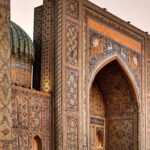
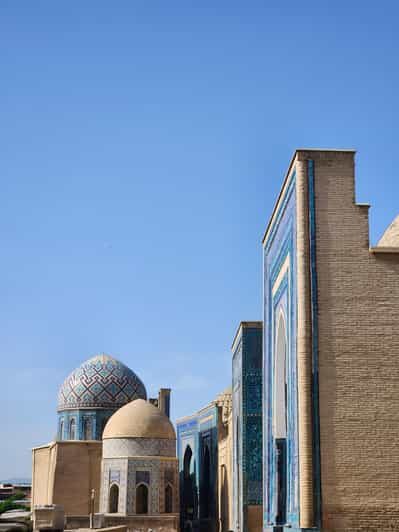
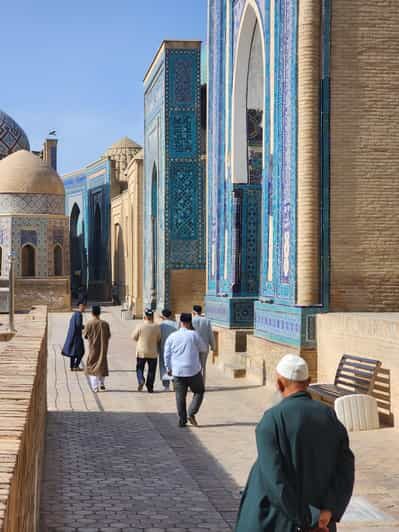
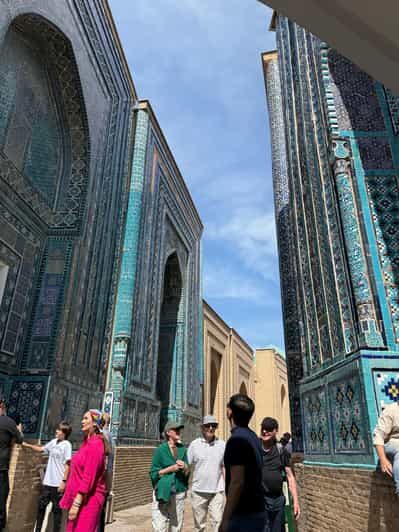
The final major stop is Shah-i-Zinda, a necropolis lined with mausoleums along a narrow passage. Its turquoise and blue tiles create one of Samarkand’s most memorable views, but the walk through the complex is more than a quick look at color. The guide explains the site’s spiritual importance and helps you understand why it is considered sacred.
The passage is narrow, and you’ll be moving through a complex that calls for a respectful pace. It’s an especially good place to pause over tile patterns and details you might miss while hurrying. You’ll also want to keep your camera ready, while remembering that no photograph can quite capture the changing views along the walkway.
Shah-i-Zinda makes a fitting close because it brings together the tour’s main themes: religious life, craftsmanship, local memory, and the city’s long history. By this stage, your legs may be ready for a rest, which is one reason to take the stated four-to-eight-hour range seriously.
What $21 buys, and what it doesn’t
At $21 per person, the tour offers a guide through several of Samarkand’s best-known sights, plus tea and light snacks. That’s good value if you want interpretation and local conversation, not merely a route between monuments. A guide can also make the bazaar easier to approach and help you get more from the details at each stop.
The price is not an all-in sightseeing pass. Entrance tickets, coffee, meals, and personal purchases are extra. Add those costs when comparing the tour with exploring independently, and ask yourself how much you value having a local guide explain the sites and answer questions along the way.
The advertised duration is broad, from four to eight hours. That flexibility may suit you if you want to take your time, but it also means you should check the actual start time and expected length before booking. Private or small-group options are available, which may make it easier to tailor the pace or conversation to your interests.
Who will get the most from this walk
This is a good first-day choice if you have limited time in Samarkand and want to cover the major sights with a guide. It also suits visitors who enjoy asking questions, want help placing the monuments in historical context, or would like some informal insight into Uzbek life alongside the standard stories.
The tour is on foot, so it’s best for people comfortable with a substantial walk. Wear comfortable shoes, and take a hat and sunscreen for protection from the sun. One guide has brought water for the group in hot weather, but don’t count on that as a standard inclusion. It’s wise to bring your own.
The experience is described as wheelchair accessible, but it is still a walking tour through several historic sites. If you have specific mobility needs, contact the organizer before booking to discuss what the route can accommodate. It is not suitable for people over 95.
The tour is offered in English, Russian, Tajik, and Uzbek. If the guide’s language is central to your choice, confirm the option available for your selected time. The experience also allows free cancellation up to 24 hours in advance and offers reserve-now, pay-later booking.
Should you book it?
Book this walk if you want the main monuments explained by a local guide and you’re happy to spend several hours on foot. The combination of Gur-e-Amir, Registan, Bibi-Khanym, Siyob Bazaar, tea, and Shah-i-Zinda gives you both monumental Samarkand and a small window onto daily life.
It’s less suitable if you want a short, low-walking outing or expect entrance fees, lunch, or coffee to be included. For the best fit, check the planned duration, confirm your guide’s language, and budget separately for tickets and any market purchases. If that works for you, $21 is a sensible way to add context and local conversation to a day among Samarkand’s most important sights.
Samarkand: Walking Tour with Tea/Coffee break & local snacks
FAQ
How long does the walking tour last?
The stated duration is four to eight hours. Check available start times for details about the schedule you can book.
Which places are included in the route?
The tour visits Gur-e-Amir Mausoleum, Registan Square, Bibi-Khanym Mosque, Siyob Bazaar, and Shah-i-Zinda necropolis.
What languages are offered?
Guides are available in English, Russian, Tajik, and Uzbek.
Is tea included?
Yes. A tea break and light local snacks are included.
Is coffee included?
No. Coffee is listed as not included.
Are entrance tickets included in the $21 price?
No. Entrance tickets are extra, as are meals and personal expenses.
Is this a private tour?
Private and small-group options are available.
Is the tour wheelchair accessible?
The activity is described as wheelchair accessible. Since it is a walking tour, contact the organizer about your specific access needs before booking.
What should I bring?
Comfortable walking shoes are recommended. A camera, sunscreen, and a hat are also advised.
Can I cancel for a refund?
You can cancel up to 24 hours in advance for a full refund.
You can check availability for your dates here: