Hanoi makes more sense when you can see how its busy streets give way to quieter lanes and farmland. This Jeep tour carries you from Train Street and Ba Dinh to Banana Island, where crops and banana plantations offer a sharp change of scene from the city center.
I like two things in particular: the ride reaches neighborhoods and countryside that are awkward to cover on foot, and a guide can connect landmarks to everyday life, from a family farm to local food. The main consideration is that this is a moving overview, not a long visit at every stop; Train Street and the full set of sights depend on which duration you book.
- At a glance
- A Jeep is a useful way to read Hanoi
- From the Old Quarter to Train Street
- Banana Island, a surprising countryside break
- Pagodas, West Lake and Ba Dinh
- Coffee, food and a guide who brings the route together
- What buys, and what it does not
- Is this Hanoi Jeep tour right for you?
- FAQ
- How long is the Hanoi Jeep tour?
- What is the price?
- Where does the tour start?
- Is Train Street included?
- Does the tour visit Banana Island?
- Is B-52 Lake included?
- Are food and drinks included?
- Is hotel pickup and drop-off included?
- What should I bring or wear?
- The Best Of Hanoi!
- More City Tours in Hanoi
- More Tours in Hanoi
- More Tour Reviews in Hanoi
- Not for you? Here's more nearby things to do in Hanoi we have reviewed
At a glance
- Banana Island brings a rural pause to a route through Hanoi’s streets, with farmland, banana plants and, on some tours, a visit to a local home.
- Train Street is part of the route, but seeing a train pass depends on timing.
- The Jeep is open-air, giving you a close-up view of city traffic and street life.
- The four-hour option covers more, including B-52 Lake, a café stop and a meal.
- Guides shape the experience. Minh, Sebastian, Tyson, Julian and Gina are among the guides named by recent participants.
- At about $25 per person, the tour combines transport, a guide and several stops in a compact outing.

👉 See our pick of the 25 Best Shopping Tours In Hanoi
A Jeep is a useful way to read Hanoi
A vintage Jeep is more than a novelty here. From an open-air seat, you can watch the city change block by block: narrow backstreets, major landmarks, quieter residential areas and the farmland along the Red River. It is a broad, street-level view rather than a museum-style tour, and that suits Hanoi, where daily life is often the most interesting thing in sight.
The Jeep has a professional driver, while an English-speaking guide explains what you are passing and answers questions. That division matters in a city where traffic can be intense. You can look around instead of worrying about directions, and your guide can adjust explanations to what you have already seen. One family of four found the two-hour version flexible enough to change stops as they went.
The tour is offered in two- and four-hour versions, with the exact route and inclusions differing. The short outing can work as a first orientation, while the longer one makes room for more history and a meal. A few participants described a roughly three-hour outing, so allow for some variation in pace rather than treating the advertised duration as a stopwatch guarantee.
You can also read our reviews of more city tours in Hanoi


From the Old Quarter to Train Street
Pickup begins at your hotel in Hanoi’s Old Quarter. After meeting the guide and driver, you climb into the Jeep and head through central Hanoi. The first stretch gives you a quick feel for the city’s traffic and architecture, with the guide pointing out how French colonial buildings and Vietnamese landmarks sit alongside ordinary shops and homes.
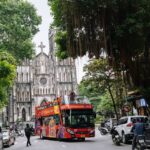
St. Joseph’s Cathedral is one of the early landmarks. Its neo-Gothic exterior recalls the French colonial period, but it is also part of the city’s present-day religious life. The tour passes the cathedral and gives your guide a chance to explain its place in Hanoi, rather than simply pausing for a photograph.
Train Street is a major draw. The railway runs close to homes and cafés, making the narrow passage feel unlike a standard city street. The tour includes a visit, but the train itself does not appear on a fixed schedule for your group. One guide, Mikey, managed to time a visit so the train passed; treat that as a possible bonus, not a promise. If seeing the train is essential, ask about timing when you book.
The Jeep then threads through backstreets and military areas, away from the main sightseeing circuit. The route can include views of the Ministry of Defence and the historic citadel area, though these are sights to pass by, not places where you should expect an extended visit. This part is valuable less for ticking off a monument than for seeing how the capital works between its famous stops.
Banana Island, a surprising countryside break
The biggest change of pace comes at Red River Banana Island. Dirt roads, cultivated plots and banana plantations replace the dense city streets, even though you are still close to Hanoi. It is a useful reminder that the capital is not only avenues and monuments; people farm here, too.
Some outings include a visit to a local home or family farm. You may be offered small fresh bananas, tea or nuts, and the guide can explain how local farmers grow crops and earn a living. One family also saw silk artists at work, but that should be treated as a possible feature rather than a guaranteed stop.
This is one of the tour’s strongest reasons to book. The contrast is immediate, and the short visit gives you a glimpse of daily rural life without committing to a separate countryside excursion. The trade-off is time: it is an introduction, not a farm stay or a long conversation with local producers. If a gift-shop stop is included, you may prefer to use that time for the surrounding area; some participants felt shopping was unnecessary.
Pagodas, West Lake and Ba Dinh
After Banana Island, the route returns toward the city and Tran Quoc Pagoda, which is described as Hanoi’s oldest pagoda and is set beside West Lake. Depending on the route and pace, the tour may stop or pass by. Dress modestly if you visit: shoulders and knees should be covered.
West Lake offers a calmer stretch of the drive. The ride along its edge gives you a look at a less congested side of Hanoi, and the open Jeep makes the breeze and views part of the experience. It is a change from the narrow lanes, though it is still a drive rather than a dedicated lakeside walk.
The longer route includes Ba Dinh Square and the area around the Ho Chi Minh Mausoleum, along with important government buildings. These places help explain the political center of modern Vietnam. You ride through and hear context from your guide; do not plan on an interior visit as part of this Jeep outing.
The four-hour tour also includes Huu Tiep Lake, commonly called B-52 Lake, where wreckage from a B-52 bomber remains. It is a compact but striking wartime site, and a guide can put the visible remains into the broader history of the conflict. If this is a priority for you, confirm that you are choosing the longer version, since the two-hour route is not described as including the stop.
More Great Tours NearbyCoffee, food and a guide who brings the route together
A café break is part of the four-hour experience, with Vietnamese coffee such as egg coffee or iced coffee. The longer option also includes lunch or dinner, described by participants as a local meal; bun cha was a popular example. The specific dish and timing can vary, so arrive without assuming the meal will fall at a particular hour.
These food stops add value because they turn the tour from a sightseeing circuit into a small introduction to local habits. You can ask how a dish is eaten or what is in your coffee, then return to the Jeep with a better sense of the place. On the shorter tour, do not count on the meal and café being included.
The guide is central to the outing. Names that have come up include Minh, Sebastian, Tyson, Julian and Gina, with Duy, Nathan and others also leading tours. They are praised for clear English, humor, flexible pacing and practical suggestions. Minh, for example, is known for taking photos and checking whether the group wants more or less explanation; Julian has helped visitors arrange a later Train Street visit. Guide assignments vary, so these names are examples, not a booking guarantee.
The strongest guiding style here is lively and responsive. If you have already seen a landmark, say so; a private group may be able to adapt the route. If you are curious about food, religion or wartime history, ask. A guide who welcomes questions can make the drive feel much less like a checklist.





What $25 buys, and what it does not
At around $25 per person, the price is appealing for an outing that includes a Jeep, driver, English-speaking guide, hotel pickup and drop-off, and entrance fees. The four-hour version adds a café stop and a meal, making it particularly good value if you want transport and local context in one booking. Check the selected duration and inclusions before you pay, since the two-hour and four-hour tours do not cover the same ground.
The price buys breadth, not lengthy time at each landmark. You see several sides of Hanoi in a few hours, but you will not have much time to linger at every stop. That is a fair exchange if you are short on time or want a first orientation. If you prefer to explore one site slowly, use the Jeep tour to decide where to return on your own.
Private groups are available, which can help if you want a more personal pace or have children with you. The tour is described as suitable for all ages, and families have taken young children. Still, the open-air ride, city traffic and short stops may suit some children better than others. Comfortable shoes and a camera are useful; bring modest clothing if a temple visit is planned.
One practical caveat: the Jeep’s condition can vary. Most descriptions focus on the fun of the vintage vehicle, and one participant found it surprisingly comfortable, while another felt their Jeep needed repairs. If vehicle condition matters to you, ask the operator before booking. The open-air setup also means you are close to Hanoi’s weather and street smells, which can be part of the fun or less appealing depending on the day.
Is this Hanoi Jeep tour right for you?
Book it if you want a quick, guided look at Hanoi that goes beyond the central sights, especially if Banana Island and the Red River countryside appeal to you. It is also a smart first-day choice: you get a broad orientation, local food and useful ideas for what to revisit.
Choose the four-hour version if B-52 Lake, a café and a meal matter to you. The two-hour option is better when your schedule is tight and you mainly want a lively overview by Jeep. If you want long visits inside monuments, a guaranteed train pass or a slow countryside stay, this is not the right format. For a compact ride that links city history with ordinary life, it offers a lot for the price.
Hanoi Jeep Tour: City Highlights, Train St & Countryside
FAQ
How long is the Hanoi Jeep tour?
The tour is offered in two-hour and four-hour versions. The route and included stops differ by duration, and the pace can affect the actual outing time.
What is the price?
The listed price is $25 per person. Check the selected tour option for its specific inclusions.
Where does the tour start?
Pickup is from your hotel in Hanoi’s Old Quarter. Confirm the pickup details when checking availability.
Is Train Street included?
Yes, Train Street is part of the described route. Seeing a train pass is not guaranteed, since it depends on timing.
Does the tour visit Banana Island?
Yes. The route includes the Red River’s Banana Island, with farmland and banana plantations. Some outings include a local home or family farm visit.
Is B-52 Lake included?
Huu Tiep Lake, the site with B-52 bomber wreckage, is included on the four-hour tour. It is not listed as a stop on the two-hour version.
Are food and drinks included?
The four-hour tour includes a café stop and a meal, described as lunch or dinner. The two-hour tour does not list these inclusions.
Is hotel pickup and drop-off included?
Yes, hotel pickup and drop-off are included. Pickup is described as being from the Hanoi Old Quarter.
What should I bring or wear?
Bring comfortable shoes and a camera. If you visit a temple, dress modestly with your shoulders and knees covered.
You can check availability for your dates here: