Arequipa’s story comes into focus on foot, from the grand arches of Plaza de Armas to the modest lanes of San Lázaro, the neighborhood regarded as the city’s first settlement. In two hours, this walk links colonial architecture, camelids, and views of the volcanoes, all within reach of the center.
I like two things in particular: the route mixes famous sights with everyday city details, and the camelid stop at Mundo Alpaca is an unexpected change of pace from churches and courtyards. Guides such as Edgar, Johan, Beatriz, and Jorge have been praised for lively explanations and local recommendations.
One thing to plan for: the $10 booking price is only part of the cost. The tour relies on a voluntary tip to pay the guide and cover operating expenses, and a tip of 30 to 50 soles per person has been suggested. Also, optional admission to Santa Catalina Convent and other museums costs extra.
- At a glance
- Start at Plaza de Armas, Arequipa’s grand front room
- Find carved stone and quiet courtyards at the Company cloisters
- Cross El Puente Grau for views of the volcanoes
- Meet Arequipa’s camelids at Mundo Alpaca
- Walk into San Lázaro, the city’s first neighborhood
- Know what the booking price really covers
- A brisk walk with a lot packed into it
- Who will get the most from this walk?
- Should you book it?
- FAQ
- Where does the tour meet?
- How long does the tour last?
- What languages are available?
- What sights are included on the walk?
- Does the tour visit Santa Catalina Convent?
- Is the Juanita mummy museum included?
- Are entry fees included?
- Is the price the full cost?
- Where does the tour finish?
- Is the tour done on foot?
- The Best Of Arequipa!
- More Walking Tours in Arequipa
- More Tours in Arequipa
- More Tour Reviews in Arequipa
- Not for you? Here's more nearby things to do in Arequipa we have reviewed
At a glance
 1 / 10
 2 / 10
 3 / 10
 4 / 10
 5 / 10
 6 / 10
 7 / 10
 8 / 10
 9 / 10
 10 / 10
- Start and finish: Santa Catalina Street 204, one block from Plaza de Armas. Look for a guide holding an umbrella.
- Duration: About two hours, though some walks run closer to two and a half.
- Route highlights: Plaza de Armas, the Cloisters of the Company, Mundo Alpaca, El Puente Grau, and San Lázaro.
- Language: English or Spanish.
- Price: $10 to reserve, plus a voluntary tip. Optional museum or convent admission is extra.
- Best for: First-time visitors who want a compact introduction to Arequipa’s architecture, history, and street layout.
👉 See our pick of the 6 Best Shopping Tours In Arequipa
Start at Plaza de Armas, Arequipa’s grand front room
The meeting point is Santa Catalina Street 204, about one block from the main square. The guide carries an umbrella, a simple landmark that should help you find the group in the central streets.
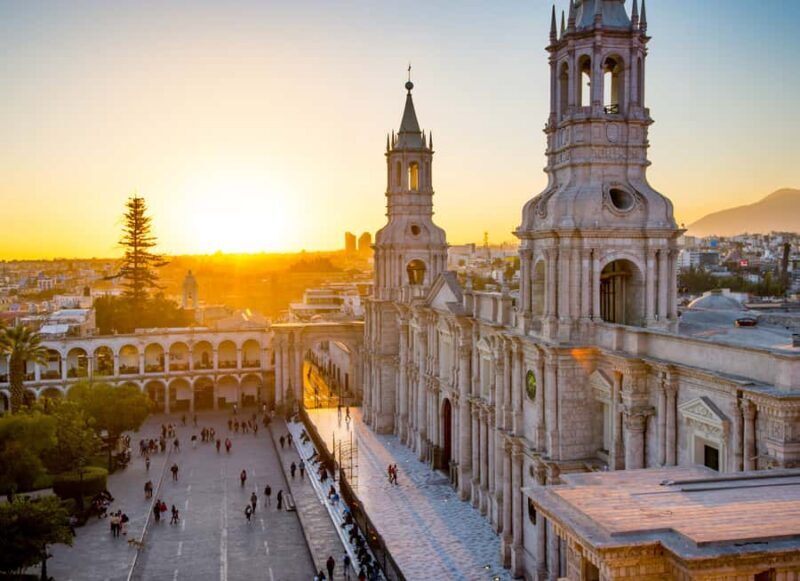
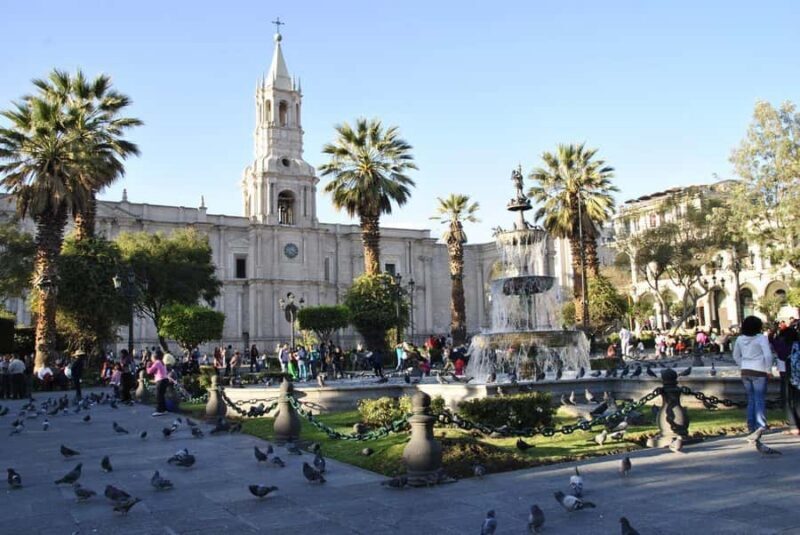
The walk begins at Plaza de Armas, where the guide explains the square’s history and points out the traditional arches and portals around it. This is more useful than simply admiring the stonework: you get a sense of how the city center is laid out and why the square has been its civic heart.
The guide’s stories are a major part of the experience. Guides including Edgar, Johan, Beatriz, and Jorge have been singled out for humor, clear explanations, and an openness to questions. That kind of conversation can turn a quick look at a facade into a better understanding of Arequipa’s past and present.
You may also pick up practical advice for the rest of your stay. Pamela, for example, found the walk helped her get oriented and explore the city over the following two days. A guide who can point you toward places to eat or answer questions about local life makes a short introduction more useful than a list of landmarks.
You can also read our reviews of more walking tours in Arequipa

Find carved stone and quiet courtyards at the Company cloisters
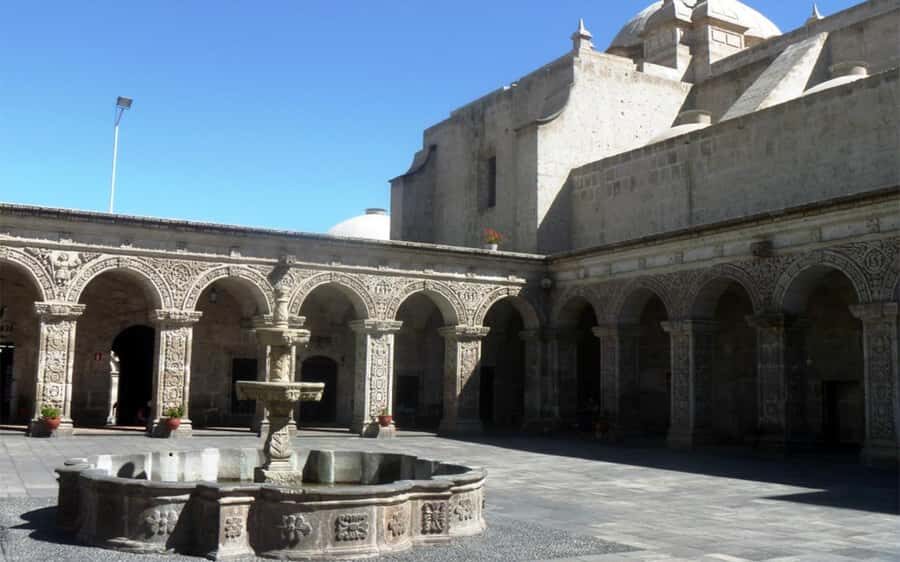
From the square, the route visits the Cloisters of the Company, a striking architectural stop. The tour presents them as an example of Arequipa’s distinctive religious and colonial design, with the guide explaining the meaning behind the architecture and art.
The cloisters offer a calmer contrast to the open square. Their arcades and enclosed spaces invite a slower look, though the overall route covers a lot in a short time. If you like taking photographs or lingering over details, be ready to ask for a moment. One visitor found the pace a bit rushed and had little time for photos.
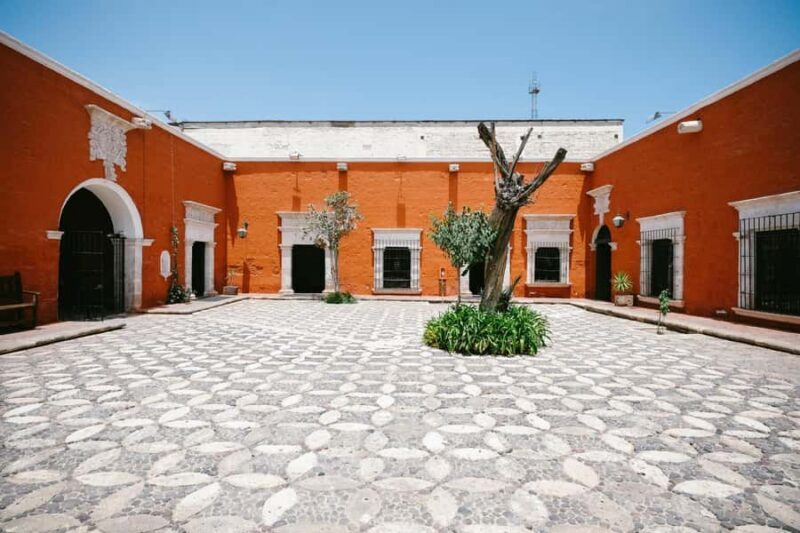
The walk also passes old mansions and city gardens. These smaller sights help fill in the picture between major stops. Rather than treating the historic center as a handful of grand buildings, the route shows how old courtyards and private homes sit within the city’s everyday fabric.
Cross El Puente Grau for views of the volcanoes
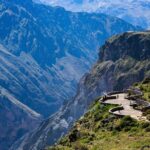
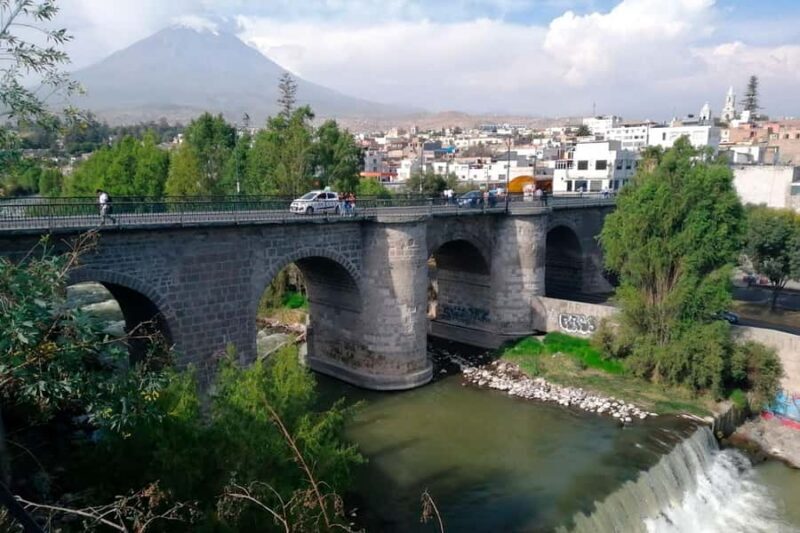
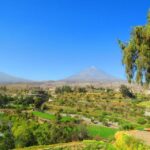
At El Puente Grau, the group pauses at a strategic viewing point for the volcanoes, including Misti, Chachani, and Pichu Pichu. This is one of the walk’s clearest shifts in perspective: the focus moves from stone streets and buildings to the volcanic peaks that frame the city.
The stop is valuable even if you have already seen the mountains from elsewhere. A guide can connect the view to Arequipa’s setting and help identify the peaks. The timing and visibility can affect how much you see, so treat this as a chance to look rather than a guaranteed postcard view.
Some guides also take the group to an elevated viewpoint, such as the top of a hotel. That can add a striking view over the city, but it is not a stop to count on as part of every departure. The core promise is a volcano-viewing point near El Puente Grau.
Meet Arequipa’s camelids at Mundo Alpaca
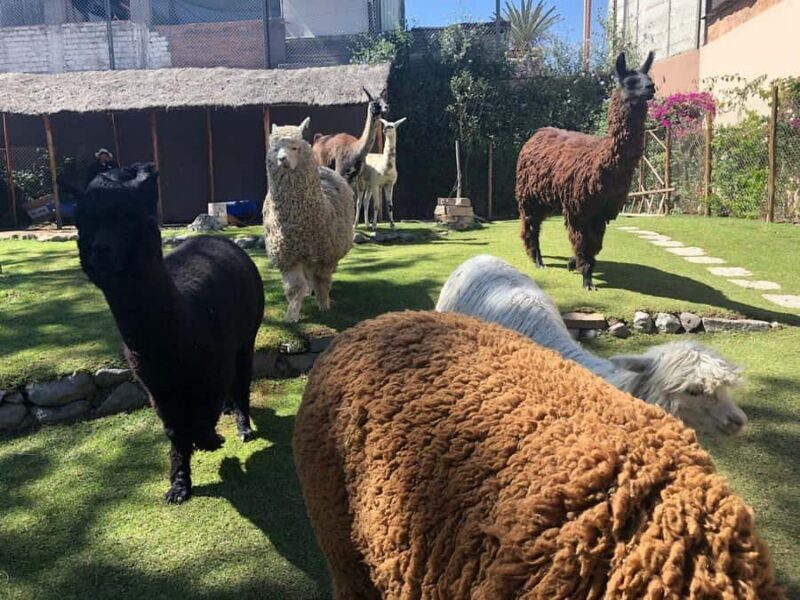
Mundo Alpaca brings a change of pace: the walk visits a former breeding farm for camelids, including llamas, alpacas, suri, and vicuñas. There is also a small camelid zoo, and one guide-led visit included the chance to feed llamas and alpacas. For many people, this is the tour’s most surprising stop, especially after a series of architectural sights.
The visit also gives context to the animals and their fibers. You can see how closely camelids are tied to local textile traditions, then browse fabrics made from the same fibers. Buying is optional. The point is not to turn the walk into a shopping trip, but the stop can help you understand the craft behind the products you may encounter elsewhere in town.
Experiences can vary with the guide and route. Some tours have included tastings such as cheese helada or cocktails, and one guide discussed Peruvian food at a market. These are not guaranteed parts of the stated route, so book for the listed sights rather than expecting a specific tasting or market visit.
More Great Tours NearbyWalk into San Lázaro, the city’s first neighborhood
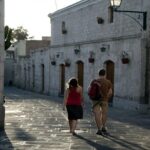
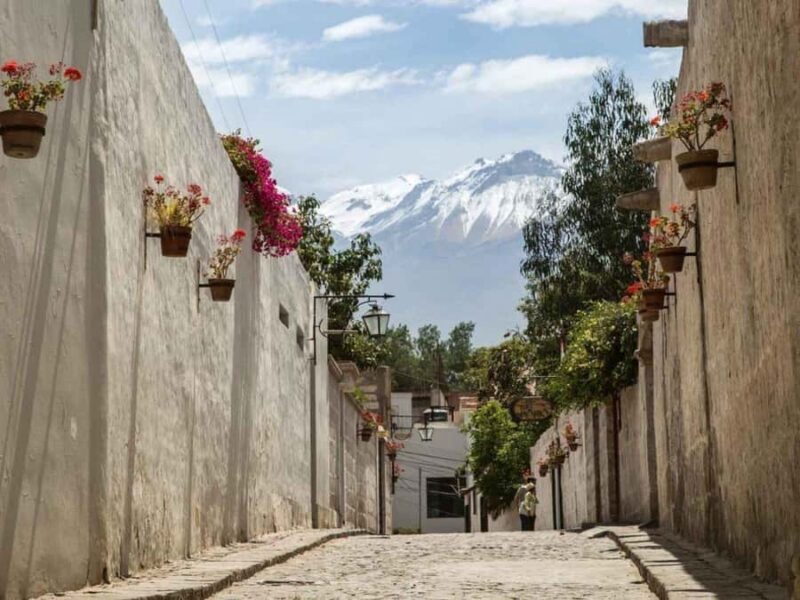
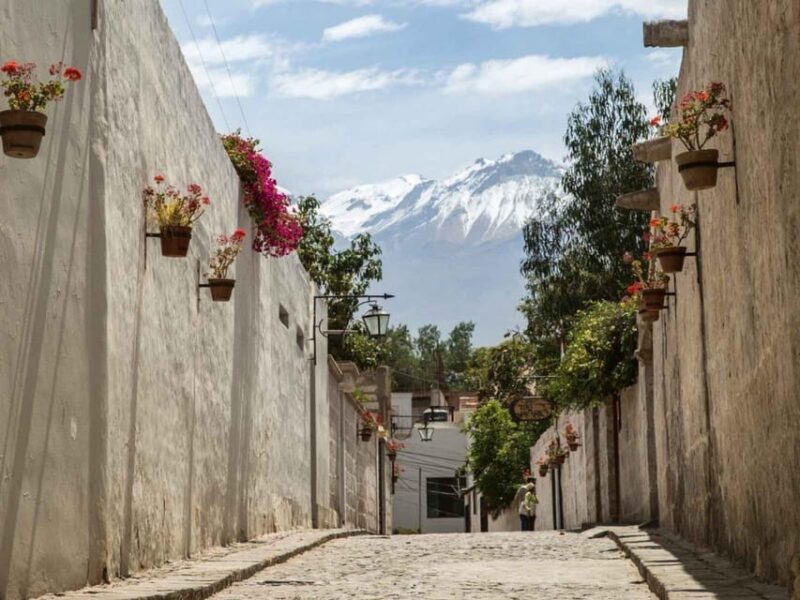
San Lázaro is presented as the first settlement from which the White City developed. Its narrower streets and older buildings make a fitting final chapter after the monumental center and the camelid stop.
This neighborhood gives the guide room to explain how Arequipa began and how it grew beyond the central square. It is also a chance to notice the scale of the city at street level: the tour’s appeal lies partly in walking between places, not just arriving at a string of photo stops.
The route returns to the center near Plaza de Armas, so you finish close to where you began. That makes it easy to continue exploring, find a meal, or revisit a site that caught your eye.
You can also read our reviews of more historical tours in Arequipa
Know what the $10 booking price really covers
The advertised price is $10 per person, but the tour operator explains that this covers the reservation rather than the full cost of the experience. At the end, you are asked to give a voluntary tip to help pay the guide and operating expenses, including maintenance at places visited.
One visitor reported that a tip of 30 to 50 soles per person was expected. That is useful to know when setting your budget, even though the tip is described as voluntary. Add the booking fee and a tip that feels fair to you when comparing this tour with other paid walks. Some groups may also describe it as a free walking tour, so clarify the payment arrangement before you set off.
The value depends on how much you want from a guide. If you mainly want directions between landmarks, the total may feel high once you add a tip. If you want a guided introduction, historical context, questions answered, and stops beyond the main square, the cost can make sense. A few hours with a strong guide can also help you choose what to explore on your own afterward.
Entry costs need similar care. The experience includes entry to places on the visit, but Santa Catalina Convent and other museums are described as optional additions with a separate admission charge. The Juanita mummy museum is one example. If you want to enter these sites, coordinate in advance and expect to pay extra, including for any internal guides.
A brisk walk with a lot packed into it
The tour is described as two hours, but some groups have taken about two and a half. That difference matters if you have a tight schedule. The route includes several stops, and guide-led explanations can stretch the walk, especially when the group has questions.
The pace is another trade-off. You cover a good range of sights, from the main square to San Lázaro, but that means you may not have long at each one. If you are keen on photography, mention that you would like time for pictures. If you want to explore a church or museum in depth, plan a separate visit.
Group size may vary. One person described a group of 30, so you should be prepared for a walk where you may need to stay close to hear the guide. The meeting instructions are straightforward, but one visitor had a delayed start after the guide was not at the meeting point initially and the organizer could not be reached right away. Arrive at the stated location and keep the umbrella clue in mind.
The walk is entirely on foot. That makes it a practical way to connect the center’s sights, but it also means you should be comfortable walking for around two hours. No transport is provided as part of the route.
Who will get the most from this walk?
I would choose this tour early in a stay. It gives you a workable map of the center, introduces the city’s history, and helps you decide which sights deserve a longer visit. A good guide can also offer useful food recommendations and answer questions that are hard to resolve by wandering alone.
It suits visitors who want more than a quick circuit of Plaza de Armas. The combination of cloisters, old homes, a volcano viewpoint, camelids, and San Lázaro gives the tour a broader scope than a standard architecture walk.
It may be less suited to anyone who wants an unhurried visit inside each landmark. The tour’s strength is variety and context, not long stops. If Santa Catalina Convent or a museum is high on your list, consider adding time and admission money for a separate visit.
Should you book it?
Book if you want an affordable, guided first look at Arequipa and are comfortable budgeting for a tip on top of the $10 reservation. The strongest reasons to go are the guide’s storytelling, the range of stops, the camelids at Mundo Alpaca, and the chance to see the city with its volcanoes in view.
Skip it if you prefer to set your own pace, spend a long time photographing each building, or avoid tip-based pricing. If you do book, bring questions, keep some time free afterward, and ask at the start how the route and tip are handled. That small bit of clarity helps you enjoy the walk for what it is: a brisk, personable introduction to Arequipa.
Walking tour in the Historic Center of Arequipa
FAQ
Where does the tour meet?
It meets at Santa Catalina Street 204, about one block from Plaza de Armas. The guide will have an umbrella.
How long does the tour last?
The stated duration is two hours. Some walks may take about two and a half hours.
What languages are available?
The tour is offered in English and Spanish.
What sights are included on the walk?
The route includes Plaza de Armas, the Cloisters of the Company, a volcano viewpoint near El Puente Grau, Mundo Alpaca, and San Lázaro.
Does the tour visit Santa Catalina Convent?
It may be possible to enter Santa Catalina Convent by prior arrangement, but admission costs extra.
Is the Juanita mummy museum included?
The museum can be an optional visit by prior arrangement. You pay its admission separately.
Are entry fees included?
Entry to places included in the visit is listed as included, but optional visits to Santa Catalina Convent or other museums cost extra.
Is the $10 price the full cost?
No. The $10 is the reservation price, and the operator asks for a voluntary tip at the end to help cover guide and operating costs.
Where does the tour finish?
It returns to Santa Catalina Street 204, near Plaza de Armas.
Is the tour done on foot?
Yes. The route is walked, with no transport included.
You can check availability for your dates here: