Bukhara’s old town makes more sense when you connect its monuments to the trade and daily life that shaped them. This $15 walking tour links 16 stops, from the old money-changing dome to the great Kalyan Mosque, in a manageable half-day route.
I like two things in particular: the route gives you a strong overview of the main sights, and the guides, including Lobar, Baxa and Ulugbek, are often praised for clear storytelling and thoughtful answers. Small groups are capped at 10, and some departures may have only a few people.
The main consideration is that 3.5 hours on foot is a lot of ground, and the Ark Fortress is viewed only from outside on the standard tour. Museum entry, meals and transport are not included, so plan for extra time and costs if you want to go inside.
Key points
- Sixteen stops link Bukhara’s landmarks: The route takes in trading domes, madrasahs, mosques and historic squares.
- The guide adds the context: Lobar, Baxa and Ulugbek are among the named guides, with English-language tours focused on history, local stories and questions.
- The Ark is an outside visit: Its museum sections add about 1 to 1.5 hours and are not part of the standard tour.
- The group is small: No more than 10 people, which leaves room for conversation and photos.
- The $15 price covers a guided walk: Museum entry, meals, transport and personal expenses are extra.
👉 See our pick of the 3 Best 3 Day Tours In Bukhara
- Key points
- A three-and-a-half-hour walk through old Bukhara
- Lyabi-Hauz and the old trading domes
- Magoki-Attori Mosque and the craft of madrasah design
- Kalyan Minaret, mosque and Miri Arab Madrasah
- The Ark Fortress, seen from outside
- Bolo-Hauz, Job’s Spring and the Samani Mausoleum
- What the guide brings to the walk
- Price, timing and practical trade-offs
- Who should book this Bukhara walk?
- FAQ
- How long is the walking tour?
- What is the price?
- What language is the tour in?
- How large is the group?
- Is entry to the Ark Fortress included?
- Are museum tickets included?
- Are meals or transportation included?
- What is included in the activity?
- The Best Of Bukhara!
- More Walking Tours in Bukhara
- More Tours in Bukhara
- More Tour Reviews in Bukhara
- Not for you? Here's more nearby things to do in Bukhara we have reviewed
A three-and-a-half-hour walk through old Bukhara
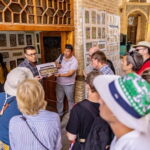
This is a walking tour, not a sequence of quick photo stops from a vehicle. You move through the old town on foot, seeing 16 places that together sketch out Bukhara’s religious, commercial and civic life. The guide’s role is to explain what you are looking at, and why a trading dome or a courtyard matters beyond its attractive tilework.
That context is useful in a city where many landmarks sit close together but tell different stories. You will pass through historic trading areas, see Islamic schools and mosques, and finish among some of Bukhara’s best-known monuments. The itinerary is broad, so expect an overview rather than a long indoor visit at each site.
The tour is offered in English and limited to 10 participants. That cap can make it easier to hear the guide and ask questions; at least one departure had just two participants, while another was a solo tour. Group size can vary, but it will not exceed the stated limit.
You can also read our reviews of more walking tours in Bukhara
Lyabi-Hauz and the old trading domes
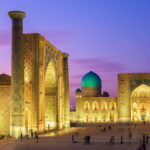
The walk begins at the Lyabi-Hauz Ensemble, a square built around a historic pool. Madrasahs and a khanaka frame the space, making it a useful introduction to Bukhara’s mix of religious, educational and public life. The pool gives the square a different feel from the crowded commercial streets nearby.
From there, the route passes the Sayfuddin Caravanserai, a compact example of the lodging and trading complexes that served merchants. Then comes Toki Sarrafon, a covered dome once associated with money changers. That detail helps make the city’s trading past tangible: this was not simply a market area, but a place where merchants handled the practical business of moving goods and money.
A little later, Toki Telpakfurushon brings another side of that commerce into view. It was once a centre for hats and skullcaps, and is described as the largest covered bazaar on the route. Abdullakhan Tim, built for silk trading, adds a more elegant note, with its domed form offering a glimpse of how trade could shape a building as well as a neighbourhood.
There is a lot to take in here, and not every stop will be a long visit. I would treat this stretch as a guided introduction to the old town’s commercial spine. If you want to linger over market details or shop, you may need to return on your own after the tour.
Magoki-Attori Mosque and the craft of madrasah design
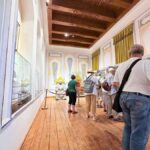
The Magoki-Attori Mosque is one of Bukhara’s oldest mosques and now houses the Carpet Museum. Its layered history makes it a particularly interesting stop, though museum access is not included in the tour price. Ask the guide what you can see during the walk and decide separately if you want to spend more time inside.
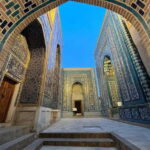
The route then passes the richly decorated Abdulazizkhan Madrasah, known for colourful mosaics and carved details. The Ulugbek Madrasah offers a point of comparison: it is one of the city’s oldest Islamic schools and was built by Ulugbek, the renowned astronomer. Together, these stops help you notice the buildings as more than handsome facades. They were places of study, worship and public life.
Toki Zargaron, another covered trading dome, was once home to jewelers and their crafts. The sequence of bazaar and madrasah stops is one of the tour’s strengths. Rather than seeing each monument in isolation, you get a sense of how commercial streets and religious institutions occupied the same old-city fabric.
Still, this is a walking overview. If you are especially interested in architecture, textiles or religious history, the guide’s explanations can help you choose where to return for a closer look. The tour itself does not include museum entry, and its broad route means you should not expect a full visit inside every building.
Kalyan Minaret, mosque and Miri Arab Madrasah
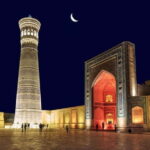
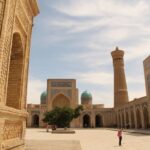
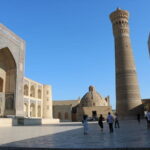
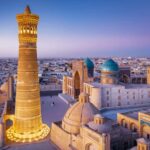
The Kalyan Minaret is the visual anchor of the route: a 12th-century tower and a symbol of Bukhara. It is the sort of landmark that gives you a useful point of orientation as you walk. The tour also takes in the Kalyan Mosque, a vast Friday mosque with room for 10,000 worshippers.
Across from the mosque stands the Miri Arab Madrasah, an active Islamic school. Seeing these major religious buildings together gives the area a strong sense of purpose, rather than making it feel like a collection of monuments kept only for sightseeing. Because the madrasah remains active, this is a place to follow your guide’s directions and be respectful.
The guide can help you read the relationship between the minaret, mosque and school, and explain their place in Bukhara’s story. Several guides, including Lobar and Baxa, are praised for making history easy to follow and for answering questions patiently. That matters here: the scale of the buildings is obvious, but their meaning is harder to grasp without some explanation.
If your schedule allows, pay attention to the light and mood around the Kalyan complex. People who choose a late-afternoon or evening departure may find the walk more comfortable than a hot afternoon, and some departures have ended around sunset. Exact conditions and timing vary, so check the available start times rather than assuming every tour offers an evening finish.
The Ark Fortress, seen from outside
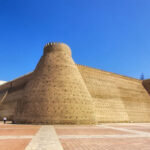
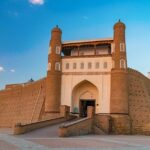
The route passes the Ark Fortress, the old citadel of Bukhara’s rulers, now used as a state museum. The standard tour views it from outside. That is a worthwhile stop for understanding the fortress’s place in the city, but it is not a substitute for entering the museum and exploring its sections.
Going inside would add about 1 to 1.5 hours, and entry is not included in the tour. If the Ark is high on your list, you have two sensible options: visit it separately before or after the walk, or ask whether a guide can adapt the route. The standard plan is clear, so do not count on an interior visit as part of the booked 3.5 hours.
A morning tour can work well if you want to see the Ark on your own later. One useful approach is to take the guided walk first, then use what you have learned to decide which museum areas deserve your time. The tour’s outside stop can provide context, while a separate visit gives you room to explore at your own pace.
You can also read our reviews of more guided tours in Bukhara
Bolo-Hauz, Job’s Spring and the Samani Mausoleum
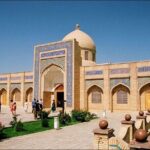
The walk ends with three distinct sights. Bolo-Hauz Mosque is known for its wooden pillars, reflected in the pool in front of it. The reflection gives you a different kind of architectural detail to notice after the monumental scale of the Kalyan complex.
Next is Chashma-Ayyub Mausoleum, or Job’s Spring, tied to a local legend about Prophet Job. The story gives the stop a human and devotional dimension, though the tour presents it as one part of a larger route rather than a long standalone visit.
The final stop is the Ismail Samani Mausoleum, a 10th-century architectural landmark described as the oldest in Bukhara. It is a fitting end to a walk that has ranged across centuries and styles. If you have been rushing to see individual sights, this route encourages you to connect them and notice how much the city’s history is held in its buildings.
What the guide brings to the walk
The clearest reason to book is not simply the number of stops. It is the chance to have someone put those stops into a story. Lobar is repeatedly associated with lively explanations, local insight and clear English. Baxa is praised for an entertaining approach to history, while Ulugbek is noted for adapting the pace and making room for questions.
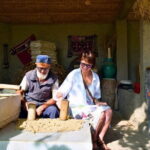
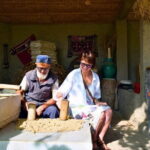
Guides can also help you understand everyday life in Uzbekistan, not just the dates and names attached to monuments. Some have offered local suggestions for restaurants, cafes and places to shop. One guide also helped visitors speak with local artisans, without pressure to buy. That sort of exchange can turn a walk into a more useful introduction to the city.
You should still bring your own questions. The group is small enough to make conversation practical, and participants have described the pace as unhurried, with time for photos. The route covers a lot, though, so if you have a particular interest, say so early. A guide may be able to adjust the emphasis, but the standard itinerary remains a broad survey.
Price, timing and practical trade-offs
At $15 per person, the tour is an inexpensive way to get an organized orientation to Bukhara’s old town. The value lies in the guide’s explanations and the effort of connecting 16 stops into a coherent walk. If you visit the same places alone, you can still see the architecture, but you may miss the context that helps you understand the mosques, schools and trading domes.
Keep your extra costs in mind. Museum entries, meals, transport and personal expenses are not included. The Ark’s museum sections in particular require extra time, around 1 to 1.5 hours, as well as a separate admission ticket.
The tour lasts 3.5 hours, so wear comfortable walking shoes and bring what you need for a long walk. The route is not suitable for people with altitude sickness. Alcohol and drugs are not allowed on the activity.
A morning start can leave your evening free, while a later start may help you avoid the worst of the afternoon heat. One summer participant found a 5 p.m. departure started hot but became pleasant as the walk continued. That is useful guidance, not a guarantee: check the available start times and choose according to the season and your own tolerance for heat.
Who should book this Bukhara walk?
I would book it if you want a first-day overview, enjoy asking questions, or want a guide to connect the city’s architecture with its history and daily life. It is also a strong fit if you have limited time and want to see many major sights in one walk without arranging each stop yourself.
It is less ideal if you want to enter every museum, spend an hour at each monument or explore the Ark in depth during the tour. The itinerary covers a lot, but its strength is breadth and explanation, not long independent visits. A good plan is to use the walk to choose which places deserve a second look.
For most people spending time in Bukhara, the combination of a low price, a small group and an English-speaking guide makes this a practical start. Book it if context matters to you, then leave room in your schedule to revisit the places that catch your eye.
Bukhara: Old Town Guided Walking Tour with 16 Stops
FAQ
How long is the walking tour?
The tour lasts 3.5 hours. It covers 16 stops in Bukhara’s old town.
What is the price?
The listed price is $15 per person.
What language is the tour in?
The live tour guide leads the walk in English.
How large is the group?
The small group is limited to 10 participants. The actual group may be smaller.
Is entry to the Ark Fortress included?
No. The standard tour shows the Ark Fortress from outside. Visiting its museum sections adds about 1 to 1.5 hours, and museum entry is not included.
Are museum tickets included?
No. Entry to museums is not included in the tour price.
Are meals or transportation included?
No. Meals and transportation are not included. The activity is a walking tour.
What is included in the activity?
The listed inclusions are a guide, a photo, small-group participation and the walking tour. Personal expenses are not included.
You can check availability for your dates here: