Krakow’s wartime history comes into sharp focus at Plac Bohaterów Getta, where families were separated and deported from the Jewish Ghetto. This 45-minute electric-cart tour links that square with the Eagle Pharmacy, fragments of the ghetto wall, and Schindler’s Factory.
I like two things in particular: the cart covers more ground than a short walk, and the mix of audio commentary and a live driver-guide can add both clear historical context and personal stories. One drawback: it is a brisk overview, and you visit Schindler’s Factory from outside only. Don’t book it expecting a museum tour or a hop-on, hop-off ride.
- The important points at a glance
- A short ride through Krakow’s wartime story
- Plac Bohaterów Getta: a square with a painful past
- The Eagle Pharmacy and the human response to persecution
- The preserved ghetto walls: seeing the boundaries
- Schindler’s Factory: an exterior visit, not museum admission
- What the electric cart adds, and what it cannot do
- The live guide can make the ride more personal
- Is good value for 45 minutes?
- Who should take this tour?
- Should you book it?
- FAQ
- How long is the tour?
- Which sites are included?
- Can I go inside Schindler’s Factory?
- What languages are available?
- Is the tour wheelchair accessible?
- Can I cancel, and when is the latest?
- The Best Of Krakow!
- More Tours in Krakow
- More Tour Reviews in Krakow
- Not for you? Here's more nearby things to do in Krakow we have reviewed
The important points at a glance
- Plac Bohaterów Getta anchors the route: Hear about deportations and the lives disrupted by the Nazi occupation.
- The Eagle Pharmacy recalls acts of help: Learn why this pharmacy became a symbol of courage and humanity inside the ghetto.
- You see the factory from outside: Schindler’s Factory is part of the route, but museum entry is not included.
- The cart saves walking time: Electric transport connects several sites in a compact 45-minute ride.
- Audio commentary comes in many languages: Live guiding is in English or Polish, with audio available in a broad range of languages.
- At $12, it is an affordable primer: Think of the tour as an introduction that can help you decide where to spend more time later.
👉 See our pick of the 6 Best Shopping Tours In Krakow
A short ride through Krakow’s wartime story
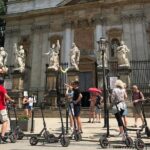
This tour uses a small electric golf cart, sometimes called a Melex in Poland, to connect key places tied to Krakow’s World War II history. You meet the driver at the designated meeting point, take a seat, and begin listening as the cart heads toward the former Jewish Ghetto.
The format is useful if you have limited time, prefer not to cover the route on foot, or want a first look before exploring a site more slowly. It is not a substitute for a long, detailed history tour. In 45 minutes, the aim is to link places and explain why they matter, not to linger at each one.
The driver-guide provides live commentary in English or Polish. You also receive headphones for a recorded audio guide in your chosen language. Some drivers add stories and explanations beyond the recording, which can make the ride feel more personal. Keep in mind that the balance between live and recorded commentary may vary. If you do not understand English or Polish, your language’s audio track should help, but you could miss some of the driver’s extra remarks.
You can also read our reviews of more tours and experiences in Krakow.



Plac Bohaterów Getta: a square with a painful past
The tour begins its historical focus at Plac Bohaterów Getta, the central square of the former Jewish Ghetto. During the war, deportations from here took families away to concentration camps, including Auschwitz-Birkenau. The guide explains the square’s connection to those departures and the separation of families under Nazi occupation.
This is the stop that gives the rest of the route its emotional weight. You are not just passing old walls or buildings; you are hearing about a community forced into confinement and the people whose lives were changed by deportation. The square is a place to listen and take in the setting, not simply a photo stop.
The tour is short, so the explanation cannot cover every person or event in depth. If you want extended time for reflection, or a fuller account of the ghetto’s history, plan to return on your own or choose a longer experience as well. This ride works best as a clear first layer of context.
The Eagle Pharmacy and the human response to persecution
Next, the route takes in the Eagle Pharmacy, a place remembered for helping Jewish residents trapped inside the ghetto. Its significance lies in the human choices made amid the restrictions and danger of occupation. The guide explains how the pharmacy became associated with courage and practical support.
I find this stop valuable because it shifts the focus from persecution alone to the acts of help that took place within it. The pharmacy gives the route a specific address connected with people trying to assist their neighbors, rather than leaving the history at the scale of policies and mass deportations.
The tour’s quick pace limits how long you can stay with any one story. Treat the stop as an introduction, then take note of the place if you would like to learn more afterward. The guide’s explanation is likely to be more substantial than the time at the building itself.
The preserved ghetto walls: seeing the boundaries
The cart also passes fragments of the original ghetto walls. These surviving sections make the forced separation of the ghetto visible in a way that a general explanation alone cannot. They remain a physical reminder of the limits imposed on the people who lived inside.
As you pass, listen for the guide’s explanation of what the walls represented. Their importance is not architectural showiness; it is what they tell you about confinement and isolation. The cart can connect this site with the square and pharmacy without requiring you to work out the route between them on foot.
There is a trade-off. Passing a wall in a moving cart is not the same as stopping to study it. Some departures have allowed time to get out for photos, while others have continued without a stop. If seeing or photographing a particular spot matters to you, ask before setting off rather than assuming you can hop out.
Schindler’s Factory: an exterior visit, not museum admission
Schindler’s Factory is included as a stop on the route, but the visit is from outside. The driver explains Oskar Schindler’s role in employing and saving more than 1,000 Jews during the war. You do not enter the factory museum, and admission is not part of the $12 fare.
That distinction matters when you plan your day. The ride gives you a useful introduction to Schindler and places the factory within the wider history of the occupation. But if you want to explore the museum’s exhibits, you will need to arrange that separately. One visitor found it necessary to take a taxi back to visit the factory, which is a good reminder not to treat this as transport with a later pickup.
The cart tour can still help you decide whether to set aside more time for the factory. It offers context and a look at the building, but it cannot provide the museum experience itself. If the factory is a priority, plan the entry visit as its own stop rather than trying to squeeze it into this 45-minute route.



What the electric cart adds, and what it cannot do
The main practical benefit is distance covered with little walking. The electric cart connects the ghetto square, pharmacy, wall fragments, and factory in less than an hour. That makes the tour handy if you have limited time, need an easier way to get between sites, or want an overview before deciding what to revisit.
It is still a small vehicle, not a roomy coach. Seating space can feel tight, and the ride lasts around 45 minutes. If you are tall or need more room, bear that in mind. The activity is listed as wheelchair accessible, but if you have particular access needs, it is sensible to confirm the arrangements for your departure.
Sound is another practical consideration. Headphones are supplied for the audio guide, but a few visitors have found recorded translation hard to hear or the live guide difficult to catch over the vehicle’s sound. The driver may switch between the audio and live comments. If you rely on a particular language, make sure you can hear the audio clearly at the start and let the guide know if not.
The route is not a hop-on, hop-off service. You should expect to stay with the cart for the tour, and getting out for photos or a longer look may depend on the driver and the schedule. This is a compact guided ride, not flexible transport between attractions.
The live guide can make the ride more personal
The audio guide supplies structured information in many languages, while the live guide can add local details, answer questions, or tell personal and family stories. That combination is one of the tour’s strengths when it works well. It can give you a clear outline without making the ride feel like a recording played from start to finish.
Guides on this route have included Roch, Oliwia, Artur, Martina, Tymek, and others. The specific person will depend on the departure, so don’t book expecting a particular guide. A strong live guide can make the sites feel connected and add context to what you see from the cart.
Still, the mix has a limitation: extra live commentary may be in English or Polish, even when your headphones are set to another language. If you need every detail in your language, rely on the recorded guide as the main track and treat the live additions as a bonus.
Is $12 good value for 45 minutes?
At the stated price of $12 per person, the value is strongest if you want a low-cost, time-efficient introduction to several sites. The fare includes the driver, electric-cart transport, headphones, the audio guide, and the 45-minute route. For a short tour covering several locations, it is an economical way to get your bearings.
The price does not include food, drinks, hotel pickup or drop-off, personal expenses, or entry to Schindler’s Factory. It also does not buy you a long stop at each site. Compare it with your goal: if you want an overview and a convenient ride, the price makes sense. If you want a detailed history lesson or a full museum visit, you will need to add another activity.
You can reserve now and pay later, and cancellation is free up to 24 hours in advance. Those terms offer flexibility, but the main value still comes down to what you expect from the ride. It is an efficient primer, not a complete study of Krakow during the war.
Who should take this tour?
I would choose this tour if you have a short stay in Krakow, want to see several ghetto-related sites without walking the whole route, or need a first introduction before exploring further. It can also suit visitors who prefer a seated ride and want audio commentary in a language beyond English or Polish.
It is less suitable if you want to enter Schindler’s Factory as part of the tour, spend extended time at the ghetto sites, or control how long you stop for photographs. History this grave deserves more time than 45 minutes can provide. The tour can orient you, but it cannot do all the work of a longer visit.
Should you book it?
Book the golf-cart tour if you want a compact, affordable overview of Krakow’s Jewish Ghetto history, with the Eagle Pharmacy, wall fragments, and Schindler’s Factory exterior on one route. Go in expecting a brisk ride, not a museum visit or a series of long stops. If you have time afterward, use the tour to choose which places deserve a slower return.
Krakow: World War II & Schindler’s Factory Golf Cart Tour
FAQ
How long is the tour?
The tour lasts 45 minutes.
Which sites are included?
The route includes Plac Bohaterów Getta, the Eagle Pharmacy, preserved fragments of the former ghetto walls, and Schindler’s Factory from outside.
Can I go inside Schindler’s Factory?
No. Entry inside Schindler’s Factory is not included. The tour visits the exterior only.
What languages are available?
Live guiding is in English or Polish. The audio guide is available in many languages, including English, Polish, French, German, Italian, Spanish, Japanese, and Traditional Chinese.
Is the tour wheelchair accessible?
Yes. The activity is listed as wheelchair accessible.
Can I cancel, and when is the latest?
You can cancel up to 24 hours in advance for a full refund.
You can check availability for your dates here: