
Kisite-Mpunguti Marine Park is the main draw: you leave the shore by wooden dhow, then swim over coral reefs in open water where fish, turtles, and dolphins may appear. I like the attentive in-water crew, especially if you are new to snorkeling, and the underwater photos and videos shared at no extra cost. Dolphin encounters are possible, not promised, and the boat trip makes for a long day.
I also like that the outing pairs time at sea with a Swahili lunch and a visit on Wasini Island, so you get more than a quick reef stop. The trade-off is the pace: with transport, boat time, snorkeling, and land visits, some days stretch to about 11 hours door to door. If you are prone to seasickness or uncomfortable in open water, this may not be your best fit.
- Dolphins are a lucky sighting, not a scheduled stop. You may see them from the dhow or in the water, but no crew can guarantee an encounter.
- Snorkeling is from the boat. You enter open water, and guides provide support, life vests, fins, and masks.
- The schedule follows the tides. A sandbank stop is possible, but it may not appear at high tide.
- Lunch is part of the day. Expect seafood, chicken, or a vegetarian meal, with special crab or lobster dishes costing extra.
- The island visit adds context. The coral garden and Shimoni slave caves connect the sea outing with local life and history.
- Plan for a long day. Pickup from Diani or Galu is included; transport from Tiwi or Mombasa can be arranged for an extra cost.
- From Diani Beach to the dhow
- Looking for dolphins on the way out
- Snorkeling above the Kisite reef
- Sandbank timing and the return sail
- Lunch and island life on Wasini
- The Shimoni slave caves
- What 8 buys you
- Who will enjoy this day most
- Should you book the Wasini dhow trip?
- FAQ
- How long does the experience take?
- Is hotel pickup included?
- Will I definitely see or swim with dolphins?
- Do I need to be a strong swimmer?
- What snorkeling equipment is provided?
- Is lunch included, and what food is available?
- Is the sandbank stop guaranteed?
- What should I bring?
From Diani Beach to the dhow
 1 / 9
 2 / 9
 3 / 9
 4 / 9
 5 / 9
 6 / 9
 7 / 9
 8 / 9
 9 / 9
The day starts with pickup from your accommodation in Diani or Galu, usually early in the morning. One outing began at about 6:30 a.m. and returned around 5:45 p.m., so treat the advertised nine hours as a guide to the activity, not a firm door-to-door promise. Transport time, sea conditions, and the day’s route can add hours.
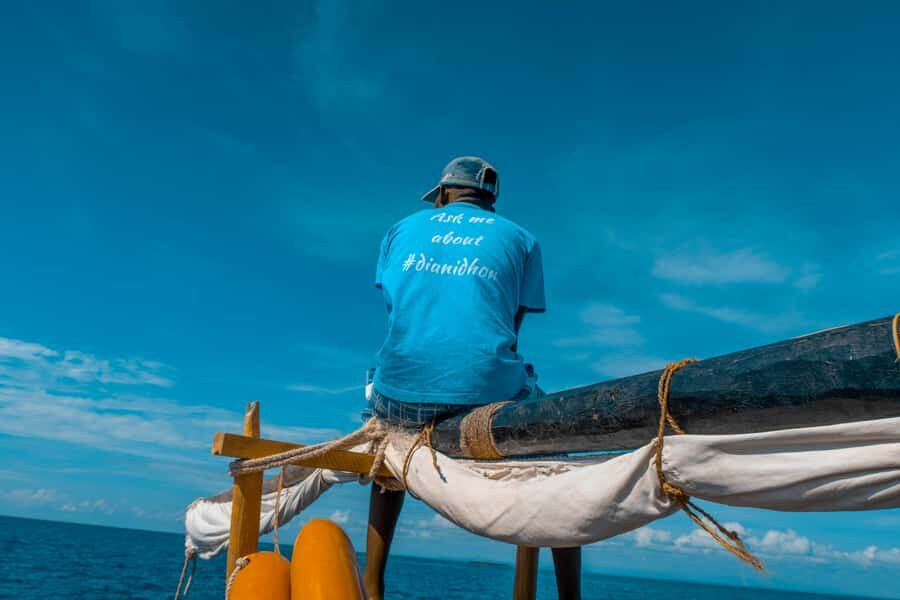
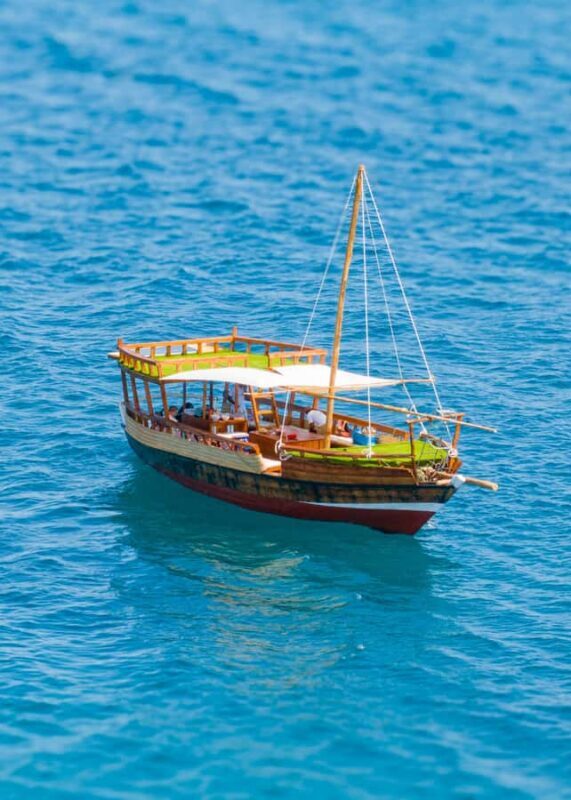
You travel by air-conditioned vehicle to the harbor, where the wooden dhow is waiting. The boat is described as large and comfortable, and past outings have had room to move about, onboard toilets, and shaded places to sit. Still, it is a working boat on the sea, not a luxury cruise ship. If you are sensitive to motion, take that seriously before booking.
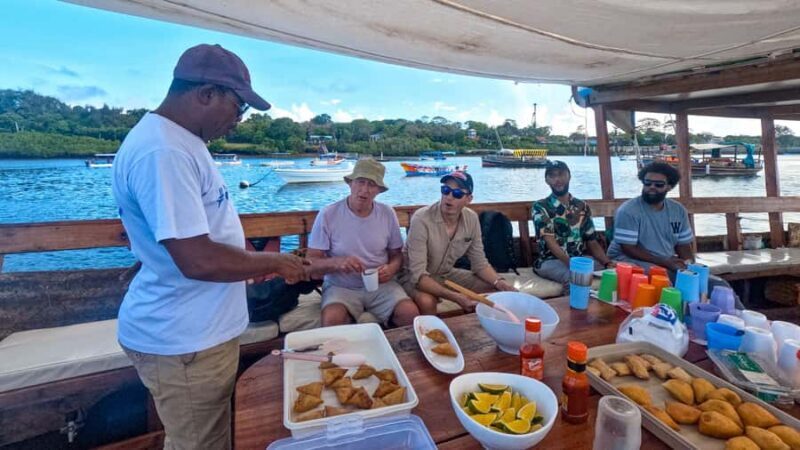
Once aboard, expect a welcome with tea, coffee, fruit, and a Swahili-style breakfast. The music, snacks, and easy coastal scenery help the morning pass, though the crossing can feel choppy in some weather. Bring a light layer if you want one, but the essentials are swimwear, a towel, sun protection, and water shoes or flip-flops.
You can check availability for your dates here:Looking for dolphins on the way out
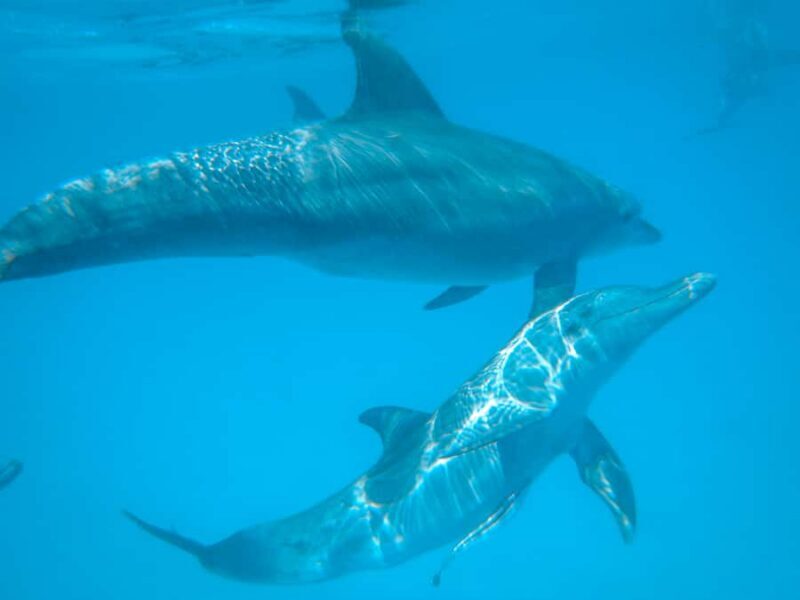
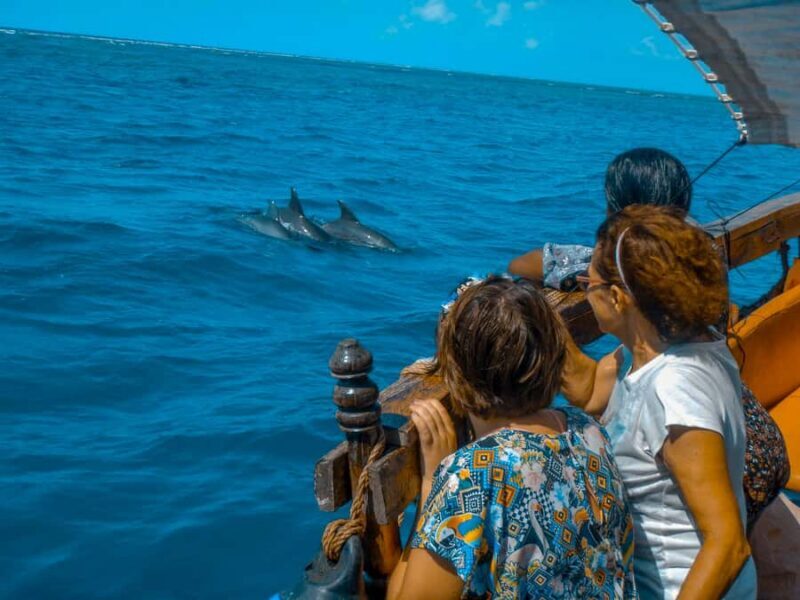
Dolphins are often the day’s most anticipated sight, but they are wild animals moving through a busy stretch of sea. The crew watches for them, and you may see them leaping near the dhow or swimming below the surface. Some outings have included close encounters while snorkeling; others have seen dolphins from the boat only. Luck and conditions matter.
There can be several boats in the area when dolphins appear. The best approach is to let the animals choose whether to come close, rather than treating a sighting as a guaranteed swim. Some crews have been praised for staying cautious and not chasing the dolphins. That matters: a respectful encounter is better for the animals and often calmer for you.
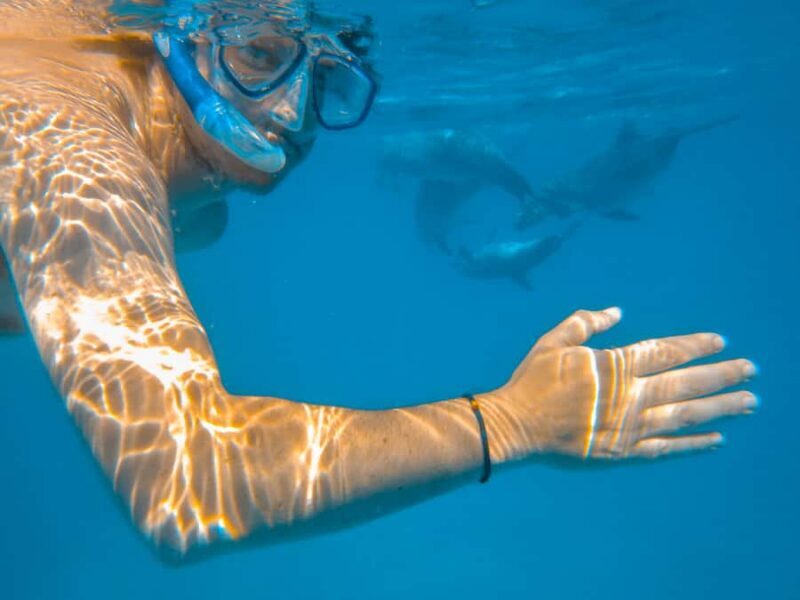
The crew’s care in the water is one of the most useful parts of this outing. Guides keep watch, help people feel comfortable, and can offer life vests and flotation support. If it is your first time snorkeling, tell the crew before you enter the water and follow their instructions. You do not need to be an expert swimmer to join, but you should be comfortable with the open-water setting. Children should know how to swim to snorkel, and families with children under four are advised to ask before booking.
Snorkeling above the Kisite reef
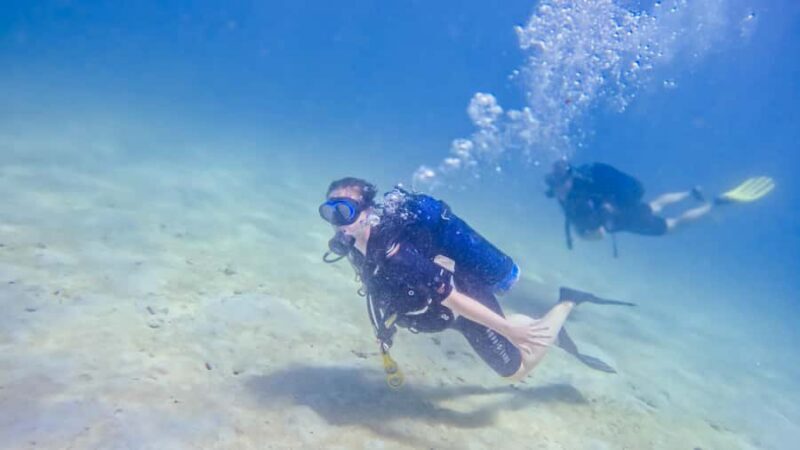
Kisite-Mpunguti Marine Park is the heart of the sea portion. The dhow anchors near the reef, and you enter the water from the boat rather than walking in from a beach. That distinction matters if you expect a gentle, shore-based swim: you will be floating and snorkeling in open sea, with the boat nearby and guides in the water.
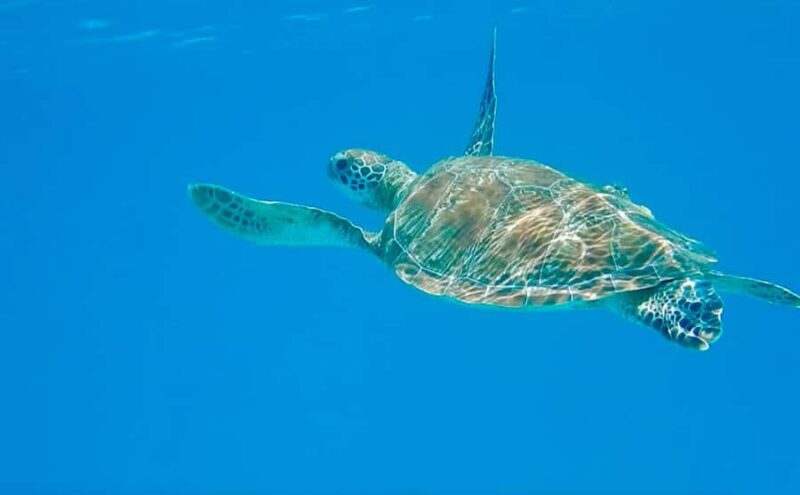
The outing may include two snorkeling stops, giving you more time to look around than a single brief swim. In clear conditions, you can see coral and schools of colorful fish. Depending on the day, you might also spot a turtle, stingray, pufferfish, octopus, or other marine life. Visibility and sightings vary, and the reef is not a glass-bottom aquarium. Give yourself time to adjust to the water and mask before focusing on what is below.
Fins and masks are provided, including life vests and reading-strength masks on request. Some masks with corrective lenses have also been available, but tell the operator what you need in advance rather than assuming a particular prescription will be on board. A waterproof camera is carried, and underwater photos or video are shared for free. That is a helpful extra, especially if you do not have a waterproof phone or camera.
The sun can be stronger than it feels in the water. A rash guard or long-sleeved swim shirt, plus sunscreen applied before boarding, can save you from a sore evening. One practical note: the marine park does not allow single-use plastic bottles, so bring a reusable bottle instead.
Sandbank timing and the return sail
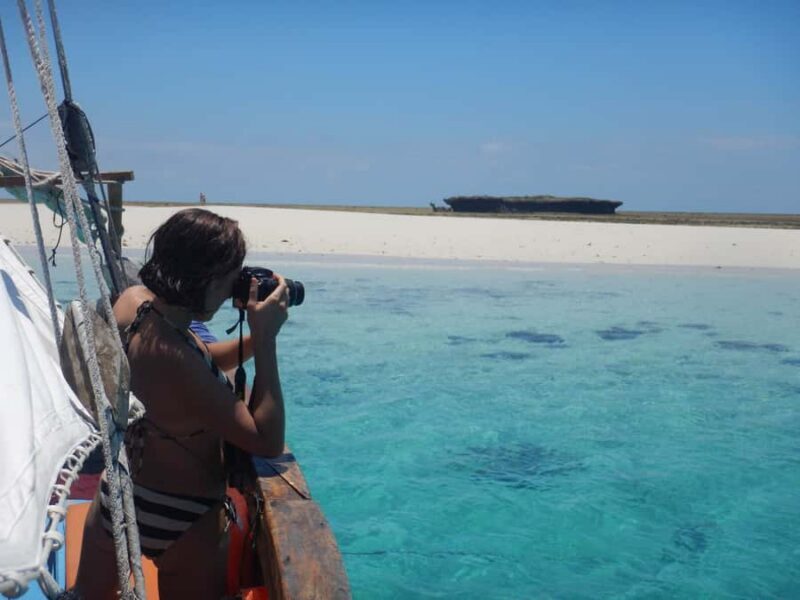
If the tide allows, the dhow may stop at a sandbank where you can swim, relax, and take in the shallow-water views. It is a lovely change of scene after snorkeling, but it is not a fixed part of every outing. At high tide, the sand may be covered, and weather or timing can change the plan.
The boat then continues to Wasini Island. The day’s rhythm is shaped by the sea, so expect some flexibility rather than a minute-by-minute schedule. If you are counting on a long stop at the sandbank, remember that the crew may need to adjust the route to the tide.
Lunch and island life on Wasini
Lunch is served on Wasini Island, usually in a local restaurant with a view of the sea. The meal typically includes fresh seafood, chapati, and local sides, with chicken and vegetarian choices also available. The food is a welcome pause, though it is best to think of it as a satisfying local meal rather than a fine-dining event. Crab or lobster may cost extra, so ask about the price before ordering.
The included drinks cover soft drinks and water through the day, plus two beers or two glasses of wine. Bring a little cash if you want an extra dish, to tip the crew, or to make a voluntary donation during a community visit. Tips are not a required part of the price, and donations should always be your choice.
After lunch, a short guided walk may take you through the village and to the coral garden. The garden is made up of old coral formations on land, a striking reminder that the island and its reefs are closely linked. The coral garden entrance is included. Some outings also include a stop at a school or kindergarten. If that is on your route, you may be asked for a donation; you can bring pencils or notebooks if you want to contribute, but there is no need to arrive with gifts.
More Great Tours NearbyThe Shimoni slave caves
The historical visit may include the Shimoni slave caves or museum, on the mainland near the harbor. The caves tell a difficult part of the coast’s past, when captives were held before being sent across the sea. It is a sobering stop after the bright, open-water hours, and guides can help put the site in context.
Entry is included in the outing, with the usual admission stated as about €4 per person. The order of visits can vary, so the caves may come after the island or on the return to the mainland. Give the stop your attention: it offers a more serious perspective on the region than the beach-and-reef portions of the day.
What $128 buys you
At $128 per person, the value rests on the full package, not just the dhow ride. The price includes pickup and drop-off from Diani or Galu, breakfast, lunch, drinks, snorkeling equipment, guided support, entrance to the coral garden and slave cave or museum, and the waterproof-camera footage. You also get a full day that combines marine wildlife, reef time, food, and cultural stops.
For someone who wants only a short snorkeling session, this may feel like too much itinerary. There is transport, a boat crossing, meals, and land visits to fit in, and one outing may run close to 11 hours from hotel pickup to return. If your priority is simply time on the reef, ask whether a shorter option is available before committing. It is not part of the package described here.
The free photos and videos are a welcome value point, but they do not replace bringing your own camera if you want particular shots. You also save the hassle of sourcing fins and masks yourself. With pickup, food, drinks, and entry fees included, the price is easier to justify for a visitor who wants a complete day rather than a bare-bones boat trip.
The operator advertises limited numbers, and the boat has been described as roomy rather than crowded. There is no exact group limit provided, so ask if group size is important to you. The experience is offered with guides speaking English, German, Faeroese, or French. Confirm your preferred language when arranging the outing, as one visitor who selected Polish did not find a Polish-speaking guide.
Who will enjoy this day most
This outing suits you if you want a varied day at sea and are happy to spend time in the water, eat a local lunch, and visit island and mainland sites. Families can bring children, but young swimmers need to be confident enough for open-water snorkeling, and families with children under four should check first. The crew’s flotation equipment and hands-on support can help nervous beginners, but they do not make the sea setting feel like a pool.
It is less suitable if you are prone to seasickness, have mobility issues or severe back pain, or feel uneasy in open water. The dhow ride and transitions on and off the boat take energy, and the day is long. If those are concerns, ask the operator about the specific arrangements before paying.
Should you book the Wasini dhow trip?
Book it if you want more than a quick reef outing and value the combination of marine park snorkeling, a chance to see dolphins, Wasini lunch, and a meaningful historical stop. The crew’s support, included equipment, and free underwater footage make the day particularly appealing for first-time snorkelers and anyone who wants memories without bringing a camera into the water.
Think twice if you want a short, quiet outing, cannot manage open-water swimming, or need a tightly fixed schedule. Dolphins and the sandbank depend on nature, and the trip can take most of the day. Pack sun protection, a towel, swimwear, a reusable bottle, and a little cash, then go for the range of experiences rather than any single guaranteed sighting.
Dhow Adventure to Wasini Island & Kisite Marine Park
FAQ
How long does the experience take?
The activity is listed as nine hours, with the full day often described as about nine to ten hours. Including pickup and return transport, plan for the possibility of a longer day, around 11 hours.
Is hotel pickup included?
Yes. Pickup and drop-off are included from accommodation in Diani and Galu. Transport from Tiwi or Mombasa can be arranged for an extra cost.
Will I definitely see or swim with dolphins?
No. Dolphins are wild, and sightings or swimming encounters depend on luck and conditions. You may see them from the dhow, and sometimes they appear while you are snorkeling.
Do I need to be a strong swimmer?
The outing is not recommended for people who are uncomfortable in open water. Life vests and in-water support are provided, but children should know how to swim to snorkel.
What snorkeling equipment is provided?
Fins and masks are provided, along with life vests. Reading-strength masks can be requested. A waterproof camera is also carried, and photos and footage are shared at no extra cost.
Is lunch included, and what food is available?
Yes. Lunch includes a seafood, chicken, or vegetarian option, usually with chapati and local sides. Crab or lobster may cost extra.
Is the sandbank stop guaranteed?
No. The stop depends on the tides and weather. The sandbank may not be visible at high tide.
What should I bring?
Bring swimwear, a towel, a T-shirt, sunscreen, a hat, and flip-flops or water shoes. A reusable bottle is encouraged because single-use plastic bottles are not allowed in the marine park.
You can check availability for your dates here: