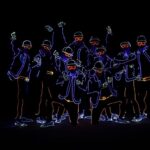
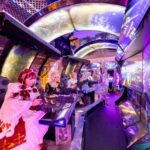
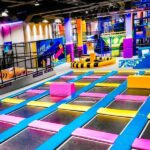
The centerpiece here is the chance to walk through a full-size Chinese space station, then switch from looking at spacecraft to trying space-themed activities yourself. Zhuhai Space Center turns aerospace history into a visit with real hardware, large-scale models, VR and interactive displays.
I like two things about the experience: the chance to see important Chinese space equipment up close, including the Chang’e 5 return capsule, and the mix of history with hands-on activities such as a VR moon landing and simulated weightlessness. The full-size station and its cabin scenes give the exhibits a useful sense of scale.
One consideration: many explanations are in Chinese only, even when the display titles appear in both Chinese and English. The 4D film may also disappoint if you are sensitive to dark viewing conditions. Check the hours before setting out, since the center is closed Mondays.
- What to know before you go
- From early satellites to the space station
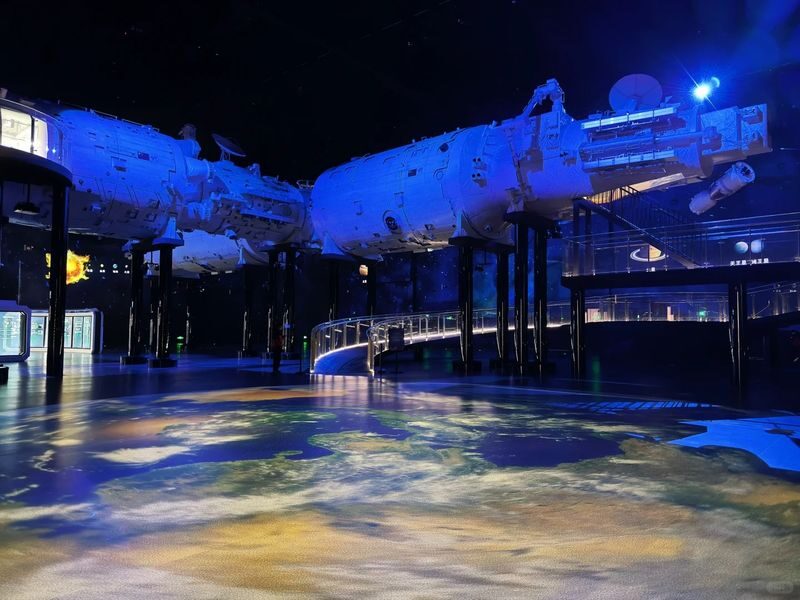
- The full-size space station is the big draw
- VR, weightlessness and robotic-arm tasks
- A 4D film with one caveat
- How long to allow and when to arrive
- Is the ticket good value?
- Who will get the most from a visit
- Should you book Zhuhai Space Center?
- FAQ
- Where is Zhuhai Space Center?
- What are the opening hours?
- When is the last admission?
- What does the ticket include?
- What space exhibits can I see?
- Are there interactive activities?
- Are the exhibits explained in English?
- Do children need a ticket?
- Can I bring a pet?
- Can I re-enter after leaving?
- The Best Of Zhuhai!
- More Tickets in Zhuhai
- More Tours in Zhuhai
- More Tour Reviews in Zhuhai
- Not for you? Here's more nearby things to do in Zhuhai we have reviewed
What to know before you go
 1 / 2
 2 / 2
- Walk through a full-size space station: The station is a standout for understanding how large a working orbital habitat is.
- See China’s space program in hardware and models: Displays include the Chang’e 5 return capsule, Long March rocket models and the Tianwen-1 Mars rover.
- Try space-themed activities: VR moon-landing games, simulated weightlessness and robotic-arm tasks add a hands-on angle.
- Follow a historical timeline: Exhibits connect Dongfanghong-1 with the space-station era through models, screens and historical material.
- Plan around language and film conditions: Some exhibit titles are bilingual, but explanatory text is only in Chinese; the 4D film can be too dark for comfortable viewing.
- Check the price and opening day: The supplied prices differ, and the center is closed on Mondays.
👉 See our pick of the 2 Best Tours In Zhuhai
From early satellites to the space station
The visit is built around China’s aerospace story, from the early satellite era to today’s space-station program. That historical thread matters: it gives the rockets and spacecraft a purpose beyond looking impressive in a hall. You can see how one stage of the program leads to another, rather than treating every object as a separate photo opportunity.
Dongfanghong-1 marks an early point in that story. Models and archival material help set the scene before the displays move toward later missions and larger ambitions. If you already follow space exploration, you may recognize some milestones. If not, the exhibition’s broad timeline offers an accessible starting point.
The displays include Long March series rocket models, the Tianwen-1 Mars rover and the Chang’e 5 return capsule. These objects connect the general story to particular missions, and make it easier to picture the machines behind news reports. The return capsule is especially useful as a focal point: it makes the idea of bringing material back from the Moon more tangible than a screen or diagram can.
The displays also bring you close to spacecraft components. That physical proximity is a key part of the appeal. Scale, shape and construction details are easier to grasp when you are standing beside an object, rather than seeing it reduced to a picture.
Explanatory signs are intended to make technical ideas approachable, and staff can answer questions. Still, prepare for a language gap. The titles may be in Chinese and English, while the longer explanations are only in Chinese. If reading the technical details is important to you, consider using a translation app; the available information does not specify whether every sign can be translated or whether staff speak English.
You can also read our reviews of more tours and experiences in Zhuhai

The full-size space station is the big draw
The full-size Chinese space station is a highlight for good reason. A model helps you see a spacecraft’s outline; a full-size cabin scene gives you a much clearer sense of the space its crew works in. For children, it can make a distant idea feel immediate. For adults, it offers a practical way to think about the scale and layout of a real orbital workplace.
The station also provides one of the visit’s strongest photo settings. Rocket displays, cabin scenes and star-themed walls offer plenty of space-themed backgrounds. You do not need to treat every exhibit as a photo stop, but a few pictures can help keep the details straight after a visit full of rockets, missions and technical displays.
The center’s large exhibits are among the best reasons to come in person. A screen can show a spacecraft in motion, but it cannot quite replace standing beside a full-scale structure. If the station is your main reason for visiting, allow time to look closely instead of rushing from one interactive feature to the next.
VR, weightlessness and robotic-arm tasks
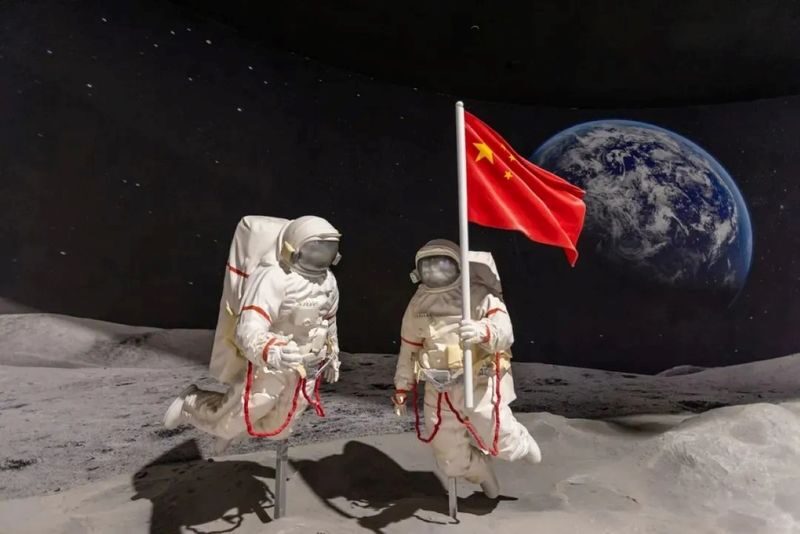
Once you have seen the hardware, the interactive activities shift the visit from observation to participation. A VR moon-landing experience puts you in the role of exploring the lunar surface. It is a playful way to approach space science, especially for children who learn best by doing.
A simulated weightlessness device offers another kind of activity, recreating the sensation of floating. The description does not provide details about the length of a session or the exact movement involved, so avoid assuming it will feel like a full astronaut-training exercise. Think of it as a short, space-themed demonstration.
You can also try a robotic-arm task framed around space maintenance. This brings a practical side of space work into the exhibition: astronauts and equipment must do more than travel to orbit. For visitors who enjoy figuring out how things operate, this may be one of the more satisfying activities.
The combination of VR, simulated weightlessness and robotic-arm control helps the center appeal to a range of ages. But participation is not the whole visit. The historical exhibits and full-size station are just as important, and they give the games a context that a standalone VR attraction would lack.
A 4D film with one caveat
A 4D film is part of the experience, but its viewing conditions are worth keeping in mind. The film has been described as too dark, which can make it harder to follow. If you are sensitive to dim screens or want a clear view of every image, set your expectations accordingly.
This is a small part of a visit with several different types of exhibits, so it need not define the day. You can still spend time with the spacecraft, historical timeline and interactive stations. If the film matters to you, ask staff about it when you arrive, since the supplied information does not give a film schedule or a description of its subject.
How long to allow and when to arrive
No visit duration is specified, and the right amount of time depends on how many interactive activities you want to try. If you mainly want to see the major displays, you may move at a different pace than a family stopping for each VR experience. Leave room for questions and photos rather than planning the visit down to the minute.
The center is open Tuesday through Friday from 10:00 a.m. to 5:00 p.m. On Saturday and Sunday, it opens at 9:30 a.m. and closes at 6:30 p.m. Last admission is 30 minutes before closing, and the center is closed on Monday. Arriving well before the last-admission cutoff gives you more time to see the exhibits.
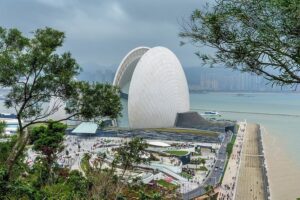
The center is next to Zhuhai Airshow Center on Jinhai East Road in Sanzao Town, Jinwan District. It is also described as being close to Zhuhai Airport and its train station, making it a possible stop around an airport-area visit. Confirm your own route and travel time before setting off; no transport directions or journey times are specified here.




Is the ticket good value?
The listed ticket covers admission to Zhuhai Space Center. Personal expenses and gratuities are not included. The supplied starting prices conflict: one gives US$23.65, while another says US$26.05. Treat those as reference figures, then check the price shown for your date before booking.
Value depends on what you want from a museum visit. If you are interested in China’s aerospace program, the combination of major displays, historical context and interactive activities offers more variety than a hall of models alone. The full-size station is a particularly strong reason to make the trip, while the VR activities can help keep children engaged.
The price may feel less compelling if you are mainly seeking English-language explanations. Bilingual titles do not mean the detailed text is bilingual, and that distinction affects how much background you can absorb without translation help. The exhibits remain visually clear, but technical context is part of what makes a science center rewarding.
The ticket is date-specific. Children 120 centimeters and under enter free, with their height measured. Children from 120 centimeters inclusive to 150 centimeters inclusive need a child ticket. Since the wording overlaps at exactly 120 centimeters, confirm the applicable ticket rule before purchase if your child is that height.
Who will get the most from a visit
I would put this center high on the list for families with children who like space, machinery or interactive exhibits. The VR activities and simulated weightlessness give younger visitors something to do, while the rockets and full-size station offer strong visual points of interest for adults.
It also suits adults with a specific interest in Chinese aerospace. The exhibits connect national missions with physical objects and models, and the progression from Dongfanghong-1 to the space-station era gives the displays a clear arc. You do not need to be an expert to follow the broad story, but you may get more from the technical signs if you can read Chinese or use translation tools.
You might choose another attraction if you need detailed English explanations at every display, or if dark 4D films are a poor fit. The center’s language limits are a practical factor, not a reason to dismiss the whole experience. The large objects and interactive elements communicate plenty visually.
There are also safety and entry rules to consider. The activity is not recommended for people with conditions such as high blood pressure or epilepsy, pregnant women, or seniors. Bottles, firecrackers, lasers and other disruptive or dangerous items are prohibited. Pets are not allowed, except service animals with valid identification. Smoking and drinking are prohibited, and leaving the venue means you cannot re-enter.
Should you book Zhuhai Space Center?
Book it if you want a space-focused outing with a strong mix of real aerospace displays, large models and hands-on activities. The full-size station, Chang’e 5 return capsule and VR experiences give the visit a clear identity, and the location near the airport may make it practical to add to a Zhuhai itinerary.
Pause if English explanations are essential to your visit, or if the price at checkout is significantly higher than you expected. Check the current ticket cost, confirm your child’s ticket category if height is close to a cutoff, and avoid Monday. With those details settled, this is a good choice for curious families and anyone who wants to see China’s space program presented at human scale.
Zhuhai Space Center Experience Ticket
“An eye-opening experience for astronomical science knowledge, with VR games. Even though the exhibition hall is located at Zhuhai Airport, it's sti…”
FAQ
Where is Zhuhai Space Center?
It is next to Zhuhai Airshow Center on Jinhai East Road, Sanzao Town, Jinwan District, Zhuhai City.
What are the opening hours?
It is open Tuesday through Friday from 10:00 a.m. to 5:00 p.m., and Saturday and Sunday from 9:30 a.m. to 6:30 p.m. It is closed on Monday.
When is the last admission?
Last admission is 30 minutes before closing.
What does the ticket include?
The ticket includes admission to Zhuhai Space Center. Personal expenses and tips are not included.
What space exhibits can I see?
Displays include the Chang’e 5 return capsule, Long March series rocket models, the Tianwen-1 Mars rover and a full-size Chinese space station.
Are there interactive activities?
Yes. Activities include VR, a simulated weightlessness experience and a robotic-arm task.
Are the exhibits explained in English?
Some exhibit titles appear in both Chinese and English, but explanatory text is only in Chinese.
Do children need a ticket?
Children 120 centimeters and under enter free, with height measured. Children from 120 centimeters inclusive to 150 centimeters inclusive require a child ticket.
Can I bring a pet?
Pets are not allowed inside, except service animals with valid identification.
Can I re-enter after leaving?
No. Re-entry is not allowed once you leave the venue.