
Wae Rebo’s seven Mbaru Niang houses sit in a mountain village reached on foot, with a circular stone compang at their center. I like that this overnight trip gives you time to see the village in the evening and again at dawn, rather than making the hike a quick stop on a longer road trip.
I also like the combination of a guided forest trek and a night in a local house, with meals included to keep planning simpler. The main caution is the shared ride: one reported arrangement put seven people, five of them tall, and their overnight bags in an MPV for a roughly four-hour drive. Ask the operator to confirm vehicle capacity before you book.
- What to know before you go
- A village visit built around Mbaru Niang
- Day 1: From Labuan Bajo to the trail at Denge
- Reaching Wae Rebo and settling into the village
- Day 2: Early village life, breakfast, and the return hike
- What the price includes, and what it does not
- Who should book, and what to pack
- Should you book the Wae Rebo overnight trip?
- FAQ
- How long is the Wae Rebo tour?
- What time does pickup start?
- How old do participants need to be?
- Where do you stay overnight?
- Which meals are included?
- How much walking is involved?
- What should I bring and wear?
What to know before you go
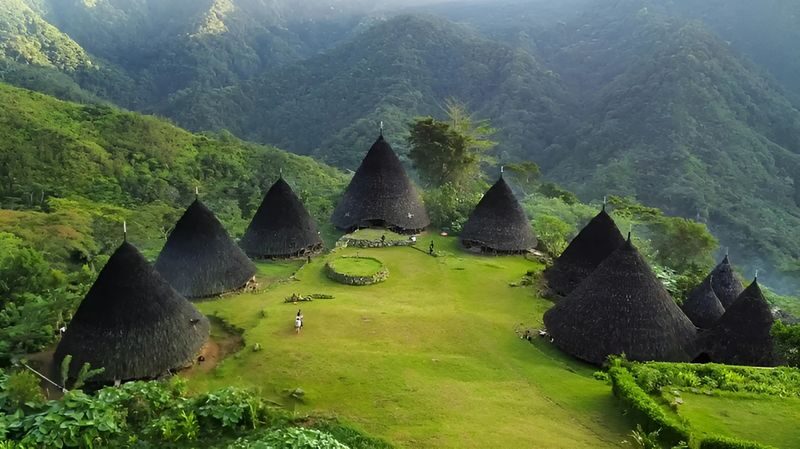
- Seven Mbaru Niang houses frame the village center: Their cone-shaped roofs and wood-and-thatch construction make the village’s architecture a central part of the visit.
- The compang is more than a photo spot: This circular stone center is used for community activities, ceremonies, and customs.
- You spend the night in a local village house: The overnight stay gives you an early start to observe morning life before breakfast.
- The trip combines a long road transfer with a hike: You travel from Labuan Bajo to Denge, then walk up to Wae Rebo and back the next day.
- Meals and transfers are included: Day 1 lunch and dinner, Day 2 breakfast and lunch, an English-speaking guide, and hotel transfers are part of the package.
- Check the vehicle plan and price: The trip is shared, the road leg can be long, and the displayed starting prices differ.
A village visit built around Mbaru Niang
Wae Rebo is a small village in Flores, in Indonesia’s Manggarai region. Its most distinctive feature is the Mbaru Niang, a tall, cone-shaped traditional house made from wood and thatch. Seven houses stand around a central circular stone called a compang, which serves as a focus for village activities and ceremonies.
The houses are described as built so they do not touch the ground, a design linked to preserving their sacred character. That detail helps explain why the village is not simply a scenic collection of unusual buildings. Its layout and architecture carry cultural meaning, so the visit is best approached as a chance to learn about local customs, not just to take photos.
The houses are recognized as cultural heritage, and the community’s traditions are part of what makes the overnight stay worthwhile. The local welcome is described as including traditional dance and music. Expect a community visit, though the exact timing and form of any welcome can depend on village routines and the day’s conditions.
Day 1: From Labuan Bajo to the trail at Denge
The day starts with hotel pickup between 7:00 and 8:00 a.m. The trip is shared, so pickup may be earlier or later than expected. The operator reconfirms the pickup time in advance, and you should be ready a few minutes early with your overnight bag packed for a long day.
The route goes through Lembor, where there may be a chance to see the area’s rice fields, before continuing to Denge. Lunch is provided there before the guided hike begins. This is a sensible place to eat and prepare, but the schedule does not promise a long sightseeing stop in Lembor, so treat the rice fields as a view along the way rather than a separate excursion.
The road journey matters when you decide if this tour suits you. A roughly four-hour drive has been described, and the vehicle comfort issue deserves attention. One account described seven people, including five tall adults, sharing an MPV with overnight bags. If you are uncomfortable in a crowded vehicle, or have concerns about space and safety, ask how many people will ride in your vehicle and how luggage will be handled before confirming.
From Denge, you hike with a guide to Wae Rebo. The walk is a key part of the experience, not a short stroll after the drive. The tour information warns that it involves considerable walking and stairs, and that routes can change with weather. You should be fit enough for sustained uphill and downhill walking, and wear hiking shoes rather than casual sandals.
The trail brings you through the forest and hills surrounding the village. The route itself is part of the appeal: you arrive on foot, with the village’s remote setting becoming clear as you approach. The precise distance, walking time, elevation gain, and trail condition are not specified, so ask the operator if you need those details to judge your ability.
Reaching Wae Rebo and settling into the village
After the hike, the guide introduces the village and its traditional way of life. The seven Mbaru Niang arranged around the compang give you a clear place to begin looking. Notice how the houses relate to one another and to the shared center, rather than treating each structure as an isolated photo backdrop.
You stay overnight in a local village house. The package does not give a room layout or promise a private room, so do not assume hotel-style privacy or facilities. Think of this as a simple village stay, where the setting and the chance to spend time in the community matter more than extra comforts.
Dinner is included on Day 1. The welcome may include local dance and music, and the community may share stories and customs. These are the moments that can make an overnight visit more meaningful than arriving, taking a few pictures, and heading back down. Still, the itinerary does not specify a fixed performance schedule, so leave room for the village’s own pace.
You can take photos, but do so with care. The compang is used for community activities and ceremonies, so it is not just a convenient place to pose. Follow your guide’s advice about where to walk and when to take pictures, and be respectful if village life takes precedence over the tour schedule.
Day 2: Early village life, breakfast, and the return hike
The second day starts around 6:00 a.m. You get up early to observe morning activity in the village while waiting for breakfast. That timing is one of the stronger reasons to stay overnight: you have a chance to see the village at the start of the day, when residents are going about their routines, rather than only during a brief daytime visit.
Breakfast is included before you hike back down to Denge. The return walk means the trip is not over once you leave the village. You will need energy for the descent, and the trail may be affected by weather. Keep water and any personal essentials accessible rather than buried in your main bag.
Lunch is provided in Denge, followed by the drive back through Lembor to Labuan Bajo. The return is scheduled from about 2:00 p.m., with hotel or personal-address drop-off expected between 2:00 and 6:00 p.m. That is a broad window, not a precise arrival promise. Avoid booking a tight onward connection for that afternoon.
The schedule can change because of traffic or weather. That flexibility is sensible for a trip involving both a long road transfer and a mountain hike, but it also means you should keep your plans around the tour loose.
What the price includes, and what it does not
The stated starting price is from $155.99, while the package information also shows a 2-day, 1-night option from US$135.65. Those figures do not match, so check the current total for your date and package before paying. The amount may vary, and the displayed starting price should not be treated as a guaranteed final price.
For the fee, the package includes round-trip transfers to and from your hotel, an English-speaking guide, admission to attractions, one night in a local village house, operator-provided insurance, and the listed meals. You receive lunch and dinner on Day 1, then breakfast and lunch on Day 2. Having these meals arranged is useful on a remote overnight trip, where you may not have convenient alternatives along the route.
Personal expenses, tips, and any food or drinks not specifically listed are extra. Bring cash for personal needs, and do not assume that every drink or snack is covered. The operator has 667 total reviews and a 90 percent good review rate across its wider activity record, but that overall figure is not a guarantee of the vehicle or service you will receive on this specific departure.
The value depends on what you want from your time in Flores. You are paying for transport, a guide, meals, a local overnight stay, and access to a village that requires a hike to reach. If you want a comfortable, low-effort day trip, this is a poor fit. If you value the chance to stay overnight and see the village at dawn, the extra time and effort are the point.
Who should book, and what to pack
This trip suits you if you are comfortable with a long shared road journey, hiking in both directions, simple accommodation, and a schedule that can shift with conditions. It is a particularly good match for visitors who want to spend time with Wae Rebo’s architecture and community rather than simply view it from the trail.
The minimum age is 15. The activity is not recommended for people with high blood pressure, epilepsy, heart disease, asthma, other serious medical conditions, pregnant people, or people with disabilities. It is not wheelchair- or stroller-accessible. If you are uncertain about the hike or health requirements, check with the operator before booking; the tour advises participants to consider accident or travel insurance.
Pack a change of clothes, sunscreen, sunglasses, a hat or cap, toiletries, a towel, and cash. Wear warm clothing for the village, casual clothing for the drive, and proper hiking shoes for the trail. Keep your belongings in your care, as the operator does not accept responsibility for lost items.
The voucher is mobile and valid only for the date and time booked. Changes are allowed up to 48 hours before the activity, subject to stated exceptions. Cancellation at least 48 hours before the activity date qualifies for a full refund, using the destination’s local time.
Should you book the Wae Rebo overnight trip?
Book it if the village stay, early-morning visit, and guided hike are worth a long drive and a physically demanding two days to you. The strongest parts are the chance to see the Mbaru Niang houses in context, the time around the village’s central compang, and the overnight format that lets you return to village life at dawn.
Before you pay, get a clear answer about how many people will share the vehicle and how their bags will fit. That is the most practical concern raised by the available feedback, and it can shape the whole first day. If the transport arrangement is reasonable and you are ready for the walk, this trip offers a rare chance to stay in Wae Rebo rather than just pass through.
Wae Rebo Village Overnight Local Village Experience
FAQ
How long is the Wae Rebo tour?
It is a 2-day, 1-night trip from Labuan Bajo. The first day includes the drive to Denge and the hike to Wae Rebo; the second includes breakfast, the return hike, lunch, and the drive back.
What time does pickup start?
Pickup is scheduled between 7:00 and 8:00 a.m. The transfer is shared, so the exact time may vary. The operator reconfirms pickup in advance.
How old do participants need to be?
Participants must be at least 15 years old.
Where do you stay overnight?
You stay for one night in a local village house in Wae Rebo. The package does not specify a private room or particular room facilities.
Which meals are included?
Lunch and dinner are included on Day 1. Breakfast and lunch are included on Day 2. Other food and drinks are not included unless specified.
How much walking is involved?
The tour includes a guided hike from Denge to Wae Rebo and a hike back the following day. It involves considerable walking and stairs, and the route may change with weather.
What should I bring and wear?
Bring a change of clothes, sunscreen, sunglasses, a cap or hat, toiletries, cash, and a towel. Wear warm and casual clothing as appropriate, and hiking shoes for the trail.