
At the old Mawei Shipyard, the seats move while the story does. This 80-minute production follows the shipyard’s rise through a route that goes from inside the original repair workshop to outside and back in, with mechanical stage changes along the way.
I like two things about the idea: the moving seats make the history feel like a journey, and the show connects the shipyard’s technical work with the people who studied, built, and defended it. One consideration: the performance uses strong light, sound, and electrical effects, and you cannot leave and re-enter once it begins.
Key points
- A moving-seat route: The audience travels through indoor and outdoor spaces in the former repair workshop.
- Nearly 100 performers: Dance, drama, martial arts, and music tell the story of the Mawei Shipyard.
- More than 300 mechanical devices: The stage folds, lifts, slides, rotates, and changes shape.
- History with a human thread: The story covers shipbuilding, technical education, naval development, and conflict.
- Plan around a strict start: The scheduled performance runs from 16:30 to 17:50, and late entry is not allowed.
- Key points
- A shipyard story told on the move
- The workshop becomes part of the performance
- Mechanical changes, live performers, and LED effects
- What the story covers, from shipyard plans to wartime drama
- Who will get the most from this show
- Allow time for Mawei and the strict admission window
- Should you book the Mawei Shipyard show?
- FAQ
- How long is the performance?
- When should I arrive?
- Where is the theatre?
- Which buses go near the venue?
- Can children attend?
- Can I leave during the performance and return?
- More Tickets in Fuzhou
- More Tours in Fuzhou
- More Tour Reviews in Fuzhou
- Not for you? Here's more nearby things to do in Fuzhou we have reviewed
A shipyard story told on the move
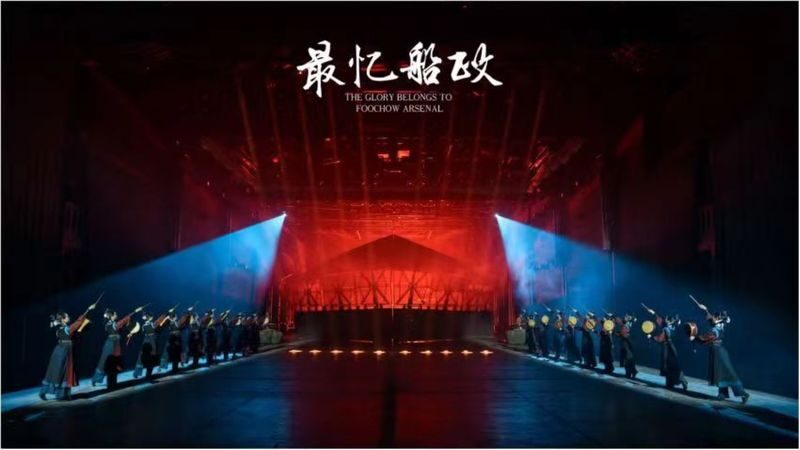
Fuzhou’s Mawei Shipyard was part of China’s effort to build modern ships, train technical specialists, and strengthen the country. This performance turns that history into a live stage story, beginning with the shipyard’s founding and tracing the ambitions and setbacks that followed.
The production draws on figures such as Zuo Zongtang and Shen Baozhen, who helped advance the shipyard project. It also follows fictional characters based on the many students trained at Mawei. Their journeys give the show a personal thread: young people cross the sea to learn new skills, then return with the aim of serving their country.
That distinction matters if you’re deciding how much historical detail to expect. This is a theatrical account, not a lecture or a museum tour. Its characters are fictional, but the show’s creators built them around real historical experiences, and the production’s props, lines, and details are tied to historical examples.
You’ll see the story delivered through dance, drama, martial arts, music, and multimedia. With nearly a hundred performers, the scale is larger than a small local stage production. It aims to make the shipyard’s history legible through action: people studying, working together on ships and guns, and responding to conflict.
You can also read our reviews of more tours and experiences in Fuzhou
The workshop becomes part of the performance
The venue is the engine workshop in the core area of China Shipbuilding Cultural City, at 港口路中国船政文化城内. The workshop is not simply a room where a play happens. The show uses both its interior and exterior spaces to create a route that goes inside, outside, then back inside.
Your seat moves along that route as the plot unfolds. The effect is closer to being carried through changing scenes than watching from one fixed position. If you enjoy theatre that plays with the boundary between audience and stage, this is the main reason to choose the show over a conventional seated performance.
The moving seats are also part of the storytelling. They suggest travel through time and space, while the old industrial setting keeps the shipyard’s working past close at hand. You don’t need to know the history in advance to follow the basic arc, though a little background on China’s drive to modernize its navy may help you appreciate what is at stake.
This setup does come with practical limits. The seat route and the show’s timing are fixed, so you’re not free to wander around or step out for a break once the performance starts. Arrive with enough time to check in and settle before the story begins.
Mechanical changes, live performers, and LED effects
The stage is designed to change repeatedly, using more than 300 independent mechanical devices and nearly 50 types of folding action. Elements can extend, lift, move, flip, rotate, or link together. The machinery is part of the spectacle, but it also suits the subject: a story about engineering and the making of modern ships.
Expect visual shifts rather than a simple set that stays put. The workshop transforms as different parts of the story come forward, supported by LED displays and other multimedia. The mix of moving seats, changing stage pieces, and live action is what makes this show distinctive.
The production also uses the human scale of a large cast. Nearly a hundred performers take on the work of telling a story that ranges from political ambition to technical training and the labor of shipbuilding. In the shipbuilding scenes, the actors work together as the stage fills with the sounds and movement of machinery. Later, the show turns toward military conflict, including the Sino-Japanese War, and the mood becomes more serious.
The balance is not all spectacle. The show’s historical material gives the effects a purpose, and the performers carry the emotional side of the story. A small number of audience ratings have praised its visual impact, distinctive format, and modern stage effects. Those are sensible reasons to book, but treat the perfect score cautiously: it comes from only three ratings.
What the story covers, from shipyard plans to wartime drama
The production begins with the founding of the Mawei Shipyard and the determination of people working toward national strength and renewal. Zuo Zongtang and Shen Baozhen appear as figures tied to that ambition, with scenes of planning and effort setting the historical stakes.
Next comes the training of young people who travel overseas to study advanced technology. The story presents the difficulties of their education, their desire to learn, and their intention to return and contribute. This part is useful context for understanding the shipyard as more than a place where ships were built: it was also linked to technical education and the creation of skilled workers.
The shipbuilding chapters move from learning to production. The stage depicts ships, cannons, and the formation of a modern navy, with performers working together amid the sounds of machinery. Rather than offering a detailed technical account of each vessel or device, the show makes the labor and collective effort its focus.
The final historical turn brings the audience to wartime conflict and the defense of home. These scenes give the performance its dramatic peak, but they also shift the tone from progress and possibility to loss and danger. If you’re taking children or prefer lighter entertainment, keep that serious subject matter in mind.
A romantic element also appears in the story. It adds a personal thread to the historical drama, but the central subject remains the development of the shipyard and its people. You’re choosing a staged historical narrative, not a romance with a shipyard backdrop.
Who will get the most from this show
This is a strong fit if you’re interested in modern Chinese history, military and industrial history, or theatre that uses the venue as part of the production. The moving-seat route and extensive mechanical effects also give it appeal if you want an evening activity that feels different from a standard play.
You’ll get more from it if you’re curious about the people behind the shipyard’s development, not just the machinery. The show gives space to ambition, study, work, and service, making its story broader than a sequence of shipbuilding scenes.
It may be less suitable if you want a quiet, conventional performance or need the freedom to leave during the show. The effects are described as realistic and include strong light, sound, and electrical effects. People sensitive to bright light should consider carefully; pregnant audience members and those with heart disease, high blood pressure, epilepsy, or related concerns are advised to consult a doctor and take precautions.
Children who are 1.2 meters tall or shorter are not permitted. Children above that height need a full-price ticket, just like other audience members. Each person needs a ticket.



Allow time for Mawei and the strict admission window
The scheduled performance runs from 16:30 to 17:50. Admission is listed from 15:45 to 16:15, and ticket checking stops ten minutes before the show begins. Latecomers will not be admitted, and refunds are not available for missed entry, so don’t plan to arrive at the last minute.
The venue is in China Shipbuilding Cultural City, Mawei District, Fuzhou. Bus options include Route 529 and Peak Express Line 1 to Mawei Pedestrian Street Station, about a 259-meter walk from there. Bus M2 stops at Gangkou Road Station, about 374 meters away.
The ticket includes one performance admission. Food, drinks, tips, and other personal expenses are not included, and food and drinks are not allowed inside the theatre. Smoking is prohibited. Check the voucher details for the selected date and time, since it is valid only for that booking.
At a starting price of $38.39, the value depends on what you want from an evening out. You’re paying for a full-scale production with a moving route, a large cast, and a complex mechanical stage, not just a seat for a straightforward play. If you enjoy theatrical effects and want a lively introduction to Mawei’s story, the price is easier to justify. If you mainly want precise historical instruction, a museum visit or guided history experience may suit you better.
Should you book the Mawei Shipyard show?
Book it if you want to see Fuzhou’s shipbuilding past translated into a large, highly visual performance. The strongest reasons are the moving seats, the changing mechanical stage, and the blend of history with dance, drama, and martial arts. It offers a memorable way to connect a historic industrial site with the people who shaped it.
Skip it if you need a calm show, dislike intense effects, or prefer to come and go freely. The performance has a fixed route, a firm start, and no re-entry once it begins. For the right audience, though, that combination of place, machinery, and historical drama makes it a worthwhile addition to a stay in Fuzhou.
Ticket for Fuzhou’s Most Memorable Ship Administration Show
“The performance was good. Very good performance.”
FAQ
How long is the performance?
The scheduled performance runs from 16:30 to 17:50, or about 80 minutes.
When should I arrive?
Admission is listed from 15:45 to 16:15. Ticket checking stops ten minutes before the show begins, and latecomers are not admitted.
Where is the theatre?
It is inside China Shipbuilding Cultural City in Mawei District, Fuzhou, at 港口路中国船政文化城内.
Which buses go near the venue?
Route 529 and Peak Express Line 1 go to Mawei Pedestrian Street Station, about 259 meters away. Bus M2 goes to Gangkou Road Station, about 374 meters away.
Can children attend?
Children 1.2 meters tall or shorter are not permitted. Children over 1.2 meters need a full-price ticket.
Can I leave during the performance and return?
No. Leaving the viewing area after the show begins is not permitted, and re-entry is not allowed after you leave.