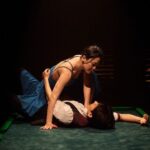
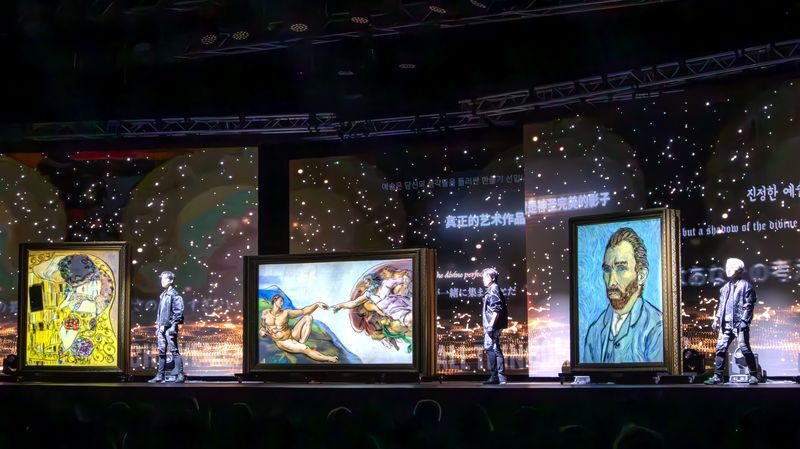
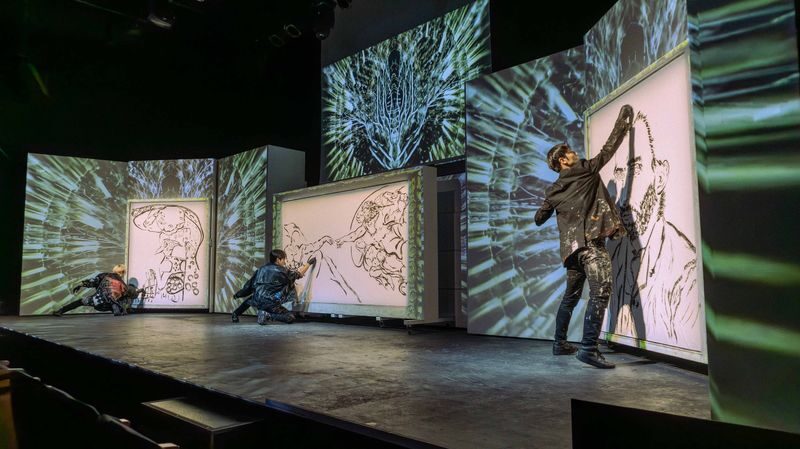
The surprise here is watching a painting take shape while its makers dance, joke and work in time with the music. The Painters turns familiar images, including Michelangelo’s Creation of Adam, Van Gogh’s Self-Portrait and Klimt’s The Kiss, into a lively stage performance.
I like two things in particular: the artists create the work in front of you, so the process is as much the show as the finished image, and the silent comedy makes the performance easy to follow without Korean. One consideration: if you expect a formal art demonstration or a serious K-pop concert, this is neither. It is a playful blend of painting, choreography and crowd interaction.
- At a glance
- A painting show with a pop-stage pulse
- What happens during the performance
- The best seat for the way you watch
- Getting to Gwanghwamun Theater
- Is the ticket worth the price?
- Who will enjoy it most
- Should you book The Painters?
- FAQ
- How long does The Painters show last?
- What time are the performances?
- Where is Gwanghwamun Theater?
- How do I get to the theater by subway?
- Do I need to exchange my mobile voucher?
- Can I choose my seats in advance?
- Can children attend for free?
- Is the show suitable if I do not speak Korean?
- The Best Of Seoul!
- More Shows & Entertainment in Seoul
- More Tours in Seoul
- More Tour Reviews in Seoul
- Not for you? Here's more nearby things to do in Seoul we have reviewed
At a glance
 1 / 8
 2 / 8
 3 / 8
 4 / 8
 5 / 8
 6 / 8
 7 / 8
 8 / 8
- Paintings made live: Watch performers draw and paint at speed, using different styles and materials.
- Famous works reimagined: Recognizable masterpieces provide a starting point for the stage art.
- Dance and comedy: K-pop-style movement, music and visual jokes keep the pace lively.
- Language-light entertainment: There is no spoken dialogue, so you can follow the action without translation.
- Audience participation: You may be invited onstage or asked to join in from your seat.
- Three daily showtimes: Performances are listed at 14:00, 17:00 and 20:00, Monday through Sunday.

👉 See our pick of the 25 Best Guided Tours In Seoul
A painting show with a pop-stage pulse
The Painters is described as Korea’s first live-action drawing show. It began in 2012 and has toured 133 cities in 19 countries. In Seoul, the performance brings live drawing together with dance, comedy, storytelling and media art. The company also performs in three dedicated theaters in Korea.
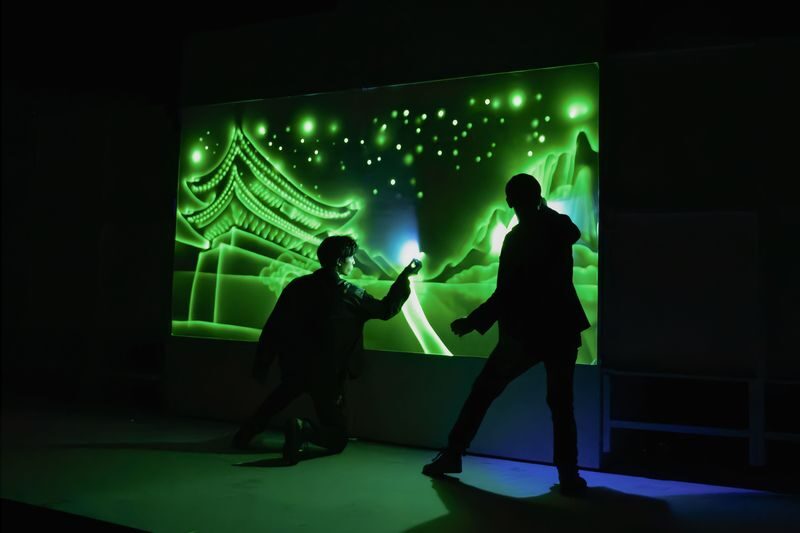
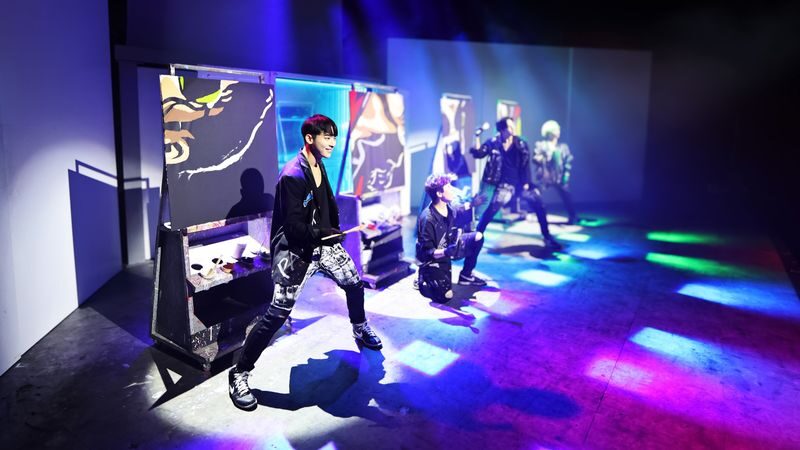
That combination matters because the artists are not simply standing at easels and painting. The creation itself is staged: music and movement build anticipation while the performers work, and the image changes as the act unfolds. You get the pleasure of seeing the final artwork, but also the speed, skill and showmanship behind it.
The cast is listed as four to eight performers, though the specific number can vary. Several descriptions of the show focus on four artists working across different forms of art. The acts include recognizable pieces such as The Creation of Adam, The Kiss and Van Gogh’s self-portrait, reworked through live performance rather than presented as a gallery lesson.
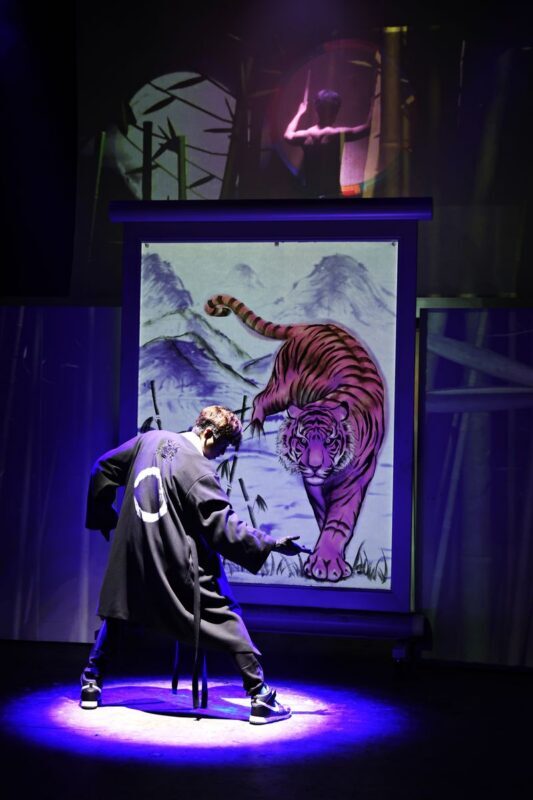
The visual style also uses high-tech media effects, including stereoscopic images. These effects are part of the stage presentation, not a substitute for the artists’ work. The appeal is the contrast: paint and hand-drawn images alongside lighting, projected visuals, dance and music.
You can also read our reviews of more tours and experiences in Seoul



What happens during the performance
The show is built from short stage acts rather than a conventional lecture or gallery tour. You can expect the performers to alternate between creating pictures, dancing, playing comic scenes and involving the audience. The exact sequence is not published, so it is best to arrive ready for a fast-changing variety show rather than a fixed set of demonstrations.
A recurring pleasure is watching an image emerge from marks that may not look like much at first. The artists use different approaches, including brushes, paint, drawing and other visual techniques. Some acts are designed around the reveal: the performance keeps you guessing about what is taking shape until the final image comes into view.
Dance supplies much of the energy. The movement is influenced by K-pop performance, but this is not billed as a standard idol concert. Expect choreography woven into the painting and comedy, with music helping set the pace. If you are there mainly for serious dance technique, the balance may feel different from a dedicated dance show. If you enjoy the odd mix of art and pop entertainment, that blend is the point.
The comedy is largely physical, and there is no spoken dialogue. That is a practical advantage for international visitors and families who speak different languages. The performers use gestures, expressions and visual cues to make the action clear. You do not need to understand Korean to follow what is happening, though the room’s energy and audience responses are part of the fun.
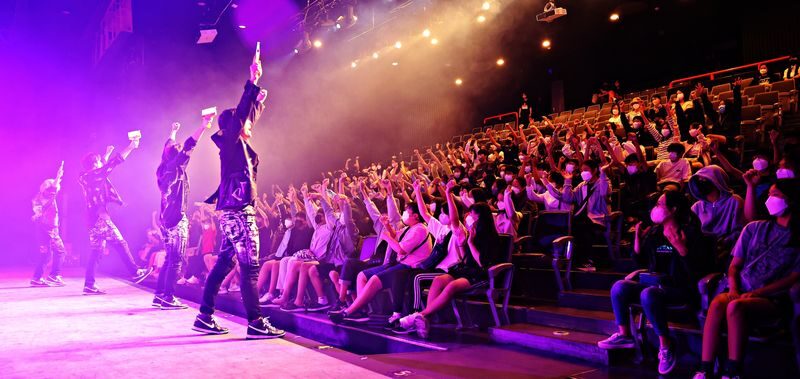
Audience interaction is another feature, not a guarantee that you will be called onstage. Performers may invite someone to take part or encourage participation from the seats. If you would rather watch quietly, you can still enjoy the show, but sit ready for a little attention. Avoiding eye contact may lower your odds, though it is no firm shield.
The performance is commonly described as about an hour, with some accounts suggesting an hour or a little longer. Since an exact runtime is not specified, leave a little breathing room before your next plan. That is especially useful if you are arranging dinner or a timed attraction afterward.
The best seat for the way you watch
Tickets are sold in S, R and VIP categories. The package prices provided are US$26.25 for S, US$31.49 for R and US$41.95 for VIP, while the experience is also advertised from US$21. Treat that starting figure as a guide rather than a firm price for every seat or date, and check the final rate when booking.
The main practical difference is proximity. VIP seats are described as close to the stage, which helps if you want to watch brushwork and facial expressions in detail. R and S are lower-cost ways to see the same performance, and may be the sensible choice if you care more about the full stage picture than being near the artists.
You cannot choose an exact seat in advance. Seating is assigned automatically and distributed sequentially at the start of the show. If you are booking for a group and want the best chance of sitting together, place everyone’s tickets in a single order. One account describes getting an upgrade at the counter, but that is not something to count on.
There is a small trade-off with front seats: being close can make audience participation feel more immediate. Some audience members are invited to take part, so if you are keen to volunteer, a front position may suit you. If you would rather stay out of the spotlight, choose a seat farther back if the booking system allows it, but remember that advance seat selection is not available.
Getting to Gwanghwamun Theater
The venue is Gwanghwamun Theater at Kyunghyang Art Hill, on the first floor at 3 Jeongdong-gil, Jung-gu, Seoul. Three subway options are listed: Line 2 to City Hall Station, Exit 12; Line 5 to Seodaemun Station, Exit 5; or Line 5 to Gwanghwamun Station, Exit 6.
Check your map before setting out and follow the venue name as well as the street address. The theater is the meeting point, and you need to exchange your mobile voucher for a physical ticket at the counter. The ticket box opens one hour before showtime. Arrive at least 15 minutes before the performance to complete the exchange and get inside without rushing.
The voucher is valid only for the date and time you booked. The listed schedule runs daily at 14:00, 17:00 and 20:00, so you have several options for fitting the show around sightseeing. Still, do not leave the ticket exchange until the last minute. A little extra time is useful if you are unfamiliar with the area or traveling with children.
Is the ticket worth the price?
For the cost of a theater ticket, you get more than one art demonstration. The show combines live painting, dance, physical comedy, music, audience participation and visual effects in a single performance. That variety makes the price easier to justify for families or groups with different tastes: one person can focus on the art, another on the dancing, and a child may simply enjoy the jokes and surprises.
The value is strongest if you are curious about the act of making art, not only the finished pictures. Seeing the performers create quickly and in rhythm with the music gives the work a sense of occasion that a static image cannot. The famous paintings also offer a point of recognition, even if you are not an art specialist.
Choose your ticket with your priorities in mind. S is the budget choice; R costs more and may suit you if you want a middle option; VIP is the most expensive and is appealing if a closer view matters to you. The listed difference between S and VIP is meaningful, so I would not pay extra automatically. If you are on a tight budget, the lower tier still gets you into the same show.
The performance may not satisfy someone looking for a deep account of Korean art or a polished concert by K-pop singers. Its strength is entertainment, not art history. And if you have already seen it, the format may feel familiar: the acts are not guaranteed to change from one visit to another. For a first viewing, though, the mix of quick painting, movement and humor offers a distinctive night out.



Who will enjoy it most
This is a particularly practical choice for families. There is no age limit, and the wordless action means children do not need to follow dialogue. The show’s physical comedy and visual reveals give younger audience members plenty to watch, while adults can appreciate the artists’ technique and the staging.
Children under 36 months can enter free with valid identification, such as a passport or medical insurance card, but they do not receive a seat. If you are bringing a toddler, plan accordingly and confirm what that means for your family before booking. All other attendees need a ticket.
The show also suits couples, friends and solo visitors looking for an indoor activity that does not depend on language. It can be a good rainy-day plan, and it gives you a break from sightseeing that still feels distinctly tied to Korean pop-stage culture. If you dislike audience participation, the possibility of being invited onstage is worth considering, though you are not required to volunteer.
Wheelchair users can be positioned on the first floor to watch, but dedicated wheelchair seats are not assigned. Contact the venue or booking provider ahead of time if you need to confirm the arrangement for your visit.
Should you book The Painters?
Book it if you want a lively Seoul show that joins live art with dance, comedy and audience interaction, and if you are happy to trade a traditional theater format for a playful visual production. I would especially consider it for a family outing, a rainy afternoon or an evening when language-independent entertainment sounds appealing.
Skip it if you want a conventional art talk, a full K-pop concert or a performance you can watch without any chance of crowd interaction. For a first visit, the artists’ speed and the changing images make the concept easy to enjoy. Pick S for value, or pay more for VIP if seeing the painting up close matters to you.
THE PAINTERS Live Art K-pop Dance Show in Seoul
“Talented artists with lots of surprise elements 🥹🫶🏼 good pick of audiences during the interactive segment ✅ luckily they didn't pick those that avo…”
FAQ
How long does The Painters show last?
The performance is described as about an hour, though some accounts suggest it may run a little longer. An exact runtime is not specified.
What time are the performances?
Shows are listed every day at 14:00, 17:00 and 20:00.
Where is Gwanghwamun Theater?
The theater is at Kyunghyang Art Hill, first floor, 3 Jeongdong-gil, Jung-gu, Seoul.
How do I get to the theater by subway?
Take Line 2 to City Hall Station, Exit 12; Line 5 to Seodaemun Station, Exit 5; or Line 5 to Gwanghwamun Station, Exit 6.
Do I need to exchange my mobile voucher?
Yes. Present your mobile voucher at the counter and exchange it for a physical ticket. The ticket box opens one hour before the show, and you should arrive at least 15 minutes before showtime.
Can I choose my seats in advance?
No. Seats are assigned automatically and distributed sequentially at the beginning of the show. For the best chance of sitting together, make one booking for your whole group.
Can children attend for free?
Children under 36 months can enter free with valid identification, but no seat is provided for them. There is no age limit for the show.
Is the show suitable if I do not speak Korean?
Yes. The performance has no spoken dialogue, so you can follow the action without understanding Korean.