Chiang Mai’s Thai Cottage class starts with the ingredients, not a chopping board. You visit a local market to learn about Thai greens, herbs and pantry staples, then head to a garden kitchen to make curry paste by hand and cook a selection of dishes, including mango sticky rice.
I like two things in particular: you choose dishes from several categories, and the class connects what you see at the market and in the herb garden with what ends up in your bowl. The main consideration is pace. You cook several dishes in a few hours, so it can feel busy, and the instruction is in English.
- What makes this class worth considering
- From Siri-wattana Market to the garden kitchen
- A garden tour that puts herbs within reach
- Choosing dishes and making curry paste by hand
- Dinner, sticky rice and the pleasure of eating your work
- What the pace, group and language mean for you
- The practical trade-offs and the price
- Who should book this Chiang Mai cooking class
- FAQ
- Where does the class take place?
- What time does the dinner class start and finish?
- Is hotel pickup included?
- What should I do before pickup?
- Which market does the tour visit?
- How long is the cooking class?
- How many dishes will I cook?
- Is mango sticky rice included?
- Are children allowed?
- Do I receive recipes after the class?
- The Best Of Chiang Mai!
- More Shopping Tours in Chiang Mai
- More Tours in Chiang Mai
- More Tour Reviews in Chiang Mai
- Not for you? Here's more nearby things to do in Chiang Mai we have reviewed
What makes this class worth considering
 1 / 8
 2 / 8
 3 / 8
 4 / 8
 5 / 8
 6 / 8
 7 / 8
 8 / 8
- Market first, cooking second: At Siri-wattana Market, your guide introduces ingredients used in Thai cooking before you work with them in class.
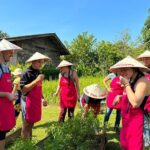
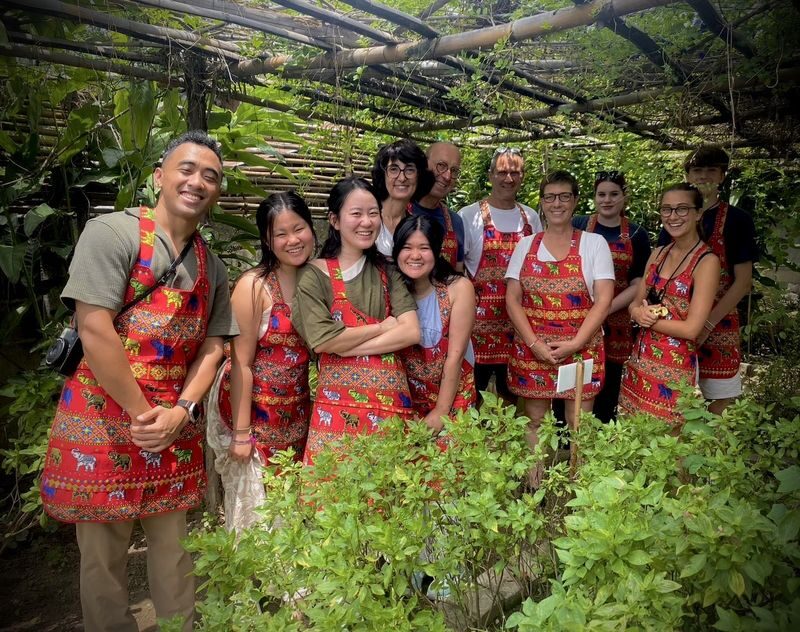
- A working herb garden: At Thai Cottage, you can see, touch and smell herbs and plants used in the dishes.
- Hands-on curry paste: You grind your own paste with a mortar and pestle, a useful lesson in how Thai curry gets its flavor.
- Your menu has choices: Pick dishes from different categories, rather than simply watching the instructor cook one fixed meal.
- Sticky rice gets its own lesson: The class covers sticky rice and sweet sticky rice with mango, a classic dessert and a satisfying finish.
- Hotel transfers and recipes are included: Pickup and return are provided within the stated service area, and you receive a PDF recipe book to use at home.
👉 See our pick of the 25 Best Shopping Tours In Chiang Mai
From Siri-wattana Market to the garden kitchen
The dinner session begins with hotel pickup between 4:30 and 5 p.m. The shared transfer is convenient, especially if you are staying within five kilometers of Chiang Mai’s Old City. Since it serves more than one person, pickup may be earlier or later than the time you expect. The operator reconfirms the time in advance, so keep your phone handy and allow room in your evening plans.
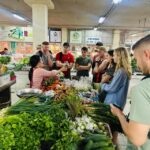
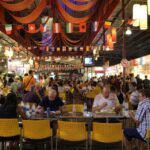
The first stop is Siri-wattana Market, also called Tha-nin Market. The guided visit lasts about 30 minutes. This is not just a quick pass through the stalls: your guide explains some of the greens, herbs and ingredients used in the class. That context matters. Thai dishes often depend on fresh aromatics and balanced sauces, and recognizing the ingredients gives you a better sense of what you are preparing later.
You may also have a short chance to browse or shop. The amount of free time can be limited, so treat this as an introduction rather than a full market visit. If you want to buy something, bring a little cash and be ready to make a quick choice.
The market stop is a practical start, but it is not a cooking lesson in itself. Its value is in seeing ingredients in their everyday setting and hearing what they do before you meet them again in the kitchen. If you already know Thai ingredients well, this section may feel basic. If you are new to them, it helps turn an unfamiliar shopping list into something more concrete.
You can also read our reviews of more shopping tours in Chiang Mai

A garden tour that puts herbs within reach
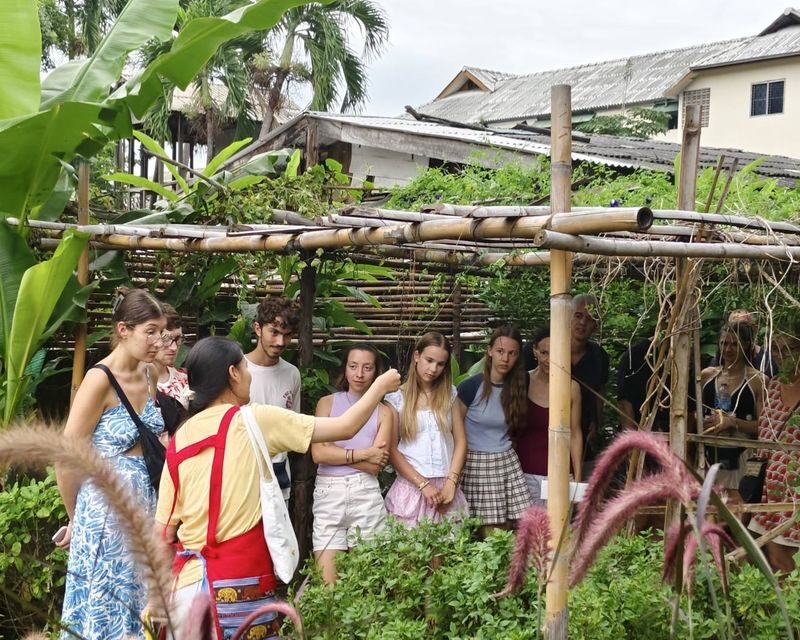
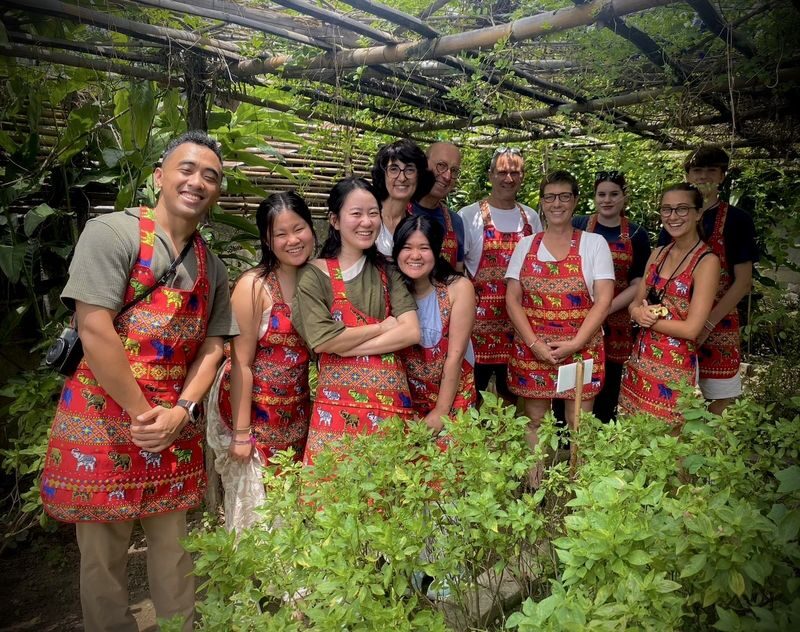
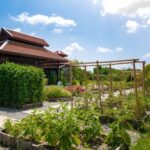
After the market, you travel to Thai Cottage Home Cookery School at 57 Sookasam Road, in Chang Phueak. The school has an organic herb garden, and the guided tour takes about 30 minutes. Instructors introduce plants used in Thai cooking, with time to look closely, touch and smell them.
That sensory lesson is a small but useful part of the experience. A name on a recipe page can be hard to remember; recognizing a herb by its smell or shape gives you a better chance of identifying it later. The garden also makes clear that this is a home-style cooking setup, not a restaurant kitchen demonstration.
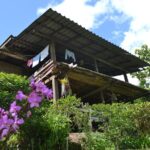
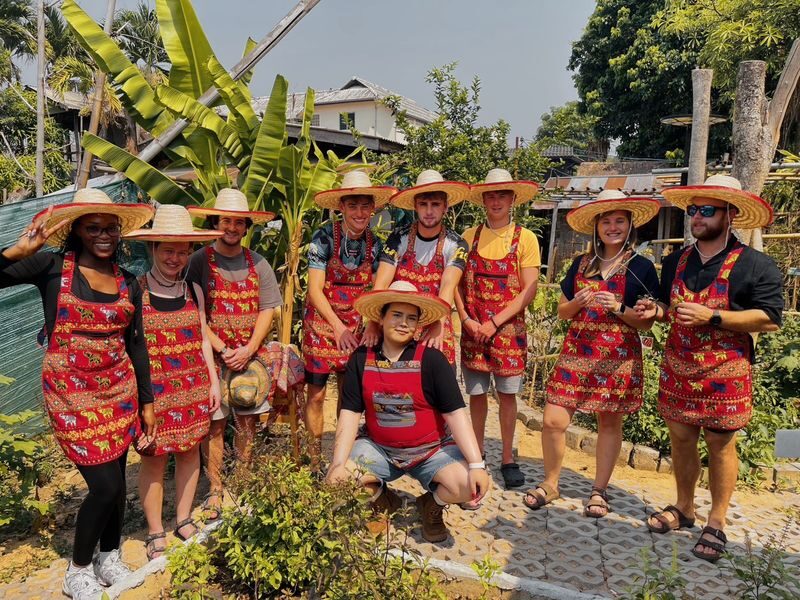
The school’s family-kitchen feel is part of its appeal, though the class is still organized and hands-on. Several sessions may run at the site, and the cooking stations are prepared to make the steps easier to follow. You should expect a working class environment, not a private lesson with one instructor devoted to one person.
Choosing dishes and making curry paste by hand
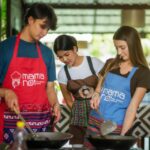
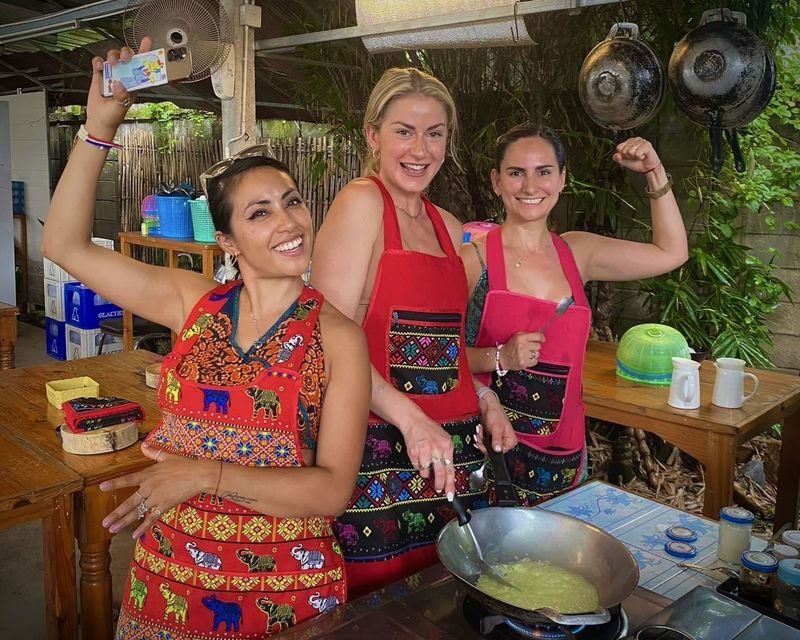
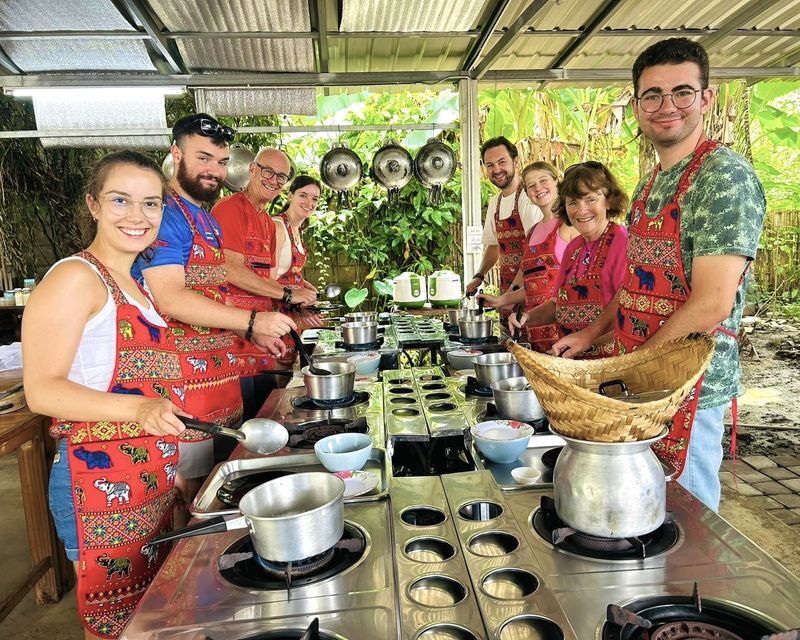
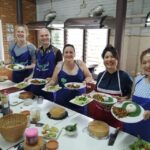
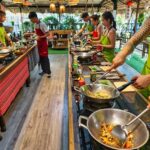
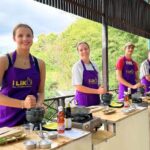
The cooking class runs for about three hours. You choose dishes from different categories, then make the food yourself with step-by-step help from an instructor. The experience is designed to let you take part rather than stand back and watch.
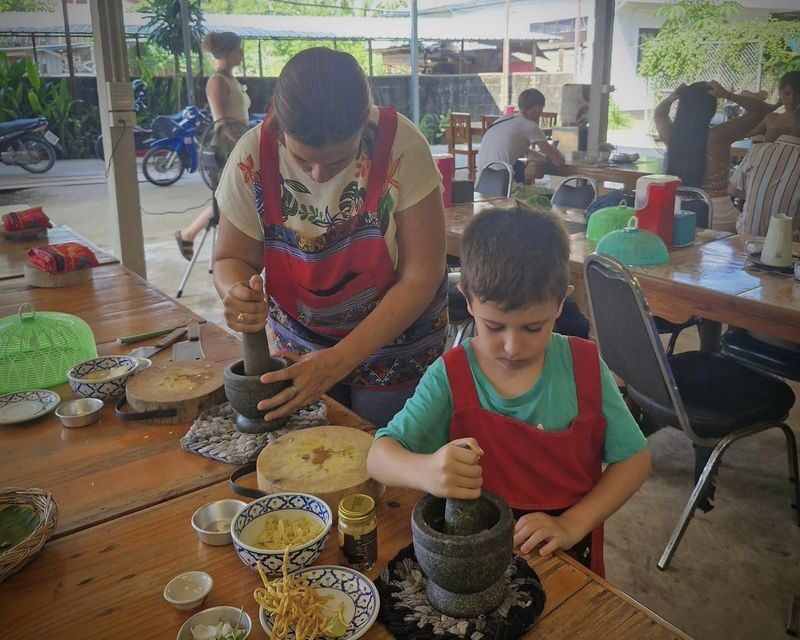
A central skill is making curry paste from scratch with a mortar and pestle. It takes more effort than opening a jar, but it teaches you how the aromatic base comes together. That lesson is especially useful if you want to cook Thai food at home. You get to see how much flavor begins with the ingredients and the work of grinding them.
The advertised class highlights a selection of five authentic dishes. The exact menu can vary by session and by the choices available, and different class times may include different combinations. Past menus have included soup, curry, stir-fry, noodles and fried rice, with dishes such as Pad Thai and northern-style khao soi among the options. Ask about your choices when the instructor presents them, particularly if you have a strong preference.
The method is guided and fairly structured. That is helpful if you are a beginner: the instructor demonstrates the steps, prepares ingredients and keeps an eye on the cooking. It also means you should not expect a free-form workshop where you can change a recipe at every turn. One person may find the pace brisk, especially if trying to cook several dishes feels tiring.
Instructors named in class sessions include Toey, Tu, Flook, Wave, Balloon and Amy. The teaching style can vary from person to person, but the class format is built around clear instructions and support while you cook. Reports of the sessions describe instructors explaining each step and helping people who are cooking different dishes at the same time. If you have a question, ask as you go; this is the time to learn why a step matters, not just copy it.
Dinner, sticky rice and the pleasure of eating your work
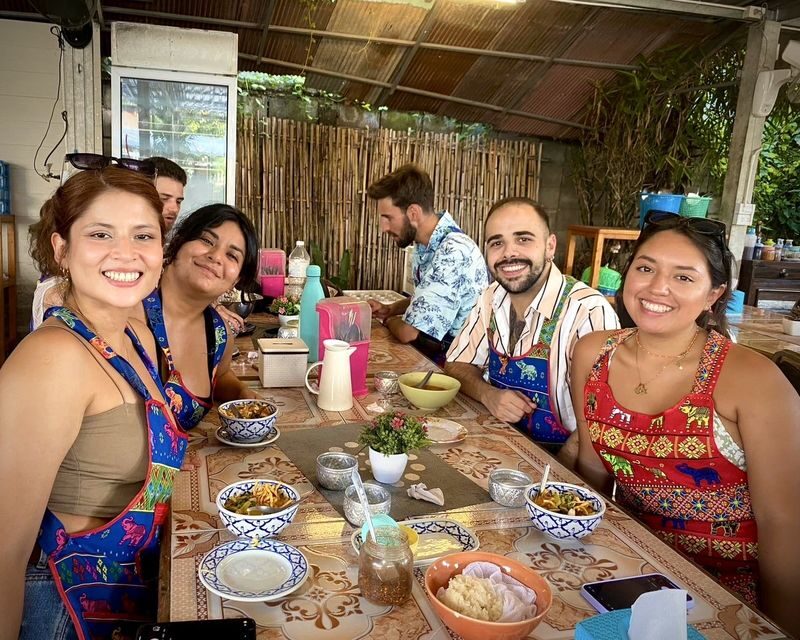
The best part for many cooks is sitting down to eat what they have made. The meal is served in a family-style setting, and the class can be filling. Some sessions serve dishes in stages, which gives you a pause between rounds and keeps the cooking from turning into one long sprint.
Sticky rice is another featured lesson. You learn about cooking it, then finish with sweet sticky rice and mango. The dessert gives you a second kind of cooking to take home: not a curry or stir-fry, but a simple sweet that depends on getting the rice and its texture right.
If you are planning the dinner session, it is sensible to arrive hungry. You will be cooking a substantial amount of food and eating it as part of the experience. The schedule runs from a 4:30 p.m. departure to a return around 9 p.m., though traffic or weather can change the timing.
You leave with a PDF recipe book by email, a practical extra rather than a souvenir that sits on a shelf. It gives you a way to revisit the dishes after the trip. Ingredients at home may differ, and the results may not taste exactly like the food you made in Chiang Mai, but the recipes give you a starting point.
What the pace, group and language mean for you
This is a social class, not a quiet private lesson. You may be cooking alongside people who have chosen different dishes, and the instructor has to keep the group moving while helping each person. That variety can be fun: you get to see more than one dish take shape. It also means there may be less time for personal experimentation.
Groups can be small, but the size is not guaranteed. One class has been described as a group of seven, while other sessions may bring together more people. If close, individualized instruction is your top priority, ask the operator about the group size for your date before booking.
The class is conducted in English. Clear, simple explanations make it accessible to many English speakers, but you will get more from it if you can follow spoken instructions and ask questions. If English is not comfortable for you, check with the operator about language support rather than assuming another language will be available.
Children can take part, and the activity has no age limit. Children aged one to five are free. Since cooking involves heat and active kitchen work, a child should be accompanied by an adult. The class can be a good shared activity for families who want children to do more than watch, but the pace and number of steps may test a younger cook’s attention.
You can also read our reviews of more tours and experiences in Chiang Mai

The practical trade-offs and the price
The listed price starts at US$32.45 for the experience, while the dinner package is also shown from US$29.49. Prices can differ by package or booking conditions, so check the amount shown for your chosen date and session before paying.
For the price, you get more than a single cooking demonstration: a market visit, a herb garden tour, a multi-dish class, food you cook, round-trip hotel transfer within the service area and a digital recipe book. That makes the experience good value if you want a structured introduction to Thai food and would otherwise pay separately for transport and a cooking class.
The cost is less compelling if you mainly want an advanced cooking workshop or a long, independent market visit. This class is designed to be accessible and organized. The recipes are taught in a guided format, and the market stop is short. You pay for a complete half-evening, not hours of open-ended practice.
The transfer is another convenience with a small uncertainty built in. Pickup is shared, so allow for a window rather than counting on a precise arrival minute. The stated free pickup area covers locations within five kilometers of Chiang Mai Old City. If you are outside that area, ask the operator what arrangements are possible before booking.
For a dinner class, the listed return time is 9 p.m. The schedule can shift with traffic and weather. The pickup and return are included, but personal expenses are not. If your hotel is not within the free pickup zone, or you need a particular vehicle arrangement, confirm those details directly with the operator.
Who should book this Chiang Mai cooking class
I would choose Thai Cottage if you want to learn by cooking, enjoy Thai food and value having the market, garden, class and transport bundled into one outing. It suits first-time cooks particularly well because the instructor guides each step, and it works for solo participants, couples and families with children who can follow kitchen instructions.
It is also a good match if you want a useful souvenir. The recipes, the curry-paste technique and the lesson in identifying herbs are more likely to last than a quick photo stop. You leave with practical ideas to try at home, even if your local ingredients are not identical.
Think twice if you want a highly flexible class, a slow market tour or instruction in a language other than English. The cooking can feel fast, and a structured format leaves limited room for improvisation. For a friendly, hands-on introduction to Thai home cooking, though, the mix of market, garden and dinner makes a sensible choice.
Thai Cottage Cooking Class, Market & Thai Herbs Garden Tour
“This was one of the most memorable activities on my first trip to thailand! The whole experience was amazing and the instructor was the best. I lov…”
FAQ
Where does the class take place?
The cooking class is at Thai Cottage Home Cookery School, 57 Sookasam Road, Chang Phueak, Mueang Chiang Mai District, Chiang Mai 50300.
What time does the dinner class start and finish?
The dinner session has pickup between 4:30 and 5 p.m. and a planned return around 9 p.m. Traffic and weather can affect the schedule.
Is hotel pickup included?
Yes. Round-trip transfers are included for pickup within five kilometers of Chiang Mai Old City. The transfer is shared, and pickup may be early or late.
What should I do before pickup?
Enter your hotel name and address at checkout, and arrive at your pickup location 30 minutes before the departure time. The operator will reconfirm your pickup time in advance.
Which market does the tour visit?
The market stop is Siri-wattana Market, also known as Tha-nin Market. The guided visit lasts about 30 minutes.
How long is the cooking class?
The cooking class lasts about three hours. The itinerary also includes a 30-minute market tour and a 30-minute herb garden tour.
How many dishes will I cook?
The experience is described as a choice of five dishes from different categories. Specific dishes and menus can vary by session.
Is mango sticky rice included?
Yes. The class includes a lesson on sticky rice and sweet sticky rice with mango.
Are children allowed?
Yes. The activity has no age limit, and children aged one to five can join free. Children should be accompanied by an adult.
Do I receive recipes after the class?
Yes. You receive a PDF recipe book online.