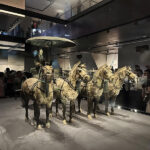
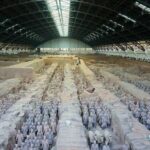
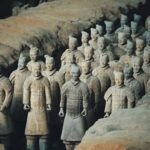
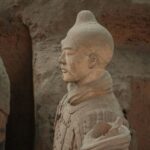
The first sight of Pit 1 is a long formation of clay soldiers, row after row, standing in the ground where they were buried more than 2,000 years ago. I like the contrast between the army’s scale and the small details you can spot on individual figures, from their expressions to their armor. I also like that you can choose a simple entry ticket or pay more for a guide who can explain what you are seeing.
The main drawback is the crowd. Pit 1 can feel packed, especially in the morning, and the one-way route leaves little room to linger when the flow of people builds. A guide can help you make sense of the site, but it cannot make the busiest viewing areas quiet.
- At a glance
- What the ticket gets you at the Qin mausoleum
- Pit 1: the scale of the army
- Pits 2 and 3: look beyond the famous hall
- A guide or a ticket-only visit?
- Getting there and finding your way
- Timing, crowds, and what to bring
- Is the ticket good value?
- Who will get the most from this visit?
- Should you book?
- FAQ
- Where is the Terracotta Warriors Museum?
- What are the opening hours?
- What is included in the adult ticket?
- What ID should I bring?
- Are children and seniors eligible for free admission?
- Can I book more than one ticket with the same ID?
- Are guided tours available?
- How long should I allow for the visit?
- Is transport to the museum included?
- Can I cancel or change my booking?
- More Tickets in Xi'an
- More Tours in Xi'an
- More Tour Reviews in Xi'an
- Not for you? Here's more nearby things to do in Xi'an we have reviewed
At a glance
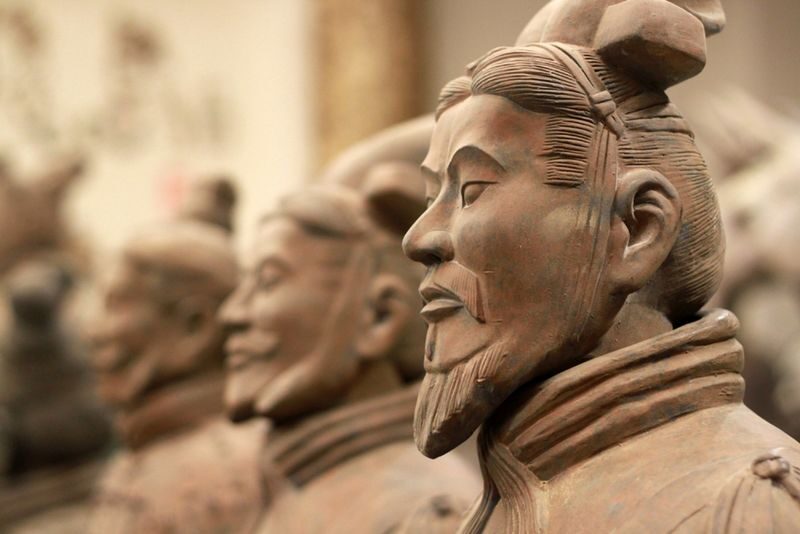
- Pit 1 is the big draw: It is the largest and earliest excavated pit, with the most imposing ranks of warriors.
- The figures are not identical: Look closely at faces, poses, armor, and other small differences.
- A guide adds context: English and Chinese group tours are available, as are private tours. Mary, Mr. Li, Huang, and Song Ming are among the guides named by visitors.
- Entry is tied to your ID: Bring the same valid document used when booking, such as your passport.
- Crowds shape the visit: Arriving early may help, though the museum can be busy at any time.
- Tickets start at about US$18 to US$20: Guided and combo options cost more, so compare what you need before booking.
What the ticket gets you at the Qin mausoleum
The Museum of Qin Shihuang’s Terracotta Warriors and Horses is in Lintong District, outside central Xi’an. It is part of the burial complex built for Qin Shi Huang, the first emperor to unite China. The adult ticket covers admission to the museum and includes the booking fee. Personal expenses are not included.
The museum presents the clay army as part of a much larger imperial burial site. Qin Shi Huang began work on his mausoleum after taking the throne at age 13. Construction continued for 38 years and involved nearly 720,000 laborers, according to the historical account presented with the experience. The emperor died before the complex was complete.
The warriors were made to guard his underground palace. They are life-size figures, formed to resemble real people rather than repeated copies of a single model. That choice is what makes the display rewarding at close range: the rows look uniform from a distance, but each figure has its own face and stance.
You can also read our reviews of more tours and experiences in Xi'an



Pit 1: the scale of the army
Pit 1 is the largest and earliest excavated of the three pits. It is the place most people picture when they think of the Terracotta Army: a wide hall with ranks of soldiers laid out in formation. The sheer number of figures gives you a sense of imperial power that a display case or a handful of statues could never match.
Try not to spend the whole visit photographing the first view from the entrance. The area there can clog with people stopping for pictures. If you want a clearer angle, move along the sides of the hall, where there may be more room to take photos and look down the ranks.
The figures reward patience, but the crowd can make close inspection difficult. You may be carried along by the one-way route, so take in the broad view first, then focus on details when the path opens up. Look at faces, armor, weapons, and posture. The care in the modeling makes the army feel less like a mass-produced display and more like thousands of individual people arranged for battle.
Pits 2 and 3: look beyond the famous hall
The museum visit includes more than the huge formation in Pit 1. Pits 2 and 3 add to the picture of how the army was organized, though the supplied details do not specify a fixed route or a guaranteed amount of time at each one. Follow the directional signs and keep to the one-way flow.
The value of seeing several pits is comparison. Pit 1 delivers the grand spectacle, while the other excavated areas help you understand that this was a planned military force, not a collection of statues placed together for show. If you have time, resist the urge to rush straight from the main hall to the exit.
The whole visit can be fairly short if you move quickly. One visitor described seeing all three pits in about 45 minutes, but that is a brisk pace, not a promise. Crowds, photo stops, and time spent reading or listening to a guide can stretch the visit.
A guide or a ticket-only visit?
A ticket-only visit works if you are comfortable exploring independently and mainly want to see the pits. The entry process is simple once your booking is confirmed: use the valid ID document connected to the ticket at the turnstiles. Several visitors found passport scanning straightforward.
A guide is worth considering if you want the figures to make sense as more than an impressive sight. English and Chinese group tours are offered, along with private Chinese and English explanation. The guides named in visitor feedback include Mary, Mr. Li, Huang, and Song Ming. Mary was praised for clear explanations and for giving her group time to look around; Mr. Li was described as attentive and helpful. These names are useful reference points, but a particular guide is not guaranteed.
The group option can be especially useful in a packed hall. A guide can keep you moving with the group, point out details, and make the history easier to follow. The trade-off is that you will need to meet at the correct place and stay with the group’s schedule. Some tour options have had confusing meeting-point descriptions, so check the exact location and contact details carefully before setting out.
Getting there and finding your way
The museum is at the intersection of Qinling North Road and Terracotta Warriors Museum Highway in Lintong District. It is outside central Xi’an, so allow time for the trip in both directions. A taxi or ride-hailing car is one option; one visitor reported a journey of about 45 minutes from the city. Public transport is also possible: a visitor described taking the subway to its final stop and then catching a bus from beside the station. The stop and route details are not specified here, so confirm the current route before leaving.
Once inside, directional signs guide you along a one-way route. Follow them rather than trying to walk against the flow. English signs may be limited in some areas, so take a moment to check the direction before heading off. One visitor found the walking route to Pit 1 manageable, under 10 minutes, but said it was not clearly signposted in English.
A shuttle may save some walking, but check the cost and destination before boarding. One visitor found a shuttle near the entrance that required a separate ticket, with little advance signage. Another noted a free internal shuttle between the pits and the emperor’s tomb area. These are different services, so ask staff what a shuttle covers before you pay or queue.
You can also read our reviews of more museum experiences in Xi'an


Timing, crowds, and what to bring
Opening hours are listed as 08:30 to 16:30, and entry is allowed only during the selected admission time. Late entry is not allowed. An early start may help you get ahead of some of the day’s crowds, though it does not guarantee a quiet visit. Another option is late afternoon, which one visitor recommended as less crowded than the morning. The museum can still be busy, and special closures or high-profile visits may disrupt the usual flow.
Carry the same valid ID you used to book. All visitors, including those eligible for free entry, must present valid identification. The ticket is real-name and date-specific, and one ID can be used for only one online or agency ticket per travel day. The same ID also has a restriction on booking related Terracotta Warriors or Huaqing Palace packages within eight days before and after the travel date. Avoid placing duplicate orders, since the system may reject them.
Expect security checks. One visitor reported that staff checked water bottles and confiscated lighters at the entrance. Keep your documents handy and follow staff instructions.
Is the ticket good value?
The adult ticket is advertised from about US$17.99, while the overall starting price is also shown as US$19.79. Prices can vary by package and offer, so check the amount shown for your date before paying. For basic entry, the ticket is good value if you are happy to explore without a guide. You are paying for access to one of China’s most important archaeological sites, not for transport or personal expenses.
A group ticket with an English or Chinese guide starts around US$29.99. That extra cost can be worthwhile if you want an explanation of the figures and the site’s history, especially if you have limited time. A private tour with Chinese and English explanation starts around US$56.95, which may suit a family or small group that values a more personal pace. The Huaqing Palace combo ticket also starts around US$29.99, but plan enough time for both locations; they are not next door to each other.
Check eligibility before buying an adult ticket. The adult category applies to ages over 16 through 64 inclusive. Children aged 16 or younger and adults aged 65 or older may qualify for free admission under the stated rules, but free-entry visitors still need to reserve in advance through the site’s official website or public WeChat account. If you qualify for free entry, compare the official reservation process before paying for an adult ticket.
Who will get the most from this visit?
This is a strong choice if you care about archaeology, early Chinese history, or seeing a major cultural site in person. It also works well for families: the scale is immediate and striking, and a guide can make the visit easier for children to follow. If you want to understand the formations rather than just take photos, the guide upgrade is the better fit.
It may be less satisfying if crowds make you uncomfortable or you expect a quiet, slow museum visit. Pit 1 can be crowded enough to feel like a moving queue, and the one-way route limits how freely you can backtrack. Go in with realistic expectations: the experience is about seeing an extraordinary archaeological site amid other people, not having the hall to yourself.
Should you book?
Book the ticket if the Terracotta Army is high on your Xi’an list and you are comfortable handling transport and entry on your own. Choose a guide if context matters to you, and a private option if you want more control over the pace. Check your ID details, ticket time, and meeting point before you leave. With those basics sorted, the museum gives you a close look at an ancient army whose individuality is as striking as its scale.
Xi’an Terracotta Warriors and Horses Museum Ticket
“Today's activities were well arranged, and the children learned a lot.”
FAQ
Where is the Terracotta Warriors Museum?
It is in Lintong District, Xi’an. The listed address is the intersection of Qinling North Road and Terracotta Warriors Museum Highway.
What are the opening hours?
The listed opening hours are 08:30 to 16:30. Entry is permitted only during the selected admission time, and late entry is not allowed.
What is included in the adult ticket?
The adult ticket includes admission to the Mausoleum of the First Qin Emperor Museum, also known as the Terracotta Warriors Museum, and the booking fee. Personal expenses are not included.
What ID should I bring?
Bring the valid ID document used for the booking. Entry uses that document at the turnstiles, and all visitors, including those eligible for free admission, must show valid identification.
Are children and seniors eligible for free admission?
Children aged 16 or younger and adults aged 65 or older are listed as eligible for free admission. Free-entry visitors must reserve in advance through the scenic area’s official website or public WeChat account.
Can I book more than one ticket with the same ID?
Only one ticket can be ordered per ID per travel day across online and travel-agency channels. The same ID is also limited to one related Terracotta Warriors or Huaqing Palace package within eight days before and after the travel date.
Are guided tours available?
Yes. Options include English and Chinese group tours, as well as a private tour with Chinese and English explanation. The adult ticket-only option is also available.
How long should I allow for the visit?
No fixed visit duration is given. One visitor reported seeing all three pits in about 45 minutes, but a guide, crowds, and time spent looking around can make the visit longer.
Is transport to the museum included?
No transport is listed as included with the adult ticket. You need to arrange your own way to and from the museum.
Can I cancel or change my booking?
The booking information says unused, unactivated tickets can be unsubscribed from, and full refunds are available for cancellations made at least 48 hours before the selected date. For a date change, contact the provider at least 48 hours before the activity; rescheduling may require a refund and a new booking.