At Hanoi’s Temple of Literature, 82 stone tortoises carry stelae honoring scholars who passed royal examinations. The site began as a Confucian temple in 1070 and became Vietnam’s first national university, so its quiet courtyards tell a story about education as well as faith.
I like two things about this ticket: an English-speaking guide is included, and the group is limited to 10, small enough for questions without turning the visit into a lecture hall. The five courtyards also give you a clear route through a large, layered site.
One consideration: this is a guided visit at a set time, not a flexible walk-in ticket. The published start times differ between the booking details, so check your voucher carefully and arrive five minutes early.
- A university founded in 1070: The Imperial Academy made this more than a temple; it was a center of learning for over 700 years.
- 82 tortoise-backed stelae: The carved records honor top scholars and are recognized by UNESCO.
- Five courtyards on one central axis: The layout makes the site easier to follow, with traditional details along the way.
- Khuê Văn Pavilion: This striking pavilion is one of Hanoi’s best-known symbols.
- Small English-speaking group: The guide-led option is capped at 10 people.
- Two possible tour times: The details give either 9:00 AM or 10:00 AM for the morning slot, plus 2:30 PM. Confirm the time on your voucher.
- Why the Temple of Literature matters
- What the guided visit adds
- Following the five courtyards
- Choosing a time and planning the visit
- Is the ticket worth .05?
- Who should book this visit
- FAQ
- What is included in the ticket?
- Where is the meeting point?
- What time does the morning tour start?
- What are the Temple of Literature’s opening hours?
- How do I use my ticket?
- Can I cancel or change my booking?
- The Best Of Hanoi!
- More Tickets in Hanoi
- More Tours in Hanoi
- More Tour Reviews in Hanoi
- Not for you? Here's more nearby things to do in Hanoi we have reviewed
Why the Temple of Literature matters
 1 / 6
 2 / 6
 3 / 6
 4 / 6
 5 / 6
 6 / 6
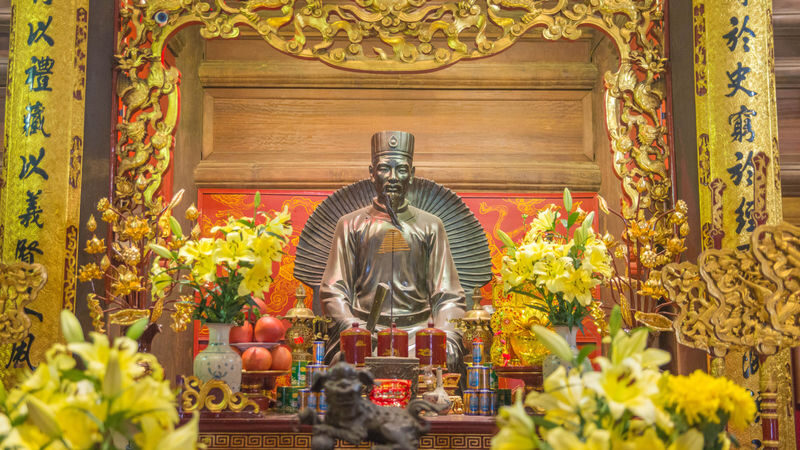
The Temple of Literature, known in Vietnamese as Văn Miếu, was founded in 1070 under Emperor Lý Thánh Tông and dedicated to Confucius. It later became home to the Imperial Academy, or Quốc Tử Giám, Vietnam’s first national university. For more than seven centuries, this was a place where learning and public service were closely linked.
That context changes how you read the site. The temple is not only a collection of attractive gates and gardens. It reflects the high status given to scholarship, moral conduct, and education in Vietnamese history. As you move from courtyard to courtyard, you are tracing a place designed to honor those ideals.
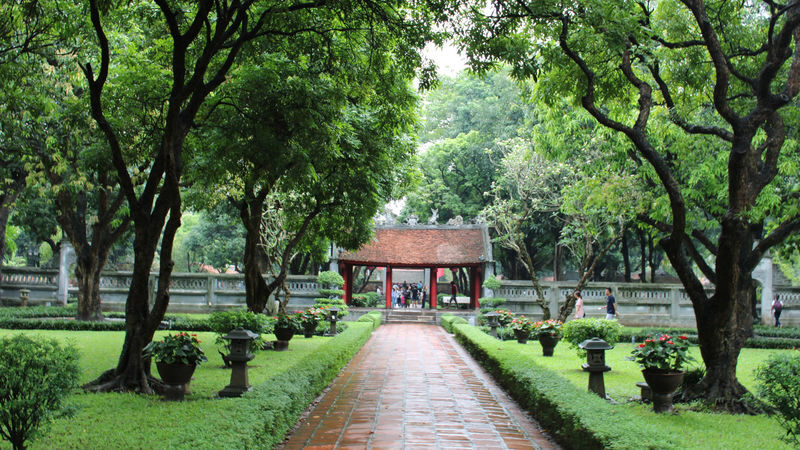
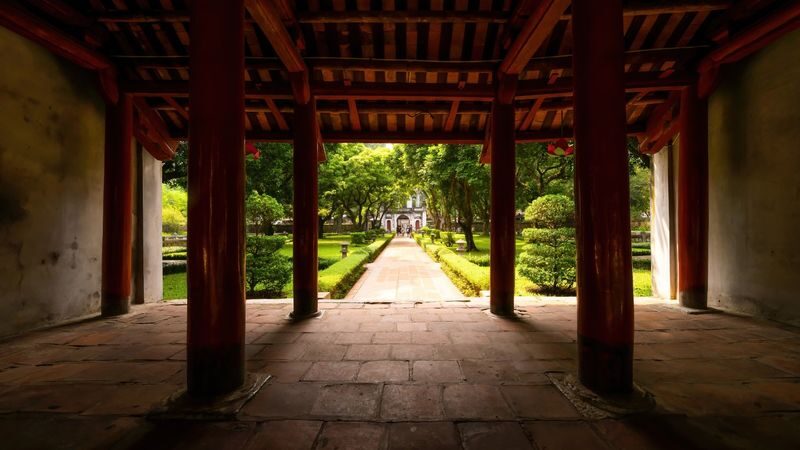
The complex is arranged along a central axis, with five courtyards to explore. Traditional Vietnamese features include wooden pillars and intricate carvings. The grounds are described as a serene oasis, a useful contrast to Hanoi’s busy streets, though the setting is still a major city attraction and can draw students and sightseers alike.
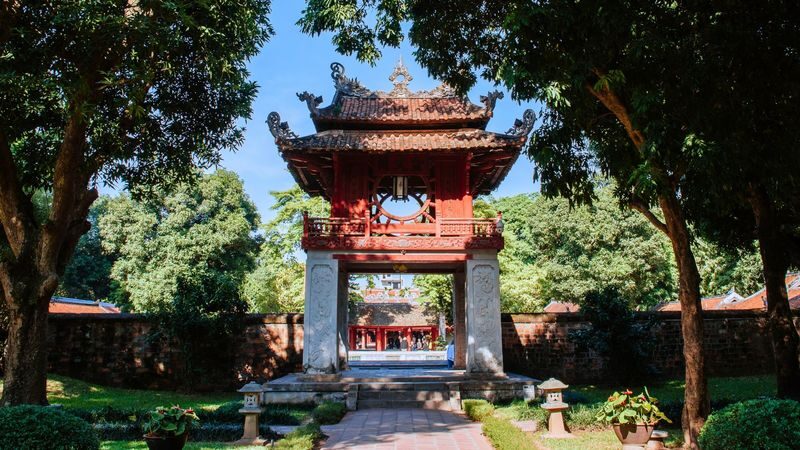
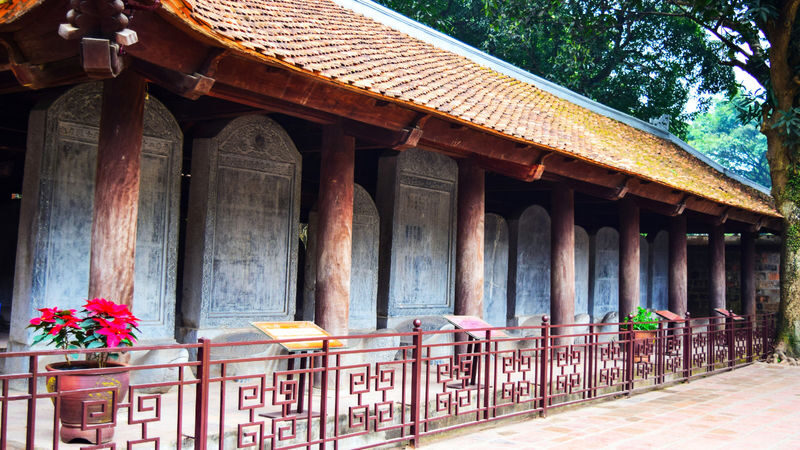
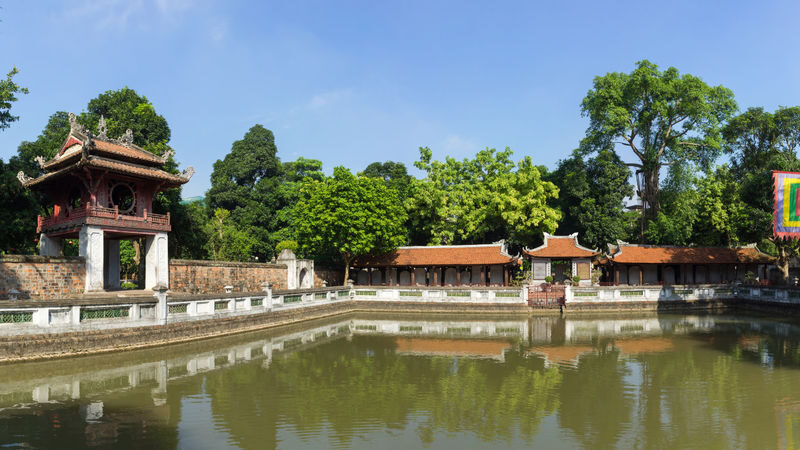
The most memorable details are often the ones with a clear purpose. The stelae preserve the names of graduates, while the tortoises beneath them give the records a distinctive form. Khuê Văn Pavilion, meanwhile, is not just a photogenic landmark: it has become an official symbol of Hanoi.

👉 See our pick of the 25 Best Shopping Tours In Hanoi
What the guided visit adds
The ticket includes admission and a live English-speaking guide in a join-in group of up to 10 people. That small cap is a practical advantage. It gives you a better chance to hear the explanation and ask questions than you might get in a much larger group, while keeping the visit shared rather than private.
A guide is especially useful here because the site’s appeal is not limited to its architecture. Without context, you can admire the courtyards and carvings but miss why the university mattered, what the stelae record, and how the place connects to Vietnam’s respect for learning. A good explanation turns a quiet walk into a more coherent story.
Mac, Finn, and Oscar are names associated with past guided visits, and the comments about them point to the qualities that matter most here: clear explanations, enthusiasm, and willingness to answer questions. Finn was singled out for his energy and for making the history interesting. Oscar was described as prepared and helpful, even in heavy rain, and offered a suggestion to visit the nearby Museum of Fine Arts afterward. Your guide may be someone else, so treat those names as examples, not a promise.
The guide-led format is a good fit if you enjoy asking questions or want a short historical overview without arranging a private tour. If you prefer to explore at your own speed, keep in mind that this package has a scheduled start and you meet the guide to receive your ticket and begin.
You can also read our reviews of more tours and experiences in Hanoi



Following the five courtyards
The experience centers on five courtyards arranged along a central axis. That order gives the visit a natural structure: instead of wandering without a plan, you follow the historic layout and see the complex as a sequence of spaces. The supplied details do not specify a timed itinerary or the exact amount of time spent at each stop, so expect the guide to shape the pace.
The first appeal is the overall design. Traditional elements such as wooden pillars and intricate carvings help make the courtyards feel distinct, while the repeated layout connects them. Take time to look beyond the main photo spots. A guided explanation can help you notice how the architecture supports the site’s role as a place for study and reflection.
Khuê Văn Pavilion is the landmark you are most likely to recognize from images of Hanoi. It is also the city’s official symbol, which gives it more significance than a simple backdrop. If photographs matter to you, this is a natural point to pause, but the pavilion is only one part of the visit. The larger reward is understanding how it fits into the full complex.
The stelae are another essential stop. There are 82 carved stone tortoises carrying royal examination records that honor the nation’s leading historical scholars. Their UNESCO recognition adds weight to what might otherwise seem like a row of monuments. Look for the names and inscriptions as historical records, not just decoration. The guide can help explain what the memorials mean and why academic achievement merited such respect.
Because the site is both a cultural landmark and an active point of interest for students and sightseers, expect to share the grounds with other people. The tour’s small group size does not mean the entire site will be quiet or private. It does, however, keep your own guided group manageable.
Choosing a time and planning the visit
The Temple of Literature is listed as open daily from 8:00 AM to 5:00 PM, with last entry at 4:00 PM. The tour has a morning and an afternoon option, but there is a mismatch in the supplied time information: one section says 9:00 AM or 2:30 PM, while another says 10:00 AM or 2:30 PM. Use the time shown on your confirmed voucher, and contact the provider if it is unclear. Do not assume the morning tour begins at one time or the other.
The meeting point is at 58 P. Quốc Tử Giám, in the Văn Miếu area of Đống Đa. Arrive five minutes before the scheduled start and meet the guide there to collect your ticket and begin. Late arrivals and no-shows are not eligible for a refund, so give yourself a little margin rather than aiming to arrive at the exact minute.
Your voucher is valid only for the date selected, and for the specified time if one applies. Show the mobile voucher at the meeting point. The activity is available to book for the same day, with instant confirmation, but that does not remove the need to check your chosen time and meeting details.
The tour runs year-round, Monday through Sunday. Rain is worth considering when you plan your day: the grounds include outdoor areas, and an umbrella or rain jacket may make the visit more comfortable. There is no age limit stated for the activity.
Is the ticket worth $7.05?
At a starting price of $7.05, this is a modest-cost way to see one of Hanoi’s most important historic sites with an English-speaking guide. The price includes admission, so you are not paying only for a ticket and then having to find a separate guide. The group cap of 10 also gives the guided format real value, particularly if you want to ask questions.
The best comparison is not simply this ticket versus entering alone. It is whether context matters to you. If you already know the history and prefer a quiet, independent visit, you may not need the guided package. If you want to understand the shift from Confucian temple to national university, and why the stelae and pavilion matter, the guide can make a short visit far more useful.
The price is listed as starting at $7.05, so check the final amount and selected option before booking. Tips and personal expenses are not included. No visit duration is provided, so do not build a tightly timed connection or another activity around an assumed end time.
For a low-cost introduction to Vietnamese educational history, the combination of entry and a small English-speaking group is strong value. It is less suited to someone who wants an open-ended visit with no fixed start.
Who should book this visit
I’d choose this tour if you enjoy history but do not want to spend your Hanoi day piecing together the meaning of every monument on your own. It suits first-time visitors, students, and anyone curious about the country’s scholarly traditions. The modest price and small group limit make it a practical option for a short cultural stop.
Families can consider it too, since there is no age limit, but the experience is centered on historical explanation and walking through the courtyards. Whether that suits younger children depends on their interest in the subject. The tour is also a good fit for solo visitors who would rather hear a guide’s account than explore the site without context.
If you have already visited the Temple of Literature or prefer to set your own pace, you may want a standard entry option instead. If you book this package, confirm the morning start time, keep your voucher handy, and arrive early. Those small steps help you spend your attention on the courtyards rather than the clock.




Temple of Literature Ticket in Ha Noi
“Mac, our tour guide, was very knowledgeable and friendly! Good tour, overall – thanks Mac!”
FAQ
What is included in the ticket?
Admission to the Temple of Literature and a live English-speaking join-in guide are included. Groups are capped at 10 people.
Where is the meeting point?
Meet at 58 P. Quốc Tử Giám, Văn Miếu, Đống Đa, Hanoi. Arrive five minutes before the scheduled start.
What time does the morning tour start?
The information gives two different morning times, 9:00 AM and 10:00 AM. Check the time on your voucher before you go. The afternoon option is listed at 2:30 PM.
What are the Temple of Literature’s opening hours?
It is listed as open daily from 8:00 AM to 5:00 PM. Last entry is at 4:00 PM.
How do I use my ticket?
Show your mobile voucher and meet the guide, who will provide your ticket and start the tour. The voucher is valid only on the date selected and at the specified time, if applicable.
Can I cancel or change my booking?
You can cancel at least 24 hours before the activity date for a full refund. Changes are allowed until 24 hours before the activity starts, with some stated exclusions for bookings made through certain passes, promotions, freebies, or cultural credit programs.