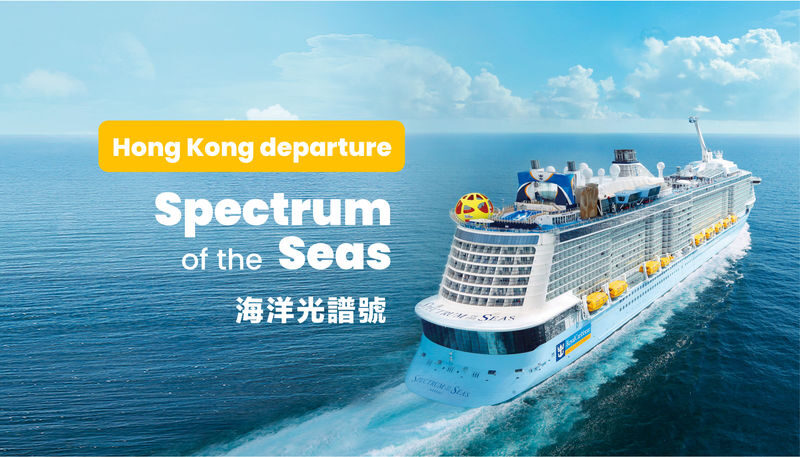
Spectrum of the Seas turns a short Hong Kong getaway into a stay aboard a huge, activity-packed ship. I like the full day at sea, which gives you time to sample the ship rather than simply use it as transport, and the choice of complimentary dining venues, from the Main Dining Room to Sorrento’s and the Noodle Bar.
The main trade-off is that a two-night sampler spends just one full day at sea and makes no scheduled port call. You also need to budget for daily gratuities, transport to the terminal, and any paid extras, so the fare is only part of the final cost.
At a glance
- The Weekend Sampler is a ship stay, not a sightseeing cruise: It leaves Hong Kong, spends a day at sea, and returns to the same terminal.
- You get two nights aboard: The standard option listed is an interior stateroom, with window and balcony upgrades available at extra cost.
- Several meals are included: Complimentary choices include the Main Dining Room, Windjammer Cafe, Noodle Bar, The Cafe @ TWO70, Sorrento’s, and Dog House.
- The ship has headline attractions: The Bionic Bar uses robots to make drinks, and the Ultimate Family Suite has an in-room slide and cinema-karaoke setup.
- Plan for extra costs: Gratuities, transport, Wi-Fi, paid dining and entertainment, and personal purchases are not included.
- Be early and check your documents: Online check-in is required, and everyone must be aboard at least 90 minutes before departure.

👉 See our pick of the Best Historical Tours In Hong Kong
- At a glance
- A short Hong Kong sailing with a full day at sea
- Big-ship energy, with plenty to keep you busy
- What your two nights actually include
- The real fare: gratuities and extras
- A day at sea: pace it your own way
- Kai Tak boarding and the documents to prepare
- Longer sailings for ports, not just ship time
- Who should book this Spectrum sailing?
- FAQ
- What is included in the Weekend Sampler?
- Where does the cruise depart from?
- What is the usual Weekend Sampler schedule?
- How early do I need to board?
- What travel documents do I need?
- Are gratuities included in the fare?
- Is transport to the cruise terminal included?
- Can children and infants board?
- What is the SeaPass account?
- The Best Of Hong Kong!
- More Boat Tours & Cruises in Hong Kong
- More Tours in Hong Kong
- More Tour Reviews in Hong Kong
- Not for you? Here's more nearby things to do in Hong Kong we have reviewed
A short Hong Kong sailing with a full day at sea
The Weekend Sampler starts at Kai Tak Cruise Terminal in Kowloon. On the usual schedule, the ship departs at 5:00 pm on Day 1, spends Day 2 at sea, and returns to Kai Tak at 6:30 am on Day 3. That is two nights aboard, but only one full day to explore the ship.
This matters when you decide what kind of cruise you want. If you’re after a quick introduction to shipboard life, the format is convenient: you can board in Hong Kong, settle in, have a full day to try activities and dining, then return to the same city. If your priority is seeing destinations ashore, this particular sampler won’t deliver that. Its scheduled itinerary is simply Hong Kong, open sea, Hong Kong.
A separate schedule applies to the November 20 sailing, which is listed as departing at 8:00 pm and returning at 4:30 am. Sailing times and itineraries can change, so check the details for your specific date rather than relying on the standard timetable. The early return is especially worth noting if you have a flight, hotel checkout, or other plans that morning.
Spectrum of the Seas is a Quantum Class ship, built around the idea that there should be plenty to do even when the sea is the only view outside. That gives this short trip its appeal: you’re not just sleeping aboard between ports. You have a full day to make the ship itself the destination.
You can also read our reviews of more boat tours in Hong Kong

Big-ship energy, with plenty to keep you busy
Spectrum is not a quiet little boat with a handful of lounges. One sailing was described as having at least 5,500 people aboard, a useful reminder that this is a large-ship experience. That scale can mean lots of activity and choices, but it also means shared spaces may feel busy, especially when many people are choosing where to eat or what to do at once.
The ship’s feature list leans toward fun and spectacle. At the Bionic Bar, robotic arms prepare custom juice creations. The family-focused Ultimate Family Suite is a multi-room space with an in-suite slide and a cinema that can double as a karaoke stage. These are memorable headline features, though they are not part of what every fare includes. In particular, the suite is an accommodation upgrade, not a standard interior cabin.
The ship also offers Suite Club accommodation with exclusive amenities. If you are considering a suite, compare the added cost with how much time you expect to spend in your room and whether the included suite benefits matter to you. For a two-night trip, an interior cabin may be enough if you plan to spend most of your waking hours around the ship.
The onboard SeaPass account is the cashless system for purchases and services. Your SeaPass card may be provided at the pier or waiting in your cabin. It is handy for onboard payments, but it can make it easy to lose track of extras. I’d keep an eye on charges as you go, especially if you plan to buy drinks, Wi-Fi, specialty meals, or paid entertainment.
What your two nights actually include
The Weekend Sampler package includes two nights in an interior stateroom, port charges, and meals at complimentary dining venues. That gives you a simple base fare: a cabin, the ship, and a number of places to eat without paying separately for every meal.
The included dining options are varied enough to suit different moods. The Main Dining Room offers a more traditional seated meal, while the Windjammer Cafe is a buffet-style choice. The Noodle Bar, Sorrento’s, Dog House, and The Cafe @ TWO70 give you alternatives when you want something different from a formal dining room meal.
Complimentary does not mean every restaurant or food item aboard is included. Chargeable dining is specifically excluded, as are paid entertainment options. Check what is covered for your sailing before you assume a particular meal, show, or activity is part of the fare. The information provided names the included venues, but does not give menus, opening hours, or the full schedule of onboard activities.
For the standard sampler, an interior stateroom is the lowest-priced room type. Other listed choices include an interior room with a virtual balcony, an ocean-view stateroom, an obstructed ocean-view balcony, a regular ocean-view balcony, a large-balcony ocean-view room, and a Junior Suite. The virtual balcony is a room category with that name; it should not be confused with a real outdoor balcony.
A cabin upgrade makes most sense if you expect to spend time in your room or value natural light and outdoor space. For a short trip with a full day of shipboard activities, a basic interior room can keep costs down. Room assignments are made based on availability, and requests for adjacent or accessible rooms are not guaranteed. If cabin location or accessibility is essential, confirm what can be arranged before booking.
The real fare: gratuities and extras
The advertised starting prices vary across the package choices. The short Weekend Sampler’s interior room is listed from US$327.79 in the package options, while the experience’s headline price is shown as US$360.55. Treat both as starting figures, not guaranteed totals: cruise rates are dynamic and can change by sailing date and availability. Confirm the price for your chosen date and cabin before paying.
The most important added cost is onboard gratuity. The stated rate for interior, ocean-view, and balcony staterooms is US$18.50 per person per night. For a two-night sailing, that is US$37 per person, or US$74 for two people, in addition to the fare. The stated rate for Royal Suite Class is US$21 per person per night.
Other items not included are transport to Kai Tak Cruise Terminal, Wi-Fi, paid dining and entertainment, insurance, visas, and other purchases or charges. The exact amount you’ll spend depends on your habits. If you stick to the complimentary dining venues and skip optional services, you can keep onboard spending more controlled. If you add paid meals, connectivity, or entertainment, the total can rise quickly.
This is where the sampler can be good value, but only if you compare like with like. A low cabin fare may look appealing, yet the gratuities and getting to the pier still belong in your budget. On the other hand, having meals included at several venues reduces the need to pay for every meal during the trip. Before booking, add the fare, gratuities, transport, and any extras you already know you’ll want.
A day at sea: pace it your own way
Day 2 is the heart of the Weekend Sampler. There is no scheduled port visit, so you can spend the day moving between dining, shipboard activities, and open-deck views, or take the time at a slower pace. The full ocean view and sunset are part of the appeal, especially if you enjoy watching the coast disappear and the ship’s wake stretch behind you.
A sea day also gives you flexibility that a port-heavy itinerary cannot. You do not need to plan a shore visit or keep checking the time to get back aboard. But it is worth setting expectations: the precise activity schedule, operating hours, and any fees are not specified here. If there is a particular show or attraction you care about, check the onboard programme once it is available and see whether reservations or separate charges apply.
With thousands of people potentially aboard, it pays to be realistic about crowds. A recent sailing was described as carrying at least 5,500 people. That does not tell you how busy every departure will feel, but it does explain why the ship can be lively rather than intimate. If you prefer quiet, look for open-deck time or less busy moments instead of expecting every shared area to feel calm.
The sea can also be rough enough to trouble some people. If you are prone to motion sickness, take that possibility seriously and plan ahead. One passenger needed medication after feeling seasick. The ship’s motion will vary with conditions, and no itinerary can promise perfectly calm water.
- The Peak Tram Fast-Track Combo Tickets: Peak Tram, Sky Terrace 428, Madame Tussauds HK
★ 4.5 · 49,191 reviews



Kai Tak boarding and the documents to prepare
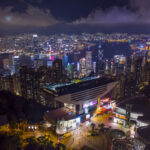
The terminal is Hong Kong Kai Tak Cruise Terminal, at 33 Shing Fung Road, Kowloon. Transport to the pier is not included, so make your own arrangements and leave enough time for traffic, check-in, and security procedures. The address is worth saving before travel, particularly if you are arriving from another part of Hong Kong.
Complete Royal Caribbean’s online check-in at least three days before departure. The guidance also recommends using the Royal Caribbean app and completing online check-in at least 14 days before sailing. If you have not completed the process by the three-day deadline, you must arrive at the pier at least two hours before the listed departure. In all cases, you must check in and board at least 90 minutes before sailing or you may not be allowed to leave.
All passengers need valid travel documents, and passports must be valid for at least six months through the end of the cruise. Bring a photocopy of your passport, too. The relevant documents depend on your nationality and route, and you are responsible for arranging any required visas. Do not assume a Hong Kong identity card or other permit is sufficient for every itinerary.
Each stateroom must have at least one passenger aged 18 or older. Children and infants must be included in the passenger count. Children aged six months or younger at the start of a cruise are not accepted; some cruises also restrict children aged 12 months or younger, so check the rule for your exact sailing. Royal Caribbean does not accept anyone who will be 24 weeks pregnant by the beginning of the cruise.
Travel insurance is strongly recommended, particularly because cancellations for medical reasons can disrupt plans. Smoking is allowed only in designated open-deck areas and on stateroom or suite balconies. Alcohol service, casino entry, and monetary games of chance are limited to people aged 18 or older.
Longer sailings for ports, not just ship time
The Weekend Sampler is only one of the available formats. Longer options from Hong Kong include five- and six-night routes with calls such as Ishigaki, Okinawa (Naha), Taipei (Keelung), and Hue or Danang (Chan May). Some itineraries run nine or ten nights and include Japanese ports such as Fukuoka, Nagasaki, Kagoshima, Kumamoto, Osaka, and Yokohama, as well as Busan.
These longer sailings change the value calculation. You pay more, but you also have multiple days aboard and scheduled destinations, making the ship a way to connect several places in one trip. The ports and cabin categories vary by departure, and some listed routes end in a different city from where they start. For example, certain sailings finish at Yokohama or Shanghai rather than returning to Hong Kong.
That difference matters for flights, hotels, and onward transport. Read the exact embarkation and disembarkation terminals for your selected date. Some special departures have different start and end ports, and the cruise line reserves the right to change ports, itineraries, prices, or programmes without notice. The route name alone is not enough to plan your arrival and departure.
Prices also vary considerably by route and room. In the listed options, longer itineraries range from lower-priced interior rooms to more expensive balcony rooms and suites. Compare the fare per night, the ports included, and the cost of getting home from the final terminal. A cheaper sailing that ends far from your planned destination may not be the cheapest trip overall.
Who should book this Spectrum sailing?
I’d choose the Weekend Sampler if you want a short, convenient taste of a large cruise ship and are happy to spend the full middle day aboard. It suits first-time cruisers who want to test whether ship life appeals, families attracted by the ship’s unusual features, and Hong Kong residents looking for a short break without arranging hotels in another destination.
It is less suitable if you want a quiet, small-ship atmosphere, a port visit, or a cruise where the fare covers every onboard choice. The room assignment is not fully customizable, and the standard interior cabin is a practical rather than spacious choice. Seasickness is another possible drawback, so think about your own sensitivity before booking.
For the strongest value, price the full trip rather than the cabin alone. Add gratuities, transport, and any paid extras, then decide whether one full sea day is enough for you. If your answer is yes, the Weekend Sampler offers a straightforward way to experience Spectrum of the Seas. If you want to wake up in Japan, Taiwan, or another destination, choose one of the longer routes and check carefully where it ends.
Spectrum of the Seas Cruise by Royal Caribbean International from Hong Kong
“Spectrum of the Seas is amazing! One price plus service fee, you can eat and play as much as you want! It's truly amazing! Open sea, unlimited 360°…”
FAQ
What is included in the Weekend Sampler?
The listed package includes two nights in an interior stateroom, port charges, and meals at complimentary venues. These include the Main Dining Room, Windjammer Cafe, Noodle Bar, The Cafe @ TWO70, Sorrento’s, and Dog House.
Where does the cruise depart from?
The cruise departs from Hong Kong Kai Tak Cruise Terminal, at 33 Shing Fung Road, Kowloon.
What is the usual Weekend Sampler schedule?
The standard schedule departs Hong Kong at 5:00 pm on Day 1, spends Day 2 at sea, and returns to Hong Kong at 6:30 am on Day 3. The November 20 sailing is listed with different times.
How early do I need to board?
You must check in and board at least 90 minutes before the listed departure time. If you have not completed online check-in at least three days before sailing, you must arrive at the pier at least two hours before departure.
What travel documents do I need?
All passengers need valid travel documents, including a passport valid for at least six months through the end of the cruise. Bring a passport photocopy and any visa required for your route.
Are gratuities included in the fare?
No. The stated gratuity for interior, ocean-view, and balcony staterooms is US$18.50 per person per night. The rate for Royal Suite Class is US$21 per person per night.
Is transport to the cruise terminal included?
No. Transportation to the pier is not included, so you need to arrange your own way to Kai Tak Cruise Terminal.
Can children and infants board?
Children and infants must be included in the passenger count. Children aged six months or younger at the start of the cruise are not accepted, and some cruises may also restrict children aged 12 months or younger.
What is the SeaPass account?
SeaPass is the cashless account used for onboard purchases and services. The card may be provided at the pier or placed in your cabin.
The Best Of Hong Kong!

More Boat Tours & Cruises in Hong Kong

More Tours in Hong Kong
- The Peak Tram Fast-Track Combo Tickets: Peak Tram, Sky Terrace 428, Madame Tussauds HK
★ 4.5 · 49,191 reviews



More Tour Reviews in Hong Kong
- The Peak Tram Fast-Track Combo Tickets: Peak Tram, Sky Terrace 428, Madame Tussauds HK
★ 4.5 · 49,191 reviews