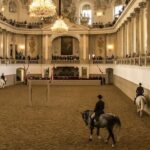
The Spanish Riding School’s morning training puts you inside a working tradition: Lipizzaner horses and their trainers practice in Vienna’s grand Winter Riding Academy, with classical music filling the hall. I like the contrast between the ornate Baroque setting and the practical work of strengthening and refining each horse’s movement. I also like that you can watch real training rather than a polished show.
Keep your expectations measured. This is not a full performance, and the routine changes from day to day. You may see horses walking and trotting through exercises without the famous jumps, so this is best for anyone curious about the training itself, not someone counting on a string of spectacular tricks.
- Key points to know before you book
- Inside Vienna’s Winter Riding Academy
- What the training session actually shows
- The seat, the view, and the hall
- How to time your visit
- Is the ticket good value?
- Who will enjoy this most?
- Should you book the Spanish Riding School training session?
- FAQ
- Is this a full Spanish Riding School performance?
- Which training times are listed?
- What is included in the ticket?
- Are the levade, courbette, and capriole guaranteed?
- How early should I arrive?
- Can I take photos or videos inside?
- Can children attend?
- Is the venue wheelchair-accessible?
- Can I cancel for a refund?
- The Best Of Vienna!
- More Horses in Vienna
- More Tours in Vienna
- More Tour Reviews in Vienna
- Not for you? Here's more nearby things to do in Vienna we have reviewed
Key points to know before you book
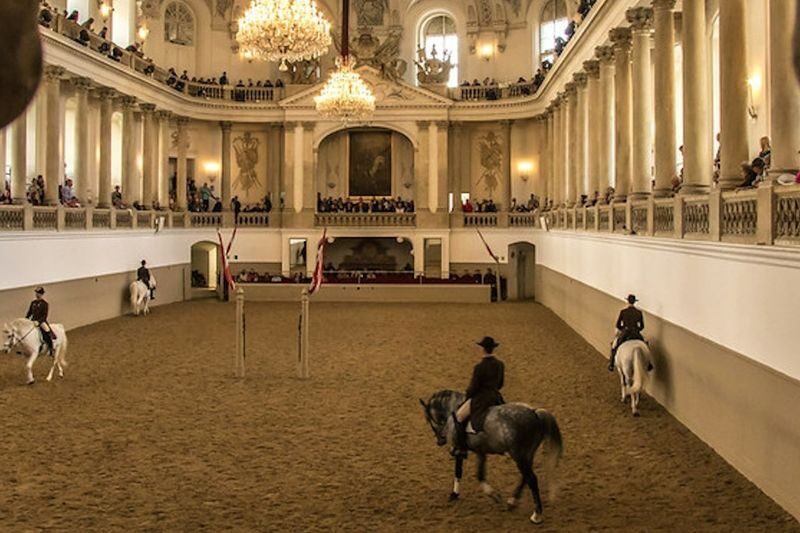
- The setting is part of the experience: Training takes place in the Baroque Winter Riding Academy, accompanied by classical Viennese music.
- You’re watching practice, not a complete show: Exercises can include movement refinement, muscle strengthening, and relaxation routines.
- The big jumps are not guaranteed: Levade, courbette, and capriole may be practiced, but not every day.
- A second-category gallery seat is included: The ticket is not a promise of a premium view, so arrive early and follow staff directions to your seating area.
- Plan for the practical rules: Arrive 30 minutes before your session, and leave cameras, video recording, dogs, and large luggage plans out of the equation.
👉 See our pick of the 11 Best Shopping Tours In Vienna
Inside Vienna’s Winter Riding Academy
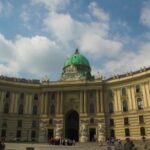
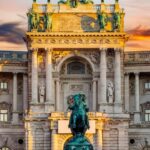
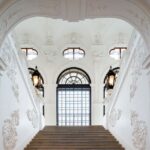
The school’s training session is held at Michaelerplatz 1, inside the Spanish Riding School. Its setting is no mere backdrop: the Winter Riding Academy is a grand Baroque hall, and watching the horses work beneath its architecture gives even a quiet exercise a sense of occasion.
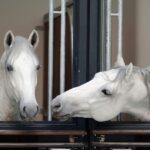
The Lipizzaners have a long connection to the Habsburg court. Once bred as royal and military mounts, they became symbols of status across Europe. Here, that past meets the present in a practical way: the horses are carefully groomed and trained, but the session is not staged as a complete theatrical program.
Classical Viennese music accompanies the exercises. It helps create the ceremonial feel people associate with the school, while the horses and trainers remain focused on the work. You are watching an institution that has carried on its tradition for roughly 450 years, but the appeal is also in seeing the daily steps behind the famous image.
The session is a good fit if you enjoy watching skill develop through repetition. It is less suited to anyone who needs constant action. Some exercises may look modest from the gallery, especially if you expect every horse to perform the high-school movements for which the school is known.
You can also read our reviews of more tours and experiences in Vienna
What the training session actually shows
This is a structured training session in haute école dressage, the advanced style of classical riding associated with the school. Horses at different stages of experience may work through routines, with exercises aimed at refining movement, building strength, and helping them relax.
That variety matters. You are not necessarily watching a single horse complete a neat sequence from start to finish. The session can include horses walking or trotting, pausing, and repeating particular movements as trainers work with them. The exact routine depends on the program, so there is no fixed list of tricks to expect.
The famous school jumps, including levade, courbette, and capriole, are a possible bonus rather than the main event. They are not practiced every day. If you see them, they can be striking; if you do not, that does not mean the session has gone wrong. The point is to see the horses’ training, not to treat each morning as a guaranteed highlight reel.
This distinction is the key to enjoying your ticket. If you approach the session as a glimpse into the slow, precise work behind a formal performance, the quieter parts have purpose. If you book mainly for dramatic jumps, you may leave disappointed.
The seat, the view, and the hall
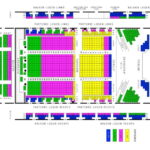
The ticket includes one second-category gallery seat. That gives you a place in the academy, but it is worth setting your expectations accordingly: this is not a premium floor-level ticket, and the view can depend on where you are seated. A recent account described poor sightlines and having to stand for much of the session, so do not assume every gallery position offers an ideal view.
Arrive early and look for directions to the entrance for your seating section. One useful practical tip is to show your mobile QR voucher at the counter in good time, as it may need to be exchanged for a physical ticket. The venue has separate entrances depending on the seating area, so follow the signs rather than joining the first queue you see.
The hall itself earns much of the praise. It is clean and comfortable, and the architecture is a major part of what makes the visit memorable. Even if the horses spend much of the session trotting and repeating basic exercises, the grand room gives that work a sense of place you would not get from watching a routine in an ordinary arena.
Photography, video, and any other form of recording are strictly prohibited inside the attraction. This rule is easy to miss when you are eager to capture the horses, so put your phone away once you enter. Dogs are not allowed, and there is no luggage storage facility at the venue.
How to time your visit
The listed training times are 10:00 and 11:30. The school is open daily from 09:00 to 16:00, with last admission 30 minutes before closing, but your ticket is valid only for the date and time specified on it. Arrive at the meeting point 30 minutes before your session; late arrivals and no-shows are not refunded.
The address is Michaelerplatz 1, 1010 Vienna. The easiest public transport options are the U3 metro to Herrengasse, followed by a five-minute walk, or the U1 to Stephansplatz, about a seven-minute walk. Tram lines 1 and D stop at Burgring, around eight minutes away on foot.
Give yourself time to find the right entrance and collect or confirm your ticket. The venue can be busy during training sessions, which may mean longer waits than expected. If you are on a tight sightseeing schedule, avoid placing another timed activity immediately afterward.
The session is not wheelchair-accessible. Participants must be at least three years old. Children aged three to five can attend free if they do not need a separate seat; children aged 18 and older pay the adult rate. Reduced tickets are available for people aged 65 and older and students aged zero to 24 with a student ID.
Is the ticket good value?
The listed price starts at about $23.39, while the second-category package is also shown from US$21.29. Prices can vary, so check the amount and ticket details for your chosen date before paying. For a relatively modest entry price, you get access to one of Vienna’s best-known cultural institutions and a view of its horses at work in a remarkable historic hall.
Value depends on what you want from the hour. If architecture, classical horsemanship, and the school’s training methods interest you, the session offers a different experience from a standard palace or museum visit. It can also help you understand the effort behind the formal performances, where the polished movements are the result of years of training.
If you want a guaranteed sequence of high jumps and showpiece moves, this ticket is not the best value for you. The session can be quiet, and the routine is not fixed. A full performance ticket is the more suitable choice if your priority is seeing a complete program, though it is a separate experience and not included here.
There are only four posted ratings associated with this specific session, ranging from strong approval to sharp disappointment. The split makes sense: the hall and the chance to see the horses up close can be a real pleasure, while a low-action routine or an awkward gallery view can make the visit feel underwhelming. I would book for the setting and the training, not for guaranteed spectacle.
Who will enjoy this most?
This session suits horse lovers, fans of classical riding, and visitors who like seeing how a tradition works behind the scenes. It is also a sensible choice if you want a shorter cultural stop in central Vienna and are happy to spend time watching measured, repetitive practice.
Families can attend with children aged three and up, though the quiet pace may not hold every child’s attention. The free entry for children aged three to five applies only if they do not occupy their own seat. If your child needs a separate place, check the ticket options and pricing before booking.
I would skip it if you dislike sitting through practice, expect an energetic show, or need step-free access. There is also no way to guarantee which horses or movements you will see. The session is most rewarding when you treat it as a window into daily training, rather than a condensed version of the school’s full performance.
For a useful alternative, consider a full Lipizzaner performance ticket if the set show program matters more to you. The Spanish Riding School also offers a tour, which is a different way to focus on the institution and its setting. The training session remains the better pick if your curiosity is about the horses’ work in the arena.
Should you book the Spanish Riding School training session?
Book it if the Baroque academy and the working routines of Lipizzaner horses appeal to you more than a guaranteed show. The setting, music, and glimpse of training give the session real character, and the ticket is a relatively affordable way to see this celebrated institution from inside.
Pass if you are expecting a full performance, a succession of jumps, or a consistently clear view from every seat. Arrive early, keep your camera away, and think of the session as practice in a spectacular room. That expectation is the difference between appreciating the quiet work and wondering when the big tricks will start.
Spanish Riding School Horse Training Session in Vienna
“nice experience to watch in Vienna. get to understand more about the horses and training section for the show.”
FAQ
Is this a full Spanish Riding School performance?
No. This is a structured training session, not a full or complete performance program. The horses practice routines that can vary by session.
Which training times are listed?
The listed session times are 10:00 and 11:30. Your voucher is valid only for the date and time shown on it.
What is included in the ticket?
The package includes admission to a training session and one second-category gallery seat. English-speaking and German-speaking staff are available.
Are the levade, courbette, and capriole guaranteed?
No. These school jumps are not practiced every day, so you may not see them during your session.
How early should I arrive?
Arrive at the Spanish Riding School 30 minutes before the scheduled session. Late arrivals and no-shows are not refunded.
Can I take photos or videos inside?
No. Photography, videography, and any form of recording are strictly prohibited inside the attraction.
Can children attend?
Participants must be aged three or older. Children aged three to five can attend free if they do not occupy a separate seat. Children aged 18 and older pay the adult rate.
Is the venue wheelchair-accessible?
No. This activity is not wheelchair-accessible.
Can I cancel for a refund?
A full refund is available if you cancel at least 48 hours before the activity date, using the destination’s local time.