Rottnest Island is a spectacular place to leave the ground behind: from up to 15,000 feet, you’ll see the island’s coast spread beneath you before a beach landing brings you back to earth. The jump pairs a sharp burst of adrenaline with a rare aerial view of this much-loved Western Australian escape.
I like two things in particular: the choice of jump height, which lets you decide how much freefall time you want, and the island setting, where the landing can be on a pristine beach rather than a plain airfield. The tandem format also means a trained jumpmaster handles the equipment and guides you through the process.
The main consideration is the weather. Wind or other conditions can delay or cancel a jump, even after you have made the trip to the island, so leave room in your plans and don’t treat this as a tightly timed add-on.
- Pick your altitude: 10,000 feet brings about 30 seconds of freefall; 15,000 feet gives you up to 66 seconds.
- Watch for a beach landing: Bickley Bay, Thomson Bay and Salmon Bay are possible landing areas, but weather decides where you touch down.
- Budget for the ferry: A skydive-only ticket does not include island transport. Bundles are offered from Perth, Fremantle and Hillarys.
- Expect a proper wait: Check-in, preparation and weather can stretch the day. Set aside at least two hours for the activity itself.
- Check the weight rules early: The maximum is 110 kg, and anyone over 95 kg must be assessed by the chief instructor before jumping.
- Plan for keepsakes: Photos and video are extra, and can be purchased at check-in.
- Rottnest Island from 15,000 feet
- Check-in, briefing and the wait
- The aircraft ride and the moment you leave it
- Under canopy and down to the beach
- Choosing between the jump and ferry packages
- Weather, safety and who should go
- Is the extra altitude worth paying for?
- Should you book this Rottnest Island jump?
- FAQ
- Where does the activity meet?
- How do I get to the airport from the ferry arrivals jetty?
- How high can I jump from?
- How long is the freefall?
- How long is the parachute ride?
- Is a beach landing guaranteed?
- What is the minimum age?
- What is the weight limit?
- Are ferry tickets and photos included?
- The Best Of Perth!
- More Tours in Perth
- More Tour Reviews in Perth
- Not for you? Here's more nearby things to do in Perth we have reviewed
Rottnest Island from 15,000 feet
 1 / 5
 2 / 5
 3 / 5
 4 / 5
 5 / 5
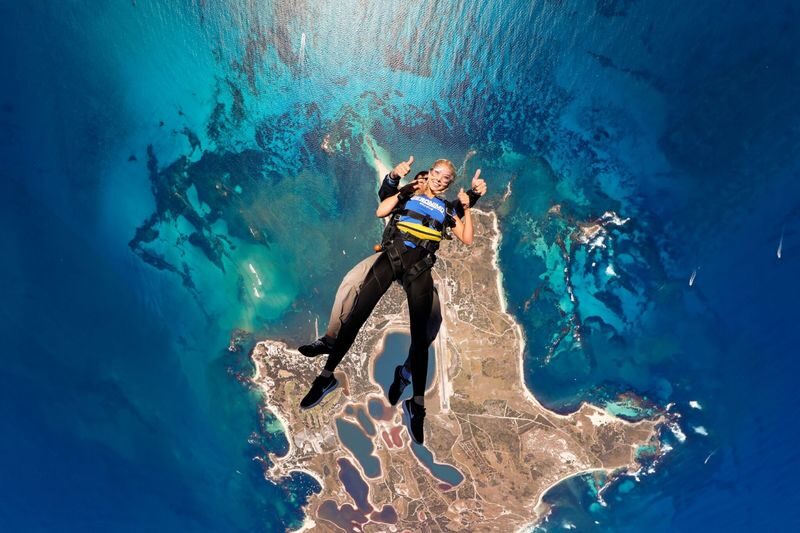
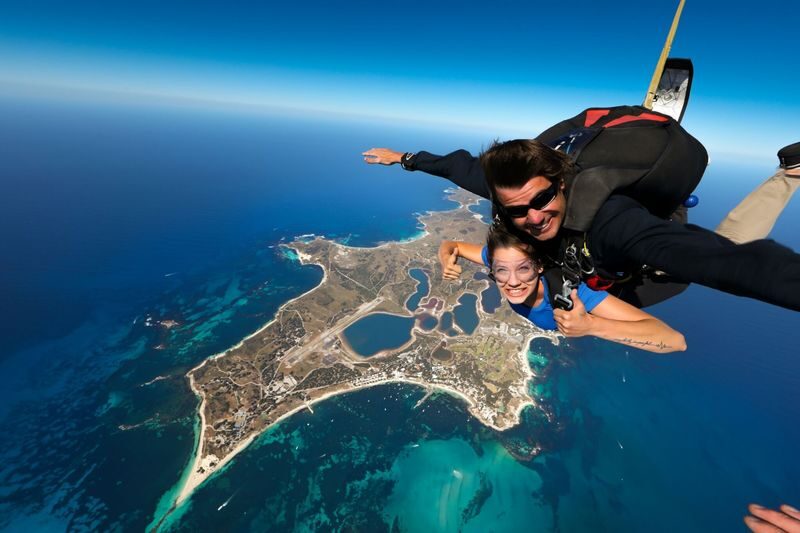
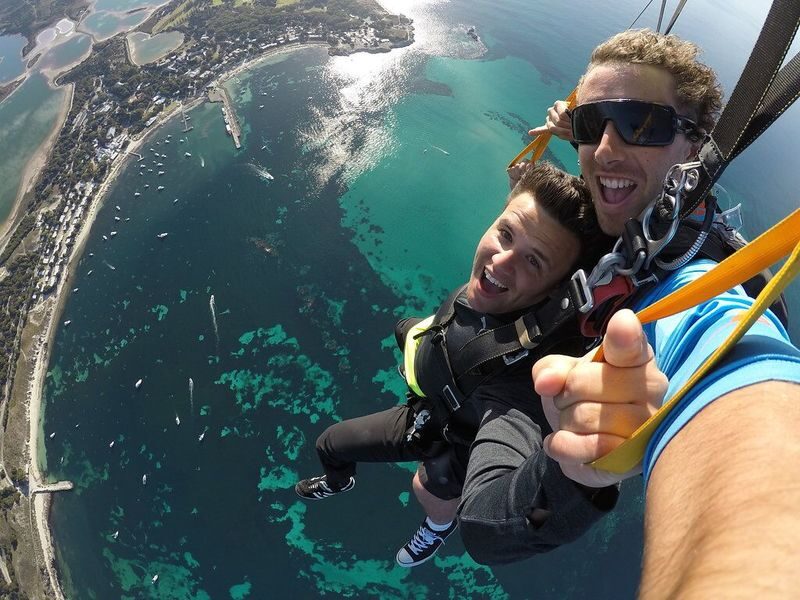
The appeal here is not simply the fall. Rottnest Island is a small, low-lying island ringed by beaches and clear coastal water, and the height gives you a striking sense of its shape and scale. From the plane, you get a view that is hard to match from a bike path or ferry deck.
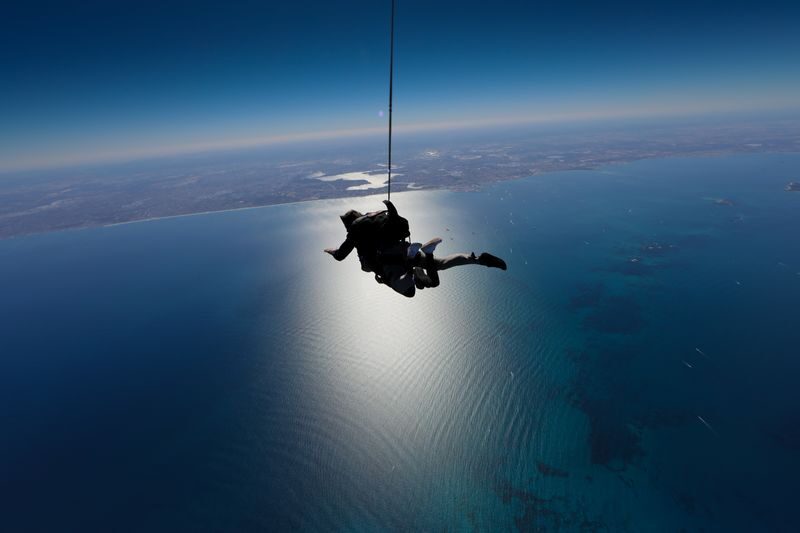
You can choose a tandem jump from 10,000 or 15,000 feet. The lower option includes about 30 seconds of freefall, while the higher jump can provide up to 66 seconds. Once the parachute opens, the ride lasts about five minutes, giving you more time to take in the island before landing.
The higher option costs more, but it also means longer in freefall. If this is your one chance to try a tandem jump, that extra time may feel worth the price. If you are more interested in the view and the overall adventure than in extending the freefall, 10,000 feet is still a substantial jump.

👉 See our pick of the 6 Best Historical Tours In Perth
Check-in, briefing and the wait
The meeting point is the Skydive Geronimo terminal building at Rottnest Island Airport, on Brand Way. From the ferry arrivals jetty, it is about a 15-minute walk or an eight-minute ride by bike. That makes it possible to arrange your own transport on the island, though you will want to arrive on time.
At check-in, you’ll sign a disclaimer and an Australian Parachute Federation membership form. Bring valid identification. The stated requirement for a passport is six months of validity. Staff provide the safety gear and instruction, and the jumpmaster stays with you throughout the tandem jump.
A short instructional video is part of the preparation, and you’ll be shown what to do before boarding. This is not a course in independent parachuting; your jumpmaster manages the equipment and leads the jump. That division of responsibility can make the activity feel more approachable if you’re nervous, but you still need to be comfortable taking part in a physically demanding, high-adrenaline activity.
Do not build a packed schedule around your booked time. One participant reported waiting nearly two hours past the scheduled slot before suiting up, and weather can change the order of flights or pause operations. Allow at least two hours for the activity, and more if your ferry or other plans leave little flexibility.
You can also read our reviews of more tours and experiences in Perth.


The aircraft ride and the moment you leave it
Once your group is ready, you board the aircraft and climb to your chosen altitude. The central moment is quick: the door opens, you move into position with your jumpmaster, and then you are in the air. The 10,000-foot option offers around 30 seconds of freefall; from 15,000 feet, it can last up to 66 seconds.
Freefall is loud and cold, according to participants, so light, comfortable clothing is sensible but a warm layer can help. Wear running shoes, and choose clothing that stays secure and allows you to move. Dri-fit material is recommended. Follow the instructor’s directions rather than worrying about memorizing every detail; the briefing is there to prepare you for the key steps.
The jumpmasters are a central part of the experience. People have described instructors such as Tom, Stefan and Stephen as friendly and reassuring, but you cannot request or count on a specific person. The important point is that a professional tandem jumpmaster is assigned to guide you, and the provider says the team is highly trained.
Under canopy and down to the beach
After freefall, the parachute opens and the pace changes. You have roughly five minutes under canopy, a slower stretch to look down at Rottnest’s coast and get your bearings. For many people, this is the moment when the island view becomes more than a quick blur.
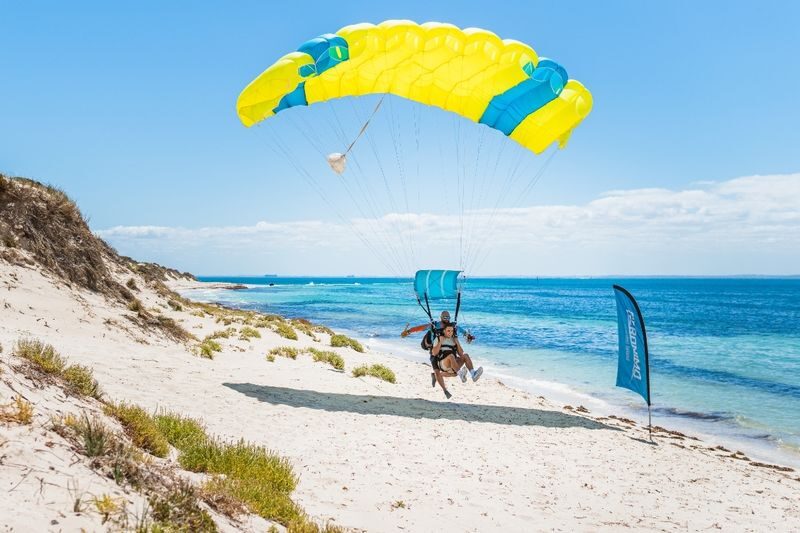
A beach landing is part of the attraction, but it is not guaranteed. Possible landing sites include Bickley Bay Beach, Thomson Bay near Army Jetty and Salmon Bay. The team may use a different area if conditions make that the safer choice, so think of the beach landing as a possibility rather than a promise.
The landing areas are not all directly beside the airport. Bickley Bay, for example, is reached by a 100-metre beach track. After the jump, the team returns participants to the airport, which is useful if you have left a bike there. Once you are down, the experience includes a free beachside drink to celebrate.
Choosing between the jump and ferry packages
The listed package prices vary by jump height and departure point. The options start at US$350.35 for a 10,000-foot jump without ferry transport and rise to US$420.59 for 15,000 feet without a ferry. Bundles that include a ferry start at US$414.25 from Fremantle, US$417.79 from Hillarys and US$445.55 from Perth for the 10,000-foot jump.
For a 15,000-foot jump with ferry transport, listed prices start at US$484.59 from Fremantle, US$488.10 from Hillarys and US$515.89 from Perth. The general experience price is also displayed from $385.39, so compare the exact package and currency shown at checkout before you commit. What you pay depends on both the departure point and altitude.
The ferry bundle is convenient if you want one purchase to cover the crossing and jump. It can also reduce the chance of overlooking the transport cost when planning your day. If you have already arranged your ferry, or want to choose a different crossing, the skydive-only option may suit you better. Ferry tickets are not included in that option.
Photos and video are not included in the base price. You can ask about the add-on at the counter when you check in. If having a record matters to you, include that extra cost in your budget rather than assuming it is part of the package.
Weather, safety and who should go
Weather is the biggest practical uncertainty. Wind and other conditions can stop flights, and the landing site can change during the day. The operator may cancel for extreme weather; in that case, you can reschedule or request a full refund. A cancellation at the island can still be a frustrating use of your day, especially if you have travelled there for this activity, so avoid scheduling anything important immediately afterward.
The terms offer a full refund if you cancel at least 24 hours before the activity date, using local destination time. Late arrivals and no-shows are not refundable. Check the current terms for your selected package, especially if you have bought ferry transport separately or as part of a bundle.
Participants must be at least 16. Anyone aged 16 or 17 must be accompanied by an adult. The maximum weight is 110 kg. If you weigh more than 95 kg, email the operator before booking with your exact weight in clothes and shoes, height and a full-length photo. You may crop your face from the photo if you prefer. The chief instructor will review the information before confirming whether you can jump.
This activity is not recommended for people with impaired mobility or certain medical conditions, including high blood pressure and epilepsy. If you have a health concern, check with the operator before booking rather than relying on a last-minute decision at check-in.


Is the extra altitude worth paying for?
The 15,000-foot option gives you a longer freefall, and it is the natural choice if the sensation of falling is your main reason for coming. The 10,000-foot jump costs less and still includes the flight, tandem jump and parachute ride. You will still see the island from above, although for less time in freefall.
The best value depends on what matters most to you. If you want to make the most of a once-in-a-lifetime attempt and can afford the difference, the higher jump adds meaningful time to the central part of the activity. If you are unsure how you will react, the lower altitude is a sensible way to keep the cost down without giving up the essential experience.
Should you book this Rottnest Island jump?
Book it if a tandem parachute jump is high on your list and you can give the day some breathing room. The island views, professional guidance and chance of a beach landing make this a distinctive way to see Rottnest, not just an adrenaline stop.
Think twice if you have a fixed onward schedule, are uncomfortable with weather-related changes or are counting on a specific beach landing. Choose your altitude, check transport costs, ask about photo and video pricing, and leave space in your itinerary. That bit of planning makes it easier to enjoy the big moment instead of watching the clock.
Rottnest Island Tandem Skydive Experience
“Incredible experience, truly unreal and amazing. if you're not afraid of height you must do it”
FAQ
Where does the activity meet?
Check in at the Skydive Geronimo terminal building at Rottnest Island Airport, Brand Way, Rottnest Island WA 6161.
How do I get to the airport from the ferry arrivals jetty?
It is about a 15-minute walk or an eight-minute bike ride from the ferry arrivals jetty.
How high can I jump from?
You can choose a tandem jump from 10,000 or 15,000 feet.
How long is the freefall?
The 10,000-foot jump has about 30 seconds of freefall. The 15,000-foot jump can have up to 66 seconds.
How long is the parachute ride?
The parachute ride lasts about five minutes.
Is a beach landing guaranteed?
No. Beach landings depend on weather. The team may use another landing area for safety.
What is the minimum age?
Participants must be at least 16. Those aged 16 or 17 must be accompanied by an adult.
What is the weight limit?
The maximum weight is 110 kg. Participants over 95 kg need a safety assessment by the chief instructor before jumping.
Are ferry tickets and photos included?
Ferry tickets are not included with the skydive-only package, though packages with ferry transport are available. Photos and video are extra.