The Roluos temples offer a quieter look at Cambodia’s early Angkor period, about 13 kilometers east of Siem Reap. You ride between Bakong, Lolei, and Preah Ko by private tuk-tuk, with time to explore each stop at your own pace. I like Bakong’s climbable five-level pyramid and the chance to see three early temples without the usual Angkor circuit crowds.
I also like the open-air ride through rural surroundings, where the journey is part of the outing rather than just a transfer. The main catch: this is primarily transport, not a guided history tour, and the optional Kompong Phluk add-on can bring extra costs that need clarifying before you set off.
- Key points to know before you go
- Why the Roluos group makes a good half-day
- Starting the morning in a tuk-tuk
- Bakong: the temple that rewards a climb
- Lolei: four towers beside an old reservoir
- Preah Ko: a quieter cluster under the trees
- How long the temple visit takes
- Adding Kompong Phluk: clarify the boat costs first
- Is the price good value?
- Who should book this tuk-tuk outing?
- FAQ
- What temples are included in the tour?
- What time is hotel pickup?
- Is an Angkor Pass included?
- Is the tour guided?
- How long do the three temples take to visit?
- Does the Kompong Phluk option include all boat fees?
- Can I cancel for a full refund?
- The Best Of Siem Reap!
- More Private Tours in Siem Reap
- More Tours in Siem Reap
- More Tour Reviews in Siem Reap
- Not for you? Here's more nearby things to do in Siem Reap we have reviewed
Key points to know before you go
 1 / 3
 2 / 3
 3 / 3
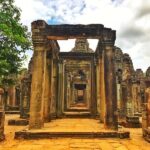
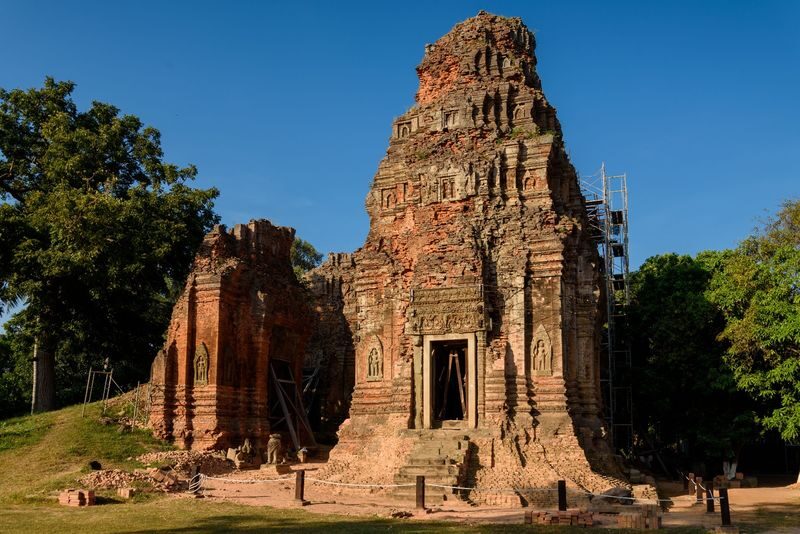
- Bakong is the architectural highlight: Its five-tier sandstone pyramid is the most imposing stop and gives you a clear sense of the Roluos group’s scale.
- The three temples feel different: Bakong is the grand centerpiece, Lolei has four weathered towers by a reservoir, and Preah Ko is a smaller cluster among greenery.
- You control the temple pace: The driver waits while you explore, within the tour’s time frame. Many people finish the three temples in roughly two to three hours.
- The tuk-tuk ride adds rural views: Expect an open-air trip beyond town, with dust possible on the red-clay roads.
- Kompong Phluk is an optional, separate-cost extension: Confirm exactly what is included, and what you will pay locally, before agreeing to the boat portion.
- Go for the temples, not a lecture: Drivers may offer useful help, but a dedicated guide is not guaranteed.
👉 See our pick of the 25 Best Guided Tours In Siem Reap
Why the Roluos group makes a good half-day
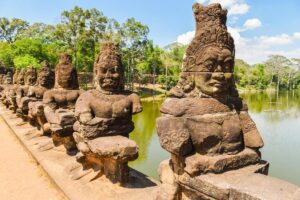
Roluos is not a miniature version of Angkor Wat. It is an earlier chapter. The temples were built in the ninth century in Hariharalaya, an ancient city about 13 kilometers east of Siem Reap, and the group is among the earliest Angkor-period sites open to visitors. If you have already seen the major Angkor temples, this outing gives you a change of scale and setting.
The appeal is partly the breathing room. These temples are away from the main Angkor circuits, so you can often walk around without the steady stream of people found at the best-known sites. That quieter feel makes small details easier to notice, though it also means you should arrive with a little context if you want to understand what you are seeing.
The tour is private, so you are not tied to a group’s pace. You can take more time at a temple that interests you, or keep the visit brisk if you have a short day. Just agree on the overall timing with your driver. Private transport gives you flexibility; it does not automatically give you an expert guide.
You can also read our reviews of more private tours in Siem Reap


Starting the morning in a tuk-tuk
Hotel pickup is listed for 8:00am. Arrive in the lobby five minutes early, as requested, and expect a stop at the ticket office to buy your Angkor Pass before heading out. The pass is not described as part of the tour price, so budget for it separately and check the current ticket requirements before your visit.
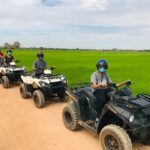
The tuk-tuk ride is one of the outing’s pleasures. You are out in the open, with a breeze and a closer view of local life than you get from a car window. It is also a practical way to cover the distance between town and the temples without arranging transport yourself.
There is a trade-off. The road can be dusty, and some stretches have heavy traffic, including large trucks. A face covering can help if the road is dry. The vehicle may also feel less comfortable than an air-conditioned car, especially in heat or rain. One useful detail from past outings: drivers have provided cold bottled water, and at least one tuk-tuk was equipped with rain protection. Treat those as possible comforts, not guaranteed inclusions.
Drivers have included Veansa and Mr Lik, both described as helpful and able to communicate in English. You cannot count on getting a particular driver, and English ability may vary. Some drivers share basic information or help with practical requests, but this is best viewed as a private ride with temple stops, not a formal guided tour.
Bakong: the temple that rewards a climb
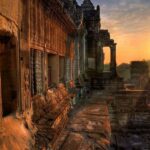
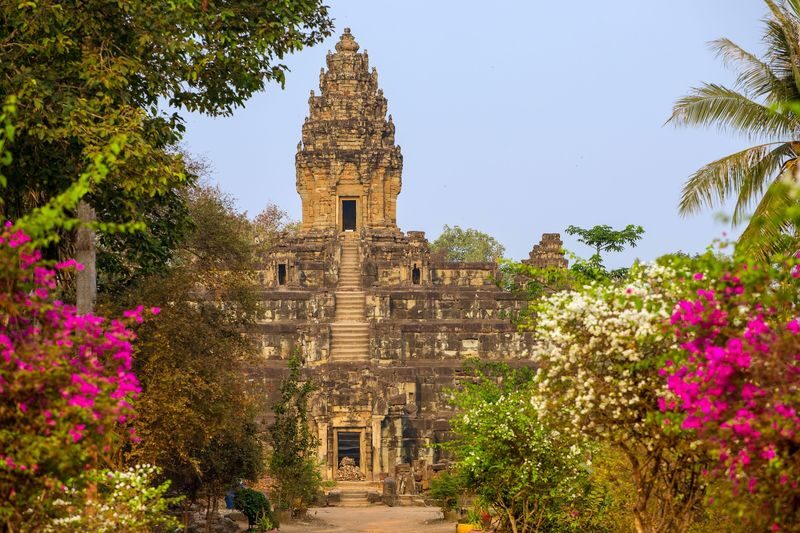
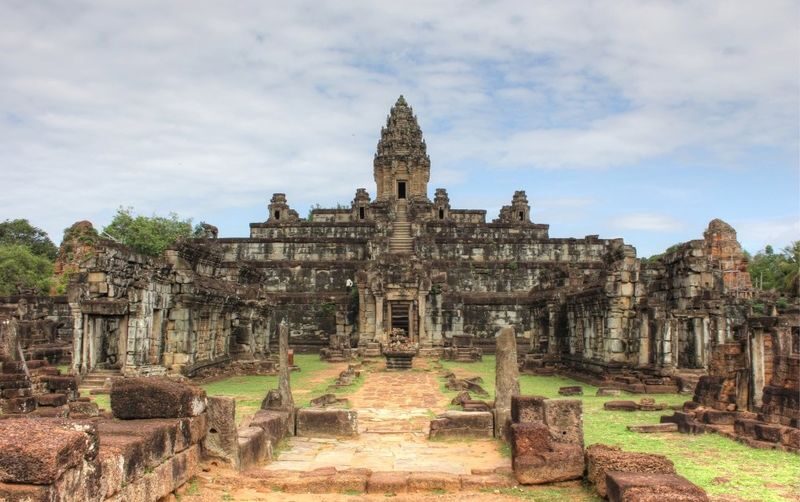
Bakong is the largest and most dramatic stop in the Roluos group. Its five-level stepped pyramid rises above the surrounding temple grounds, with sandstone construction and brick towers around it. From ground level, the layered shape is easy to read. If you climb to the upper levels, you get a better sense of the temple’s height and views across the site.
Give Bakong the most time if you are choosing where to linger. It is the temple that makes the strongest visual impression, and the climb gives the visit a physical element that the other stops do not match. Take care on the steps and allow time to look around rather than rushing straight back down.
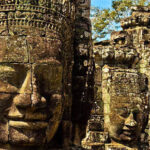
For all its scale, Bakong is still a ruin, not a polished monument. Expect worn stone and weathered surfaces. That is part of the point: you are looking at an early religious complex shaped by centuries of exposure, not a newly restored showpiece.
Lolei: four towers beside an old reservoir
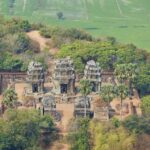
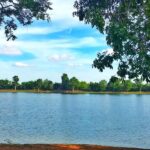
Lolei is a group of four crumbling towers associated with the Hindu god Shiva. They stand beside a man-made reservoir, a reminder that water management was central to life in this region. The setting gives the stop a different feel from Bakong’s high pyramid.
The towers are smaller and more fragile, and restoration work has affected what you can see at times. Scaffolding or blocked areas may limit close views, so do not expect every carving or face of the structure to be accessible. Even when parts are under repair, the visit can help you see how conservation work protects a site that would otherwise keep deteriorating.
Some visitors spend only a short time here. That is reasonable if the towers are partly obscured, but look closely at the surviving carvings and brickwork before moving on. The temple’s modest scale is a useful contrast to Bakong.
Preah Ko: a quieter cluster under the trees
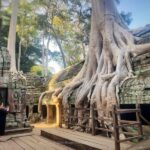
Preah Ko is the oldest of the three temples in this itinerary. Its remaining structures form a cluster of ruins framed by greenery, giving it a more enclosed and intimate character than Bakong. The trees and vegetation soften the site, though they can also make the ruins feel less imposing at first glance.
The temple’s age is part of its interest. Much of the damage comes from time and natural wear, and some areas have been undergoing restoration. If you are curious about how conservation works, you may see evidence of that work up close. If you want a large, intact structure, this stop may feel less rewarding than Bakong.
A practical approach is to visit the smaller temples first, then save Bakong for last. That order builds toward the most substantial structure. However, the driver may follow a different route, so ask at pickup if the sequence matters to you.





How long the temple visit takes
The listed plan is a daytime outing with hotel pickup, a stop for Angkor passes, visits to all three temples, a lunch break at your own expense, and a return to your accommodation. The temples themselves can take about two to three hours if you keep a steady pace. The exact length depends on how long you explore and whether you add the floating village.
This flexibility is useful if you are using a multi-day Angkor Pass and have a spare morning or half-day. It can also work well near the end of a Siem Reap stay, after you have already seen the main Angkor sites. If you have very limited time, the Roluos temples may not be your first priority, since the structures are smaller and farther from the central circuit.
Use the time at each stop deliberately. Ask your driver how long the full outing is expected to take, and agree on a return time before you wander off. The tour is relaxed, but the driver still has a schedule to manage.
Adding Kompong Phluk: clarify the boat costs first
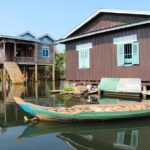
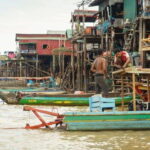
You can choose a package that adds Kompong Phluk, a floating village on Tonle Sap, after the temple visit. The idea is appealing: after a morning among ancient ruins, you see a very different side of life in the region. The village stop may involve walking around and meeting local residents, and a boat ride may be available.
The key word is may. The package price does not settle every detail of the village visit. Extra fees can apply locally, and boat arrangements or costs may be confusing if they have not been explained in advance. Some visitors have felt pressured by add-on purchases or donations during the boat trip. You do not need to buy snacks, books, pencils, or other goods simply because someone asks.
Before you choose this option, ask the operator or driver what the package includes, what must be paid on site, whether the boat is optional, and what payment methods are accepted. Carry enough cash for confirmed expenses, but do not assume that every suggested purchase is part of the tour. If the details remain vague, book the temple-only version and decide separately whether to visit Kompong Phluk.
The extra stop can make a longer day, but it is not automatically better value. If the village is a priority, a dedicated floating-village tour may give you a clearer schedule and a more explicit breakdown of costs.
Is the price good value?
The tour is advertised from $16.10, while the package options are listed from US$14 for the Roluos temples and US$15 for the temples plus Kompong Phluk. These are starting prices, so check the amount shown for your date and package before booking. The apparent low price is for private tuk-tuk transport and stops, not necessarily every expense associated with the day.
The main costs to check are your Angkor Pass, lunch, and any Kompong Phluk or boat fees. Once you include those, the value depends on what you want. For a solo traveler or couple who would otherwise need to hire transport, a private tuk-tuk can be a convenient and reasonably priced way to reach three outlying temples. The ability to set your own pace adds value if you dislike being hurried.
If your priority is detailed explanations, factor in the cost of arranging a guide separately. The driver may be friendly and helpful, but a few practical comments are not the same as a guided account of the temples’ history and art. This distinction matters: book for transport and independence, not for a guaranteed educational tour.
Who should book this tuk-tuk outing?
I would choose this tour if I had already visited the main Angkor sites and wanted a quieter half-day with a different feel. It suits independent visitors who are comfortable exploring ruins on their own, enjoy an open-air ride, and value a flexible schedule more than a scripted tour.
It is also a sensible option if you have an Angkor Pass with time left and want to make use of it. The temples are close enough to cover in a morning, and the relaxed pace leaves room to return to town for lunch or rest. Families and small groups may appreciate having a private vehicle, though the comfort of an open tuk-tuk depends on the heat, dust, and road conditions.
Skip it if you have only one day for Angkor and have not yet seen the major temples. Consider another arrangement if you need a fully guided visit, dislike dusty roads, or want a tightly planned floating-village excursion with all fees clearly stated in advance.
For most people, the best choice is the temple-only package. It delivers the strongest part of the outing without adding uncertainty. Choose Kompong Phluk only after confirming the extra costs and boat details in plain language.
Roluos Temples Private Tour by Tuk-Tuk
“It was a good experience to explore temples by Tuk Tuk. We could explore the temple on our own at our own time. No one rush you, as long as you uti…”
FAQ
What temples are included in the tour?
The temple-only tour visits Bakong, Lolei, and Preah Ko, all part of the Roluos group.
What time is hotel pickup?
The listed pickup time is 8:00am. You should be in the hotel lobby five minutes before your selected pickup time.
Is an Angkor Pass included?
The itinerary includes a stop at the ticket office to buy Angkor Passes. The pass is not listed as included in the tour price, so plan to purchase it separately.
Is the tour guided?
A dedicated guide is not guaranteed. The driver provides transport and may offer basic information, but you should arrange a separate guide if you want detailed explanations.
How long do the three temples take to visit?
The temple visits can take about two to three hours, depending on your pace. The full outing also includes pickup, the pass office, and the return journey.
Does the Kompong Phluk option include all boat fees?
The package information does not specify every local fee. Confirm any village admission or boat costs, and accepted payment methods, before setting off.
Can I cancel for a full refund?
A full refund is available if you cancel at least 24 hours before the activity date, using the destination’s local time.