
Rock Springs gives you a rare view below the waterline: in a clear kayak, you can watch the spring’s underwater world while you paddle through Emerald Cut. The route starts at Kings Landing, heads upstream, then lets the current carry you back.
I like two things here: the clear kayaks make the water itself part of the scenery, and the upstream paddle followed by a gentle return gives the outing a pleasing change of pace. You also get time to swim, with guides sharing what they know about the local plants and wildlife.
One practical wrinkle: the experience is described as two hours, but the schedule also lists a guided portion of two hours and 30 minutes. Confirm the timing for your chosen departure, and arrive early. The meeting point can be tricky to find, and late arrivals are not refunded.
- The best parts of the Rock Springs kayak tour
- Clear kayaks change what you notice
- From Kings Landing into Emerald Cut
- A float back, with time to swim
- How the guide shapes the trip
- What the price gets you
- Who should go, and what to bring
- Should you book the Rock Springs tour?
- FAQ
- How long is the Rock Springs kayak tour?
- Where does the tour meet?
- What departure times are available?
- How cold is the spring water?
- What is included in the price?
- What should I bring?
- Can children join the tour?
- Are there participant weight or accessibility restrictions?
- Can I cancel for a refund?
The best parts of the Rock Springs kayak tour
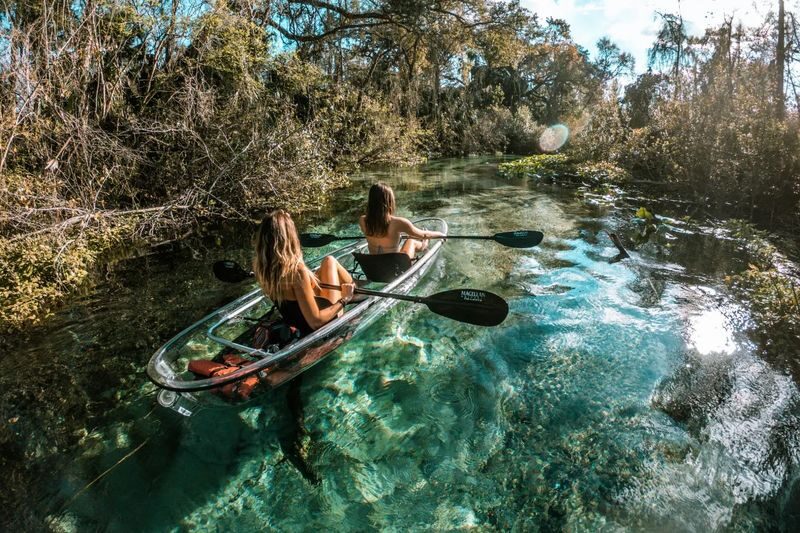
- See below the surface: Clear kayak hulls give you a view of the water and its underwater life as you paddle.
- Follow Emerald Cut upstream: The route begins at Kings Landing and heads upstream before the return float.
- Swim in spring water: The water is a refreshing 68 to 70°F year-round.
- Look for fish and turtles: Wildlife sightings are possible along the route, though nature does not work to a schedule.
- Get guidance on the water: An English-speaking guide leads the group, explains the local ecosystem, and adjusts the rowing distance to the group’s ability.
- Plan around the rules: Participants must be at least 3 years old and under 250 pounds. Children 6 and under must wear a life jacket while on the water.
Clear kayaks change what you notice
A regular kayak puts you close to the water. A clear one adds a window into it. At Rock Springs, that is more than a novelty: the water is one of the main reasons to come, and the transparent hull lets you keep an eye on what is below as well as the banks around you.
The water is described as crystal clear, with fish and turtles among the wildlife you may spot. Sightings are never guaranteed, so think of the clear kayak as a better vantage point, not an underwater aquarium. You are still moving through a natural habitat, where the animals may show themselves or stay out of view.
This tour also has a useful balance of activity and ease. You paddle upstream through Emerald Cut, then drift back, so the return is less effortful than the outward leg. The upstream section calls for some work, but the guide can distribute the rowing distance according to the group’s physical strength. That makes the outing more approachable if you are new to kayaking or unsure how long you can paddle.
Expect a nature trip rather than a fast-paced water sport. The appeal is the clear water, a steady route, and time to pause and take in the surroundings. If you want a long, strenuous workout or a guaranteed wildlife encounter, this may not be the right match.
From Kings Landing into Emerald Cut
The tour meets at Kings Landing in Apopka, a short drive from Orlando. You should plan your own way there: hotel pickup and drop-off are not included. Parking was straightforward for some visitors, but finding the entrance caused trouble for at least one person. Use the Kings Landing address, check your route before leaving, and give yourself time to get oriented.
Arrive 15 minutes before the departure you selected. This is especially important because latecomers and no-shows cannot get a refund. The guide is expected to meet the group at the location, but do not rely on a last-minute arrival to sort out where to go. The departure time is confirmed after booking, with listed options at 08:00, 09:00, 11:00, 12:00, 14:30, and 15:00. Available return times depend on the departure you choose.
Before setting out, expect a guide to give instructions and provide the safety equipment. The guide speaks English, and the safety briefing matters even if you have kayaked before. In particular, the group’s pace and rowing distance can be adjusted to suit different abilities, which helps make a shared trip work for people with varying levels of experience.
Then comes the upstream paddle through Emerald Cut. It is the more active part of the outing, and the guide’s pace-setting can help you avoid turning it into a race. Keep your attention on the water and the banks, rather than concentrating only on making progress. The clear kayak is at its most useful when you take time to look around and below.
The scenery is a central part of the experience. You may pass through clear water over soft sand, and the tour allows for breaks to take in the surroundings. One visitor described the sand as soft underfoot and the water as especially clear, details that point to why a stop can be as memorable as the paddling itself. Bring a phone or camera if you want pictures, but protect it around water.
A float back, with time to swim
After the upstream leg, the route turns into a gentler drift back. That change is a big part of the tour’s appeal. You have used your arms to get upstream, then can relax a little and watch the scenery move past without having to paddle at the same intensity.
The spring water stays around 68 to 70°F, so swimming is possible year-round, but the temperature is cool. If you are sensitive to cold, treat a swim as optional rather than a requirement. Bring swimwear and a towel, and have dry clothes available for afterward if that suits your plans.
Breaks are built into the outing, and the guide can share information about local flora, fauna, and conservation. That context gives the trip more substance than a simple paddle from one point to another. You are visiting a natural spring environment, and learning about its ecosystem helps you notice more than the surface view.
Keep expectations sensible around wildlife. Fish and turtles are among the animals you might see, but there is no guarantee of a particular sighting. The strongest promise is the chance to travel through clear spring water with a guide who can point out what is around you.
How the guide shapes the trip
The guide is not just there to lead the route. Clear instructions before departure and attention to the group’s ability can make a real difference, especially if you are new to kayaking. One guide named Jacob received particular praise for looking after the group and making the outing feel companionable. Guide assignments can vary, so do not assume Jacob will lead your departure.
A good guide also helps with the practical side of a shared tour: getting everyone started, explaining safety expectations, and keeping the group together. The tour is not private, so you will be sharing the experience with other participants. No group size is specified, which means it is best not to expect an intimate one-on-one outing.
The reviews are mostly positive, with a strong emphasis on the scenery, clear instructions, and attentive guiding. There is also a caution worth taking seriously: one person had difficulty finding the entrance and missed the guide. That is a preventable risk if you confirm the location in advance, arrive early, and follow the meeting instructions closely.
What the price gets you
The stated price starts at $135.99, while the Join-In Kayak Tour option is also shown from $118.29. Because the amounts differ, check the price for your selected package and date before paying. The tour includes an English-speaking guide and necessary safety equipment, but not meals, drinks, hotel transport, personal expenses, or tips.
Value depends on what you want from the outing. You are paying for guided access to a spring route, a clear kayak, safety gear, and a two-part journey that combines paddling with a float and swimming time. If clear water and a guided nature experience are high on your list, that is a more persuasive use of your budget than simply renting a kayak for an unsupervised paddle.
The value is less compelling if you are mainly looking for transportation from Orlando, a long swim, or a guaranteed wildlife encounter. You need to reach Kings Landing yourself, and the group follows a shared schedule. Factor in your own transport and any food or drinks you want to bring.
There is also a timing detail to settle before you book. The tour is advertised as two hours, while the itinerary gives a guided duration of two hours and 30 minutes. The return-time choices vary with your departure, so confirm the schedule for your chosen slot rather than planning another activity right up against the listed end time.
Who should go, and what to bring
This tour suits first-time kayakers, families with eligible children, and anyone who wants to experience Rock Springs from the water without doing all the planning alone. The guide’s ability to tailor the rowing distance to the group makes it less intimidating than a self-guided route. Still, you should be comfortable sitting in a kayak and doing some paddling upstream.
Children must be at least 3 years old and those aged 3 to 17 must be accompanied by a paying adult. Children 6 and under are legally required to wear a life jacket at all times on the water. Children weighing 0 to 30 pounds need to bring their own life jacket. Participants must weigh under 250 pounds. Pets are not allowed.
Bring sunscreen, sunglasses, a cap or hat, swimwear, a towel, a water bottle, and shoes that can get wet. These are not fussy extras: you will be exposed to the sun, close to the water, and may want to step into the spring. Meals and beverages are not included, so bring what you need within the tour’s rules.
The activity is not wheelchair- or stroller-accessible. If anyone in your group has mobility needs, check carefully before booking rather than assuming the meeting point or kayak launch will work for them.
Should you book the Rock Springs tour?
Book it if you want a guided paddle on clear spring water, like the idea of looking through a glass-bottom kayak, and are happy to trade a hard workout for a scenic upstream leg and easy float back. The chance to swim in cool spring water and learn about the local ecosystem adds variety without making the outing feel overpacked.
Think twice if you need hotel transport, require a fully accessible activity, or would be frustrated by a schedule that could run closer to two and a half hours. Confirm the exact meeting point and selected departure time, then arrive 15 minutes early. For a well-prepared visitor, this is a practical, active way to see Rock Springs from the water.
Rock Springs 2-Hour Glass Bottom Guided Kayak Eco Tour
“A great experience, the scenery is beautiful, and the tour guide takes good care of the group members.”
FAQ
How long is the Rock Springs kayak tour?
It is described as a two-hour experience, while the itinerary also lists a guided duration of two hours and 30 minutes. Confirm the timing for your selected departure.
Where does the tour meet?
The meeting point is Kings Landing in Apopka, Florida 32712. The departure time is confirmed after booking.
What departure times are available?
Listed departure times are 08:00, 09:00, 11:00, 12:00, 14:30, and 15:00. The available return time depends on the departure you select.
How cold is the spring water?
The water is around 68 to 70°F year-round.
What is included in the price?
The tour includes an English-speaking guide and necessary safety equipment. Hotel transport, meals, beverages, personal expenses, and tips are not included.
What should I bring?
Bring sunscreen, sunglasses, a cap or hat, swimwear, a towel, a water bottle, and shoes that can get wet.
Can children join the tour?
Children must be at least 3 years old. Participants aged 3 to 17 must be accompanied by a paying adult. Children 6 and under must wear a life jacket while on the water, and children weighing 0 to 30 pounds must bring their own.
Are there participant weight or accessibility restrictions?
Participants must weigh under 250 pounds. The activity is not wheelchair- or stroller-accessible.
Can I cancel for a refund?
A full refund is available if you cancel at least 48 hours before the activity date, based on local time.