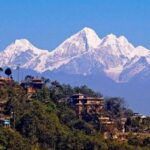
Kathmandu Valley packs seven UNESCO-listed monument zones into a surprisingly small area, but seeing all seven in one day takes smart routing. This guided drive links the royal squares of Kathmandu, Patan, and Bhaktapur with four major religious sites, giving you a useful first look at the valley’s Newar culture, Buddhist practice, and Hindu traditions.
I like two things about this plan: one guide connects the sites into a story, instead of leaving you to puzzle out carved woodwork and temple courtyards alone; and hotel transfers save time when the stops are spread across the valley. Guides named Dipendra and Rajan have earned especially strong praise for clear explanations, patience, and flexibility.
The trade-off is pace. This is an eight-hour route with plenty of walking, and admission fees are extra unless your selected package clearly includes them. You will see a lot, but you will not have time to linger at every courtyard.
- At a glance
- Seven sites, one long day
- Starting at Swayambhunath
- Kathmandu Durbar Square: palaces and courtyards
- Patan’s concentrated artistry
- Changu Narayan, the quieter temple stop
- Bhaktapur: a full hour in the old royal city
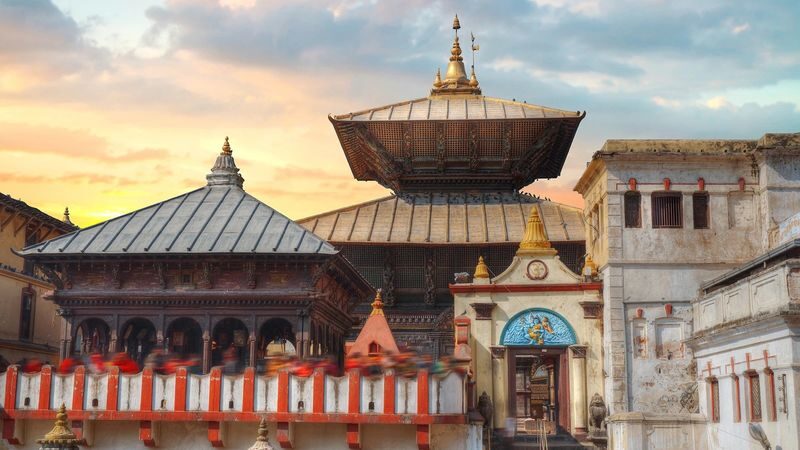
- Pashupatinath: sacred grounds, limited temple access
- Boudhanath: ending at the great stupa
- What the guide adds
- Price, tickets, and what to budget
- Who will get the most from it
- Should you book it?
- FAQ
- How long does the seven-site tour take?
- Which sites are included?
- Are entrance tickets included?
- Is lunch included?
- Does the tour include hotel pick-up and drop-off?
- Is the tour private or shared?
- Can visitors enter the main Pashupatinath temple?
- How much walking should I expect?
- The Best Of Kathmandu!
- More Historical Tours in Kathmandu
- More Tours in Kathmandu
- More Tour Reviews in Kathmandu
- Not for you? Here's more nearby things to do in Kathmandu we have reviewed
At a glance
- Seven major sites in one day: Swayambhunath, Kathmandu Durbar Square, Patan Durbar Square, Changu Narayan, Bhaktapur Durbar Square, Pashupatinath, and Boudhanath.
- A full-day outing, not a short half-day: The stated schedule runs from 8:30 am to 4:30 pm, with traffic and weather able to shift the timing.
- A guide makes the difference: Guides including Dipendra and Rajan have been praised for explaining Nepali history, Hinduism, Buddhism, and local traditions in an engaging way.
- Entrance fees are usually extra: Carry Nepalese rupees, and check whether your chosen package is specifically marked all-inclusive.
- Expect walking and steps: The day involves several monuments, courtyards, and uphill or stair sections, with breaks worth requesting if you need them.
- Good for a tight schedule: If you have only one full day in Kathmandu Valley, this route gives you a broad introduction, though it is not built for slow exploration.
👉 See our pick of the 14 Best Shopping Tours In Kathmandu
Seven sites, one long day
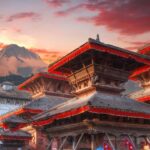
The route takes in seven UNESCO-listed monument zones, though the sites are not seven interchangeable stops. You move from royal squares to Buddhist stupas and Hindu temple grounds, each with a different role in the valley’s life. A guide can help you notice the links between them, especially the Newar craftsmanship and religious traditions that shape many of the buildings.
The published schedule begins at 8:30 am and returns around 4:30 pm. It includes about five hours at the attractions and roughly two and a half hours in the car, before allowing for traffic, weather, and the practical business of getting in and out at each stop. That is efficient, but it leaves limited time for browsing, shopping, or a long lunch.
The experience may be private or shared, depending on the package you book. Do not assume that every option has the same group size or inclusions. The details specifically note that package features vary, so check the chosen option for transport type, lunch, entrance tickets, and whether the tour is private.
You can also read our reviews of more historical tours in Kathmandu

Starting at Swayambhunath
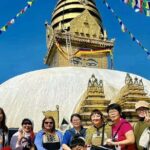
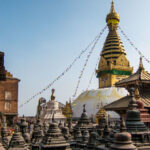
The day opens at Swayambhunath, often called the Monkey Temple, with a guided visit listed at about 30 minutes. It is a strong first stop: the stupa gives you an early introduction to Buddhist worship and the layered religious culture of Kathmandu Valley.
Half an hour is enough for a focused visit, but not a leisurely one. If you want time for photographs or to pause and take in the setting, keep an eye on the schedule. The tour involves substantial walking, and this site may include steps, so pace yourself from the start rather than saving all your energy for later.
Kathmandu Durbar Square: palaces and courtyards
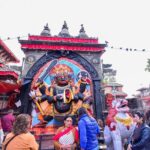
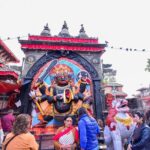
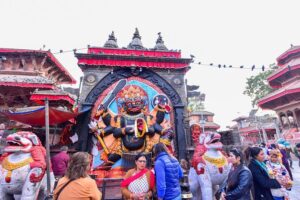
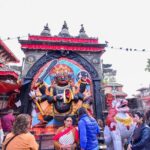
Kathmandu Durbar Square gets about 45 minutes, including a guided tour. The square brings together palace buildings, temples, courtyards, and carved details that help explain the valley’s royal and religious past. It is also a useful place to begin spotting the Newar wood and brick work you will see again in Patan and Bhaktapur.
One guide has described Kathmandu’s earlier name, Kasthamandap, and the temple associated with it. That kind of context helps turn a quick walk through a historic center into something more than a checklist. Still, 45 minutes is brief for a large, intricate area, so ask your guide what not to miss before setting off.
Patan’s concentrated artistry
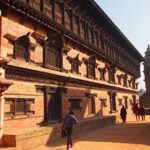
Patan Durbar Square is scheduled for an hour, the longest allocation among the first three city-center stops. The extra time makes sense. Its temples, palace buildings, and courtyards reward a slower look, particularly if you are interested in traditional architecture and the detail of Newar craftsmanship.
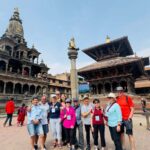
This is also a good point in the day to ask questions. Guides such as Dipendra have been praised for offering concise background rather than burying visitors in dates and names. If you prefer a more detailed account, say so; if you would rather take photographs or browse, the guide may be able to adjust the pace, especially on a private tour.
Changu Narayan, the quieter temple stop
Changu Narayan receives about 25 minutes, with a guided visit. It is described as Nepal’s oldest Hindu temple, making it a useful counterpoint to the larger urban squares. The stop gives you a chance to see a sacred site in a different setting and to connect its importance with the broader religious story of the valley.
The short visit is the drawback. If you are especially interested in temple art or Hindu practice, you may wish you had more time. On this route, the benefit is breadth: Changu Narayan is included alongside the better-known city squares and major stupas, rather than being left off to make the day easier.
You can also read our reviews of more tours and experiences in Kathmandu



Bhaktapur: a full hour in the old royal city
Bhaktapur Durbar Square gets an hour, with a guided tour. Its temples and historic buildings offer another view of Newar urban life, and the guide can point out details that are easy to miss when moving through the square on your own. One visitor singled out Nyatapola, the tall temple that survived the 2015 earthquake, as a highlight.
Bhaktapur is also the most tempting place to stretch the schedule. A past visitor recommended trying a Newari or Nepali thali here, along with bara, a lentil fritter. But meals are not included in the standard package, and the day has several stops still to come. Ask whether your option includes lunch and how much time is available before ordering.
Pashupatinath: sacred grounds, limited temple access
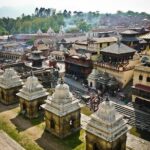
The tour allows about 45 minutes at Pashupatinath, one of the valley’s major Hindu temple sites. A guide can explain the site’s religious importance and help you understand what you are seeing, which matters at a place where customs and access rules are not always obvious to first-time visitors.
There is an important distinction between visiting the site and entering the main temple for worship. A tour guest noted that entry for worship is limited to Hindus and that the stated access windows are around 8:00 to 8:30 am and 6:00 to 6:30 pm. This route reaches Pashupatinath later in the day, so do not book it expecting to enter the main temple. Confirm current access arrangements locally if that is central to your plans.
Boudhanath: ending at the great stupa
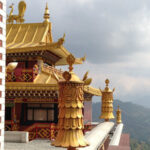
Boudhanath, also called Boudha Stupa, is the final major stop and gets about 40 minutes. Guides have described it as the world’s largest stupa. The site offers a final opportunity to see Buddhist practice up close and to compare the atmosphere and architecture here with what you saw at Swayambhunath in the morning.
The timing makes this a satisfying close, but it is still a scheduled visit rather than an open-ended stay. If you want to sit, shop, or explore more slowly, check whether your guide can accommodate that and what it means for the return time. The stated drop-off is around 4:30 pm, but traffic and weather can change the schedule.
What the guide adds
The strongest reason to choose a guided route is the context between stops. These sites are not just old buildings: they represent the valley’s royal centers, Buddhist communities, Hindu worship, and Newar architecture. A good guide can explain why a courtyard or temple matters, then help you recognize similar features at the next site.
Names that have been praised on this route include Dipendra, Dipender, Rajan, and Raj. Past visitors describe guides who explain history clearly, answer questions, help with photographs, and remain patient when someone needs to walk slowly or take breaks. The guide assigned to your tour is not guaranteed to be one of those named, so confirm the details with the operator if you have a preference.
Flexibility appears to depend on the format. A private tour may be easier to adapt for extra photo stops, shopping, or a slower walking pace. A shared tour has a set schedule and may require more compromise. Either way, speak up early if you need more time at a particular site; the route is full enough that a late request may be hard to fit in.
Price, tickets, and what to budget
The advertised price information is not entirely consistent: the summary says from $69, while the package option lists the seven-site tour from US$60. Treat these as starting figures, not a final all-in cost. The exact price can depend on the option you select, and the listed package details do not establish that every version includes the same services.
The standard inclusions name an English-speaking professional guide, guided visits, round-trip transfers, private or shared transport, and government taxes and service charges. Meals, drinks, personal expenses, and tips are excluded. Most important, entrance tickets are not included unless your selected option explicitly says all-inclusive.
Carry Nepalese currency for monument fees. One visitor advised budgeting about 6,000 rupees for entry charges, but that is a practical tip rather than a guaranteed current total. Check the latest fees before the tour, and do not assume that a ticket is covered simply because transport and a guide are included.
Other packages have different terms. The options described include an evening Pashupatinath Aarati outing that lasts about three hours and provides transport only, and a four-site group tour with lunch that lasts about four and a half hours. The seven-site package is described as roughly eight hours; private and all-inclusive versions may differ. Read the exact package details before booking.
Who will get the most from it
I would choose this tour if you have one full day in Kathmandu Valley and want a well-organized introduction to all seven UNESCO sites. The transfers reduce the effort of connecting far-flung stops, while the guide gives you a better chance of understanding what you are seeing than a hurried self-guided drive would.
It also suits solo visitors who want transport and company arranged for the day, as well as anyone who values a guide’s help with local context and photography. If you are traveling with someone who walks slowly, ask about a private option and tell the operator in advance. There are no age restrictions, but infants and children must be included in the passenger count.
This is less suitable if you prefer long visits, quiet museum time, or an unhurried meal. The schedule is ambitious, and some stops get only 25 to 45 minutes. Consider a shorter four-site option if you would rather spend more time at fewer places; the seven-site route is about coverage, not lingering.
A few practical details can save trouble. The operator will reconfirm your pick-up time, the voucher is valid only for the booked date and time, and changes are generally allowed until 24 hours before departure, subject to stated exceptions. The provider may cancel for extreme weather or unforeseen events, with a choice to reschedule or request a refund. These are worth checking, but the bigger booking decision is whether you want a fast overview or a slower day.
Should you book it?
Book the seven-site tour if seeing the full UNESCO circuit is your priority and you can give it a full day. I like the mix of royal squares, temples, and stupas, and the guide-led format gives the route a purpose beyond ticking off landmarks. The most praised guides, including Dipendra and Rajan, are noted for clear explanations and a helpful, flexible manner.
Skip it, or choose a shorter option, if you want to explore each place at your own pace. Before paying, verify whether your package is private or shared, whether lunch is included, and whether entrance fees are covered. Bring rupees, comfortable walking shoes, and realistic expectations: seven important sites in one day is a valuable overview, not a deep visit to every one.
Kathmandu 7 UNESCO Heritage Half-Day Group Tour Options
“I had a wonderful half-day tour covering the 7 UNESCO World Heritage Sites in Kathmandu with our guide, Dipendra. It was an excellent way to experi…”
FAQ
How long does the seven-site tour take?
The stated schedule runs from 8:30 am to about 4:30 pm, roughly eight hours. Traffic and weather can affect the timing.
Which sites are included?
The route includes Swayambhunath, Kathmandu Durbar Square, Patan Durbar Square, Changu Narayan Temple, Bhaktapur Durbar Square, Pashupatinath Temple, and Boudhanath Stupa.
Are entrance tickets included?
Not in the standard inclusions. Tickets are included only when the selected package specifically says it is all-inclusive.
Is lunch included?
Meals are not included in the standard package. A separate four-site group option is described as including a packed lunch, so check the details for the option you book.
Does the tour include hotel pick-up and drop-off?
Round-trip transfers to and from your hotel are listed as included. The operator will reconfirm the pick-up time in advance.
Is the tour private or shared?
The transport may be private or shared, depending on the selected option. Check the package details before booking.
Can visitors enter the main Pashupatinath temple?
The tour visits Pashupatinath, but access for worship in the main temple is limited to Hindus. The tour timing does not coincide with the access windows noted for worship, so confirm current arrangements if entry is important to you.
How much walking should I expect?
The tour information says the itinerary involves substantial walking. It does not give a total distance, so plan for walking between and around the sites and ask in advance about a slower pace if needed.