Thai cooking makes more sense when you can see, smell and handle the ingredients before they reach the wok. At Siam Garden, you visit a local market and an organic garden, then cook a menu of your choice at a school set among trees, herbs and pavilions beside a lake.
I like two things in particular: you get your own wok and mortar, so the cooking is genuinely hands-on, and the menu is selectable, with meat-free, vegan and gluten-free choices available. Staff such as Jia and Nene have been singled out for patient, friendly teaching. The main catch is the setting: the school is about 20 kilometres outside Chiang Mai, so allow for the drive and arrange your pickup in advance.
- At a glance
- A market visit that gives the ingredients a backstory
- Herbs, vegetables and a garden pause
- Six choices, one wok per person
- Eat what you have made, then take a breath
- Friendly teaching and a small-group feel
- The drive, pickup and price
- Who should book this class
- Should you book Siam Garden?
- FAQ
- How long does the morning class take?
- Is hotel pickup included?
- How many dishes do you cook?
- Can I choose vegetarian, vegan or gluten-free dishes?
- Is the class suitable for beginners and children?
- Is the school wheelchair-accessible?
- The Best Of Chiang Mai!
- More Cooking Classes in Chiang Mai
- More Tours in Chiang Mai
- More Tour Reviews in Chiang Mai
- Not for you? Here's more nearby things to do in Chiang Mai we have reviewed
At a glance
- Market and garden first: See Thai ingredients at a local market, then learn about herbs and vegetables growing at the school.
- Your own cooking station: Each participant gets a wok, plus a mortar for making curry paste.
- A broad menu: The morning package describes six choices: an appetizer, curry paste, curry, stir-fry, soup and dessert.
- A meal you make yourself: Eat your food at the school or take it away. Sticky rice for mango dessert is part of the lesson.
- Transport is included from central Chiang Mai: Free pickup and return are offered for the Old Town, though some outlying destinations are excluded.
- A relaxed garden setting: Between cooking, you can pause in a pavilion by the lake and waterfall, or eat in the air-conditioned dining room.

👉 See our pick of the 25 Best Shopping Tours In Chiang Mai
A market visit that gives the ingredients a backstory


The morning schedule starts at 9:00, with a drive of about 30 minutes to a local market. There, an English-speaking guide introduces ingredients used in Thai cooking. This stop adds useful context to the class: rather than meeting unfamiliar herbs and vegetables only as chopped items on a work surface, you can see them in the setting where people buy and use them.
The market visit is brief, about 30 minutes, so think of it as an introduction rather than a full market-shopping excursion. You may have time to look around and pick up fruit, but the focus is on learning about ingredients for the dishes ahead. If you hope to browse at length, this schedule may feel brisk.
From the market, the group drives roughly 10 minutes to the cooking school. The school is in San Sai, outside the city, and the drive is part of the deal. It can be a pleasant break from Chiang Mai’s streets, but it also makes this a less convenient choice if you dislike car rides or have only a short window between other plans.
You can also read our reviews of more cooking classes in Chiang Mai


Herbs, vegetables and a garden pause
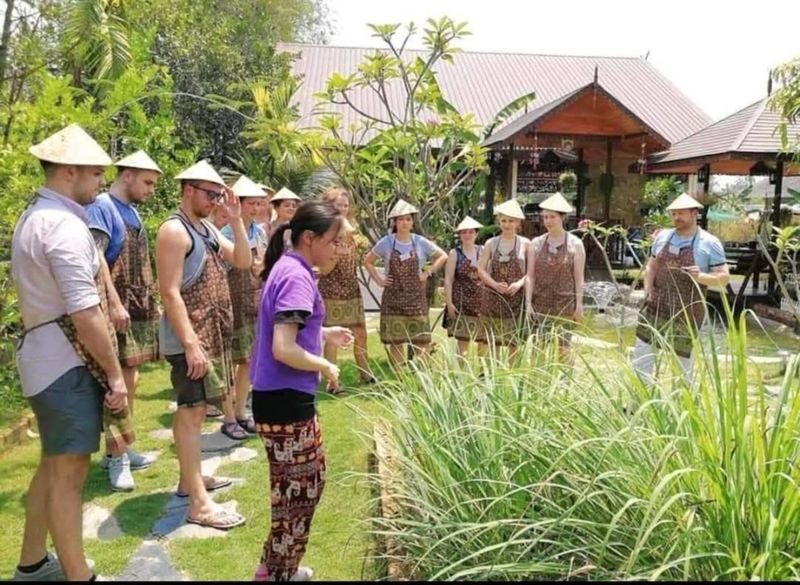
On arrival, you take a guided walk through the organic garden, with about 20 minutes set aside for it. The school grows herbs and vegetables used in Thai dishes, and the walk helps you connect what you saw at the market with what you will cook. For a first Thai cooking class, that link is valuable: ingredients such as local herbs can be easier to remember when you have seen how they grow and heard how they are used.
The garden is also a place to slow down before the cooking starts. The school describes pavilions beside a lake, with a waterfall and trees around the grounds. You can relax there between activities, while the dining area is air-conditioned for the meal. The setting sounds particularly appealing if you want a class that feels more like a half-day outing than a lesson in a city kitchen.
There are also pets on the grounds, including dogs noted by some participants. If you enjoy a friendly, informal atmosphere, that may be a welcome extra. It is not the main attraction, though, and the garden visit remains short.
Six choices, one wok per person
The practical heart of the experience is the three-hour cooking session. The morning package lists six parts to the menu: one appetizer, one curry paste, one curry, one stir-fried dish, one soup and one dessert. You choose your dishes, and the school asks you to share those selections after booking so ingredients can be prepared.
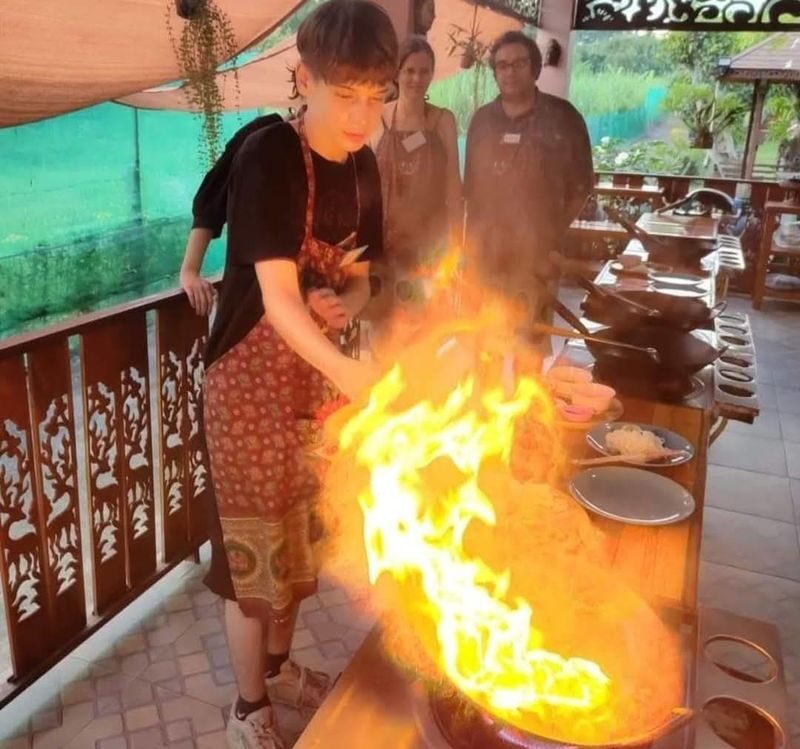
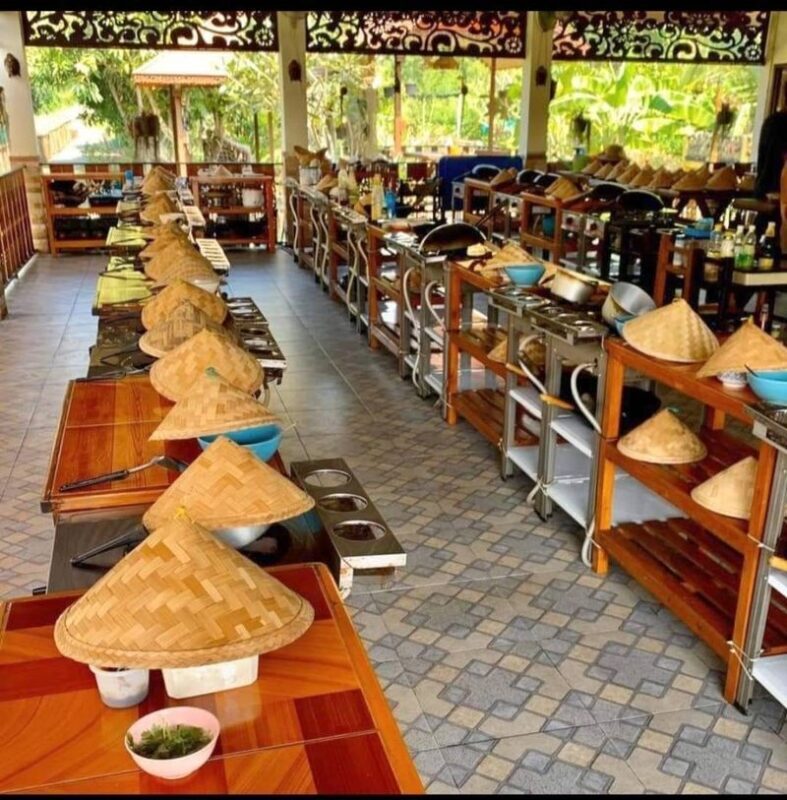
The individual setup matters. One person gets one wok, and each participant makes curry paste with an individual mortar. You are not simply watching a chef cook for the group. Staff prepare the ingredients and guide you through the steps, while you do the chopping and cooking yourself. The school describes the class as easy to follow, and the instructions use English.
That said, the amount of cooking can feel brisk. The class covers several dishes in a limited time, and one participant noted that the pace may be quick. Some accounts also describe preparing five dishes rather than six. The listed morning package promises six menu components, but the exact number completed can appear to vary by class or package. If the dish count matters to you, confirm your selections and what is included directly with the school before booking.
The menu is a strong point for different diets. Meat, vegetarian, vegan and gluten-free options are available, and you can choose dishes to suit your tastes. You can also adjust spice levels, according to participants who cooked with the school. Tell the staff about dietary needs when you contact them, rather than waiting until the cooking begins.
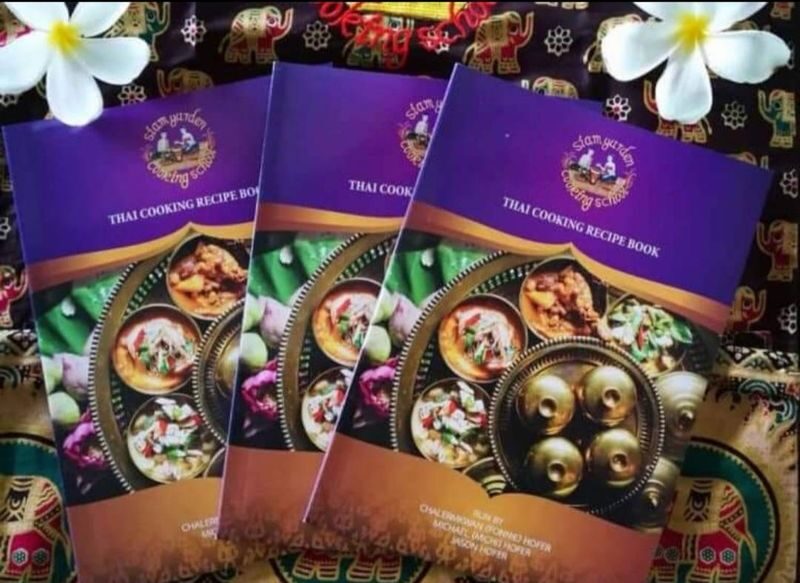
A special touch is the lesson on glutinous rice for sticky rice with mango. Dessert is often the dish people associate with Thai cooking, but the rice takes preparation and technique of its own. The school also provides an online recipe book, so you can refer back to the recipes after you leave Chiang Mai.
Eat what you have made, then take a breath
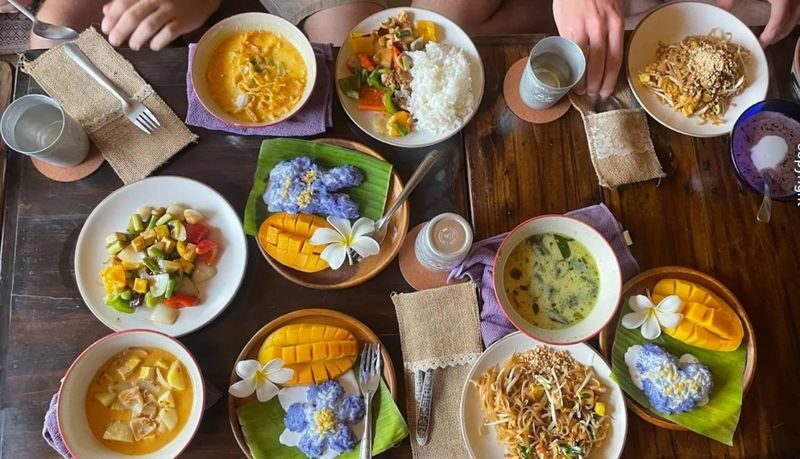
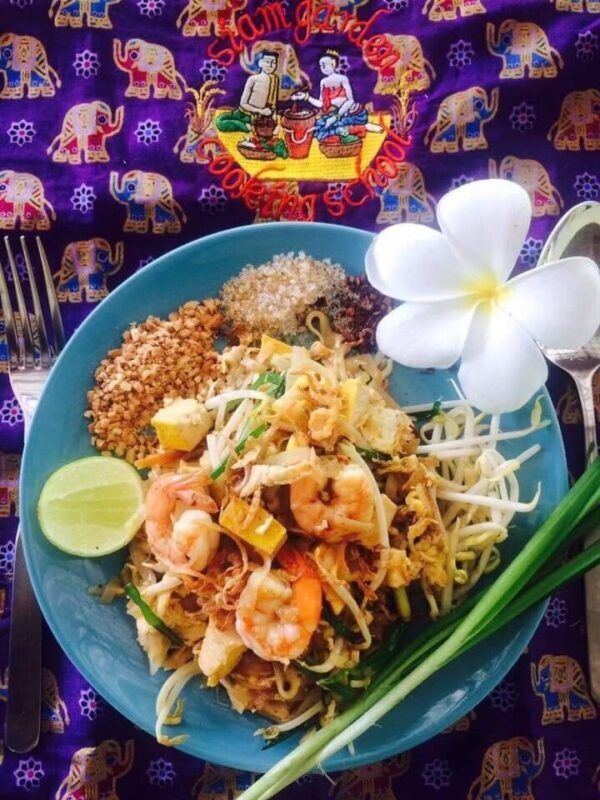
Cooking is followed by eating, which makes the class more than a demonstration. You can enjoy your food at the school or take it away. With several dishes prepared per person, portions can add up quickly, especially if you are cooking as a pair and both choose a full menu.
The meal is served either in the Chiang Mai-style dining room with air conditioning or in an open-air Thai pavilion in the garden. The option is useful in a warm climate: you can enjoy the setting outdoors if conditions suit, or retreat to a cooler room. Tea, coffee and drinking water are included.
Staff are also said to take photos during the experience, with online albums available afterward. Between the recipe book, photos and the food you make, you leave with something more practical than a few snapshots: a set of dishes you can try to recreate at home.
Friendly teaching and a small-group feel
The clearest strength of Siam Garden is the teaching style. Jia and Nene are among the instructors named by participants, with Nini and Naam also mentioned. Names and staff assignments may vary, but the class is set up for English-speaking instruction, and the cooking is described as beginner-friendly. You do not need to arrive with kitchen confidence.
The staff-to-participant attention appears to be a real benefit. Some classes have had small groups, with several instructors on hand to help with chopping, stirring and seasoning. Smaller groups are not guaranteed, but they can make a difference in a hands-on class: you get a chance to ask questions instead of keeping pace from the back of a crowded room.
Cleanliness also comes through as a practical strength. Participants have noted clean work areas, fresh ingredients and handwashing stations, along with reminders to wash hands between cooking stages. That is reassuring when you are handling raw ingredients and preparing multiple dishes.
Families can consider the class too. Children have joined in, and the teaching is described as patient and accommodating. Still, the school says non-participant visitors and infants are not available without advance notice, and separate fees may apply for accompanying visitors or children under 10. Check the rules before booking if anyone in your party will not cook.
You can also read our reviews of more tours and experiences in Chiang Mai


The drive, pickup and price
Siam Garden is about 20 kilometres outside Chiang Mai. The listed morning schedule runs from a 9:00 departure to a return around 14:00, with transport in an air-conditioned vehicle. Pickup and return are free from the Old Town, while locations such as Nimman Road, Maya Lifestyle Shopping Center, CentralFestival, the airport and the railway station are listed among destinations not included. Other pickup points may be possible by request.
Contact the school after booking with your accommodation details and menu choices. Pickup arrangements need to be made in advance and depend on available seats. The meeting point is The Pizza Company Ruamchok if that is the agreed arrangement. Confirm the exact location and time rather than assuming your hotel is covered, particularly if you are staying outside the Old Town.
Allow a little flexibility around the schedule. The school notes that traffic and weather can change timings, and the class may finish earlier or later depending on the group. If you are in a hurry or need to bring luggage, tell the school before booking.
Prices are shown from US$21.40, while the morning and evening options are also listed from US$24.30. The actual price depends on the package and booking details, so check the rate for your date. At either starting price, the value is appealing if you want transport, a market visit, a garden walk, hands-on cooking, a meal, drinks and a recipe book in one half-day outing. The value is less clear if you are mainly seeking an in-depth market tour or a slow, single-dish cooking lesson.
Who should book this class
This class suits you if you want to learn by doing, try several Thai dishes and have a little time outside the city. It is especially useful for beginners, curious eaters and anyone who wants a recipe book to help carry the experience home. The garden and market add context that a kitchen-only lesson would miss.
It may not suit you if you dislike longer drives, need a wheelchair-accessible activity or have back problems. The school says the activity is not wheelchair-accessible and is not recommended for people with back problems or serious medical conditions, including heart problems. For dietary needs, children, extra visitors or an unusual pickup location, contact the school before you pay.
Should you book Siam Garden?
Book it if you want a friendly, practical cooking class with a garden setting, a choice of dishes and transport from central Chiang Mai. The strongest reasons to go are the personal cooking stations, the ingredient walk and the patient English-speaking instruction. Just plan for the out-of-town drive, check the exact menu and price for your date, and leave room in your schedule for the class to run a little long.
Thai Cooking Class by Siam Garden Cooking School in Chiang Mai
“Jia did a wonderful job guiding our small group of 3. The class was informative and fun!”
FAQ
How long does the morning class take?
The listed schedule runs from a 9:00 departure to a return at about 14:00. The class may finish earlier or later depending on the group, traffic and weather.
Is hotel pickup included?
Round-trip transport is included from the Old Town of Chiang Mai. Some destinations, including Nimman Road, Maya Lifestyle Shopping Center, CentralFestival, the airport and railway station, are excluded from the free service. Confirm your pickup point in advance.
How many dishes do you cook?
The morning package describes six menu choices: an appetizer, curry paste, curry, stir-fry, soup and dessert. The number completed can vary by class or package, so confirm the details when you send your menu selections.
Can I choose vegetarian, vegan or gluten-free dishes?
Yes. Meat, vegetarian, vegan and gluten-free options are available. Contact the school with your dietary needs when confirming your menu.
Is the class suitable for beginners and children?
The school describes the class as easy to understand, and children have taken part. Non-participant visitors and infants are not available without advance notice, and fees may apply for accompanying visitors or children under 10.
Is the school wheelchair-accessible?
No. The activity is not wheelchair-accessible. It is also not recommended for people with back problems or serious medical conditions.