Jagalchi is not just a place to look at seafood. It is a working market where tanks of live fish, octopus and shellfish bring Busan’s coastal food culture right up to the pavement. With local chef Heeyoung leading the way, this two-hour walk links the fish market with nearby food streets and traditional markets, adding context to what might otherwise be a maze of stalls.
I like two things especially: Heeyoung’s food knowledge turns unfamiliar ingredients into useful lessons, and the route reaches more than one market, including places you might not find on your own. You also get to sample at least three local foods, with possibilities such as fish cake, seed-filled hotteok and seafood.
One consideration: this is a market walk with tastings, not a guaranteed full dinner. The food and route can change with the season and local conditions, so come curious rather than expecting a fixed menu.
- What to know before you book
- Jagalchi, where Busan’s seafood comes into view
- From BIFF Square to the older market lanes
- Tastings: local snacks, not a promised feast
- The value of a chef’s perspective
- Timing, meeting point and a few practical details
- Who will get the most from this walk
- FAQ
- How long is the tour?
- Where does the tour start?
- Where does the tour finish?
- Which markets are included?
- What foods might I taste?
- What is included in the price?
- What is the cancellation policy?
- The Best Of Busan!
- More Shopping Tours in Busan
- More Tours in Busan
- More Tour Reviews in Busan
- Not for you? Here's more nearby things to do in Busan we have reviewed
What to know before you book
 1 / 7
 2 / 7
 3 / 7
 4 / 7
 5 / 7
 6 / 7
 7 / 7
- A chef leads the walk: Heeyoung guides in English and Korean, explaining seafood, local ingredients and Busan food customs.
- Four market-area stops: The route can include Jagalchi Market, BIFF Square, Gukje Market and Bupyeong Kkangtong Market.
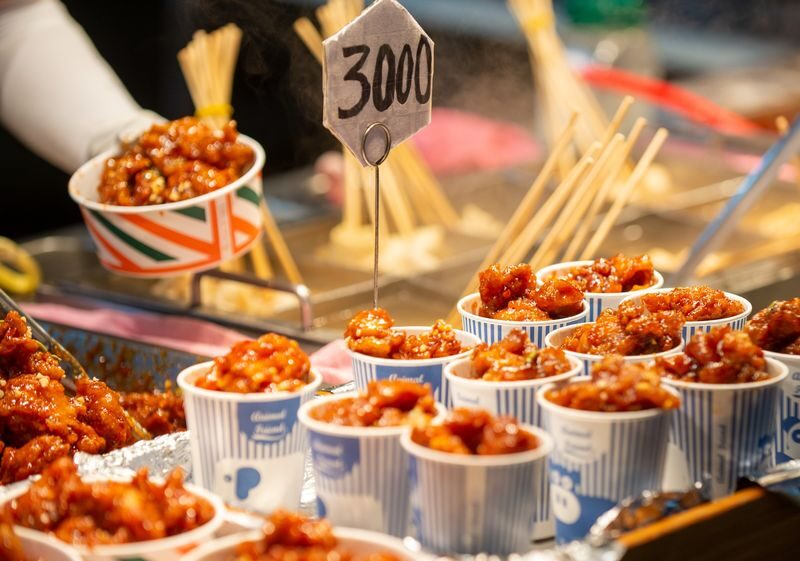
- At least three tastings: Snacks may include eomuk fish cake, seed hotteok, tteokbokki or seafood, but choices vary.
- A compact evening outing: The stated schedule runs from 4 to 6 p.m., starting at Jagalchi Station Exit 10 and ending at Bupyeong Market.
- A useful first-day orientation: The walk pairs food with local stories and practical suggestions for where to eat afterward.
👉 See our pick of the 4 Best 3 Day Tours In Busan
Jagalchi, where Busan’s seafood comes into view
The tour begins near Jagalchi Station, at Exit 10 in front of Hanaro Mart. From there, the walk heads into the market district that gives the experience its name. Jagalchi is described as Korea’s largest fish market, and its scale can feel bewildering if you arrive without a local guide or a clear idea of what you are seeing.
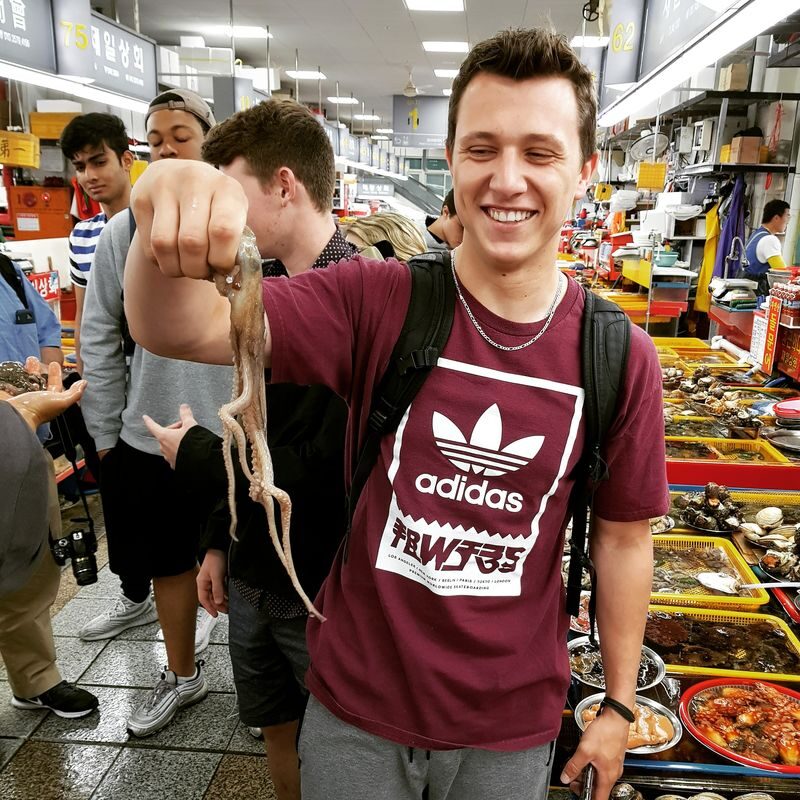
Heeyoung helps make the seafood stalls legible. You can expect to encounter tanks and displays of live fish, squid, octopus, clams and prawns. The guide’s explanations can help you understand what is in season, how different seafood is sold and what local cooks do with it. One useful detail shared on the walk is that Busan’s port supply helps keep squid on local menus throughout the year, with many varieties associated with the area.
This is the part of the tour that suits curious eaters, even if you are not ready to try everything. You can ask questions about unfamiliar ingredients and learn how seafood is selected and prepared. Heeyoung also gives cooking tips, which make the market visit more than a visual tour: you leave with practical ways to think about the fish and shellfish you have just seen.
The sensory side is part of the point. Jagalchi is a working market, not a polished food hall built for visitors. That means close views of fresh seafood and a more immediate feel for local trade, but it also means crowds, wet floors and plenty to take in. Wear shoes you are comfortable walking in, and keep an open mind about the sights and smells.
You can also read our reviews of more shopping tours in Busan


From BIFF Square to the older market lanes
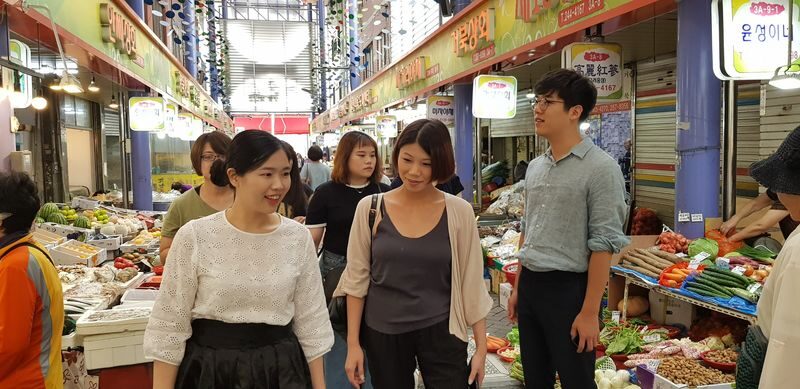
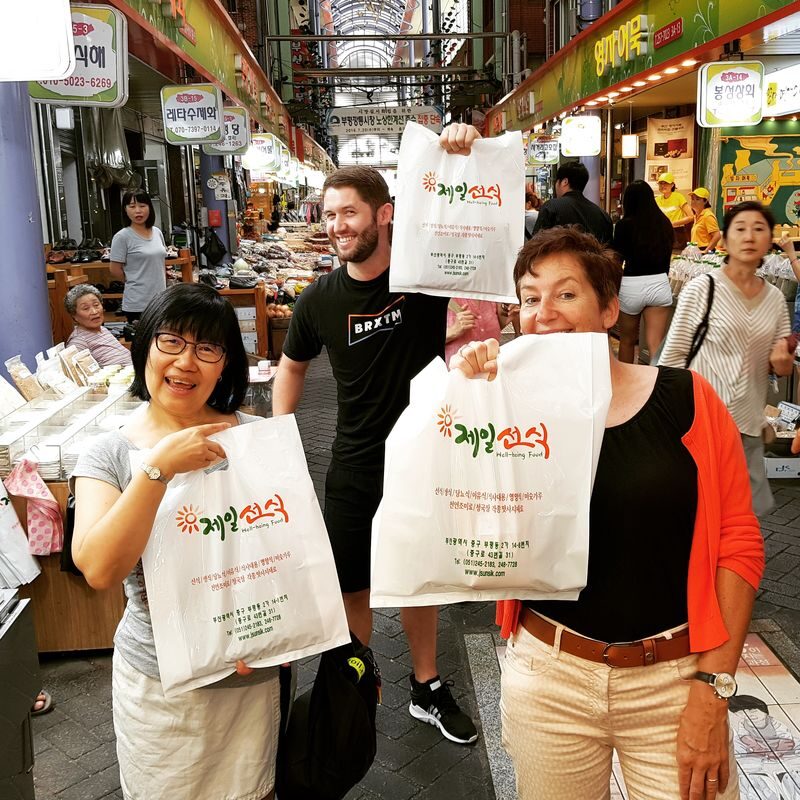
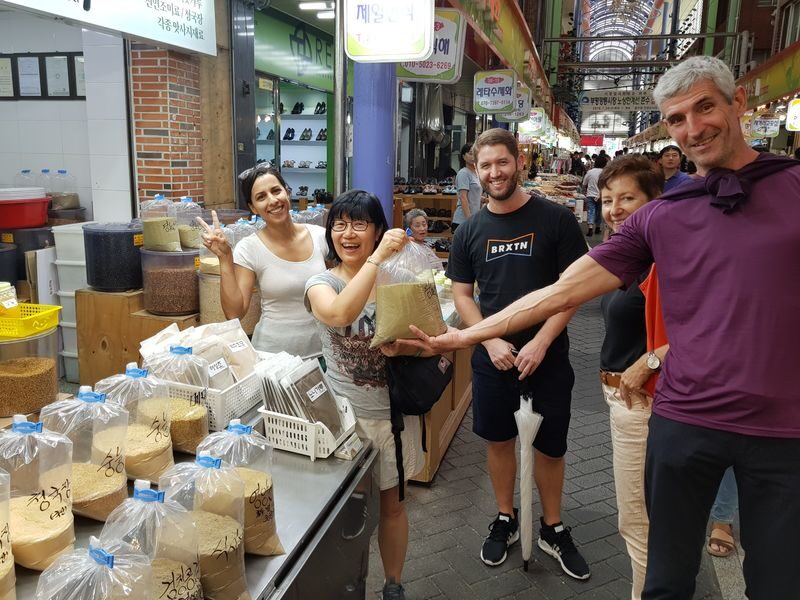
The route continues through the surrounding market district, with stops that can include BIFF Square, Gukje Market and Bupyeong Kkangtong Market. The exact path may shift, but this mix gives you more than a single-market visit. Each stop offers a different angle on how food is bought, prepared and eaten in Busan.
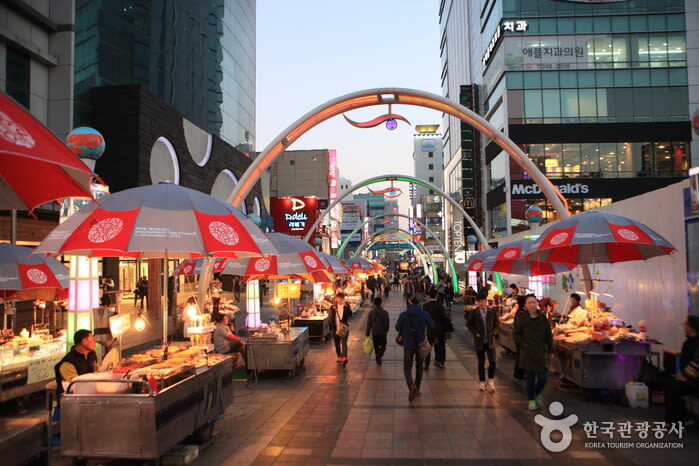
BIFF Square adds a street-food setting to the seafood displays. Here, the focus may turn to familiar Korean snacks, including fish cake on a skewer, spicy rice cakes or hotteok. Bupyeong Kkangtong Market, a traditional food market more than a century old, brings the walk to its finish. Gukje Market and its adjoining lanes add further context to the area’s daily shopping and food trade.
A guide matters in these dense blocks. It is easy to pass a small stall or a side passage without knowing what is sold there, especially when signs and menus are unfamiliar. Heeyoung’s local connections and experience with the markets help make the walk more personal and less like a checklist of famous stops. The aim is not to race through every market, but to notice details and understand what you are looking at.
The tour is also a useful introduction to Busan beyond seafood. Food traditions reflect local ingredients, seasonal availability and the city’s history. Heeyoung explains how those threads connect, and her knowledge of the market gives you a chance to ask about more than the next snack. You can also use the walk to get recommendations for meals later in your stay.
Tastings: local snacks, not a promised feast
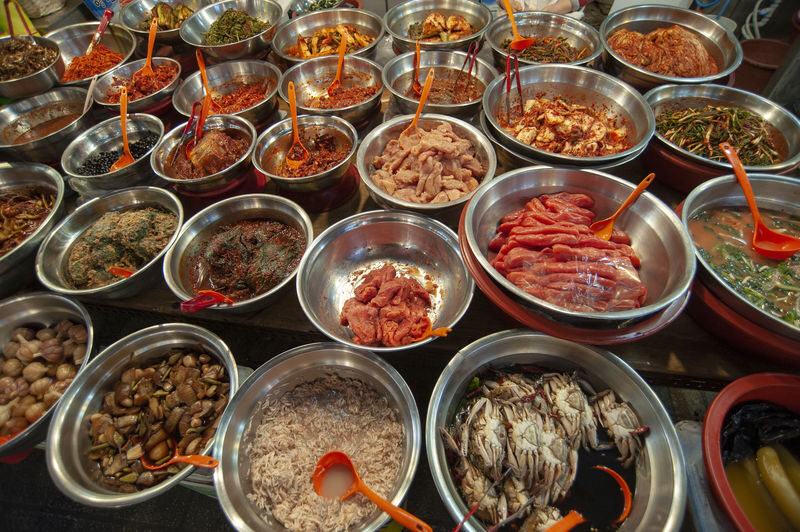
Food tasting is included, with at least three representative Korean or Busan foods. Possible items include live octopus, dried seafood, fish cake, seed-filled sweet pancakes called hotteok, and tteokbokki, the familiar spicy rice cakes. The selection depends on the season and what is available, so do not book with one particular dish in mind.
Some tastings can be adventurous. Live octopus, known as sannakji, is a distinctive option, and the tour may also introduce you to fresh seafood or sashimi. Other stops are more approachable: a hot fish cake skewer served with broth, or hotteok cooked crisp and filled with nuts and seeds. The contrast is part of the pleasure. You move from the sea’s raw ingredients to snacks made for eating as you walk.
The tastings are a chance to try things you might not order alone. A chef can explain what an item is, how it is made and what to pair it with. That guidance is especially useful if you are uncertain about ordering from a stall or have questions about ingredients. It can also help you distinguish a quick taste from a meal. The tour is about sampling and learning, and should not be treated as a substitute for dinner.
If you have dietary restrictions or strong food preferences, keep in mind that the menu is flexible according to local conditions, and the supplied details do not specify substitutions. Ask the operator before booking if you need a particular accommodation. If you are keen to try seafood but unsure about live octopus, you can still enjoy the market explanations and other snacks; the tasting list is not fixed.
The value of a chef’s perspective
The strongest reason to choose this walk is its guide. Heeyoung is a local chef and food expert, and the tour’s emphasis is on explaining ingredients and food culture rather than simply naming stalls. That is valuable in a market where a tank of seafood can look like a jumble until someone explains what is in season, what locals buy and how it may be cooked.
Her role also extends beyond the food itself. The walk includes local history and cultural context, and the market route can reveal alleyways and stalls that are easy to miss when exploring independently. Heeyoung can offer recommendations for where to eat after the tour, including local specialties such as milmyeon, Busan’s wheat-noodle dish. This practical advice can make the experience useful well after the two-hour walk ends.
The format is conversational and relaxed rather than a formal cooking class. You are walking, looking, tasting and asking questions. If you enjoy learning through conversation, that is a strength. If you want hands-on cooking, a seated meal or a tightly scripted itinerary, this is not that kind of experience.
Timing, meeting point and a few practical details
The walk is scheduled from 4 to 6 p.m. Meet 10 minutes early at Hanaro Mart, 73 Gudeok-ro, near Jagalchi Station Exit 10. There are two metro exits numbered 10, so follow the stated meeting location and look for the mart. The tour finishes at Bupyeong Market, at 39 Bupyeong 1-gil, Jung-gu, rather than returning to the starting point.
That end point is useful if you want to continue eating or exploring nearby, but plan your onward route accordingly. The tour is on foot through market streets, and the schedule can change with traffic or weather. Wear comfortable walking shoes and allow room in your evening plans for a flexible finish.
The price starts at US$51.69. For that, you get a local chef guide, food tastings and a Busan gourmet map. The value is strongest if you want both an introduction to local foods and help navigating the market district. If your priority is simply to buy a meal or browse stalls at your own pace, you may prefer to explore independently and spend the fee on food.
There is a minimum group requirement, and the activity may be cancelled if the minimum number of participants is not met. The supplied booking details give both a minimum booking size of two people and a possible cancellation if fewer than four participants are gathered, so check the current conditions when reserving. The voucher is valid only for the date and time booked, and late arrivals or no-shows are not refundable. A full refund is available for cancellations made at least 48 hours before the activity, according to the stated terms.
You can also read our reviews of more tours and experiences in Busan


Who will get the most from this walk
This tour is a good fit for first-time visitors who want an introduction to Busan’s food scene without having to decode the markets alone. It also suits people who like asking questions, trying unfamiliar snacks and learning why a dish belongs to a particular place. If you are travelling with teenagers or family members who enjoy food, the mix of sights and tastings can hold their attention, though the menu may include seafood that is not to everyone’s taste.
You do not need to be a seafood specialist. In fact, a guide is particularly useful if you are new to Korean markets and want a friendly way into the subject. Still, this is best for people who are comfortable with busy public spaces and a little uncertainty about exactly what they will eat.
I would book it early in a Busan stay, when Heeyoung’s restaurant tips and market orientation can shape the rest of your visit. Choose it for the local perspective and the chance to sample several foods, not for a long meal or a fixed list of dishes. If those priorities match yours, two hours here can make the markets feel far less intimidating and Busan’s food culture much easier to understand.
Jagalchi Fish Market & Busan Market Tour in Busan with Local Chef
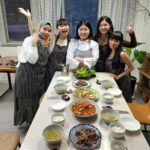
“Chef Heeyoung took us on a tour through the local markets (some which we wouldn't have found) and it was great to have some background and understa…”
FAQ
How long is the tour?
The scheduled tour runs from 4 p.m. to 6 p.m., for about two hours.
Where does the tour start?
Meet at Hanaro Mart, 73 Gudeok-ro, near Jagalchi Station Exit 10. Arrive 10 minutes before the start time.
Where does the tour finish?
It finishes at Bupyeong Market, at 39 Bupyeong 1-gil, Jung-gu, Busan.
Which markets are included?
The tour can include Jagalchi Market, BIFF Square, Gukje Market and Bupyeong Kkangtong Market. The route may change depending on local conditions.
What foods might I taste?
At least three foods are included. Depending on season and availability, these may include live octopus, dried seafood, fish cake, hotteok or tteokbokki.
What is included in the price?
The package includes an English- or Korean-speaking local chef guide, food tastings and a Busan gourmet map. Travel insurance and personal expenses are not included.
What is the cancellation policy?
The stated terms offer a full refund for cancellations made at least 48 hours before the activity date. The tour may be cancelled if its minimum participant requirement is not met, in which case a rescheduled time or refund is offered.