The draw here is getting close to Iceland’s recent volcanic ground, where old lava flows and even rocks that may still be steaming bring the peninsula’s eruptions into focus. I like that the tour pairs a five-hour Fagradalsfjall hike with a stop at Seltún, so the day is not only a long walk.
I also like the guide-led context: you’ll hear about eruptions at Fagradalsfjall, Meradalir and Litli Hrútur, as well as the brief Sundhnúkur event in December 2023. The trade-off is real: this is rated hard or challenging, and volcanic activity can change, so an active eruption is never guaranteed.
- Three years of eruptions: Learn how Reykjanes changed during the 2021, 2022 and 2023 events.
- A substantial hike: Allow about five hours at Fagradalsfjall, not counting bus travel or the Seltún stop.
- Seltún adds contrast: Spend around 20 minutes with a guide at this geothermal area before the main hike.
- Conditions shape the route: Weather and volcanic activity may affect what you see and where you go.
- Bring food and proper layers: Meals and drinks are not included, and Iceland’s weather calls for warm, waterproof hiking clothes.
- Plan for a long day: The listed schedule runs from an 11:00 departure to an expected 18:00 return.
- Why hike the Reykjanes Peninsula
- From Reykjavík to Seltún
- What the five-hour Fagradalsfjall hike involves
- What the guide adds
- Clothing, weather and what to carry
- Is the price fair?
- Who should book this hike?
- FAQ
- Where does the tour leave from?
- What time does the tour depart?
- How long does the tour last?
- How difficult is the hike?
- Is an eruption guaranteed during the visit?
- What should I bring?
- Are hiking poles included?
- Are meals and drinks included?
- Can children join the tour?
- The Best Of Reykjavik!
- More Hiking & Trekking Tours in Reykjavik
- More Tours in Reykjavik
- More Tour Reviews in Reykjavik
- Not for you? Here's more nearby things to do in Reykjavik we have reviewed
Why hike the Reykjanes Peninsula
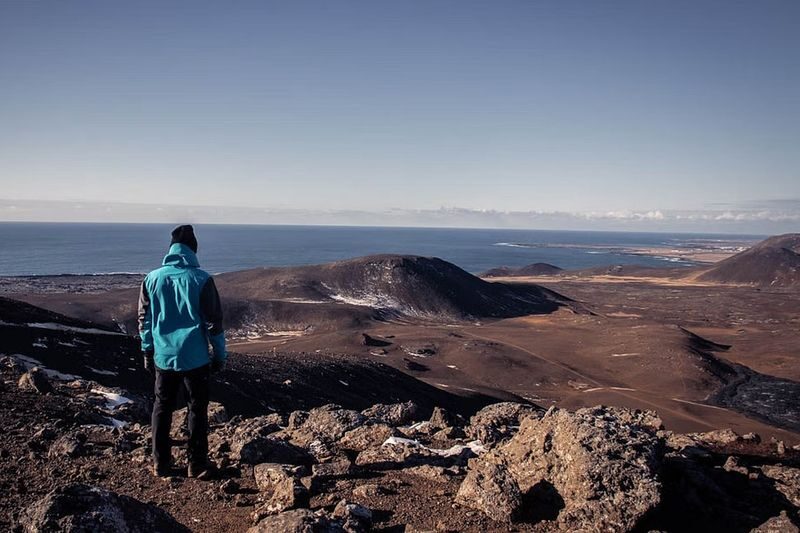
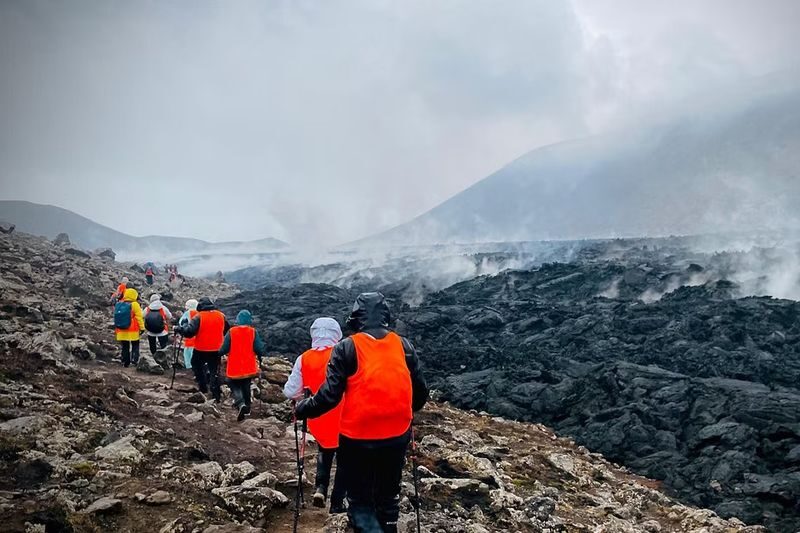
Iceland’s volcanoes are not museum pieces. They keep changing the ground beneath your feet, and the Reykjanes Peninsula has seen several eruptions in a short span. This tour gives you a guide’s account of the region’s activity from 2021 onward, then takes you out to see the results on foot.
The focus is Fagradalsfjall and the Geldingalur Valley area, with possible attention to Meradalir and Litli Hrútur depending on conditions. You’ll hear about the longer 2021 eruption and the shorter events of 2022 and 2023. The tour also covers the Sundhnúkur eruption of December 2023, described as brief but dramatic.
That history matters because a visit is not just a hunt for glowing lava. The ground can remain fascinating even when a volcano is quiet. One account of the hike described seeing and touching lava rocks that were still steaming months after an eruption. That is a striking possibility, but not a promise: the tour information is clear that activity varies from day to day.
I would book this for the chance to understand a changing volcanic area at walking pace, rather than for a guaranteed eruption spectacle. If you need the volcano to be erupting for the outing to feel worthwhile, this is a gamble. If you’re curious about the forces that shape Iceland, the older lava and the guide’s explanation can be rewarding in their own right.

👉 See our pick of the 25 Best Guided Tours In Reykjavik
From Reykjavík to Seltún
The meeting point is Bus Stop #12, Höfðatorg, at Þórunnartún 6 in Reykjavík. The listed departure is 11:00, and you should arrive 15 minutes early. The return is shown as 18:00, though the schedule can shift with traffic and weather.
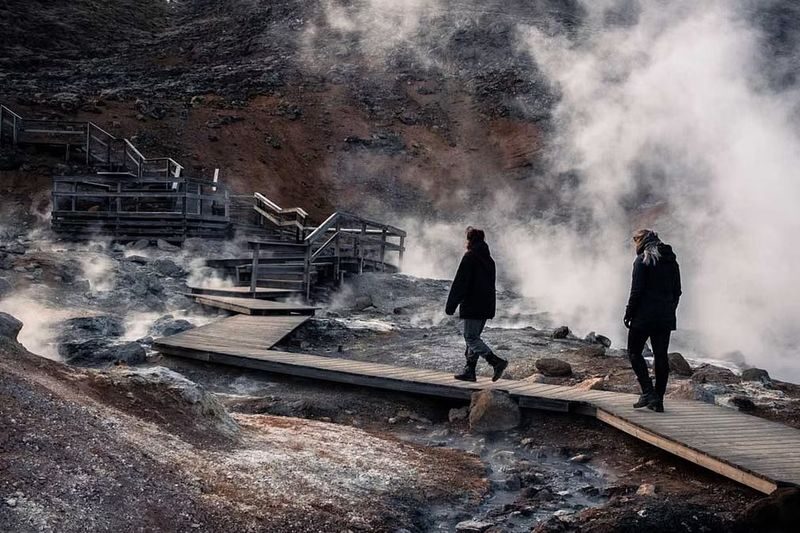
The first bus leg takes about 45 minutes. Then you’ll spend around 20 minutes at Seltún Geothermal Area on a guided visit before boarding again for roughly 20 minutes to the Fagradalsfjall area. Seltún makes a useful opening act: it offers a quick look at geothermal activity before the day turns to a much longer walk.
Keep expectations in proportion. Twenty minutes is a short stop, not an extended visit. The main event is the hike, and the schedule gives it about five hours. Afterward, a bus ride of roughly one hour brings you back to Reykjavík.
The tour is sold as an afternoon and evening outing, but the stated 11:00 start and 18:00 return make it a full day in practice. The timing and order can change, so treat those hours as a guide rather than a promise. If you have a flight, dinner reservation or other fixed plan, leave room for delays.
You can also read our reviews of more hiking tours in Reykjavik


What the five-hour Fagradalsfjall hike involves
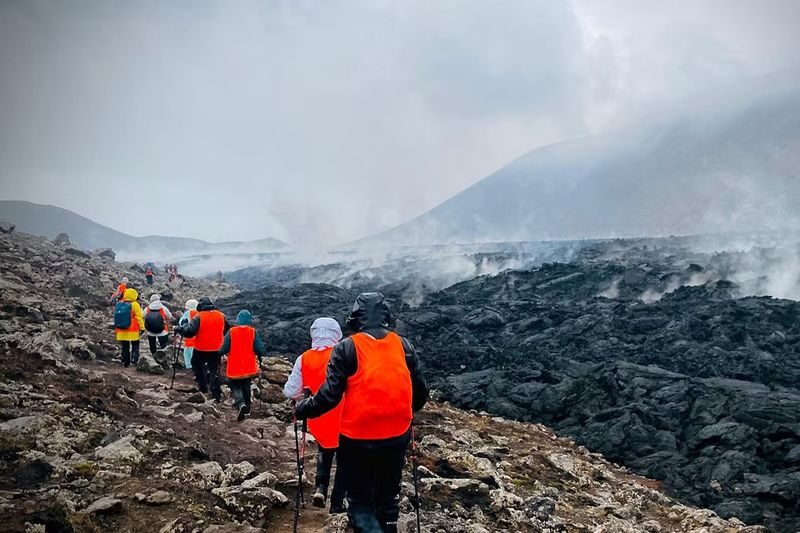
The hiking portion is the heart of the trip. It is guided and described as hard or challenging, so do not mistake the bus transport for an easy sightseeing excursion. You’ll be on your feet for hours, with the route taking you through volcanic terrain shaped by recent eruptions.
The details of the precise trail and distance are not provided, and conditions may affect the route. What is clear is the length of the guided hike and the need for suitable footwear and clothing. Hiking shoes are essential. Hiking poles are recommended, but optional, and can be rented from the operator for US$8.
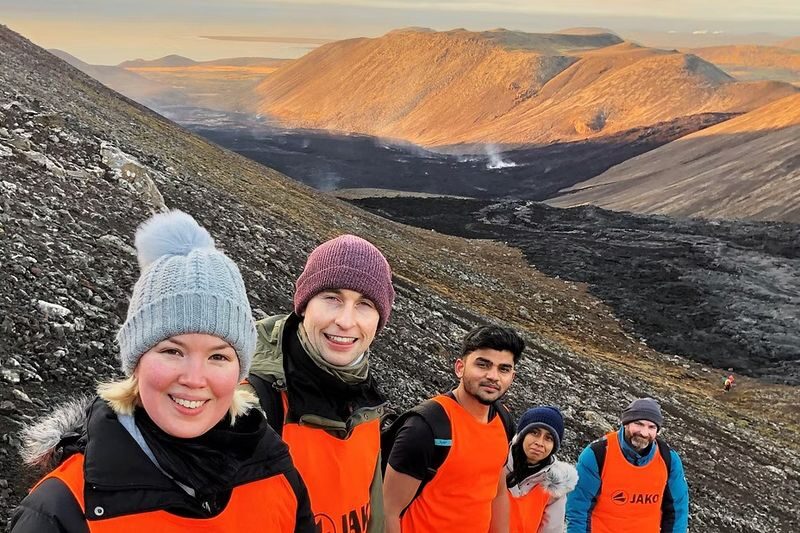
The ground itself is part of the appeal. Recent lava fields offer a direct sense of how quickly volcanic activity can remake a place. If the conditions allow, you may explore sites associated with Fagradalsfjall, Meradalir and Litli Hrútur. The tour also discusses the Sundhnúkur eruption, though that does not mean every stop will be accessible or that you’ll see a live eruption.
Expect a physically demanding day, not a gentle walk with frequent indoor breaks. Bring water and snacks, or a packed dinner, since meals and beverages are not included. That advice matters on a five-hour hike: there is no listed meal service to rely on, and you’ll want to carry what you need.
What the guide adds
An English-speaking guide leads the volcano hike and explains the peninsula’s eruption history. No guide names are provided, so you cannot request a particular person. The value lies in having someone connect the visible ground with the events that formed it.
A good guide can help make sense of the sequence: the 2021 eruption, the shorter 2022 and 2023 episodes, and the later Sundhnúkur event. That context is especially useful when the volcano is not erupting during your visit. Instead of simply looking at dark rock, you have a timeline for understanding what happened and why the area remains a point of interest.
The hike can also be a social outing. The group format means you’ll share the walk with other participants, and one account described the group as relaxed and fun. That is a bonus, not something the operator can guarantee. Group pace and chemistry vary, and the challenging route may feel different depending on your fitness and the day’s conditions.
Clothing, weather and what to carry
Iceland’s weather can turn a scenic hike into a cold, wet slog if you dress poorly. The recommended system is practical: wear wool or fleece as your first thermal layer, not cotton, then add waterproof and breathable hiking trousers and a jacket. Bring wool or fleece headwear and gloves, along with hiking shoes.
Pack water and snacks or dinner. The tour does not include food or drinks, and there is no reason to assume you can buy supplies during the hike. Poles can help on a hard trail, but they are not mandatory. If you do not own a pair, the listed rental cost is US$8.
This activity is not wheelchair-accessible, and participants must be at least 12 years old. Children aged 16 and older pay the adult rate. Those limits, along with the hard difficulty rating, make this a poor fit for anyone who cannot manage a demanding outdoor walk.
Is the price fair?
The stated starting price is US$121.19, while the package option for the join-in Fagradalsfjall hike is shown at US$131.75. Prices can depend on the option selected, so check the total for your date before paying rather than assuming the lowest figure applies to the exact tour you want.
For that fare, the core value is transport from Reykjavík, an English-speaking guide and the guided hike. You are also getting a short guided stop at Seltún as part of the day’s schedule. Meals and drinks are extra, hiking poles cost US$8 to rent, and pickup and drop-off are listed as an additional US$12.
I see the price as reasonable if you want a guided outing to a remote volcanic area and do not have your own transport or local hiking plan. The five-hour hike is the main reason to pay for the tour. If you only want a brief look at volcanic ground, this is likely too long and too strenuous for what you need.
There is also an operational caveat. A few participants have described serious problems with cancellations or a departure time being changed without clear notice. Those accounts do not prove that such problems are common, but they are worth keeping in mind. The provider’s listed response rate is 17 percent, with replies taking more than four hours. Confirm your departure details before setting off for the meeting point, and do not schedule a tight connection afterward.
The stated cancellation terms offer a full refund if you cancel at least 24 hours before the activity date, using local destination time. Keep that policy and your booking confirmation handy, especially if weather changes your plans.


Who should book this hike?
This is a good choice if you’re fit enough for a challenging walk, interested in recent volcanic activity and comfortable spending most of the day outdoors. It suits people who value a guide’s explanations and want to see more than a roadside viewpoint.
It is less suitable if you need an easy walk, have limited mobility, are travelling with a child under 12, or want a guaranteed view of an active eruption. The volcano is a natural phenomenon, and its activity can vary. Go for the setting and the chance to learn about it, not for a promise of flowing lava.
I would also choose this tour if you can be flexible about the exact route and timing. Weather can alter the schedule, and the tour may not visit every past eruption site on every departure. The best mindset is curious and prepared: bring the right clothes, carry food and water, and let the guide’s account give shape to what you see.
Iceland Geldingalur Valley Volcano Hiking Tour from Reykjavik
“Throughly enjoyed this experience to see and touch first hand lava rocks that are still steaming months after eruption. Guide was knowledgeable and…”
FAQ
Where does the tour leave from?
It departs from Bus Stop #12, Höfðatorg, at Þórunnartún 6, 105 Reykjavík. Arrive 15 minutes before your selected departure.
What time does the tour depart?
The listed departure time is 11:00. The time confirmed after booking takes precedence, so check your confirmation.
How long does the tour last?
The listed schedule runs from 11:00 to 18:00. It includes bus travel, a 20-minute guided stop at Seltún and about five hours for the Fagradalsfjall hike. Traffic and weather can change the schedule.
How difficult is the hike?
It is rated hard or challenging. Hiking shoes are required, and hiking poles are recommended but not mandatory.
Is an eruption guaranteed during the visit?
No. Volcanic activity varies from day to day. The area can still be fascinating when there is no active eruption.
What should I bring?
Bring water and snacks or dinner. Wear hiking shoes, a wool or fleece thermal base layer, waterproof and breathable hiking trousers and jacket, and wool or fleece headwear and gloves.
Are hiking poles included?
No. They are recommended but optional, and the operator lists rental at US$8.
Are meals and drinks included?
No. Meals and beverages are not included, so bring what you need for the long hike.
Can children join the tour?
Participants must be at least 12 years old. Children aged 16 and older are charged the adult rate.