A ride above Hanoi’s traffic gives you a quick read on a city that can feel like a maze at street level. From the open top, you pass temples, colonial-era buildings, lakeside sights, and busy central streets in one broad sweep. I like the panoramic views and the chance to hear context in your own language while you watch the city go by.
I also like that you can choose between a short circuit and longer passes, so the bus can be a quick orientation or a way to link several sights. The main catch: the one-round ticket is not a true hop-on hop-off pass. If you leave that bus, you cannot reboard, so check your ticket type and its rules before you set off.
- What to know before you board
- The route gives you Hanoi in broad strokes
- What each landmark adds to the ride
- One loop, four hours, or a full day
- Open top, audio, and Hanoi weather
- Water puppets: a separate cultural stop to verify
- Price, comfort, and the main risks
- Who should choose this Hanoi bus tour
- FAQ
- How long does one loop take?
- Is the one-round ticket hop-on hop-off?
- Where does the bus depart?
- What languages are available for the audio guide?
- Is a live tour guide included?
- Is the Thang Long Water Puppet Show included?
- What is included with the bus ticket?
- Can the route or schedule change?
- The Best Of Hanoi!
- More Tours in Hanoi
- More Tour Reviews in Hanoi
- Not for you? Here's more nearby things to do in Hanoi we have reviewed
What to know before you board
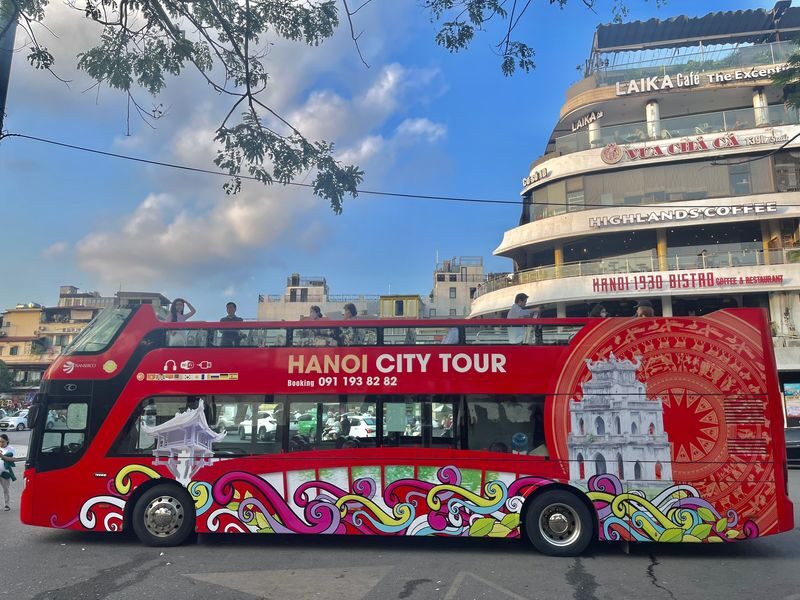

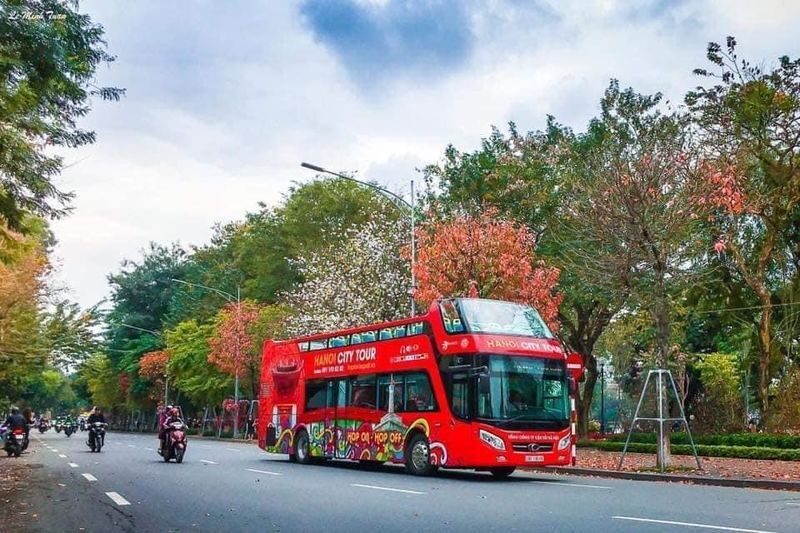

- One loop takes about an hour. Allow longer if traffic slows the bus. Some riders have found the round trip closer to 90 minutes.
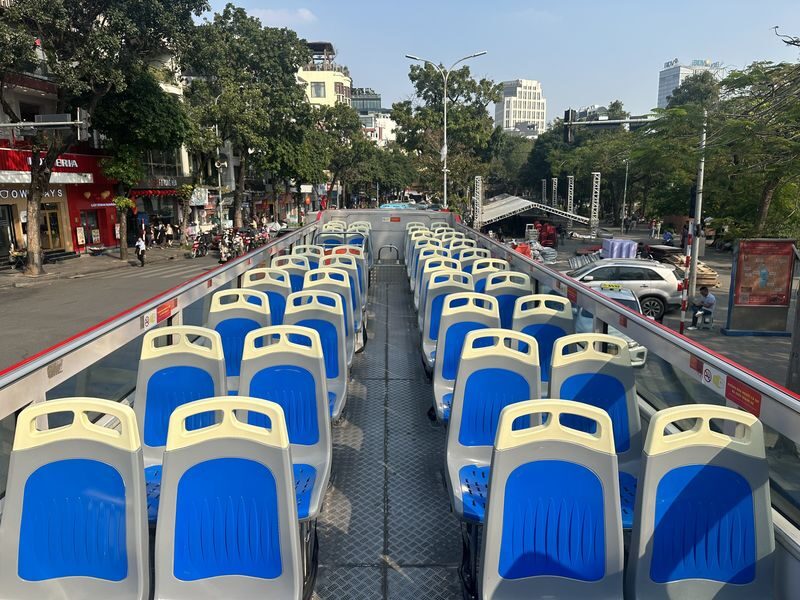
- The roof deck is the main event. It gives you a clear view over the street scene, but bring a hat and expect sun, heat, and low tree branches along parts of the route.
- The audio guide comes in eight languages. English, French, German, Spanish, Russian, Japanese, Korean, and Vietnamese are listed. Commentary can be out of sync or unavailable at some seats, so use the city map to follow along.
- Boarding details change by day and date. The usual meeting points are Hoan Kiem Lake and Hanoi Opera House. Confirm the correct one for your departure before you travel across town.
- Pass types are not interchangeable. The one-round ticket has no re-entry. Four-hour and 24-hour options are offered, but confirm the precise boarding and re-entry rules for your chosen ticket.
- The water puppet show needs a separate check. It is mentioned in the tour description, but the stated inclusions list the bus ticket and not a show ticket. Do not count on a performance being included unless your booking clearly says so.

👉 See our pick of the 25 Best Shopping Tours In Hanoi
The route gives you Hanoi in broad strokes
The bus begins at Hoan Kiem Lake, at No. 7 Dinh Tien Hoang Street on the stated weekday schedule, and at Hanoi Opera House on weekends. For the period April 30 to May 3, 2026, the meeting point is listed as the Opera House. These details can change, so check your ticket and current departure information rather than relying on a map pin alone.
From the lake, the route threads through the center and past a string of major landmarks. The listed circuit includes St. Joseph’s Cathedral, the Flag Tower, Ho Chi Minh Mausoleum, Quan Thanh Temple, Tran Quoc Pagoda, Cua Bac Church, the Imperial Citadel of Thang Long, the Temple of Literature, Hoa Lo Prison, the Vietnam Women’s Museum, Hanoi Opera House, and the Post Office. The wider route is described as covering 15 stops and more than 20 attractions, with access to over 30 destinations.
That range matters. In a short visit, the bus can help you see how the city’s main sights sit in relation to each other. You also get a look at the contrast between formal landmarks and the daily movement of central Hanoi. But a passing view is not a visit. The mausoleum, temples, museums, and citadel each deserve time on foot if you want to understand them beyond their names.
The route is a useful sampler, not a substitute for choosing a few places and going inside. On the one-round ticket, think of the circuit as a moving overview. If you buy a longer pass, check whether that specific product permits you to get off and board again before planning your day around stops.
You can also read our reviews of more tours and experiences in Hanoi.



What each landmark adds to the ride
The Flag Tower of Hanoi is one of the route’s most recognizable historical markers. Its presence gives the bus commentary a natural place to introduce the city’s past, while the elevated seat can help you spot landmarks that are easy to miss from a crowded pavement.
The Ho Chi Minh Mausoleum is a major national site, and the bus offers a convenient first look at the area. It is not a visit to the complex itself, however. If the mausoleum is a priority, plan a separate stop and check its current visitor arrangements rather than assuming the bus tour covers entry.
Tran Quoc Pagoda, beside West Lake, is a quieter change of scene from the tight central streets. From the bus, you can take in its setting and get a sense of why the city’s water and religious sites are so closely tied to its character. The same rule applies: seeing the pagoda from the route is not the same as walking around it.
The Imperial Citadel of Thang Long and the Temple of Literature are among the strongest reasons to use the ride as an orientation. The citadel connects Hanoi to its former political role, while the Temple of Literature brings the city’s scholarly traditions into view. If either interests you, note its location and return for a proper visit.
Hoa Lo Prison and the Vietnam Women’s Museum add a different kind of history to the route. They reward a slower visit, with time to read and reflect. The bus can help you decide which one to prioritize, but a quick pass outside will not do either site justice.
The Opera House and Post Office round out the central-city stretch, where French-era architecture sits alongside Vietnamese institutions and everyday commerce. The route does not promise that every landmark will appear at the exact moment you expect. Traffic, road closures, holidays, and weather can alter the route or timing, and some riders have found the audio commentary out of step with the bus’s location.
One loop, four hours, or a full day
The one-round ticket is the simplest choice if you want a broad overview without building a day around the bus. It is listed from $5.50, a modest outlay for an open-top circuit and multilingual audio. The trade-off is important: this option is described as non-stop, with one use only. If you get off, you cannot get back on.
The four-hour pass makes more sense if you want to pair the ride with visits to a few landmarks. The pass name suggests a useful block of time, but bus frequency and traffic matter. One account describes buses arriving about every 30 minutes at stops, while another reports waiting without a bus arriving. Treat the timetable as a guide, not a guarantee, and keep a taxi app or other transport option in mind if you have a fixed appointment.
A 24-hour pass offers the most room to spread out your sightseeing, but its value depends on how reliably you can use the bus and how many stops you plan to make. Before booking, confirm that your selected product allows reboarding and check which stops it serves. The activity information includes both genuine hop-on hop-off pass options and a one-round non-stop ticket, so the distinction deserves your attention.
The bus is not a door-to-door service. Hotel transfers and transport to the meeting point are excluded. If you are staying near the Old Quarter, Hoan Kiem Lake may be an easy walk; otherwise, include the trip to the boarding point in your timing and budget.
Open top, audio, and Hanoi weather
The upper deck is the best place to see the city, especially when you want a clear line of sight over traffic. It is also exposed. Hanoi’s heat can make a midday ride tiring, and riders have found later departures more comfortable. Evening rides bring cooler air and city lights, though you lose some detail in the dark. If you have a choice, match the departure to your priorities: daytime for architecture and orientation, evening for atmosphere and a break from the sun.
The operator says conical hats and raincoats are available for use on board, and drinking water is available from a large bottle. These are helpful basics, but I would still carry your own water and a hat, especially in hot weather. One rider found that tree branches came close to the top deck, so keep your headwear secure and watch overhead as the bus passes under trees.
Audio commentary is provided through headphones in eight languages. It can add useful context to the landmarks, but don’t expect a live guide. A tour guide is not included, and the commentary may not line up perfectly with what you are passing. Check the map as you ride, and consider changing seats if your audio is not working. Some riders have reported faulty or one-sided earphones and commentary that lagged behind the route.
Staff help with ticket exchange and seating, and the bus supplies a city map. Still, the boarding process can be confusing because another red double-decker service operates on similar routes. Look for the official Hanoi City Tour branding on the bus or staff uniforms. At the meeting point, show your voucher and exchange it for a physical ticket.
Water puppets: a separate cultural stop to verify
The activity description pairs the bus ride with a 50-minute Thang Long Water Puppet Show, a traditional performance form with roots in Vietnamese culture. It is an appealing addition: after seeing the city’s landmarks from above, you could spend time with a local art form rather than moving straight to another sightseeing stop.
But the ticket details do not settle whether the show is included in every package. The inclusions list a bus ticket, insurance, map, water, use of a conical hat and raincoat, and audio guide. It does not list a puppet-show ticket. The show is also not part of the bus route. Before you pay, check the exact package wording and arrange a separate ticket if necessary. That small bit of planning prevents a pleasant idea from becoming a surprise expense.



Price, comfort, and the main risks
At a starting price of $5.50, the one-loop ride can be good value if you want a quick orientation or have only a short time in Hanoi. You are paying for the elevated viewpoint, a set route past headline sights, and audio in several languages. You are not paying for a guide, hotel pickup, entry to attractions, or personal expenses.
The longer passes offer better potential value if you intend to get off at several places, but only when the reboarding rules and bus schedule work for your plans. Traffic can stretch a one-hour circuit to around 90 minutes, and a missed or delayed bus may eat into a four-hour ticket. If you are on a tight schedule, the one-loop ride is easier to budget for, though it is less flexible.
The most practical risk is not the view or the commentary. It is finding the right bus at the right place. Boarding points and schedules vary, and the two similar-looking services can be hard to distinguish. Check the current meeting point, operating hours, and branding before you leave your hotel. Listed hours are Monday to Thursday, 8:30 a.m. to 9:30 p.m., and Friday to Sunday, 8:30 a.m. to 8 p.m.; hours and closure dates may change.
Weather and unforeseen events can also interrupt service. Extreme weather may cause cancellation, and traffic or road closures can lead to delays or route changes. The operator’s terms say such changes may not qualify for a refund, so avoid placing a timed museum booking immediately after the bus ride.
Who should choose this Hanoi bus tour
I would put this near the top of the list for a first day in Hanoi, a short stopover, or a traveler who wants to see the main landmarks without navigating every street on foot. It is especially useful if you want a city overview before deciding which places deserve a longer visit. The evening ride may suit you if heat is a concern or if you want to see central Hanoi lit up.
It is a weaker fit if you need precise timing, expect a live guide, or want to make several unscheduled stops on a one-round ticket. It is also not ideal if you dislike exposed seating in hot or wet weather. A Grab ride may be more practical for a single point-to-point journey, while a walk or local transport can make more sense if your plans focus on just one neighborhood.
Book the bus for perspective, not for guaranteed transport between appointments. Choose the one-round ticket for an easy circuit, and consider a longer pass only after confirming its re-entry rules and current bus schedule. If the puppet show is part of your plan, verify that it is included in your exact package.
Ha Noi Hop On Hop Off Pass
“enjoyed my time here!! the staffs are accomodating and starting point (Hoan Kiem Lake) is just few blocks away from our hotel in Old quarter!”
FAQ
How long does one loop take?
The full loop is listed at approximately one hour. Traffic can extend the ride, and some trips may take around 90 minutes.
Is the one-round ticket hop-on hop-off?
No. The one-round option is described as a non-stop ride with one use. If you get off, you cannot reboard.
Where does the bus depart?
The usual meeting points are Hoan Kiem Lake at No. 7 Dinh Tien Hoang Street and Hanoi Opera House. The meeting point depends on the day and schedule, so check your ticket before going.
What languages are available for the audio guide?
Audio is listed in English, French, German, Spanish, Russian, Japanese, Korean, and Vietnamese.
Is a live tour guide included?
No. A tour guide is not included. The bus provides recorded audio commentary through headphones.
Is the Thang Long Water Puppet Show included?
The show is mentioned in the activity description, but the stated inclusions do not list a show ticket. Confirm your exact package before booking or plan to buy a separate ticket.
What is included with the bus ticket?
The listed inclusions are the bus ticket, operator-provided insurance, a city map, water available on board, use of a conical hat and raincoat, and multilingual audio. Hotel transfers and personal expenses are excluded.
Can the route or schedule change?
Yes. Traffic, road closures, public holidays, weather, and other unforeseen events may cause delays or changes to the route or schedule.