The unusual part of this Summer Palace tour is the way in: you approach by boat along the waterway once used for imperial journeys, then enter through South Ruyi Gate rather than the crowded East Palace Gate. The ride gives the visit a different start, but the quieter arrival and views across Kunming Lake are the stronger reasons to book.
I like two things here: the route joins the waterway to the palace’s best-known sights, and an English-speaking guide can explain the stories behind what you see, from Cixi’s summer journeys to the Long Corridor’s painted panels. Guides named in past tours include Jessica and Taurus, though you cannot choose a particular guide.
One thing to weigh is the mixed information about duration and hotel transfers. The activity is described as about two and a half hours in one place and two hours in another, while transport details conflict. Check the exact schedule and what your booking includes before setting your day around it.
- Key points to know before you book
- A royal approach along the Changhe
- South Ruyi Gate and the lakefront
- The Long Corridor, Marble Boat and Cixi’s quarters
- Climbing to the Tower of Buddhist Incense
- What the time and price buy you
- The guide can make the difference
- Seasons, comfort and practical limits
- Should you book the Cixi Waterway tour?
- FAQ
- How long does the tour take?
- Where does the tour start?
- Where does the tour end?
- Is English commentary available?
- What is included in the tour?
- Does the tour include the Tower of Buddhist Incense?
- Are children allowed?
- Can I cancel for a refund?
- The Best Of Beijing!
- More Boat Tours & Cruises in Beijing
- More Tours in Beijing
- More Tour Reviews in Beijing
- Not for you? Here's more nearby things to do in Beijing we have reviewed
Key points to know before you book
 1 / 9
 2 / 9
 3 / 9
 4 / 9
 5 / 9
 6 / 9
 7 / 9
 8 / 9
 9 / 9
- The boat ride is an alternate entrance, not the whole tour: It follows the Changhe to the Summer Palace’s South Ruyi Gate.
- The quiet arrival may be the best part: You reach the lakeside near the Bronze Ox and Seventeen-Arch Bridge, away from the usual East Palace Gate approach.
- The guide adds the context: English commentary is available, with explanations of garden design, imperial customs and palace architecture.
- Expect a brisk visit: The stated schedule ranges from two to two and a half hours, with several major sights on the route.
- The Tower of Buddhist Incense involves climbing: The described route includes 114 steps, so wear comfortable shoes.
- Confirm transport details: Hotel transfers are described as included in one section and excluded in another.
👉 See our pick of the 25 Best Shopping Tours In Beijing
A royal approach along the Changhe
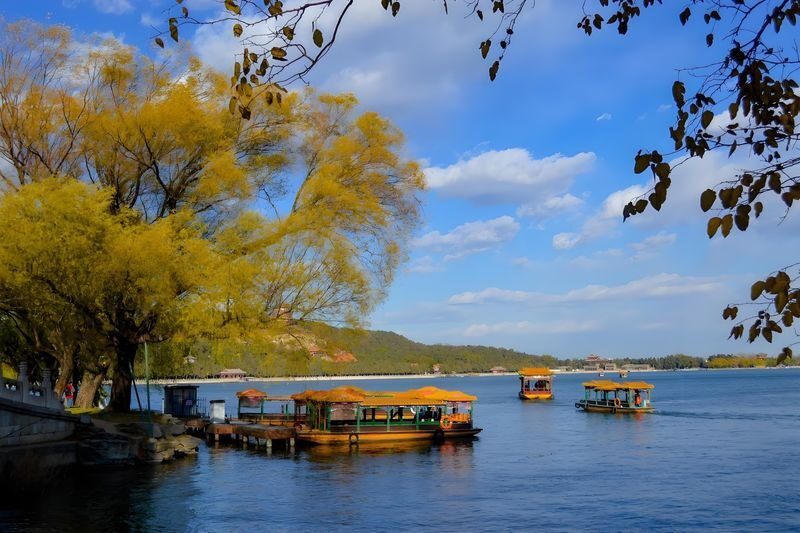
The tour begins at Ziyuwan Pier in Zizhu Academy Park. From there, you board a boat for the trip along the Changhe, a waterway described as having served several dynasties before becoming part of Empress Dowager Cixi’s summer route. The ride takes about half an hour, including commentary, according to the detailed schedule.
This is a useful change of pace from arriving at the palace gates on foot. The boat offers a view of the banks and water system as you approach, while the guide explains how the route connected Beijing with the imperial gardens. The history is part of the appeal: this was not simply a scenic canal ride, but a water route tied to transport, court life and the management of water.
The tour’s account of Cixi’s journeys gives the route a human scale. She is said to have made 32 boat trips to escape the summer heat. Along the banks, the guide may explain the elaborate protocol around her passage, including the use of yellow curtains and the requirement for common people to kneel as the imperial boat went by. Those details help you picture the canal as a working royal corridor, not just a pleasant stretch of water.
The boat passes landmarks including Guangyuan Gate, Wanshou Temple and Zizhuyuan. Guangyuan Gate is presented as a feat of water control, with sluice gates and stone channels helping regulate water levels for boats. The guide may use a simple model to show how the system worked. That sort of explanation can make an otherwise easy-to-miss piece of infrastructure more interesting.
The ride is not guaranteed to feel grand or dramatic. One past English-language tour found the boat less special than expected, while the arrival by water and the peaceful walk afterward were the highlights. Keep expectations practical: the boat is a distinctive way to enter and a chance to hear the story of the canal, but the palace itself is likely to hold your attention longer.
You can also read our reviews of more boat tours in Beijing


South Ruyi Gate and the lakefront
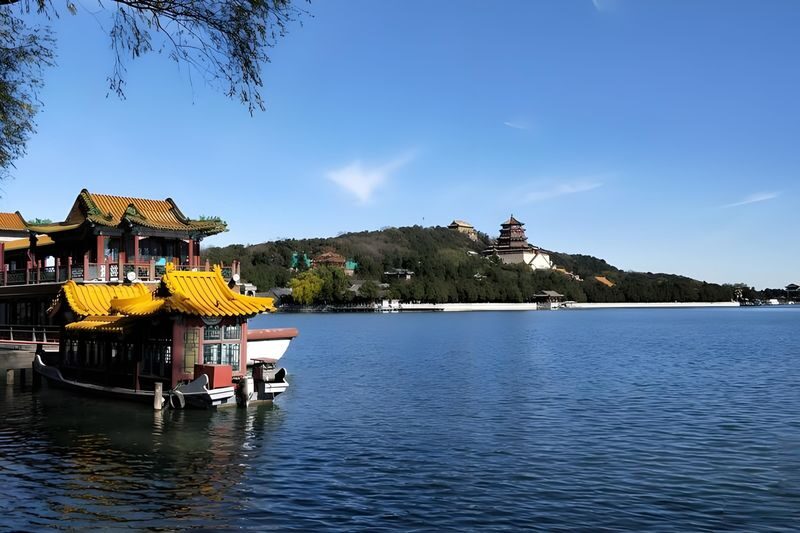
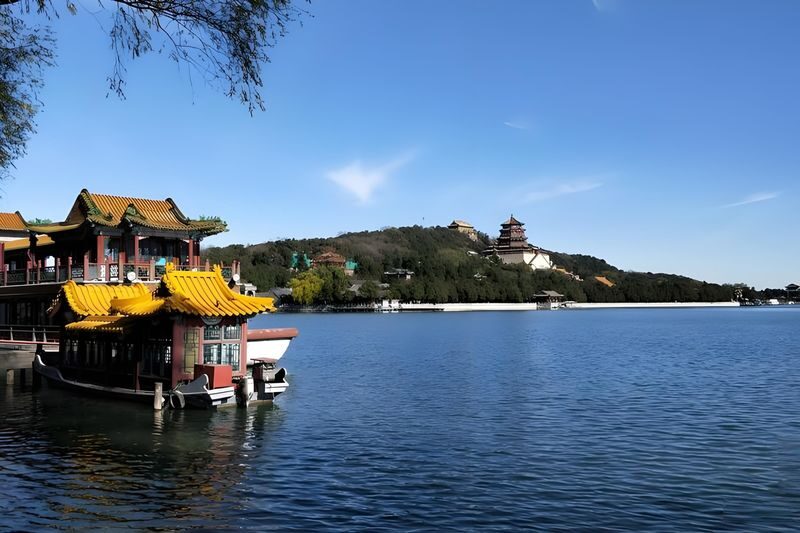
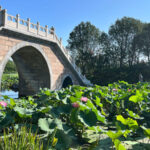
The boat brings you to South Ruyi Gate, a less conventional entrance than the East Palace Gate. The change matters. Instead of beginning amid the main gate crowds, you step into the palace grounds near the lake and reach the Bronze Ox and Seventeen-Arch Bridge area. That first view across Kunming Lake is a strong opening to the visit.
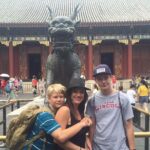
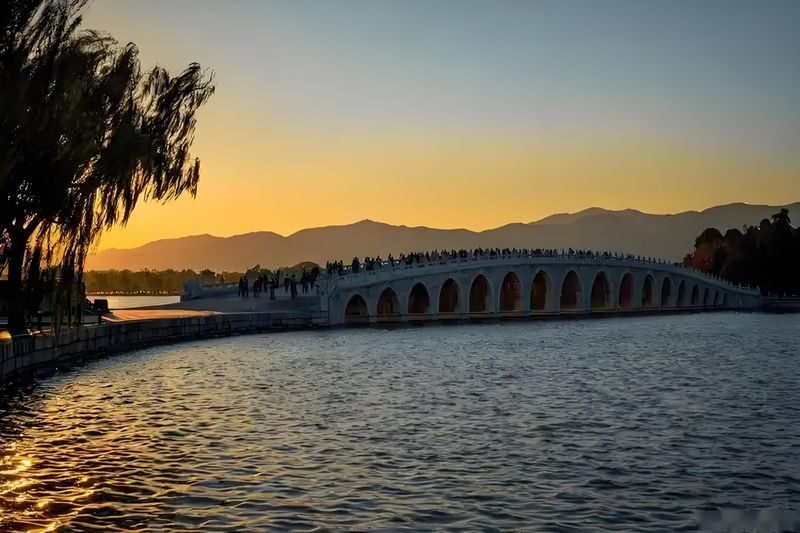
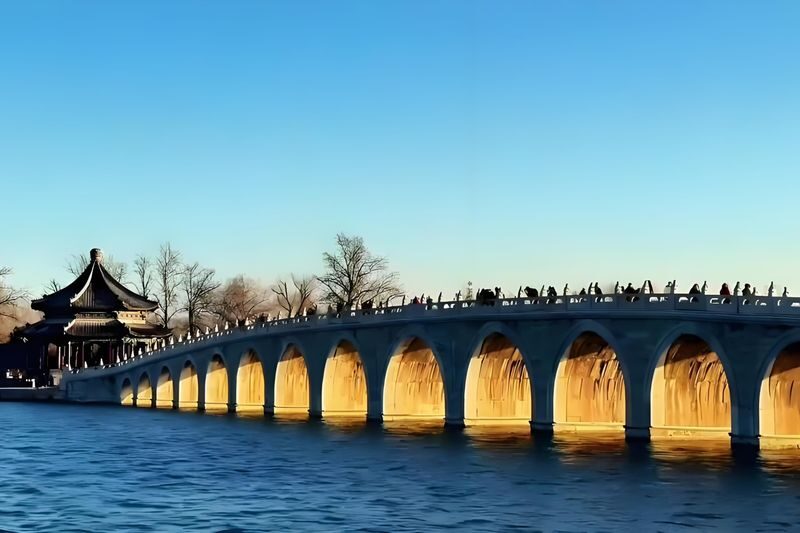
The Bronze Ox is a landmark on the lake’s edge, while the Seventeen-Arch Bridge stretches across the water toward Nanhu Island. The tour uses these sights to set up the palace’s relationship with the lake: water is not just scenery, but part of the way the garden is arranged and understood. From this side, the palace’s broad water views come into focus quickly.
The South Ruyi Gate entry is also a practical advantage if you want to avoid the busiest approach. It does not mean the whole Summer Palace will be quiet, especially in peak season, but it gives the tour a calmer start. A past participant particularly valued the easy entry and peaceful lakeside walk, which suggests the route can feel more like a garden visit than a march through a queue.
The waterway’s account of garden design includes the idea of Kunming Lake as an earthly echo of the Penglai islands, a Taoist paradise associated with immortals. This is where a good guide makes a difference. Rather than simply identifying a bridge or hall, the guide can explain why the lake and its islands were arranged as they were and what those choices signaled to the people who built and used the garden.
The Long Corridor, Marble Boat and Cixi’s quarters
From the South Ruyi Gate, the route continues through the Summer Palace’s core sights. The Long Corridor is 728 meters long and lined with painted scenes. It works as an open-air gallery, but its length also has a practical purpose: it offers a sheltered route through the garden. With a guide, you can look beyond the sheer number of paintings and hear how the images fit into the palace’s decorative world.
The corridor is one of the places where a short guided visit can feel rushed. There is a lot to see, and the tour’s schedule also includes several other major stops. If you want to linger over every painting or take many photographs, you may need a longer independent visit afterward.
The Marble Boat, also known as Qingyanfang, is another stop where the guide can connect architecture to politics. Its stone construction and boat-like shape invite interpretation, including the contrast between Chinese and Western influences described in the tour. The building is striking from the water’s edge, but the explanation is what turns it from an unusual object into part of the palace’s story.
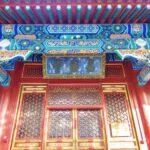
Leshou Hall brings the focus back to Cixi and everyday life at court. It served as her living quarters, and the tour points out details such as the Prodigal Stone, a peacock-stone screen and huanghuali furniture. The decor’s emphasis on longevity helps explain how symbolism ran through palace interiors. These are small details, but they give you a more intimate sense of the ruler’s residence than a broad view of roofs and courtyards can.
Climbing to the Tower of Buddhist Incense
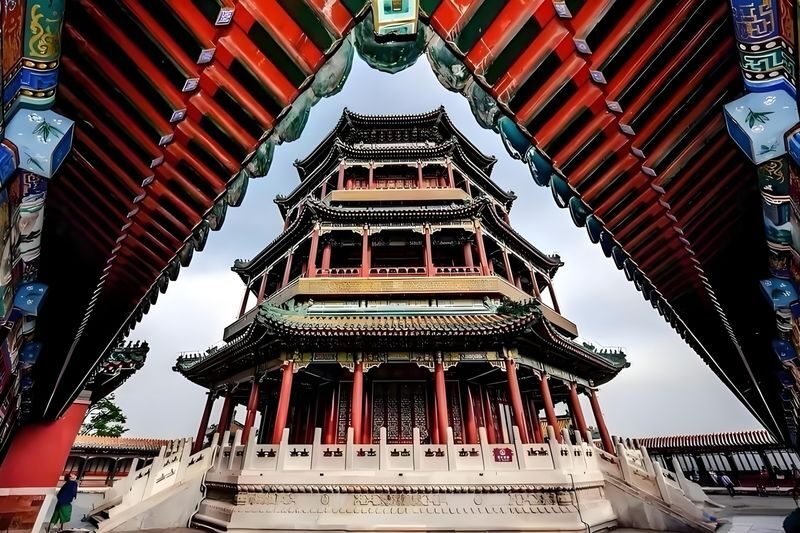
The Tower of Buddhist Incense is the route’s high point, both in elevation and in the view it offers. The climb involves 114 steps. From above, you can look across Kunming Lake and see how the palace’s buildings, water and hills relate to one another. If you are comfortable with the stairs, this is a valuable pause for taking in the scale of the grounds.
The guide’s explanation of the site’s north-facing and south-facing arrangement ties the view to imperial ritual and authority. The stated interpretation links the layout to the idea of the Son of Heaven residing in the north and governing the south. The point is not only to admire the panorama, but to understand how palace architecture could express power and order.
The climb is a real consideration for anyone with limited mobility or who would rather avoid stairs. The activity has no age limit, but that does not mean every part of the route will suit every visitor. Lightweight sports shoes are recommended, and you should be prepared for a fair amount of walking as well as the steps.
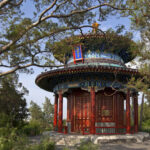
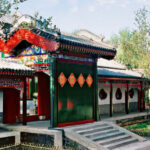
The Garden of Harmonious Interest is included as a smaller garden stop, with rockeries and pavilions creating a more enclosed contrast to the open lake views. It offers a change of scale after the broad sweep of the Tower and Kunming Lake. How much time you get there will depend on the group’s pace and the day’s schedule.
What the time and price buy you
The advertised starting price is not one fixed price for every language. The Chinese-language option starts at US$111.45, the English option at US$145.75, the Russian option at US$188.45, and the Japanese option at US$188.45. A Spanish option is listed from US$224.35. The headline price of US$128.15 therefore does not match every package, so check the language and price shown for your selected date.
For the English option, the value is mainly in the guide and the unusual entrance route. You are paying for the Summer Palace admission, the Cixi Waterway boat ticket and English commentary, rather than simply for a short boat ride. If the palace is high on your Beijing list and you want help reading its symbolism and history, that can be worthwhile. If you mainly want time to wander, photograph and explore at your own pace, a self-guided visit may offer better value.
The schedule is described as about two and a half hours in the detailed itinerary, while the headline duration says two hours. The proposed plan gives roughly half an hour to the waterway and about two hours to the palace, but the timing may change with traffic and weather. Several famous sights are packed into that window, so think of this as a focused introduction rather than a slow, complete exploration.
The tour’s transfer information needs checking. One section says round-trip hotel transfers within Beijing’s Fifth Ring Road are included, while the fees section says hotel pickup and drop-off are not included. The listed meeting point is Ziyuwan Pier, and the return point is South Ruyi Gate. Confirm your actual pickup arrangement and plan how you will get to and from those points before booking.
Departure times are listed as 09:00 and 13:00, with return times of 12:00 and 16:00 depending on the option selected. Morning may suit you if you prefer to start early, but one past participant suggested choosing an earlier session to avoid being grouped with a larger tour. Group size can vary: one tour was just two people with their guide, while another visitor noted being grouped with a noisy senior group. Do not count on a private tour unless your booking specifically says so.
You can also read our reviews of more tours and experiences in Beijing



The guide can make the difference
This is a history-heavy visit, and the English commentary is central to its value. The guide is expected to cover more than names and dates, explaining how the waterway worked, why the garden was designed around Kunming Lake and what details in the halls and temples reveal about court life. Past tours have included guides named Jessica and Taurus. Their names are useful reference points, but guide assignments can vary.
The most praised part of the experience has been the quality of the guiding. One English-language visitor valued Jessica’s thorough explanations, patience with questions and ability to connect the Summer Palace to Beijing’s wider history. Taurus was also described as friendly and helpful, including when accompanying older family members. Other feedback emphasizes careful, clear explanations.
That matters because the tour covers a lot in little time. A guide who welcomes questions can help you choose which details to focus on and make the route more personal. Still, a strong guide cannot remove the time limit. If a particular hall, painting or garden corner matters to you, be ready to ask about it rather than assuming the group will stop for a long time.
Seasons, comfort and practical limits
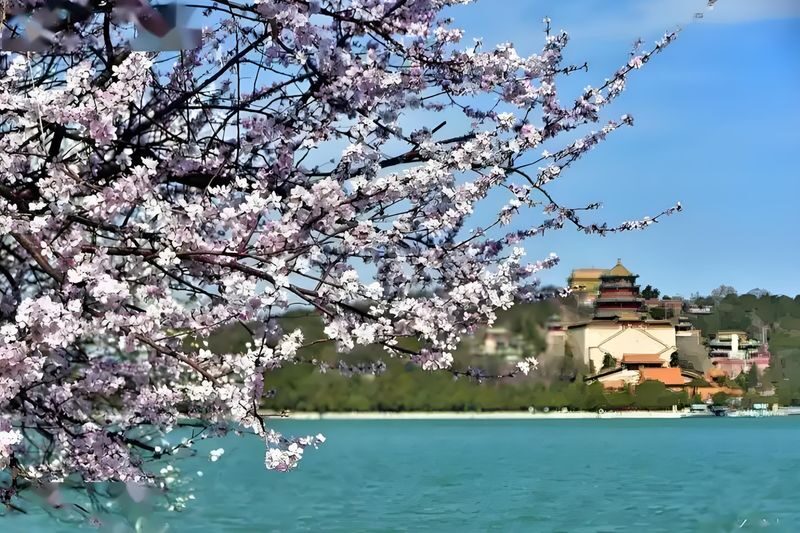
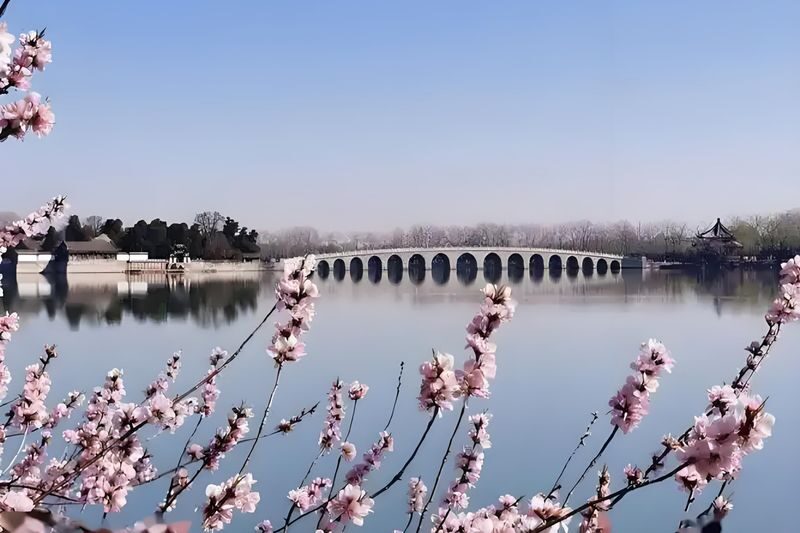
The route’s character changes with the season. Spring brings peach blossoms along the waterway, while summer is associated with lotus flowers and the heat-escape story behind Cixi’s trips. In autumn, red leaves on Longevity Hill reflect in the lake. Winter can bring ice and snow, but any winter waterway experience depends on weather and whether the route is open.
Wear comfortable shoes. Sun-protective clothing and a hat are sensible in warm weather, and mosquito repellent is recommended in summer. Luggage storage and delivery are not provided, so bring only what you want to carry through the boat ride and palace walk.
Children and infants must be included in the passenger count, and the activity has no stated age limit. That is a booking rule, not a promise that the climb or walking will suit every child or adult. Consider the Tower’s 114 steps and the compact pace when deciding whether the route fits your group.
The tour lists no meals or beverages as included. Bring what you need for the outing, especially if you are joining the afternoon departure or prefer to have a drink on hand. The meeting and return points differ, so allow time to orient yourself after the tour rather than assuming you will finish where you started.
Should you book the Cixi Waterway tour?
Book this tour if you want a guided introduction to the Summer Palace, value clear English explanations and like the idea of arriving by the old water route. The South Ruyi Gate entrance, lakeside views and guide-led context are the strongest reasons to choose it. Jessica and Taurus have both been praised for being patient and informative, though you cannot request either by name.
Skip it if you want a leisurely day at the palace, dislike a tight schedule or mainly want a boat ride. The canal trip is a pleasant and unusual approach, but the palace walk and the guide’s explanations are the real substance. Before paying, confirm the session length, language, hotel transport and exact meeting arrangements. With those details settled, it makes a good, compact way to see the Summer Palace from both water and land.
Summer Palace Half-Day Tour: Boat Trip to Explore Cixi’s Waterway + In-depth English Explanation
“The tour guide explained everything very carefully and thoroughly.”
FAQ
How long does the tour take?
The duration is described as about two and a half hours in the detailed itinerary, though another summary gives two hours. The schedule may change due to traffic and weather.
Where does the tour start?
The listed meeting point is Ziyuwan Pier at Zizhu Academy Park. The departure time is confirmed after booking, with 09:00 and 13:00 options listed.
Where does the tour end?
The listed return point is South Ruyi Gate at the Summer Palace. Return times are shown as 12:00 or 16:00, depending on the departure option and itinerary duration.
Is English commentary available?
Yes. English and Chinese guide options are listed, along with Spanish, Russian and Japanese packages at different prices.
What is included in the tour?
The included items are Summer Palace admission, the Cixi Waterway boat ticket and an English or Chinese-speaking guide. Hotel transfer information is inconsistent, so confirm whether it is included with your specific booking.
Does the tour include the Tower of Buddhist Incense?
The described core route includes the Tower of Buddhist Incense and a climb of 114 steps. The route also includes the Long Corridor, Marble Boat, Leshou Hall and Garden of Harmonious Interest.
Are children allowed?
The activity has no age limit. Infants and children must be included in the passenger headcount.
Can I cancel for a refund?
A full refund is available if you cancel at least 24 hours before the activity date, using the destination’s local time.