Gyeongju’s Silla-era temples, royal tombs and wooden bridge make a fine counterpoint to modern Busan, and this full-day trip lets you see them without planning the transport yourself. I like the mix of major heritage sites and everyday culture, from Bulguksa to Gyochon’s rice-cake activity, and the chance to walk through a centuries-old bamboo grove. Guides such as Erica, Joy, Yaho and Hans have been praised for clear, lively explanations and helpful photo stops.
I also like that the route finishes at Woljeonggyo Bridge, where you can take in its traditional timberwork beside the water. The trade-off is a long day on a shared coach, with several stops to fit in and possible changes for traffic, weather or crowding. If you want unhurried time at each site, this route may feel brisk.
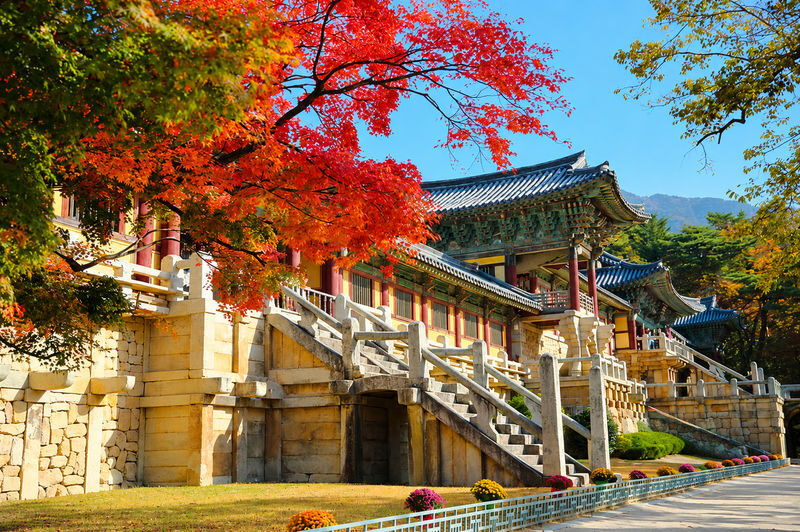
- Bulguksa Temple brings you face to face with Silla Buddhist architecture and its celebrated stonework.
- Ahopsan Forest adds a 400-year-old bamboo grove and familiar K-drama filming scenery, though admission costs extra.
- Daereungwon and Hwangridan-gil pair royal tombs with contemporary hanok cafés.
- Gyochon Village offers a look at traditional architecture and a rice-cake-making activity.
- Busan pickup points include Busan Station, Seomyeon and Haeundae, with evening returns to all three.
- The join-in fare starts at $25.15, while a VIP private option starts at $565.09.
- A full day in Gyeongju, not a one-hour outing
- Getting out of Busan without arranging the ride
- Ahopsan Forest: bamboo, quiet paths and an extra fee
- Lunch and Gyochon’s traditional village
- Bulguksa Temple: stonework from Silla’s golden age
- Royal tombs, hanok cafés and the New-tro contrast
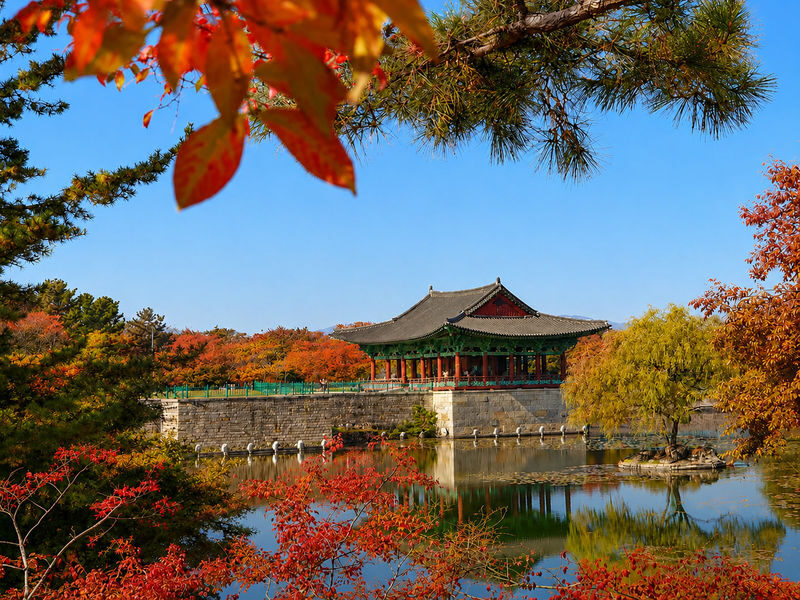
- Museum choice, Donggung and the bridge at day’s end
- Is the join-in tour worth the price?
- A few details to settle before departure
- Should you book this Gyeongju day trip?
- FAQ
- How long is the tour?
- Where can I join the tour in Busan?
- How early should I arrive?
- What language does the guide speak?
- Is Ahopsan Forest admission included?
- Is lunch included?
- Is Donggung Palace and Wolji Pond included?
- Where does the tour return in Busan?
- Can children join?
- Is the tour wheelchair-accessible?
- The Best Of Gyeongju!
- More Tours in Gyeongju
- More Tour Reviews in Gyeongju
- Not for you? Here's more nearby things to do in Gyeongju we have reviewed
A full day in Gyeongju, not a one-hour outing
 1 / 10
 2 / 10
 3 / 10
 4 / 10
 5 / 10
 6 / 10
 7 / 10
 8 / 10
 9 / 10
 10 / 10
Gyeongju is often called a museum without walls, and this trip gives you a useful first look at why. Silla, one of Korea’s ancient kingdoms, made Gyeongju its capital for centuries. Its temples, tombs and traditional streets are not confined to one museum block, so getting between them takes planning. Starting in Busan, the tour bundles the transport and a guide into one long day.
One detail needs checking before you book: the short summary lists a duration of one hour, but the actual schedule runs from morning departures in Busan to evening returns, roughly 19:00 to 19:50. Treat it as a full-day excursion. The route and finish time can shift with traffic or weather, so do not plan a tight dinner reservation or onward connection in Busan.
The group tour is the lower-cost option, advertised from $25.15. That is an appealing price for round-trip transport, a guide, tolls, parking and fuel, but do not assume every site’s admission or lunch is included. Ahopsan Forest and Donggung Palace and Wolji Pond are specifically listed as extra-cost options. Meals and drinks are also on you.

👉 See our pick of the 5 Best Historical Tours In Gyeongju
Getting out of Busan without arranging the ride
You can board at one of three subway stops: Busan Station Exit 4 at 08:10, Seomyeon Exit 4 at 08:30, or Haeundae Exit 5 at 09:10. Arrive ten minutes early. The Busan Station meeting point is at Subway Exit 4, not the KTX gate, an easy distinction to miss if you are arriving by train.
The return schedule lists Haeundae at 19:00, Seomyeon at 19:30 and Busan Station at 19:50. These are estimates rather than promises, since traffic can change the finish time. A round-trip ride is particularly useful here: Gyeongju’s main sights are spread out, and the tour handles the transfers rather than leaving you to connect separate buses or taxis.
This is a join-in coach tour, not a small-group outing. People booked through different sites may be combined, and one account describes a large coach group. That can mean a lively mix of languages and fellow sightseers, but it also makes punctuality important. Keep your belongings together and be ready at the stated meeting time when the guide calls the group back.
You can also read our reviews of more tours and experiences in Gyeongju.


Ahopsan Forest: bamboo, quiet paths and an extra fee
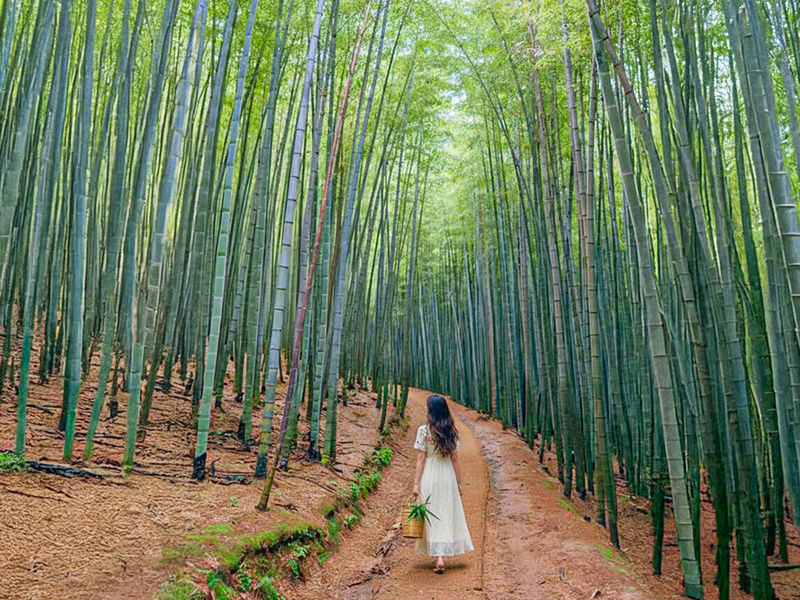
The day begins with Ahopsan Forest, a private bamboo grove said to be around 400 years old. Its tall stalks and shaded paths offer a change of pace from temple courtyards and city streets. The forest is also known as a location for Korean dramas, a fun detail if you recognize the filming scenery.
Admission is not included in the join-in tour price. Factor that extra cost into your budget, and check the current amount with the operator before you set out, since no price is specified here. As with the other outdoor stops, weather can affect the route or the amount of time you spend there.
The forest makes sense as the opening stop: it gives the day a dose of nature before the history-heavy sites. Still, if you are mainly coming for Silla heritage, remember that this stop takes time away from the central Gyeongju sights. The tour’s appeal is variety, not a slow, single-subject visit.
Lunch and Gyochon’s traditional village
Lunch gets about an hour, but the location and timing can change depending on the day. The meal is not included, so bring money for food and drink. Tell the guide in advance about allergies, vegetarian needs or religious restrictions. That simple step matters on a tightly scheduled group outing, where there may not be time to search for a suitable meal at the last minute.
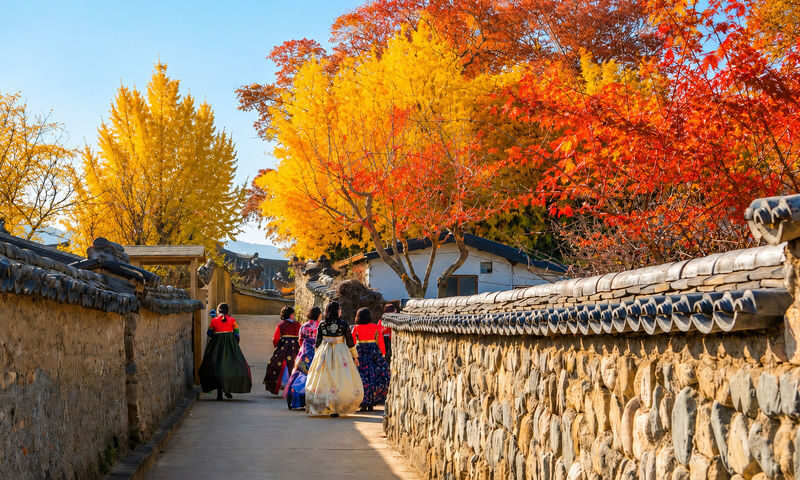
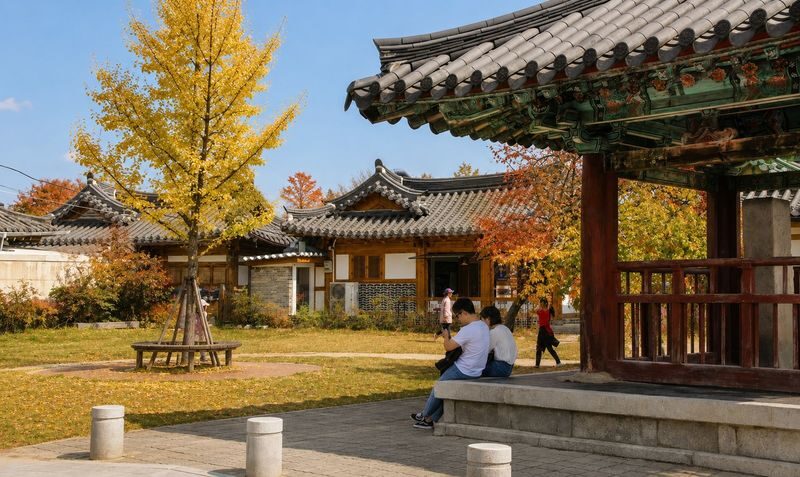
Gyochon Village offers a more domestic view of the past than a temple or royal burial ground. Its old buildings and the Choi family’s values give the guide a chance to explain local ideas of integrity and family life. A traditional rice-cake activity is part of the visit, adding a hands-on moment to a day otherwise spent walking and listening.
The activity is a welcome change from looking at historic structures, though it may depend on capacity or weather. The itinerary warns that some attractions can be skipped under those conditions. If the rice-cake experience is a priority for you, ask the operator whether it is running on your date rather than assuming it is guaranteed.
Bulguksa Temple: stonework from Silla’s golden age
Bulguksa is the tour’s key UNESCO World Heritage stop. Built during the Silla period, it is known for Buddhist architecture and stone structures that reward a closer look. A guide can explain what you are seeing and why the temple matters, giving the carved stonework and layout context beyond a quick photo.
The guide’s role is one of the strongest reasons to choose this trip over making your own way there. Past guides have included Erica, Joy, Yaho and Hans, though the assigned person varies. Travelers have particularly valued clear explanations, humor and practical help, including assistance with photos. Guides have also been praised for keeping groups on schedule and making history easier to follow.
That said, a coach tour cannot give every site unlimited time. One account of the day describes feeling short on time and needing to return independently, while many others found the stops comfortable. The difference may come down to traffic, crowd size, pace and what you want from each place. If you love lingering over temple details, plan a separate visit to Gyeongju on another day.
Royal tombs, hanok cafés and the New-tro contrast
Daereungwon’s grassy royal tombs are a striking sight. The large mounds rise from the ground without the familiar shape of a stone mausoleum, and their green contours give the area a calm, open feel. The stop introduces the burial traditions of the Silla rulers and offers a sharp contrast with the temple’s intricate stonework.
Nearby, Hwangridan-gil brings the past into the present. Hanok-style cafés and newer shops give the old architectural forms a modern use, often described as New-tro, a blend of traditional style and contemporary tastes. The point is not that every building is ancient; it is the way the district sets old forms alongside current café culture.
These stops help keep the day from becoming a string of history lectures. You get time to walk and take photos, and the mix of tombs, cafés and village streets gives you a feel for how Gyeongju’s heritage sits alongside present-day life. At busy times, however, crowds or capacity may affect which places the group can enter or how long it can stay.


Museum choice, Donggung and the bridge at day’s end
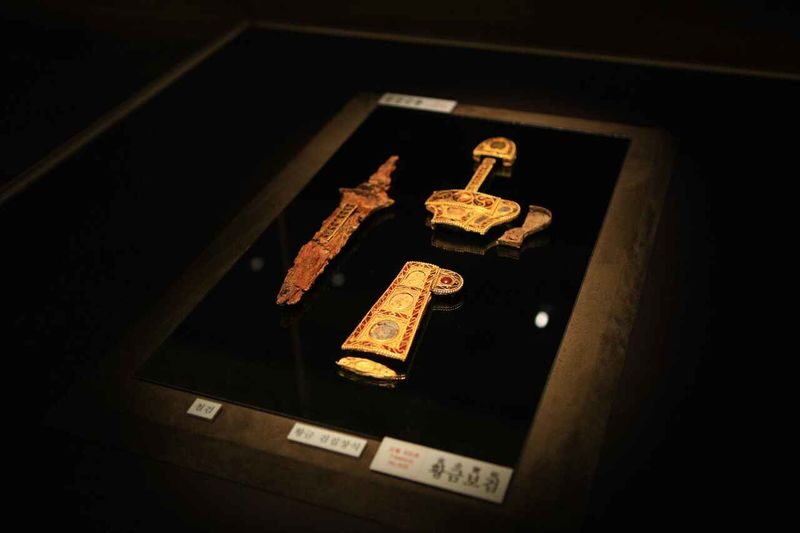
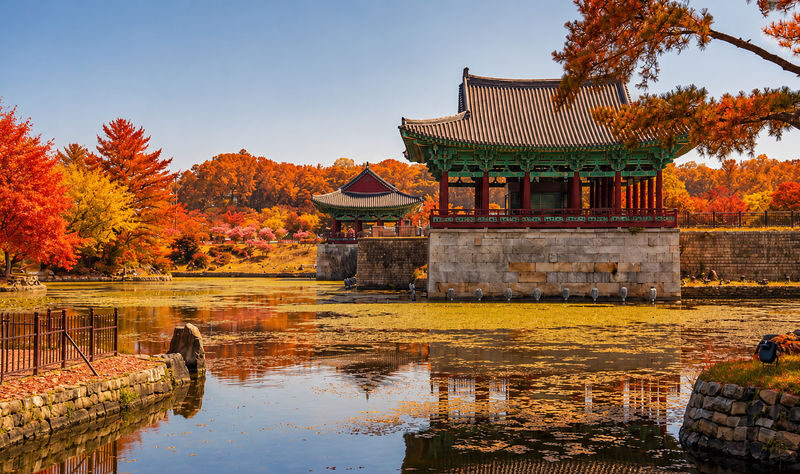
The final part of the route includes a choice connected with Gyeongju National Museum. If you skip the museum, Donggung Palace and Wolji Pond may be offered instead. Admission to the palace and pond is 3,000 KRW on site, and the choice should be confirmed with your guide. Since the itinerary does not give detailed visit times, keep your expectations flexible.
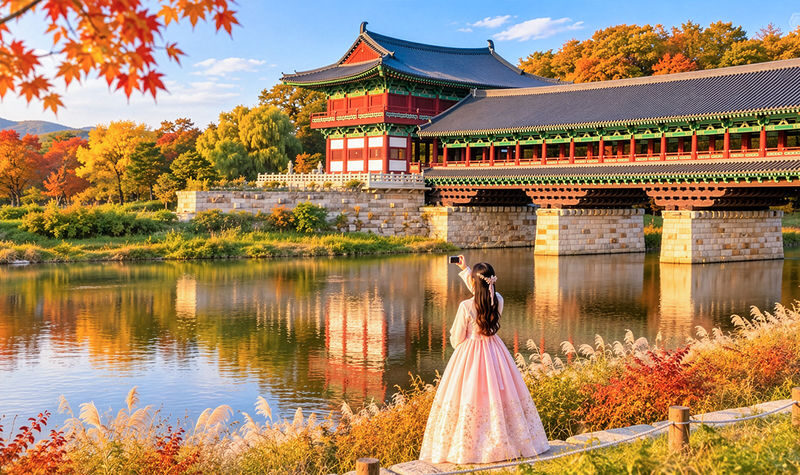
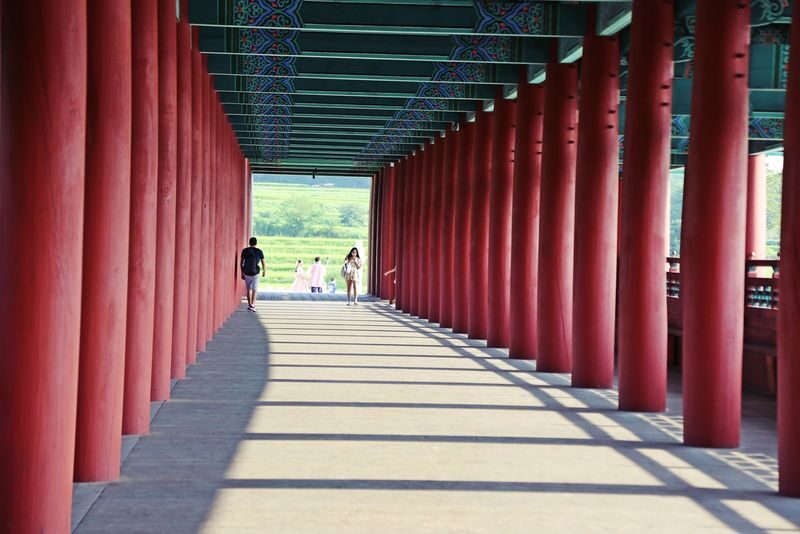
Woljeonggyo Bridge provides the closing scene. Its traditional wooden structure and riverside setting make it a natural place for a last stroll and photographs. The bridge is listed for a 17:00 visit, though the day’s schedule can change. Guides have been praised for knowing good photo spots, so ask if you want help finding a clear angle.
Ending here works well after the tombs and village streets: the bridge is both a historic structure and a scenic stop. But the day is not over until the coach returns to Busan, and the schedule allows for a late arrival. Bring a layer if you expect to be outside near evening, and avoid booking something that depends on a precise return time.
Is the join-in tour worth the price?
At $25.15 to start, the join-in option can be strong value if you want an overview of Gyeongju without arranging transport and admissions stop by stop. The fare covers the ride, guide and vehicle costs, and the route fits several distinct experiences into one day. The low starting price does not include lunch, Ahopsan admission or the optional Donggung and Wolji admission, so the final cost will be higher.
The VIP private tour starts at $565.09. Its listed benefits include hotel pickup and the ability to customize the itinerary, with an extra 100,000 KRW for pickup in the Gimhae Airport or Gijang area. Attraction admissions are not included in the private-car price either. The private choice is better suited to a group that values control over its pace and pickup details, but it costs far more.
The join-in trip suits first-time visitors based in Busan, people short on time, and anyone who would rather have historical context than navigate the sites alone. It is less suited to wheelchair users, since the activity is not wheelchair-accessible, or to visitors who want a quiet, highly flexible day. Children must be included in the headcount, and participants must be at least four years old.
A few details to settle before departure
After booking, provide an accurate phone number or messenger ID. The operator says it will send a pre-tour message through WhatsApp or LINE one to two days before the trip. If you use LINE, turn off the Filter messages setting the day before so the guide can reach you. If no message arrives by 10:00 PM the night before, contact the operator through WhatsApp at +82 10 4521 7582.
The voucher is valid only on the date booked. Changes are allowed until 24 hours before the activity in some cases, but restrictions apply to bookings made with certain passes, presales, freebies or culture-point programs, and to bookings without an issued voucher. The stated cancellation terms offer a full refund for cancellations at least 24 hours before the activity date; severe weather or unforeseen events may lead the operator to cancel and offer a refund or rescheduling, subject to availability.
Should you book this Gyeongju day trip?
Book it if you want to see several sides of Gyeongju in one day and value transport plus a guide more than a slow pace. The combination of Bulguksa, royal tombs, village streets, bamboo and bridge views is a better introduction than a temple-only outing, and guides such as Erica, Joy, Yaho and Hans have been praised for making the history engaging.
Skip it if your priority is extended time at each site, a small group or full control over the schedule. For most people based in Busan with one day to spare, the join-in tour is a practical, low-cost starting point. Budget for meals and optional admissions, arrive early, and treat the return time as approximate.
Gyeongju UNESCO Authentic Tour from Busan
“Great full day trip from Busan with guide Yaho. Experienced guide from Busan most recently working at the Vatican. Detailed itinerary covering all…”
FAQ
How long is the tour?
The summary states one hour, but the detailed schedule runs from morning departures in Busan to evening returns, roughly 19:00 to 19:50. Plan for a full day.
Where can I join the tour in Busan?
Pickup points are Busan Station Subway Exit 4 at 08:10, Seomyeon Subway Exit 4 at 08:30, and Haeundae Subway Exit 5 at 09:10. Busan Station pickup is at the subway exit, not the KTX gate.
How early should I arrive?
Arrive at your meeting point ten minutes before the departure time. Late arrivals and no-shows are not refundable.
What language does the guide speak?
The tour offers an English- or Chinese-speaking guide. The specific guide varies by date.
Is Ahopsan Forest admission included?
No. Admission to Ahopsan Forest is not included in the join-in tour price.
Is lunch included?
No. Meals and beverages are not included. Lunch is scheduled for about one hour, though timing may change.
Is Donggung Palace and Wolji Pond included?
It is an optional alternative for guests skipping Gyeongju National Museum. Admission is 3,000 KRW, payable on site.
Where does the tour return in Busan?
The listed return points are Haeundae Subway Station around 19:00, Seomyeon Subway Station around 19:30, and Busan Subway Station around 19:50. The actual times may vary.
Can children join?
Participants must be at least four years old. Infants and children must be included in the passenger headcount.
Is the tour wheelchair-accessible?
No. The activity is not wheelchair-accessible.