Angkor Wat is more than one famous temple. This full-day outing links it with Bayon’s stone faces, Ta Prohm’s tree-threaded ruins, and quieter Ta Nei, giving you a useful first look at the vast temple complex. You can choose a sunrise or sunset departure, and a shared small group or private guide.
I like two things here: a guide puts the carvings and religious stories in context, and hotel transfers spare you the hassle of arranging rides between far-flung sites. Several named guides, including Ben, Vuthy, and Da Rith, have earned praise for clear explanations, flexible pacing, and taking photos for their groups.
The main consideration is the long, hot day. You’ll walk over uneven temple grounds, need to buy your own Angkor Pass, and pay for lunch. Sunrise also means an early start, while clouds can spoil the dawn colors.
- At a glance
- One day, several different Angkor moods
- Sunrise or sunset: choose your kind of light
- Angkor Wat: begin with the great temple
- Ta Prohm: roots, stone, and a different scale
- Ta Nei: a quieter pause in the circuit
- Angkor Thom and Bayon: faces and royal-city scale
- Phnom Bakheng: the final stop
- Transport, group size, and the value of a guide
- What the price does and does not cover
- Dress, heat, and a few practical details
- Should you book this Angkor day tour?
- FAQ
- Is the Angkor Pass included?
- Is lunch included?
- What temples are on the route?
- Does the tour include hotel pickup?
- What languages are available?
- What should I wear?
- Can I book a private tour?
- The Best Of Angkor Wat!
- More Private Tours in Angkor Wat
- More Tours in Angkor Wat
- More Tour Reviews in Angkor Wat
- Not for you? Here's more nearby things to do in Angkor Wat we have reviewed
At a glance
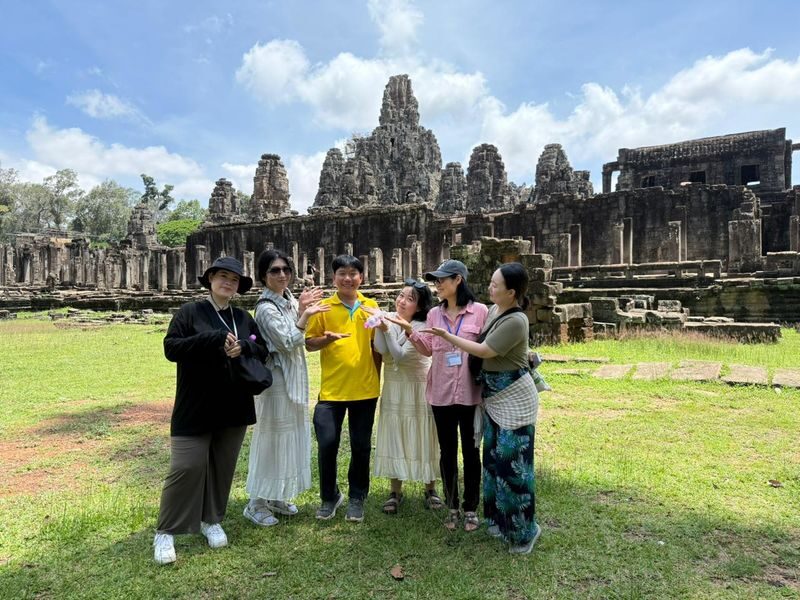
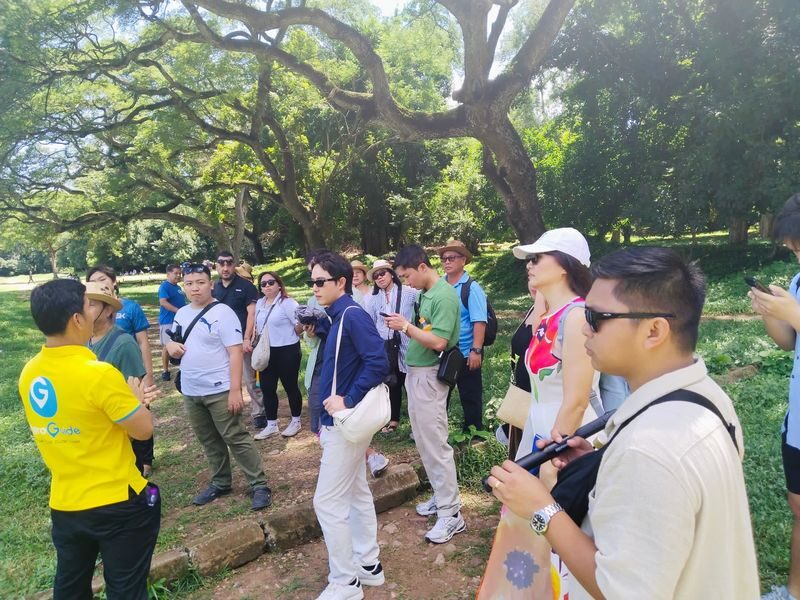
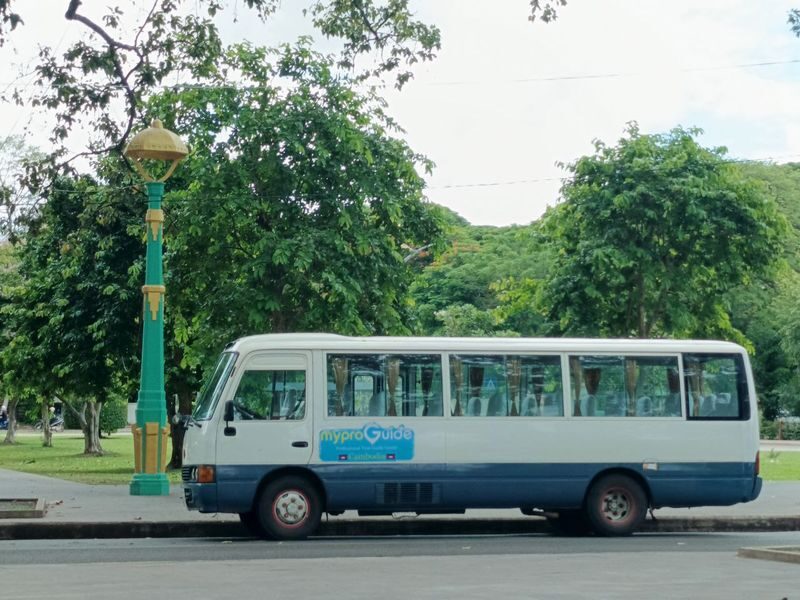

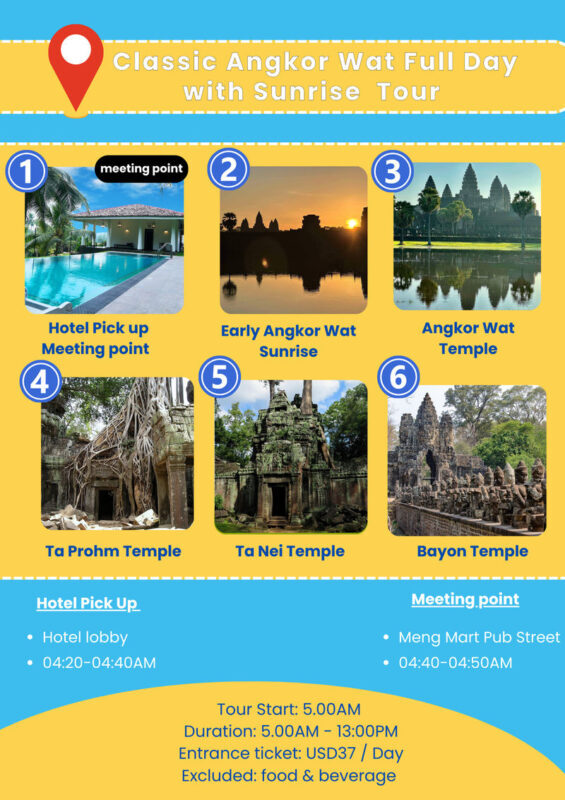
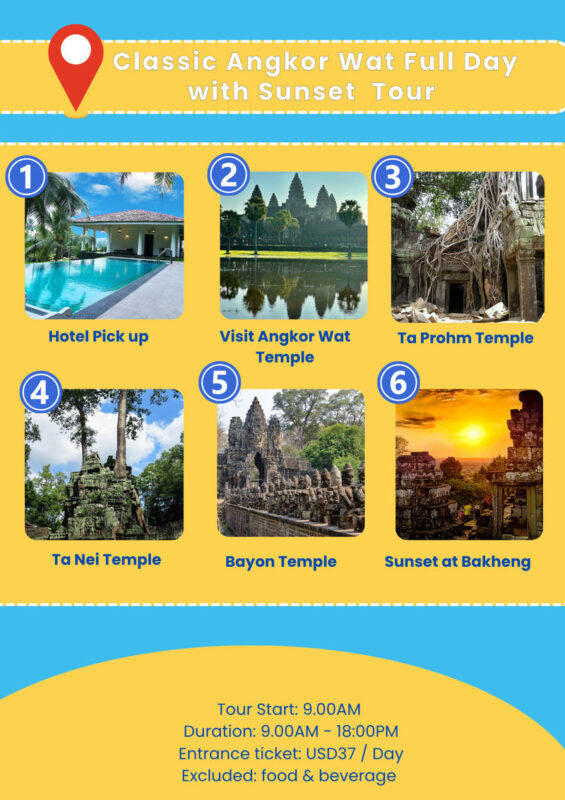
- The route covers six major stops: Angkor Wat, Ta Prohm, Ta Nei, Angkor Thom, Bayon, and Phnom Bakheng.
- You choose the mood: sunrise brings the chance of dawn light at Angkor Wat; sunset packages include a stop at Phnom Bakheng.
- Hotel pickup and return are included: shared transport may be by van or tuk-tuk, depending on the group.
- A licensed local guide leads the temple visits: English, Chinese, Japanese, Korean, and Russian options are offered.
- The Angkor Pass and lunch cost extra: a one-day pass is listed at US$37.
- It’s a full day on your feet: dress modestly, wear walking shoes, and plan for heat and humidity.

👉 See our pick of the 3 Best Tours In Angkor Wat
One day, several different Angkor moods
Angkor Wat is the headline, but the pleasure of this route is seeing how varied the complex is. The vast temple gives you scale and ceremony; Bayon draws you into close-up stone faces and carved galleries; Ta Prohm feels more tangled and intimate. Ta Nei offers a quieter contrast, while Angkor Thom connects several pieces of the former royal city.
That variety makes the tour a strong first-day choice if your time in Siem Reap is short. You get a guided introduction to the best-known temples without needing to plan the route or negotiate transport at each stop. The tradeoff is that six stops in one day give you a sampler, not a slow archaeological study.
The tour is operated by MyProGuide Cambodia, with licensed local guides. The guide’s skill matters here: Angkor’s carvings and layouts can be hard to read without context, and the temples are large enough that it’s easy to spend an hour looking without understanding what you’re seeing. Guides such as Ben, Vuthy, Da Rith, and Sen have been praised for explaining history and culture in accessible terms, helping with photos, and adjusting the pace to conditions. You can request a guide by name, but availability is not guaranteed.
You can also read our reviews of more private tours in Angkor Wat


Sunrise or sunset: choose your kind of light
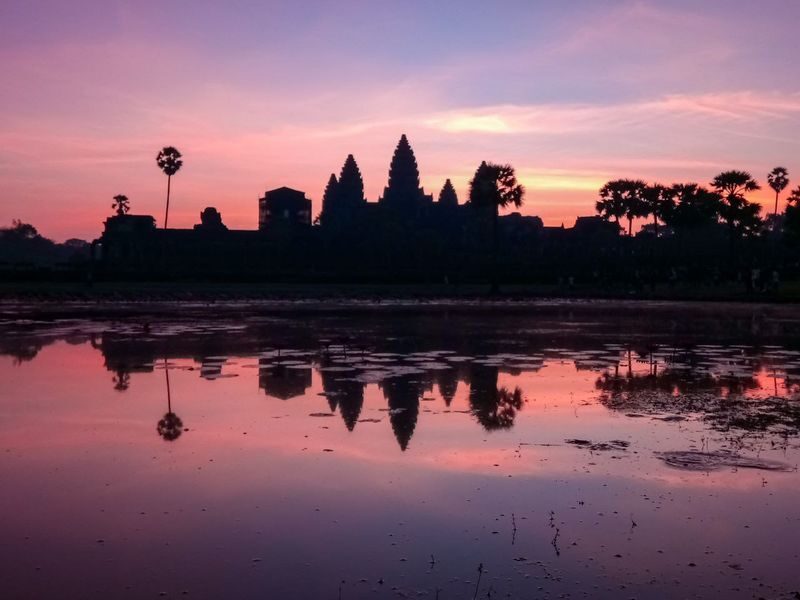
A sunrise departure is for you if seeing first light at Angkor Wat is a priority. It adds a special mood to the visit and may give you a memorable view of the temple before the day’s heat settles in. But dawn is not a promise of a glowing sky. Clouds can cover the sunrise, and you’ll need to be ready for a very early pickup.
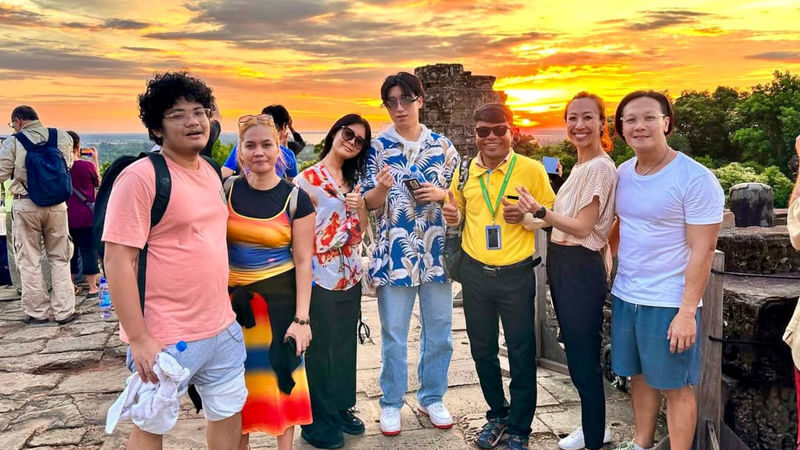
The sunset option suits you if you’d rather avoid the pre-dawn start. Phnom Bakheng is included as a one-hour stop, making it the natural place in this route to end the day. The precise light and timing depend on weather and schedule, so treat sunset as a possibility rather than a guaranteed show.
The timing information varies by package. A general day schedule lists a 9:00 a.m. departure and return around 6:15 p.m., while sunrise and sunset options may use different pickup times. The operator confirms your pickup in advance, so check the time for the exact package you book instead of relying on the general schedule.
Angkor Wat: begin with the great temple
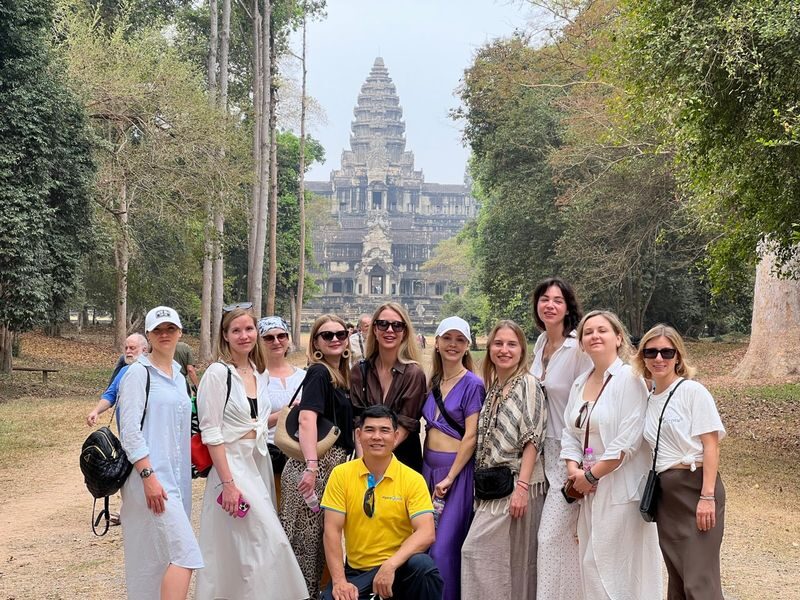
The itinerary allows about two hours at Angkor Wat, with a guided visit inside the complex. That is a helpful amount of time for a first encounter: you can take in the scale, walk through the main areas, and listen as your guide explains the temple’s religious and historical details.
The temple covers more than 401 acres, so don’t expect to see every corner in a couple of hours. Your guide helps focus your attention, whether on architecture, religious imagery, or the stories carved into stone. If you’re keen on photography, guides have helped visitors find good angles and taken pictures for solo travelers and families.
For the sunrise option, Angkor Wat is the key draw. The experience depends on the sky and crowds, but the chance to see the temple at dawn is a sound reason to set the alarm. Bring patience as well as a camera: the sunrise is a short moment, while the temple deserves more than a quick photo stop.
Ta Prohm: roots, stone, and a different scale
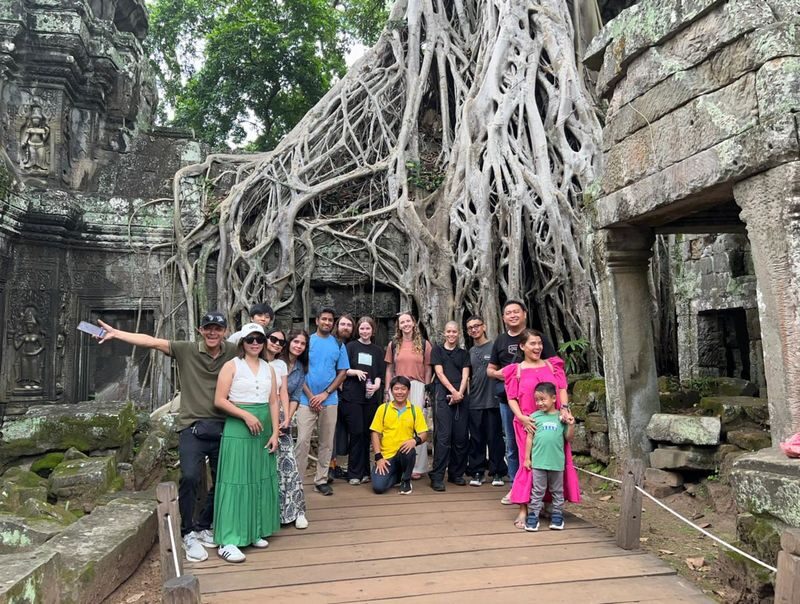
The tour gives Ta Prohm about an hour and a half, the longest stop after Angkor Wat. Its appeal is the close relationship between the temple remains and the trees growing through them. Rather than feeling as formal and immense as Angkor Wat, Ta Prohm can feel more enclosed, with stone passages and dramatic roots shaping the views.
This is a good place to slow down enough to notice how the ruins fit into their surroundings. It is also a popular photo stop, so the guide’s advice on where to stand and when to move can save time. The site is uneven underfoot, and the heat can make an hour and a half feel longer than it sounds.
Ta Nei: a quieter pause in the circuit
Ta Nei is scheduled for an hour. Compared with the better-known temples, it offers a change of pace within the day and a chance to look closely at the stonework without treating every stop as the same grand spectacle.
The route’s value lies partly in this contrast. Angkor’s famous monuments can blur together when you rush from one to another; a less prominent temple helps you notice differences in layout and atmosphere. Still, the itinerary is full, so ask your guide questions as they arise rather than expecting a long, unhurried visit at every site.


Angkor Thom and Bayon: faces and royal-city scale
Angkor Thom has a one-hour slot, followed by an hour at Bayon. The two stops are linked: Angkor Thom was a major royal city, and Bayon sits at its heart. Bayon is known for its towers with large carved faces, an image that feels very different from Angkor Wat’s more ordered, monumental form.
A guide is particularly useful here. The scale, carved details, and religious references can be difficult to make sense of on your own, and a good explanation turns the faces and reliefs into more than a backdrop for photos. Guides have been praised for talking about architecture, religion, Cambodian culture, and history, rather than reciting dates alone.
The itinerary may adjust for traffic or weather. That flexibility is sensible in a day with several separate stops, but it also means you should not expect every visit to run to the minute.
Phnom Bakheng: the final stop
The schedule sets aside an hour at Phnom Bakheng. It is the last stop in the listed route, and it fits especially well with a sunset package. If the light cooperates, it can be a fitting end to a day among temples; if weather or timing shifts, the experience may be less scenic than you hoped.
Do not confuse the stop with a guarantee of a clear sunset. The schedule can change with conditions, and the tour’s main strength is the broad temple circuit, not control over the weather. If a sunset view is your main reason for booking, keep that uncertainty in mind.
Transport, group size, and the value of a guide
Hotel pickup and return are included, which is a real convenience when you’re moving among sites spread across the Angkor area. The tour includes bottled water and refreshments, and the driver may provide cold towels. In Cambodia’s heat, a cool drink and a short break between temples are more than a courtesy.
Shared tours may use an air-conditioned van or a tuk-tuk. The operator notes that groups of fewer than three may travel by tuk-tuk instead of van, though the tour also has a minimum-participant rule and may reschedule if that minimum is not met. Private transport gives you more control over the day and suits families, couples, or anyone who prefers to ask questions without keeping pace with a group.
The guide is the part that can turn a busy temple day into a meaningful one. Strong guides such as Ben, Vuthy, Sen, and Da Rith have been praised for clear storytelling, patience, and help with photos. But the quality of commentary can vary, especially across language options. If detailed interpretation in a particular language is essential to you, consider that carefully before choosing a package.
What the price does and does not cover
Prices depend on the departure, language, transport, and whether you book shared or private. The listed options begin around US$15 to US$18 for some shared English packages, while private options cost more; other language packages are priced differently. Treat the price shown at checkout as the relevant one for your dates and selection.
The low starting price is not the full cost of seeing Angkor. Admission is separate: the listed Angkor Pass costs US$37 for one day, US$62 for three consecutive days, or US$72 for seven consecutive days. Lunch and personal expenses are also on you. The tour includes water and refreshments, but do not assume that a meal is part of the package.
For a first-time visitor, the value is mainly in transport and guided orientation. You avoid arranging rides between temples and gain explanations at the sites. If you already have transport and prefer to explore at your own pace, the shared tour may offer less value; a private option may be worth the extra cost if you want more flexibility.
Dress, heat, and a few practical details
Angkor requires modest clothing: long pants and a shirt with sleeves are specified. Wear comfortable walking shoes and expect uneven ground, long stretches on foot, and hot, humid conditions. Bring sun protection and drink water regularly, even when you feel fine.
Arrive at your hotel lobby about 10 minutes before the confirmed pickup time. Shared transfers may arrive early or late, and missing the pickup is treated as a no-show. Infants and children must be included in the passenger count; children aged 0 to 2 are free, while those aged 12 and over pay the adult rate. Children aged 0 to 11 need a paying adult, and child seats are not available.
The activity is not recommended for pregnant women on the join-in option. There is no luggage storage or delivery service, so leave large bags at your accommodation. The voucher is mobile, and the operator sends pickup details in advance.
Should you book this Angkor day tour?
Book it if this is your first visit to Angkor, you want a guide to explain the major temples, and you value hotel transport over arranging each ride yourself. The route covers a lot in one day, and the mix of Angkor Wat, Bayon, Ta Prohm, Ta Nei, Angkor Thom, and Phnom Bakheng gives you a solid sense of the complex’s range.
Choose a private package if you want more control over pace or prefer a quieter day with your own guide. Choose shared transport if price matters more and you’re comfortable with a group schedule. Either way, budget for the pass and lunch, prepare for heat, and choose sunrise only if you’re willing to trade sleep for the chance of dawn light.
Classic Angkor Wat Sunrise or Sunset Small Group or Private Tour
“The bus ride with air conditioning was comfortable. The tour guide thoroughly explained the historical background of each ruin, and we enjoyed the…”
FAQ
Is the Angkor Pass included?
No. You need to buy it separately. The listed prices are US$37 for one day, US$62 for three consecutive days, and US$72 for seven consecutive days.
Is lunch included?
No. Lunch is not included, and personal expenses are also extra.
What temples are on the route?
The listed stops are Angkor Wat, Ta Prohm, Ta Nei, Angkor Thom, Bayon, and Phnom Bakheng.
Does the tour include hotel pickup?
Yes. Round-trip transfers to and from your hotel are included for pickup packages. The operator confirms the pickup time in advance.
What languages are available?
English, Chinese, Japanese, Korean, and Russian options are listed. Package availability and price vary by language.
What should I wear?
Wear long pants and a shirt with sleeves, as well as comfortable walking shoes. Casual clothing is suitable, provided it meets the clothing requirements.
Can I book a private tour?
Yes. Private options are available in several languages, including English, Chinese, Japanese, Korean, and Russian. The price varies by language and sunrise or sunset selection.