The most revealing part of this half-day tour may be watching palm juice and fruit gathered using simple local techniques, then seeing how palm sugar is made in the field. It connects a familiar ingredient to the work behind it, in a setting that is far removed from a shop shelf.
I like the mix of hands-on craft visits and cultural stops: you can see Kran clay pots and ovens being made, then explore Khmer pagoda architecture and a traditional silk-weaving house. One consideration: the outing is brief, and the stated schedule does not include the cooking class or lunch mentioned in an older account, so check what your booked package covers.
- Key points before you book
- From Chau Doc to the Khmer village
- Palm juice, fruit, and sugar in the field
- Kran clay pots and ovens
- An ancient Khmer pagoda
- Silk weaving at a traditional house
- What the price includes, and what it does not
- Who will enjoy this morning most
- Practical details for a smooth start
- Should you book this Khmer village tour?
- FAQ
- How long is the tour?
- Where does pickup take place?
- Is an English-speaking guide included?
- What will I see and do?
- Are palm products included?
- What should I bring?
- Are children and infants included in the booking?
- Is lunch included?
- More Private Tours in Chau Doc City
- More Tours in Chau Doc City
- More Tour Reviews in Chau Doc City
Key points before you book
 1 / 10
 2 / 10
 3 / 10
 4 / 10
 5 / 10
 6 / 10
 7 / 10
 8 / 10
 9 / 10
 10 / 10
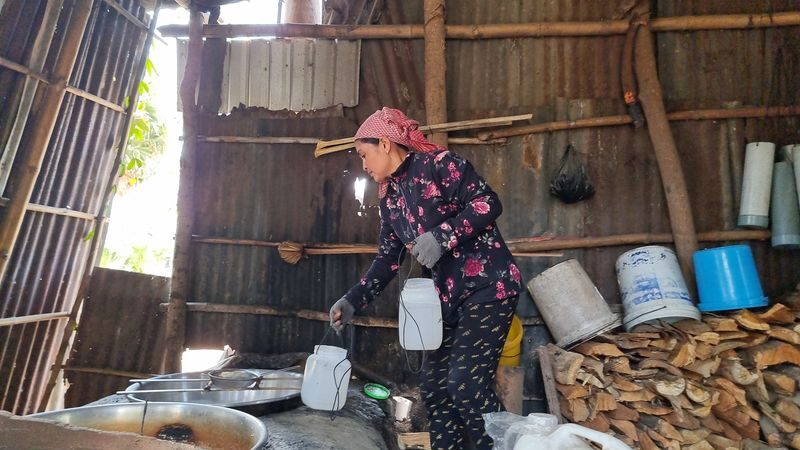
- Palm work is the clearest window into daily craft: See how local people collect palm juice and fruit, and learn about palm sugar production at the palm field.
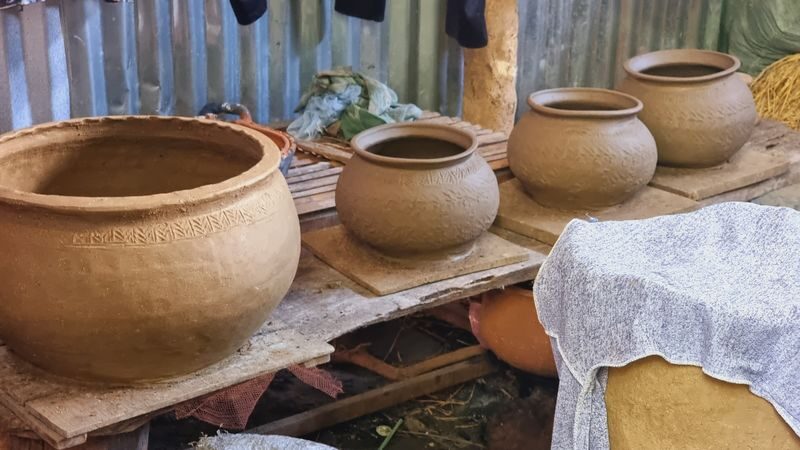
- Kran making is a practical craft stop: Watch Khmer makers shape traditional clay pots and ovens.
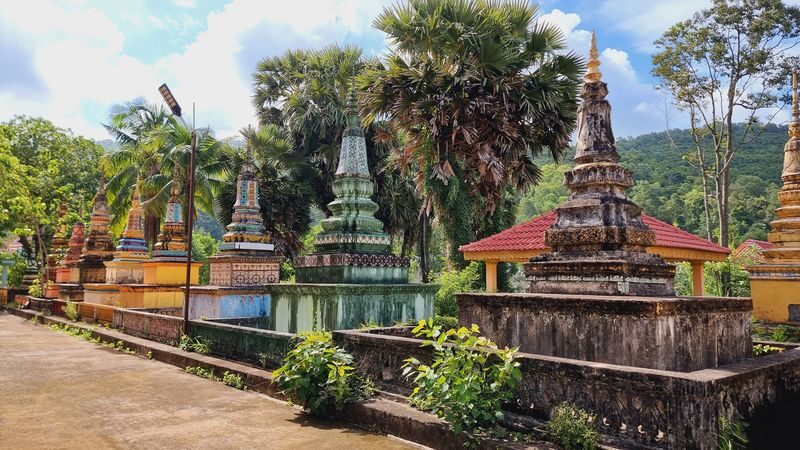
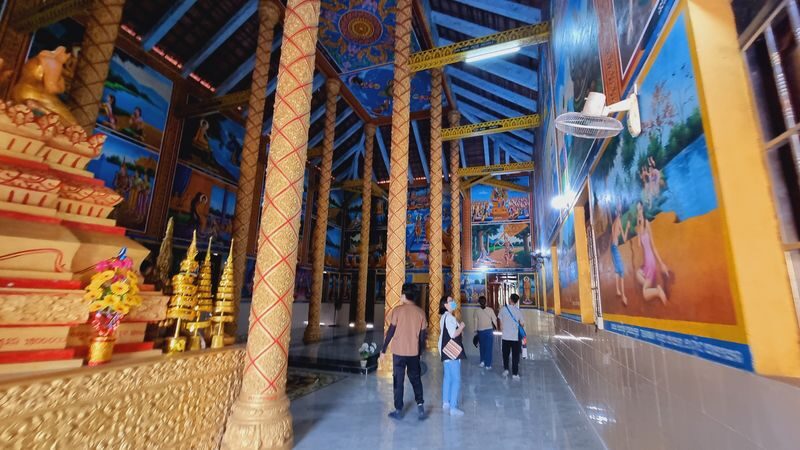
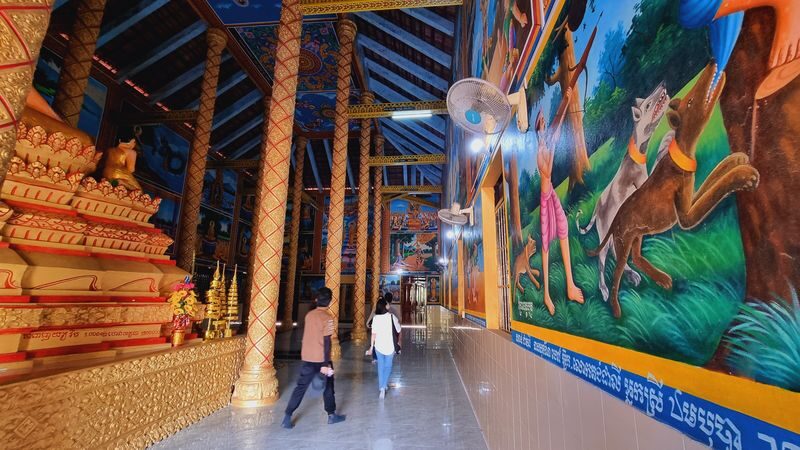
- The pagoda adds cultural context: Its architecture is a chance to see Khmer design and learn about distinctive local culture.
- Silk weaving rounds out the visit: A traditional weaving house offers a different kind of craft from the palm and clay stops.
- You get a private half-day outing: Hotel transfers in central Chau Doc and an English-speaking guide are included.
- Plan for heat and insects: Bring a hat, sunscreen, sunglasses, and insect repellent.
From Chau Doc to the Khmer village
The tour leaves Chau Doc at 7:30 a.m. and is scheduled to return at 12:30 p.m. That morning timing gives you several hours for the village and its craft visits without taking up an entire day. It also means an early start, so have breakfast before pickup if you prefer not to begin the day hungry.
The outing is described as a private half-day tour, with round-trip transfers from hotels in Chau Doc City Center. That is useful if you want to avoid arranging transport to a meeting point, though the hotel pickup area is limited. If you are staying outside the city center, confirm the pickup plan before booking rather than assuming a transfer will reach you.
An English-speaking guide is included, which matters here: you are not just looking at finished goods. The point is to understand the methods and local traditions behind palm products, clay craft, Khmer architecture, and silk weaving. A past account names a guide called Huy and describes an unhurried visit, but that does not establish who will guide your departure. Treat the name as a useful reference, not a promise.
The tour operator is Vietnam Awaits. The schedule can change with traffic or weather, so keep the morning flexible if you have another appointment soon after the stated return time. The operator is also expected to contact you between 8 and 9 p.m. the evening before to confirm pickup details. Check your Messenger app during that window.
Palm juice, fruit, and sugar in the field
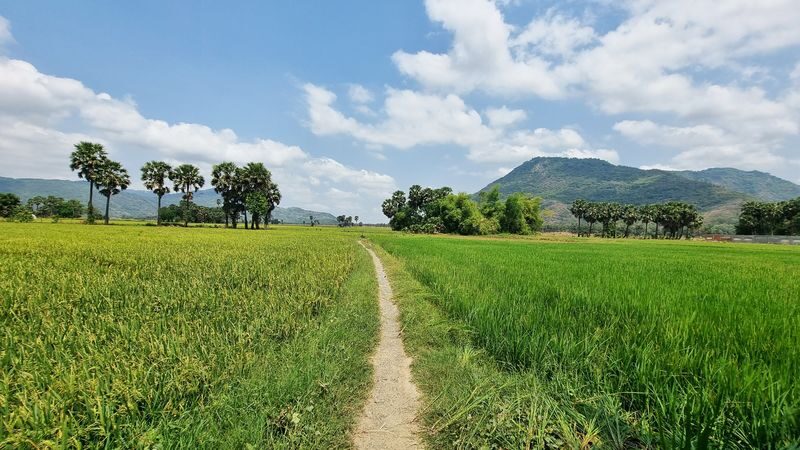
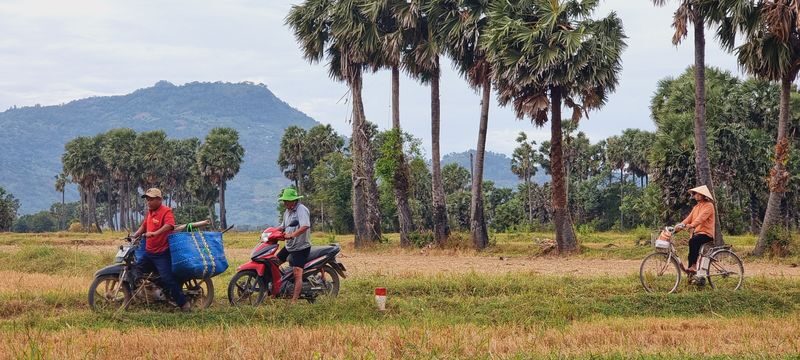
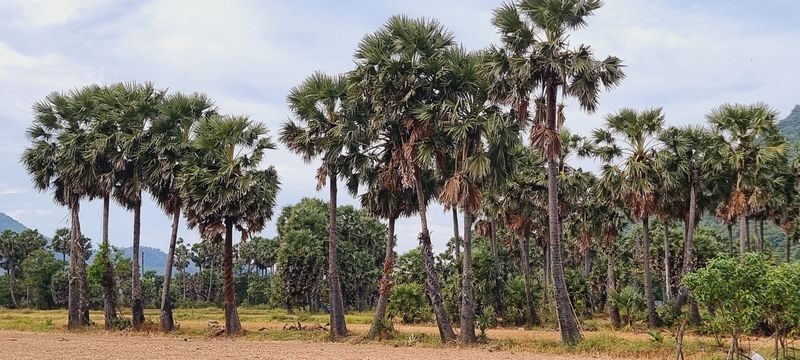
The palm field is the stop with the most immediate sensory appeal. You can watch local Khmer people collect palm juice and fruit using simple techniques, and learn how palm sugar is made. The tour includes palm products in the field, with palm fruit, juice, and sugar listed as part of the experience.
That connection between the tree, the work, and the food is what makes this stop useful. You see the process where it happens, rather than only hearing a guide describe a finished product. If you enjoy learning how everyday ingredients are produced, this is likely to be one of the most memorable parts of the morning.
The description does not specify how long you spend in the field or whether you take part in harvesting or sugar making. Expect to observe and learn, and enjoy the included products, but do not assume you will operate tools or make sugar yourself. The emphasis is on seeing the methods and tasting palm products.
Bring sun protection. The suggested items include a hat or cap, sunglasses, and sunscreen, plus insect repellent. Cash is also recommended for personal expenses. There is no need to overpack, but the tour does not provide luggage storage or delivery, so avoid bringing bulky bags if you can.
Kran clay pots and ovens
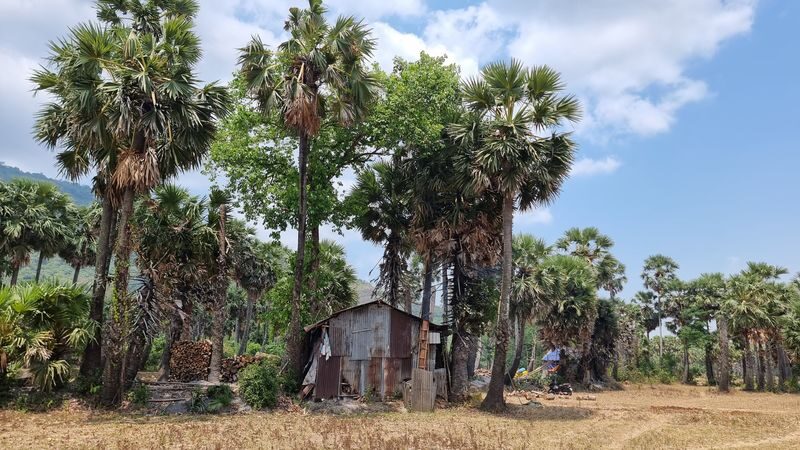
In the Khmer village, you can see locals making traditional Kran, including clay pots and clay ovens. This is a useful counterpoint to the palm-field visit: rather than following a food product from tree to table, you see a practical craft taking shape by hand.
The value is in observing the process and the role of the objects in local life. The tour does not provide detailed information about the workshop setup, the tools used, or whether you can try making a pot yourself. Go in ready to watch, ask questions through your guide, and look closely at how the craft is done.
This stop also gives the half-day its village-level focus. You are not simply being driven between major sights; you are visiting people engaged in traditional work. That can make the experience feel more grounded than a tour built only around monuments. Still, time is limited across several stops, so you should not expect an extended workshop unless the guide confirms one.
An ancient Khmer pagoda
The pagoda provides a change of pace from the production-focused visits. You can explore its architecture and learn about Khmer culture, with the building itself as the main point of interest. The tour description calls attention to its distinctive design, but does not identify the pagoda by name or specify particular architectural features.
That lack of detail is worth keeping in mind. If you have a special interest in religious architecture, ask your guide what features to look for and what the site means to the local community. The English-speaking guide is included, and this is the stop where their explanations can make the visit more than a quick look around.
Allow for the possibility that the time at the pagoda will be brief, since the morning also includes the palm field, Kran makers, and a silk-weaving house. The schedule is not broken down by stop, and weather or traffic may affect the order or duration. The best approach is to treat the pagoda as one part of a compact cultural overview, not a long temple visit.
Silk weaving at a traditional house
A visit to a traditional silk-weaving house completes the craft theme. After seeing work with palm and clay, you get a look at a textile tradition and the process behind woven silk. The tour information does not promise a demonstration at a particular loom or a chance to try weaving, so ask your guide what is happening during your visit.
This stop may be especially rewarding if you like seeing how different materials shape local crafts. It also gives you a chance to compare the rhythms of textile work with the palm and pottery stops. Since the visit is part of a half-day route, expect an introduction rather than a long class.
If you are interested in buying something, the tour information does not specify whether products are for sale or what payment methods are accepted. Bring cash for personal expenses, but do not assume a purchase is required or included.
What the price includes, and what it does not
The listed starting prices are not consistent: the tour summary gives a starting price of US$51.85, while the package option shows US$45.09. Prices can vary by booking details or availability, so check the amount shown for your selected date and package before paying.
For that price, the stated inclusions are admission to attractions, an English-speaking guide, round-trip transfers, palm products in the field, mineral water, and a fresh towel. The private format and transport add real value if you would otherwise need to arrange a vehicle and guide for several village stops. Admission and a few refreshments also mean fewer small costs along the way.
Personal expenses and tips are not included. A holiday surcharge of 550,000 VND per person applies on April 30 to May 1, August 31 to September 3, and December 31, 2025, payable directly to the guide. Since those dates are specific to 2025, verify any current surcharge if your trip falls on a holiday period in another year.
One older account describes a cooking class and lunch as highlights, but neither appears in the current stated inclusions or schedule. The listed tour ends around 12:30 p.m. and does not promise either activity. If cooking or a meal is important to you, ask the operator before booking rather than building your plans around that account.
Who will enjoy this morning most
I would choose this tour if you want a short, guided introduction to Khmer crafts and culture near Chau Doc, especially if you value seeing working methods over ticking off a long list of major attractions. It combines several distinct subjects in a single morning: palm products, clay craft, pagoda architecture, and silk weaving.
It is also a sensible choice if you prefer having transport arranged and want an English-speaking guide to connect the stops. The private format can suit couples, families, or small parties who want their own outing, although the tour details do not specify vehicle size or a maximum group size. Infants and children must be included in the passenger headcount, and child seats are not available.
This is less suitable if you need step-free access, a long workshop, or a full day devoted to one site. Accessibility details are not provided, and the schedule covers multiple stops in about five hours. The operator also does not provide luggage storage or delivery, so make other arrangements if you are checking out or moving between hotels that morning.
The tour has one listed rating of five out of five, but that is a very small sample and the account dates to 2019. It names Huy and praises the pace, while also mentioning cooking and lunch that are not part of the stated current plan. The operator, Vietnam Awaits, has a broader record of 9,082 total reviews, a 93 percent good review rate, a 99 percent response rate, and a response time under one hour. Those figures are useful context, but they cannot guarantee that every departure will run exactly the same way.
Practical details for a smooth start
Arrive at your hotel pickup point about 10 minutes before departure. Enter your hotel name and address when booking, then look for the operator’s message the evening before, between 8 and 9 p.m., to confirm the time and location. Pickup and drop-off are available only at hotels in Chau Doc City Center, or at the confirmed meeting location if arranged.
Pack light and bring the basics: a hat, sunglasses, sunscreen, insect repellent, and some cash. Mineral water and a fresh towel are included. There is no child seat service, and luggage storage or delivery is not available.
Your voucher is valid only on the date and time specified. Booking changes are allowed until seven days before the activity, with some restrictions for bookings made through certain passes or promotions. In extreme weather or unforeseen circumstances, the operator may cancel and offer a reschedule or refund. Keep your plans flexible, especially if you have onward travel later that day.
Should you book this Khmer village tour?
Book it if you want a manageable morning of local craft, palm products, Khmer architecture, and silk weaving, with a guide and central Chau Doc transfers included. The palm-field visit and the chance to see Kran clay pots and ovens being made give the outing a specific focus that a generic city tour may not offer.
Skip it if your priority is a cooking class, lunch, or an in-depth visit to one site. Those are not promised in the stated program. Before paying, confirm the current price, pickup location, and whether any extra activity you care about is included. If the craft visits and compact schedule suit you, this is a practical way to spend a morning outside central Chau Doc.
Chau Doc Khmer Village Half-Day Private Cultural Tour
“Superb tour and Magnificent Tour guide: Huy. Thoroughly enjoyed all the tour had to offer… not rushed. Cooking class and lunch were the highlight…”
FAQ
How long is the tour?
It is a half-day tour, scheduled to depart at 7:30 a.m. and return at 12:30 p.m. The schedule may change with traffic and weather.
Where does pickup take place?
Pickup and drop-off are available at hotels in Chau Doc City Center. You should enter your hotel name and address when booking.
Is an English-speaking guide included?
Yes. The tour includes an English-speaking guide. A past account names Huy, but your assigned guide may be different.
What will I see and do?
The planned visits include a Khmer village where you can see Kran clay pots and ovens being made, an ancient Khmer pagoda, a traditional silk-weaving house, and a palm field where you can learn about palm products and sugar making.
Are palm products included?
Yes. Palm products in the field are included, with palm fruit, palm juice, and palm sugar listed among them.
What should I bring?
Bring a hat or cap, sunglasses, sunscreen, insect repellent, and cash for personal expenses.
Are children and infants included in the booking?
Yes. Infants and children must be included in the passenger headcount. Child seats are not available.
Is lunch included?
Lunch is not listed among the current tour inclusions. An older account mentions lunch and a cooking class, so confirm with the operator if either is important to you.