Lisbon’s center makes more sense on foot, especially when your route links grand squares to the tight lanes of Alfama. This tour runs from Rossio to Praça do Comércio, with an English-speaking local guide to explain the city’s past and point out the shortcuts that can spare you some uphill trudging.
I like two things in particular: the route covers several distinct neighborhoods in one outing, and the food stops add a small taste of everyday Lisbon, from pastel de nata to codfish cake and green wine. Guides including Martin, José Luis and Catarina have been singled out for lively storytelling, humor and practical local tips.
The trade-off is physical: this is a substantial walk over hills and stairs, not a stroll on flat pavements. It may also feel repetitive if you have already spent time exploring Baixa, Chiado and Alfama on your own.
At a glance
- Rossio to Praça do Comércio: A central-city route through Rossio, Restauradores, Carmo, Baixa, Chiado and Alfama.
- A guide who connects the dots: Guides such as José Luis, Martin, Catarina and Filipe have been praised for clear explanations, warmth and humor.
- Lisbon tastes along the way: The price includes a pastel de nata, tapas and a wine tasting, with codfish cake and green wine among the treats described.
- Hills are part of the deal: Expect stairs, slopes and plenty of walking. Wear trainers or other comfortable walking shoes.
- Best early in your stay: The route gives you a useful first look at central Lisbon and can help you find your way around afterward.
- A short tour, not a full meal: Tastings are a bonus, but lunch and other food and drinks are not included.
- At a glance
- From Rossio’s old square to Lisbon’s waterfront
- Rossio and Restauradores set the scene
- Carmo’s ruins and Chiado’s everyday streets
- A pastel stop, then the climb toward Alfama
- Alfama’s local stop brings food and conversation
- Lisbon Cathedral and the final approach
- What the guide adds, and what the tour cannot do
- Price, pace and who should book
- Should you book the Best of Lisbon Walking Tour?
- FAQ
- How long does the tour take?
- Where does the tour start and finish?
- What food and drink are included?
- Is the tour suitable for people with limited mobility?
- What time should I arrive, and how do I find the guide?
- What is the cancellation policy?
- Can children join the tour?
From Rossio’s old square to Lisbon’s waterfront

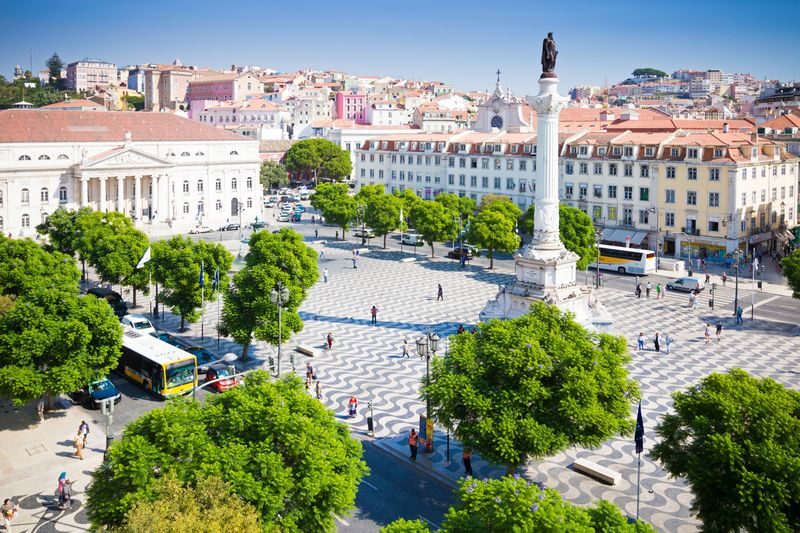
The meeting point is Praça D. Pedro IV, usually called Rossio, in front of the statue of D. Pedro IV. From here, the walk moves through central Lisbon and ends at Praça do Comércio. The advertised departures are 9:30 a.m. and 2:30 p.m., with return times listed as 12:30 p.m. and 5:30 p.m. The schedule can change with weather or traffic, and the route’s actual length can vary.
Plan on roughly three hours, though some tours have run closer to three and a half. That is enough time to cover a lot of ground without giving each landmark a long visit. This is an outdoor city tour, not a series of guided museum or monument interiors.
The group meets near the center of a busy square, so arrive 15 minutes early and look for the guide with a blue shoulder bag bearing the Inside Lisbon logo. The meeting details also describe a blue ribbon badge. Rossio metro station is a one-minute walk away, which makes the start point straightforward to reach.
Rossio and Restauradores set the scene
Rossio has served as one of Lisbon’s main squares since the Middle Ages. Its past includes public celebrations, political upheavals, bullfights and executions. That range gives the square a useful role at the start: it is not simply a handsome open space, but a place where the city’s public life played out over centuries.
From there, the tour heads to Restauradores Square and its obelisk, a monument associated with victory and independence. The stop helps introduce Portugal’s political story before the walk moves on to buildings and neighborhoods. You get context as you go, rather than a long lecture in one spot.
Rossio Central Station is another early landmark. Its unusual, ornate facade is a good reminder to look up while crossing the city. The station may be a quick stop rather than an architectural visit, but a guide can help you notice details you might otherwise pass on your way to the next square.
Carmo’s ruins and Chiado’s everyday streets
Carmo Square offers one of the route’s strongest contrasts. Its romantic Gothic ruins are a visible reminder of a past event and a striking break from the surrounding streets. The tour focuses on the site from outside; a guided visit inside monuments is not included, so think of this as an introduction rather than an in-depth exploration.
The route then links the historic Baixa district with Chiado. Baixa’s orderly, Neoclassical streets give way to Chiado’s cafés, boutiques, theatres and bookshops. These neighborhoods are not just a string of sights. They show how Lisbon changes from broad central streets to a more intimate mix of shops and cultural spaces.
This section is useful for planning the rest of your stay. If a café, shop or theatre catches your eye, make a note and return later at your own pace. The tour is designed to keep moving, and you will not have time to linger at every appealing storefront.
A pastel stop, then the climb toward Alfama
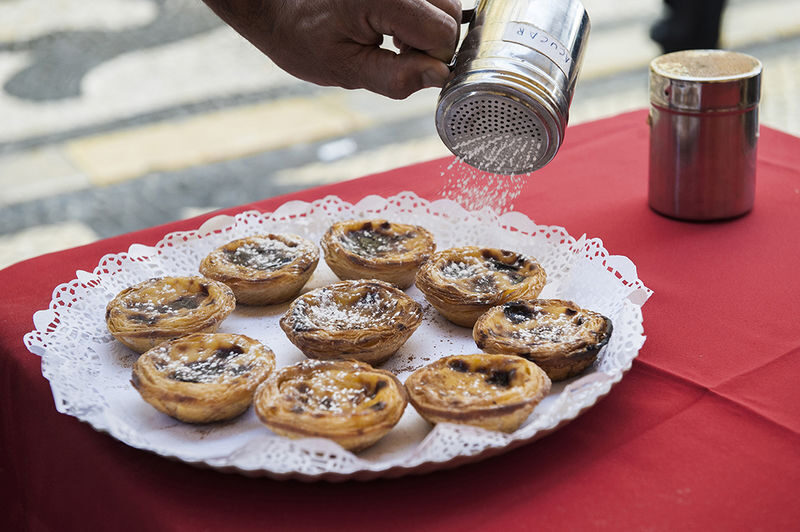
Pastel de nata, the custard tart familiar across Portugal, is one of the included tastings. It is a small but well-chosen pause in a walking tour. You get a local sweet without having to stop for a full meal, and the break gives the group a chance to catch its breath.
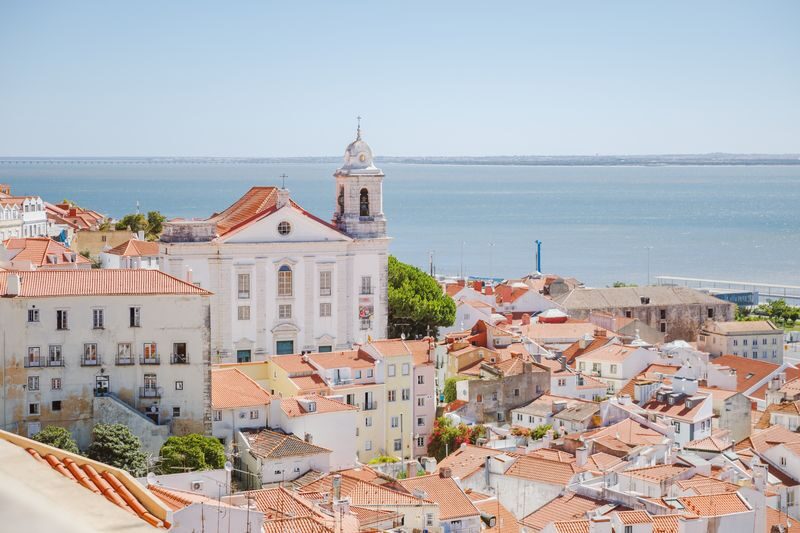
The route continues toward Alfama, an old hillside neighborhood with a very different feel from Baixa’s broader streets. The hills and stairs are not a minor footnote: they are part of the route and part of what makes Lisbon’s center distinctive. Some guides use public escalators or elevators to help connect levels, and one visitor praised a guide for knowing these local shortcuts. Do not count on every slope disappearing, though. The walk still calls for decent fitness and comfortable shoes.
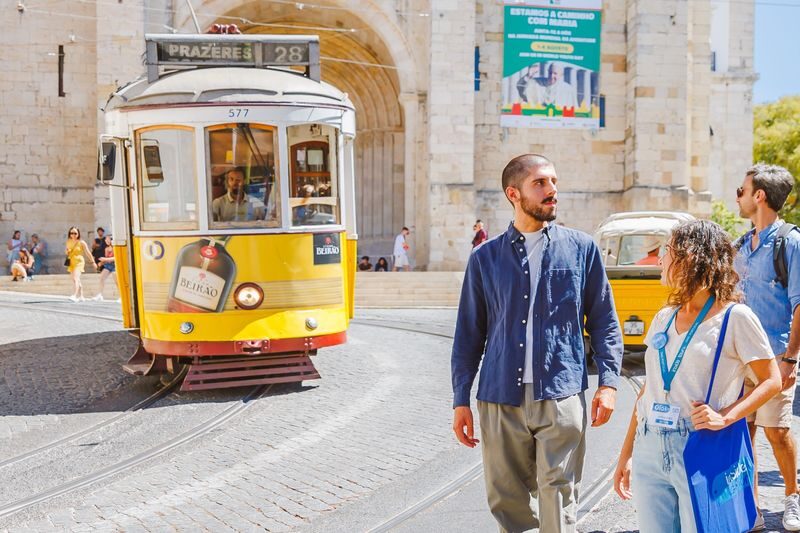
The tour description refers to vintage trams on the way toward Alfama, but public transport is not listed among the included items. Treat the core experience as a walking tour, and check with the operator if riding a tram is important to your plans. The route’s main value is seeing how the neighborhoods connect, not relying on a particular vehicle.
Alfama’s local stop brings food and conversation
In Alfama, the tour visits a local place for tapas and a wine tasting. The treats include codfish cake and a small taste of vinho verde, or green wine. These tastings give the walking route a more personal pause than a quick photo stop, and they are a welcome chance to sample a pair of familiar Portuguese flavors.
Keep your expectations in proportion. The included food is a tasting, not lunch, and additional meals and beverages are not covered. If you are hungry, have dietary needs, or prefer not to drink wine, plan accordingly. The supplied details do not specify substitutions or alternative tastings, so ask before booking if that matters to you.
The guide’s role is especially valuable here. The best moments on a neighborhood walk often come from knowing why a street feels different from the one just behind it, or where locals go for a quick bite. Guides such as José Luis, Martin, Catarina and Filipe have been praised for making history approachable while also sharing present-day tips. The specific guide varies, so book for the route and format rather than expecting a particular person.
Lisbon Cathedral and the final approach
The tour passes Lisbon Cathedral before finishing at Praça do Comércio. The cathedral gives the final stretch another historic landmark, while the walk toward the waterfront lets you see how the older hillside lanes connect back to the grand central spaces.
The finish at Praça do Comércio is practical. You are left at a major open square rather than returned to Rossio, so you can continue your day from the waterfront end of the route. The tour does not include a hotel pickup or drop-off, which is typical for a central walking tour but worth remembering if you are staying outside the center.
Because the route ends at a different location from where it begins, you may want to check your next stop before setting off. The tour’s stated return time is a guide, not a promise that every group will finish at precisely that minute.
What the guide adds, and what the tour cannot do
The most consistently praised part of this outing is the guide. Names mentioned include Martin, José Luis, Alex, Catarina, Filipe, Natalia, Joana and others. The recurring strengths are lively delivery, humor, care for the group and the ability to connect historical events with what you are seeing now. Some guides have also been praised for adjusting the pace and helping the group use elevators or escalators.
That matters because a three-hour city walk can otherwise become a checklist. A good guide turns a square, station or ruin into a piece of a larger story and helps you notice how Lisbon’s neighborhoods fit together. You also have a chance to ask for restaurant and shop suggestions, though recommendations naturally depend on the guide leading your departure.
There are limits. You will see landmarks from the street, but the tour does not include guided visits inside monuments. It also cannot replace time spent exploring a neighborhood slowly, and the compact pace may leave you wanting to return to favorite spots later. Think of it as an orientation with local context, not a deep visit to every stop.
Price, pace and who should book
The displayed starting price is from $19.59, while the join-in package is also shown from $21.29. Prices can vary, so check the amount for your selected date before paying. For a few hours with a local English-speaking guide, several neighborhoods and included tastings, the price can represent good value, especially if you would otherwise visit the area without much context.
The value is less compelling if you mainly want interior visits, a leisurely food tour or a flat, easy walk. Tastings are modest, and meals, other drinks, transport tickets and tips are not included. You are paying chiefly for the route and the guide’s explanations, with food as a welcome extra.
I would place this tour near the start of a Lisbon visit. It gives you a map in your head, introduces central districts and can help you spot shortcuts before you explore independently. If you have already walked these neighborhoods, the route may repeat familiar ground, so consider spending the money on a different part of the city instead.
Families should weigh the length and walking against children’s interest in history. Children aged zero to two join free, while ages 12 and older pay the adult rate. Children aged 0 to 11 must be with a paying adult, but the tour’s pace and historical focus may not suit young children who tire easily or need frequent breaks.
Wear comfortable shoes with grip, bring clothing suited to the day’s weather, and leave the stroller at your accommodation: the tour is not stroller or wheelchair accessible. Arrive early, keep your belongings close, and remember that late arrivals and no-shows are not refunded. The tour does not run on December 25 or January 1.
Should you book the Best of Lisbon Walking Tour?
Book it if you want a lively first orientation to Rossio, Baixa, Chiado and Alfama, and you are comfortable walking uphill and using stairs. The guide-led storytelling and small local tastings make the route more useful than simply ticking off the main squares.
Skip it if you need step-free access, want substantial food, or have already explored the central neighborhoods at length. For most first-time visitors who can manage the hills, it is a practical way to meet Lisbon on foot and learn where to return.
Best of Lisbon Walking Tour
“Martin is so lively there is no boring moment. He covered a lot of history and we went from one hill to another using public escalators and elevato…”
FAQ
How long does the tour take?
The tour is generally around three hours. Some outings have taken about three and a half hours, and the schedule may change with weather or traffic.
Where does the tour start and finish?
It starts at the statue of D. Pedro IV in Rossio Square and ends at Praça do Comércio.
What food and drink are included?
The listed inclusions are a pastel de nata, tapas and a wine tasting. Codfish cake and vinho verde are among the tastings described. Meals and other beverages are not included.
Is the tour suitable for people with limited mobility?
The route involves a considerable amount of walking and stairs and is not wheelchair accessible. The tour is also not stroller accessible.
What time should I arrive, and how do I find the guide?
Arrive 15 minutes before your selected departure. Look for the guide with an Inside Lisbon blue shoulder bag or a badge with a blue ribbon near the D. Pedro IV statue.
What is the cancellation policy?
A full refund is available if you cancel at least 24 hours before the activity date, using the destination’s local time. Late arrivals and no-shows are not refunded.
Can children join the tour?
Children aged zero to two can join free. Children aged 0 to 11 must be accompanied by a paying adult, and children aged 12 or older are charged the adult rate.